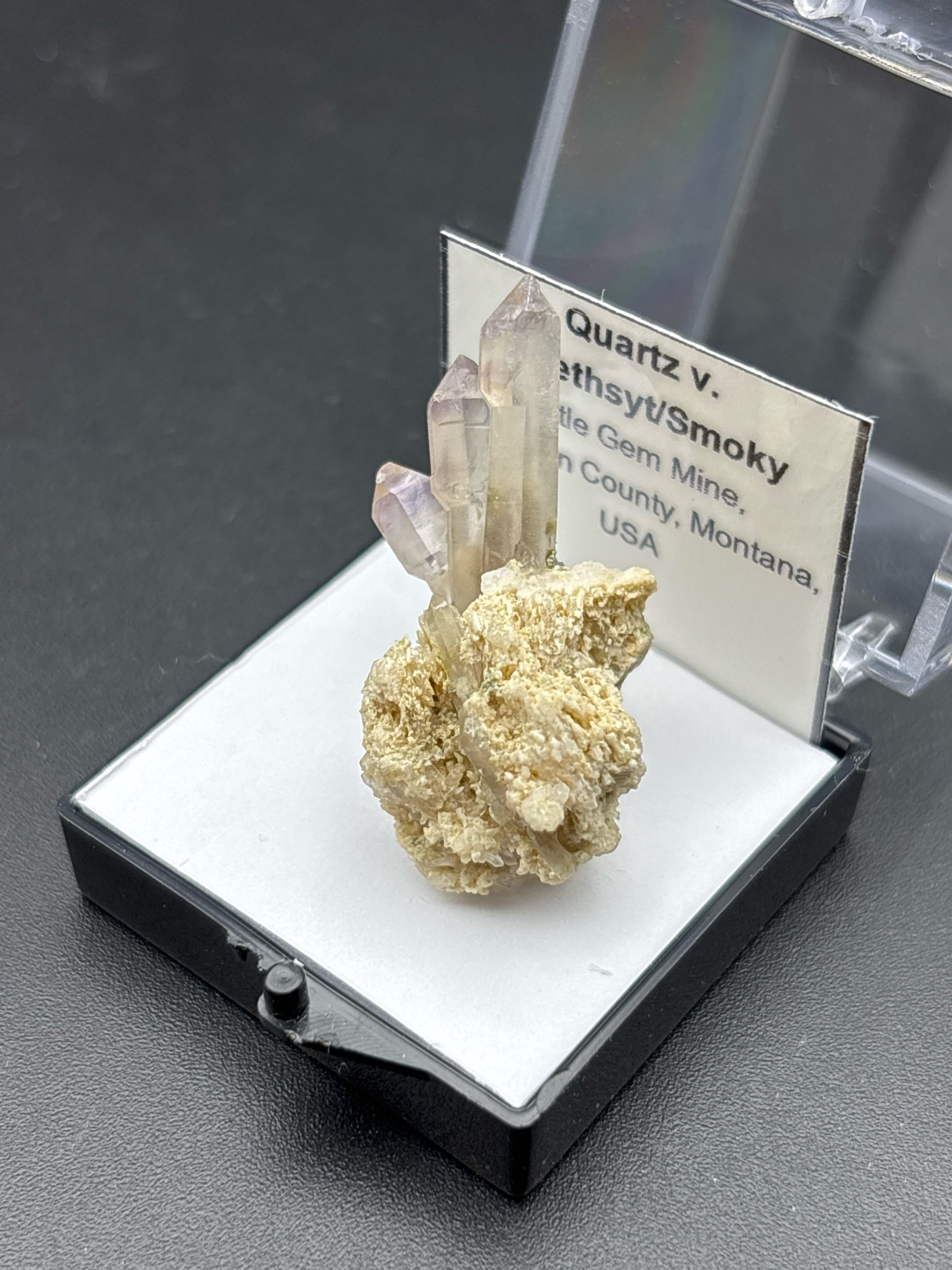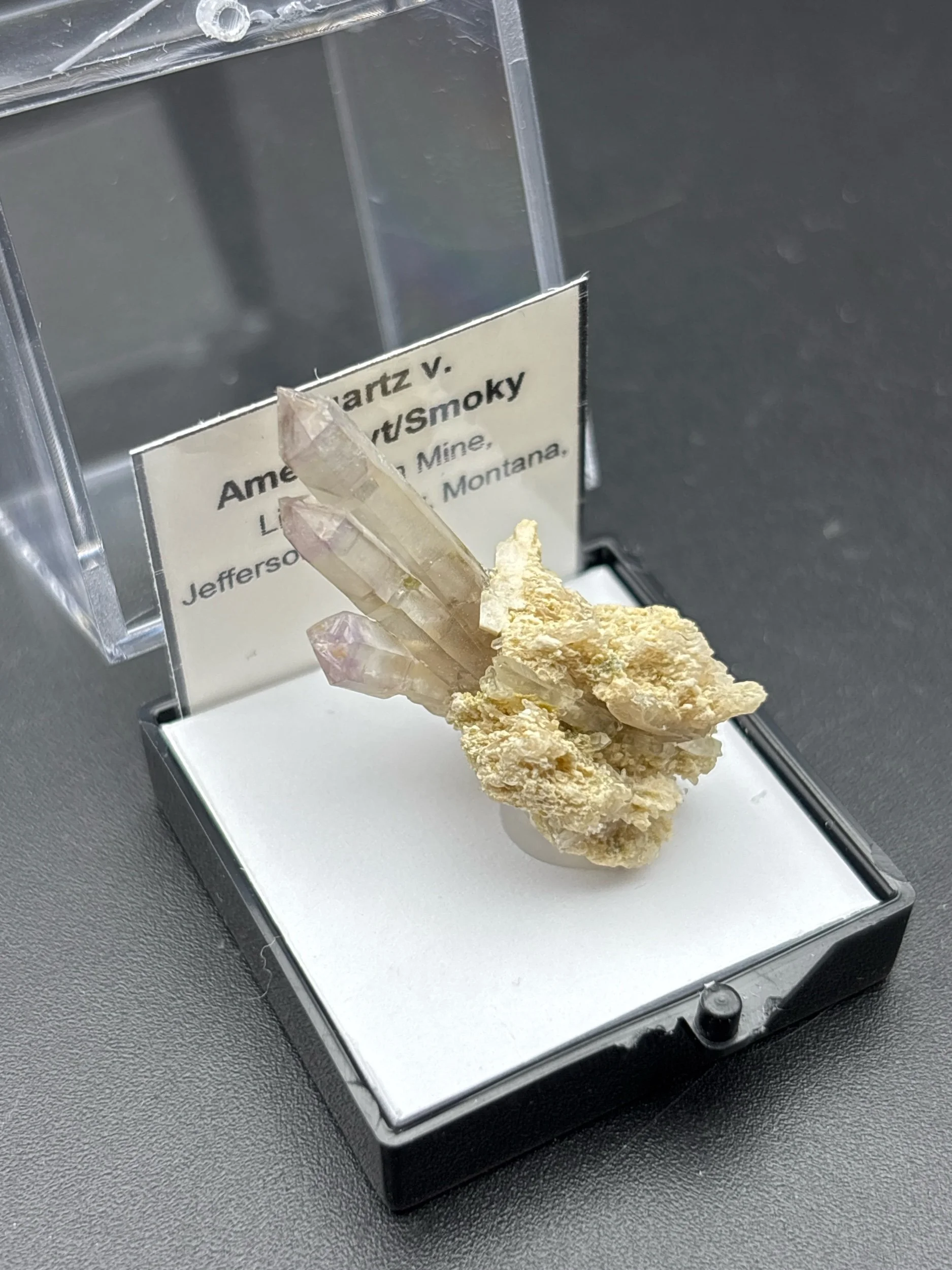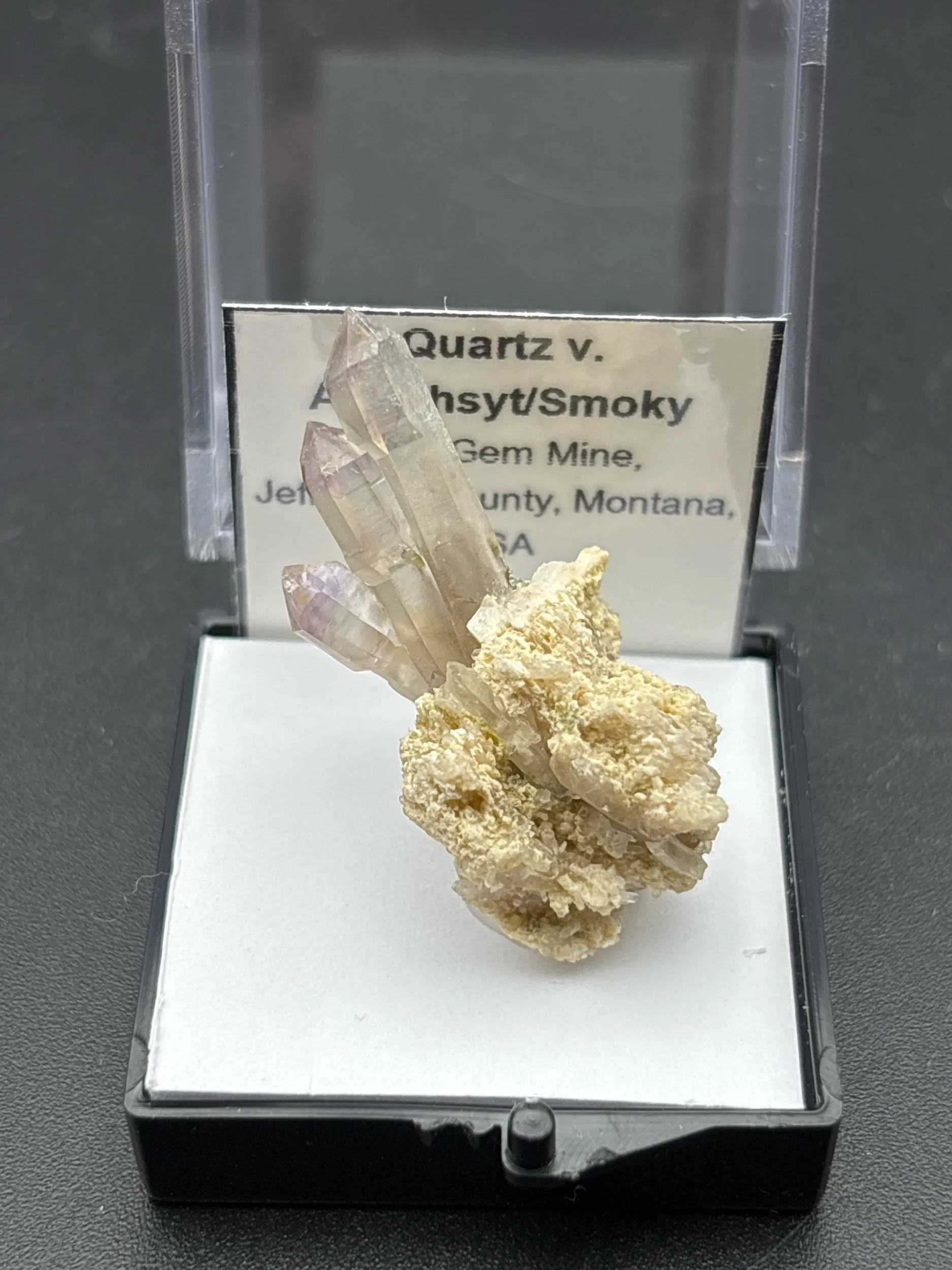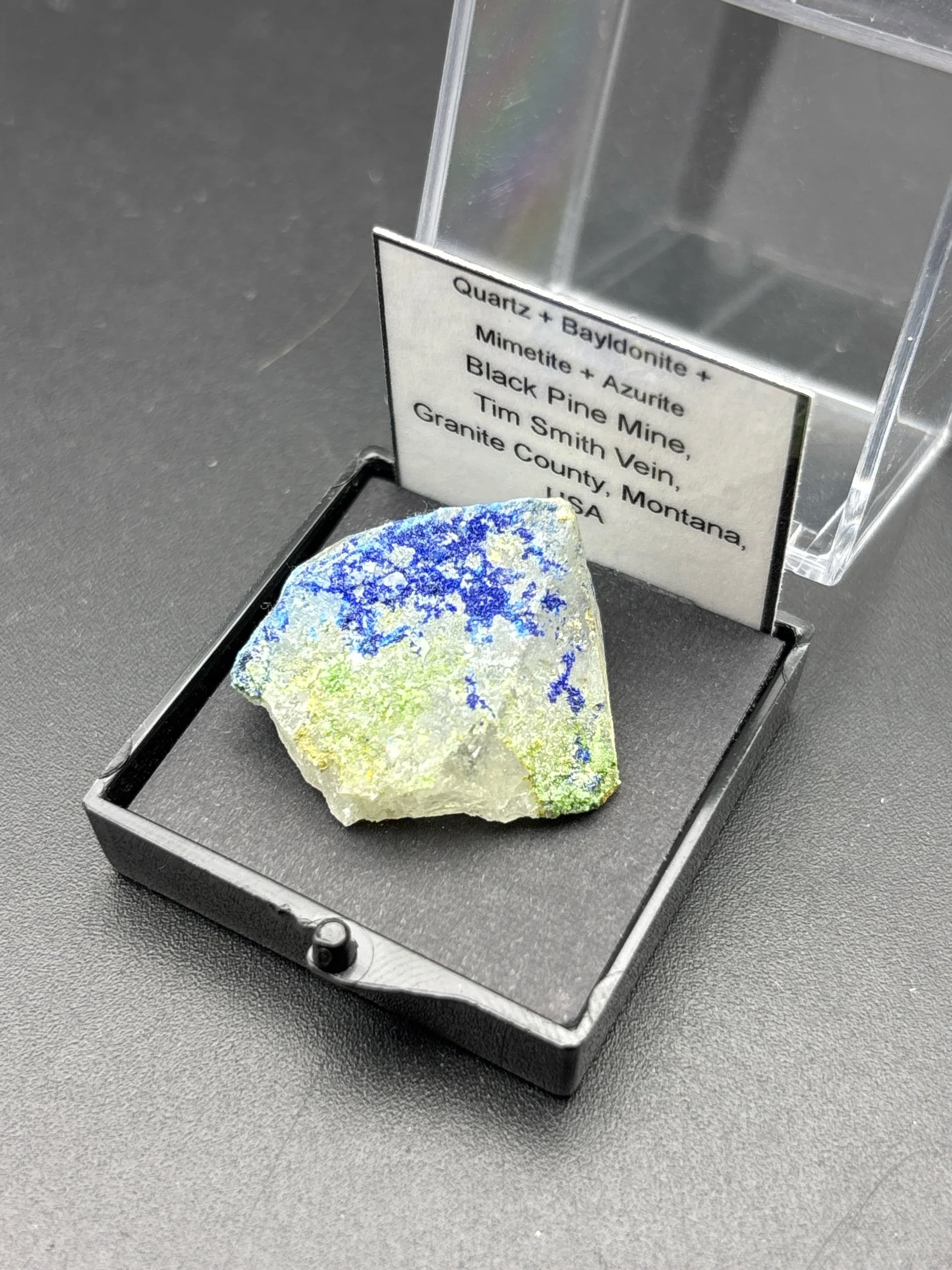
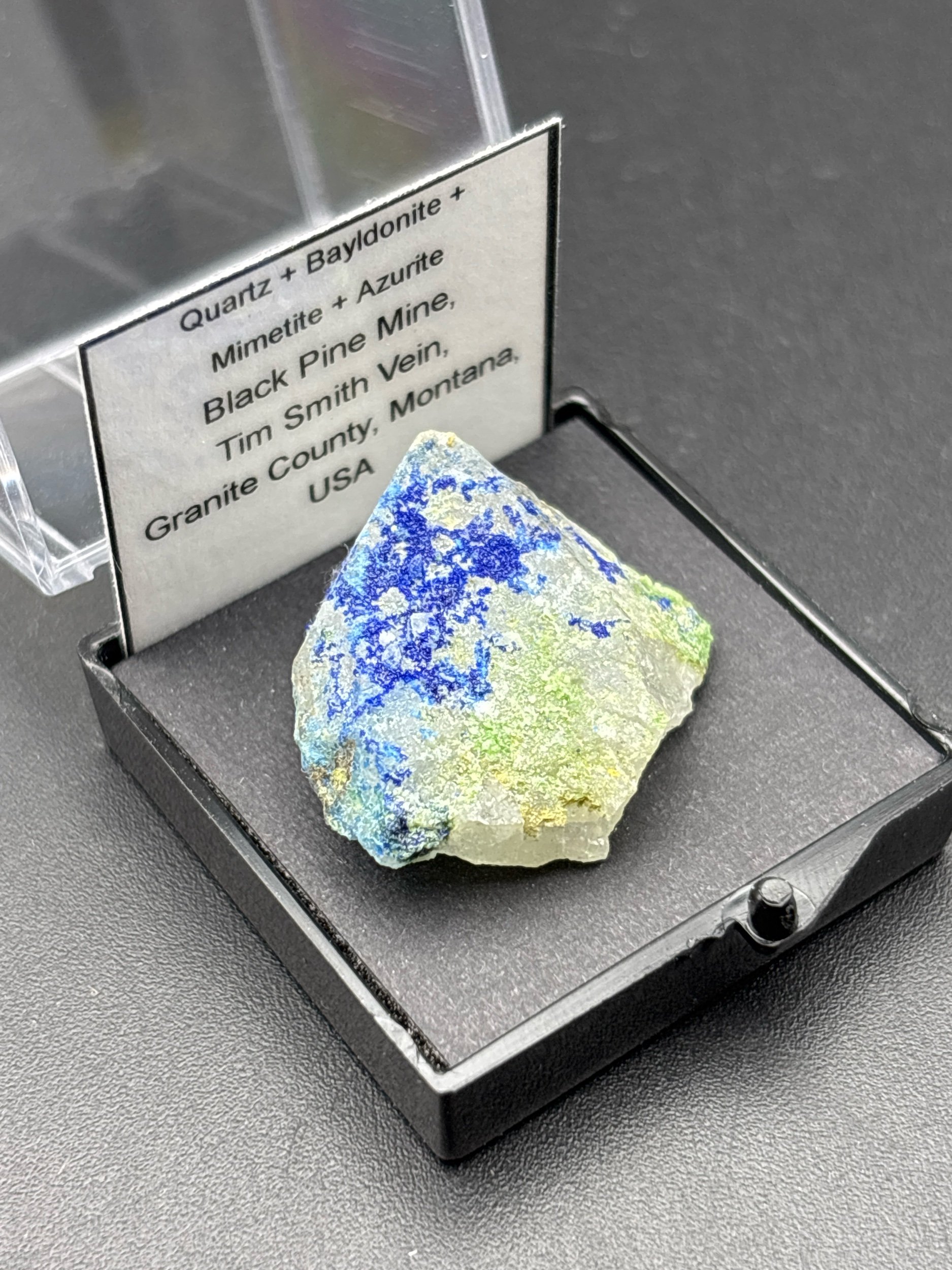
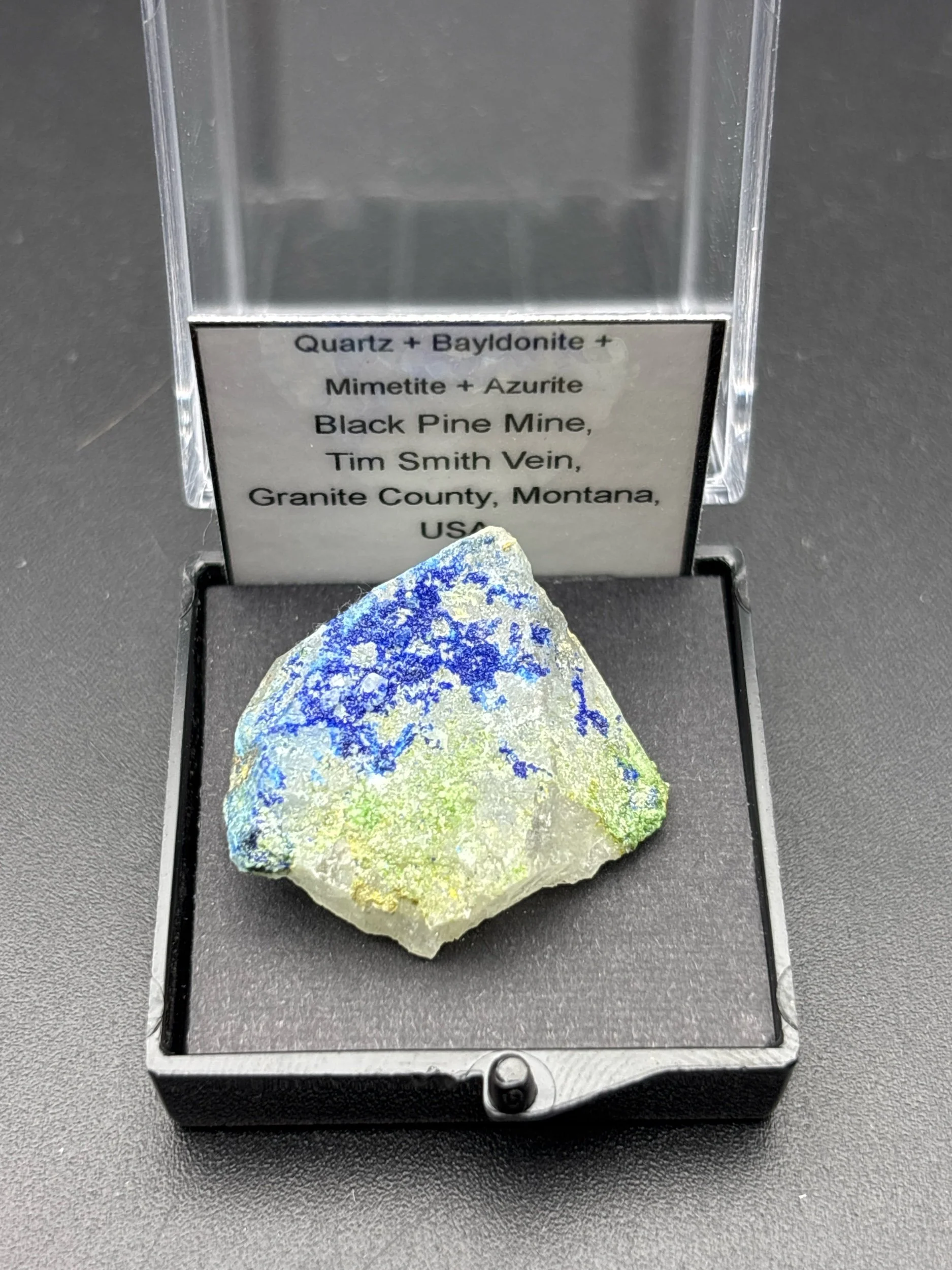
Mimetite + Bayldonite + Quartz + Azurite - Black Pine Mine, Granite County, Montana, USA
Specimen shown in standard perky box
(Base - 1.25 × 1.25in - 31.5mm x 31.5mm)
Thank you so much for viewing! Please message for any further information
ORDERS SHIP MONDAYS
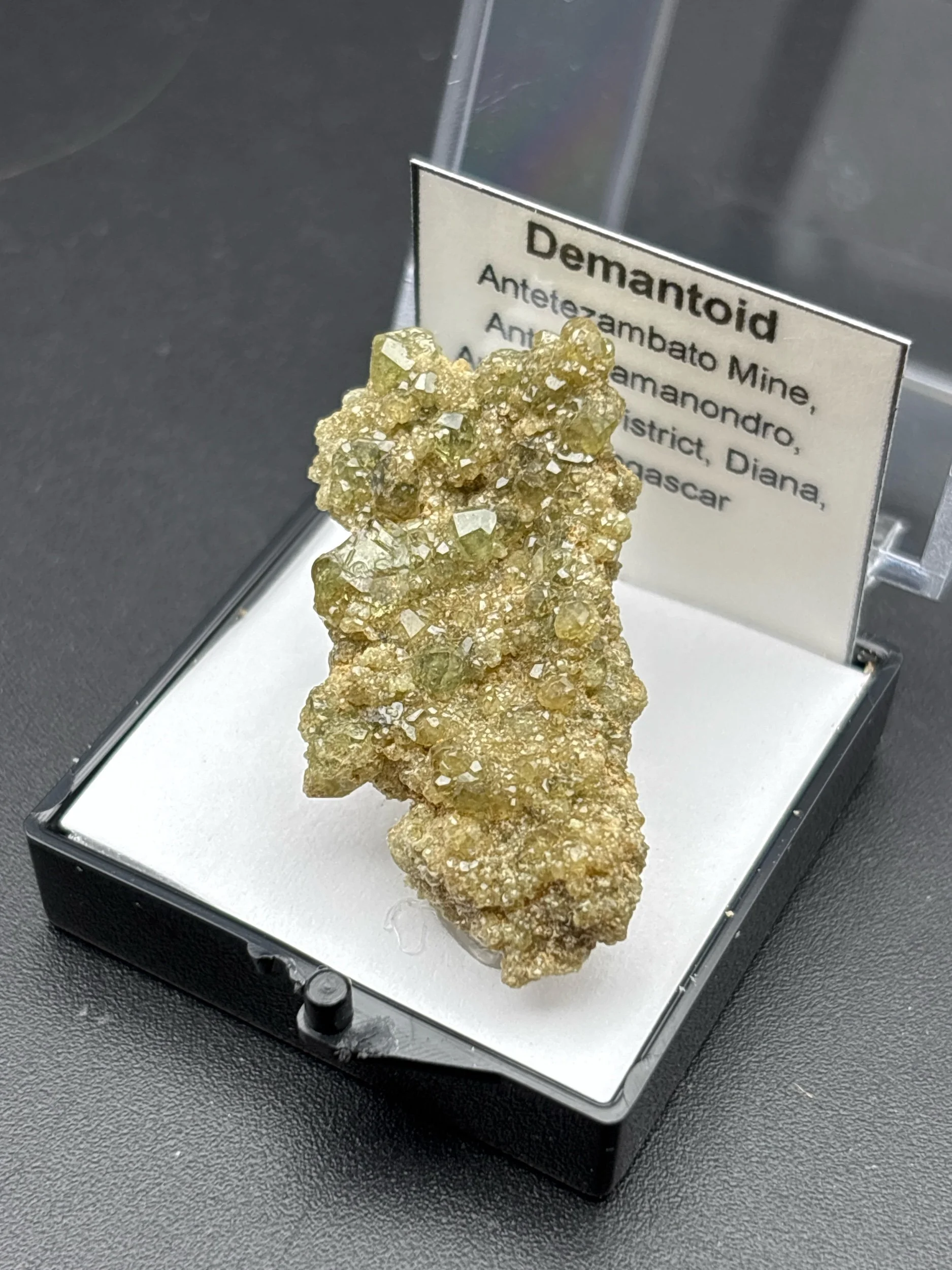
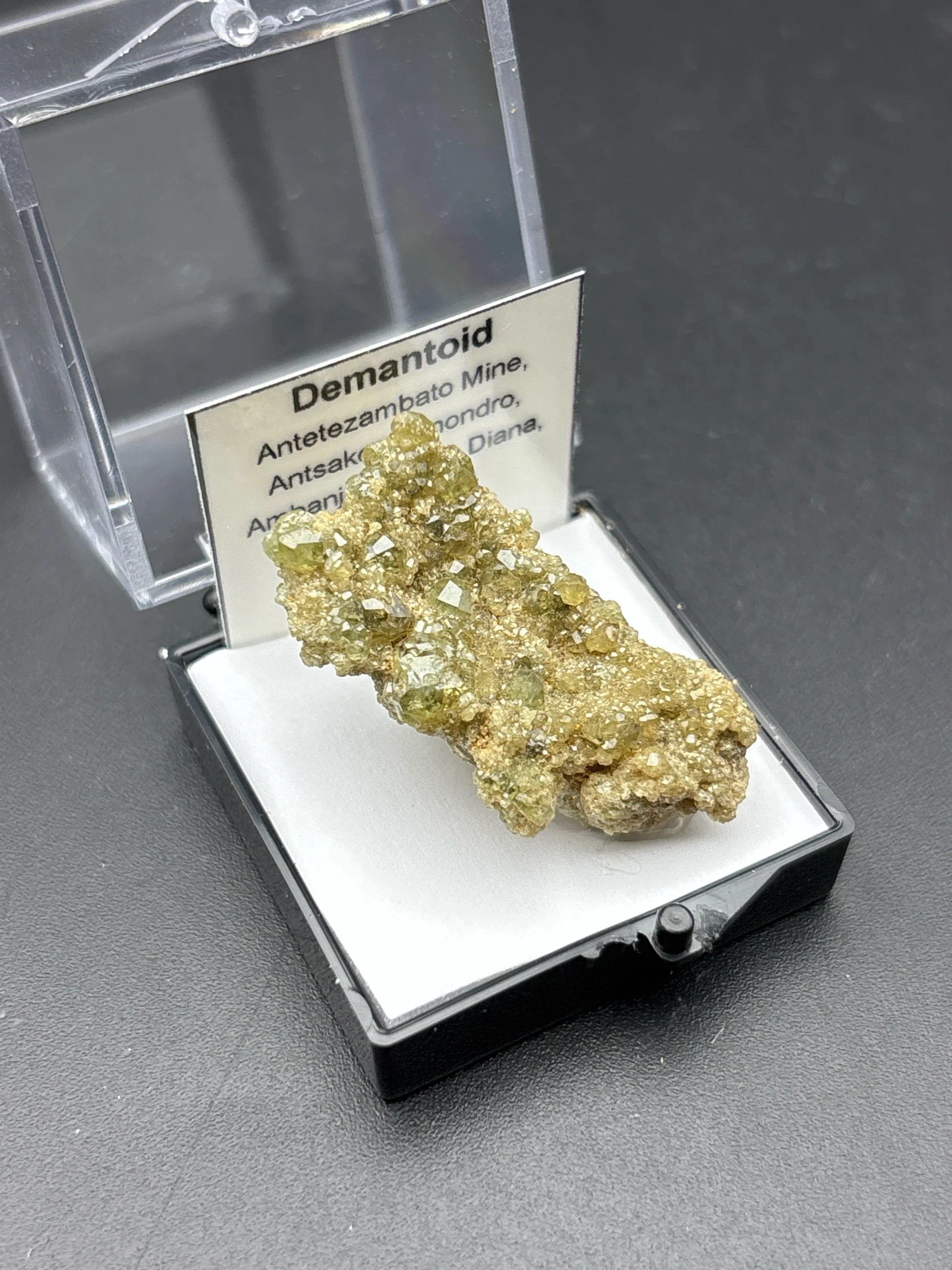
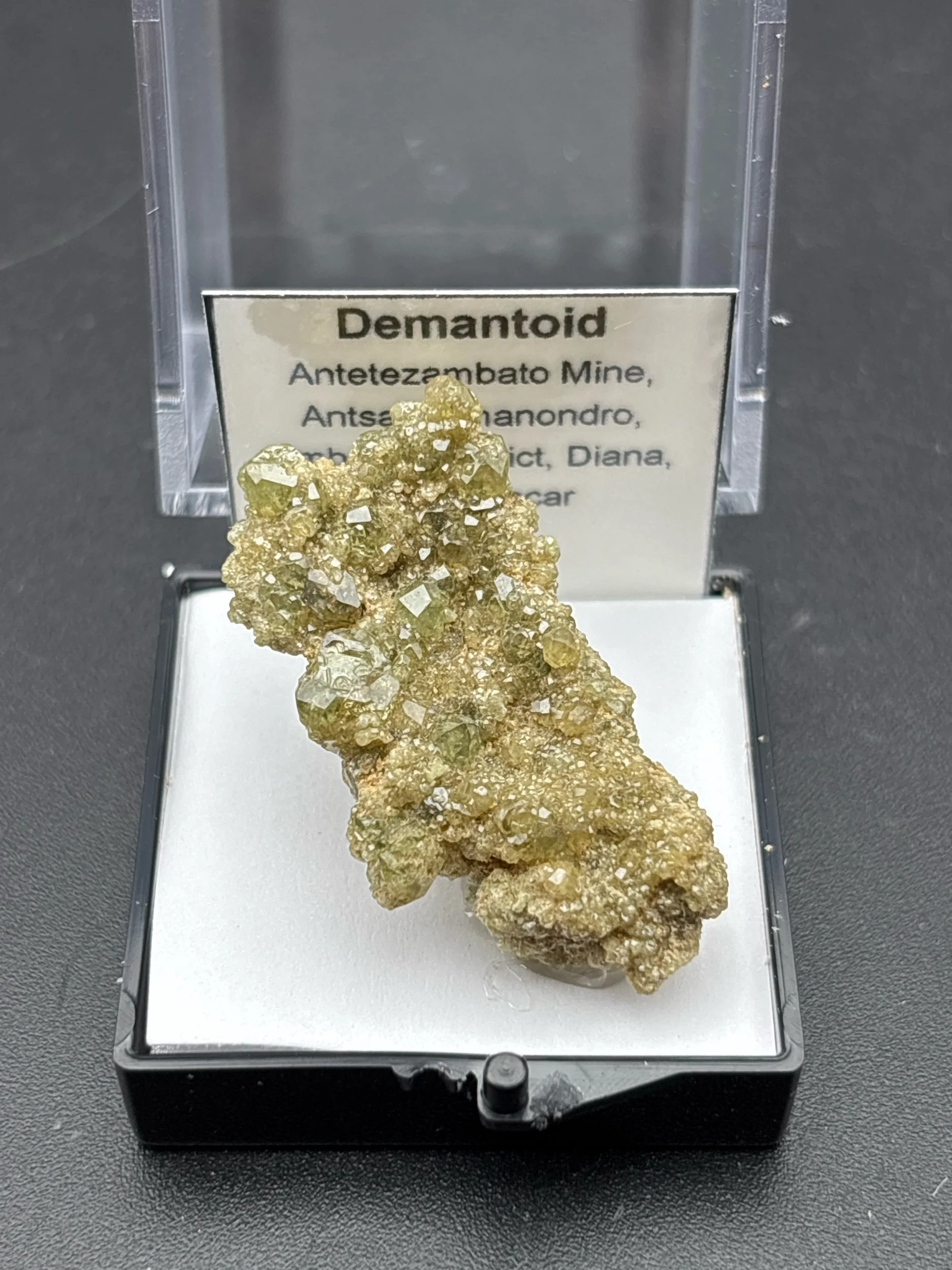
Demantoid - Antetezambato Demantoid-Topazolite Mine, Antsakoamanondro, Ambanja District, Diana, Madagascar
Specimen shown in standard perky box
(Base - 1.25 × 1.25in - 31.5mm x 31.5mm)
Thank you so much for viewing! Please message for any further information
ORDERS SHIP MONDAYS
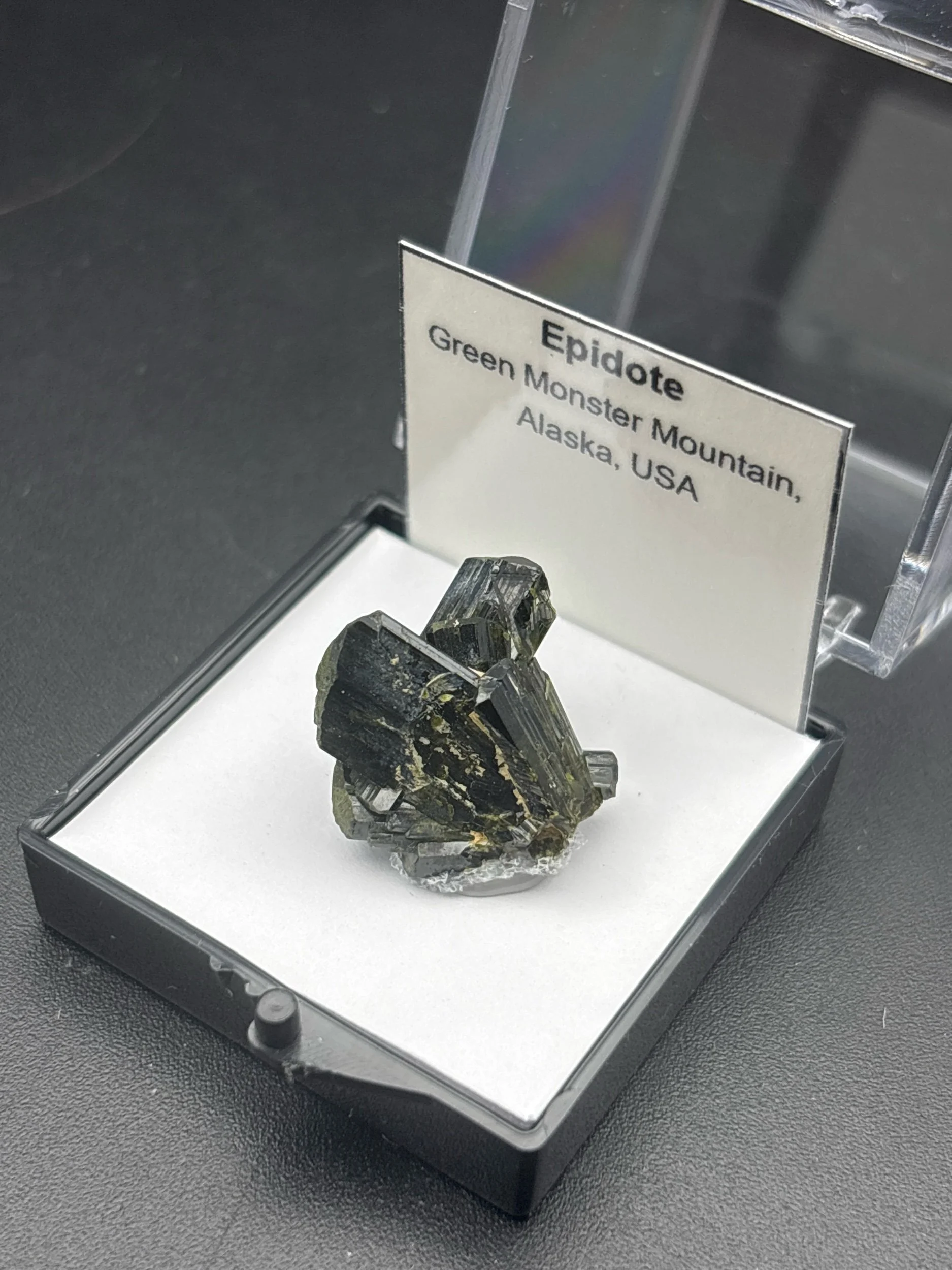
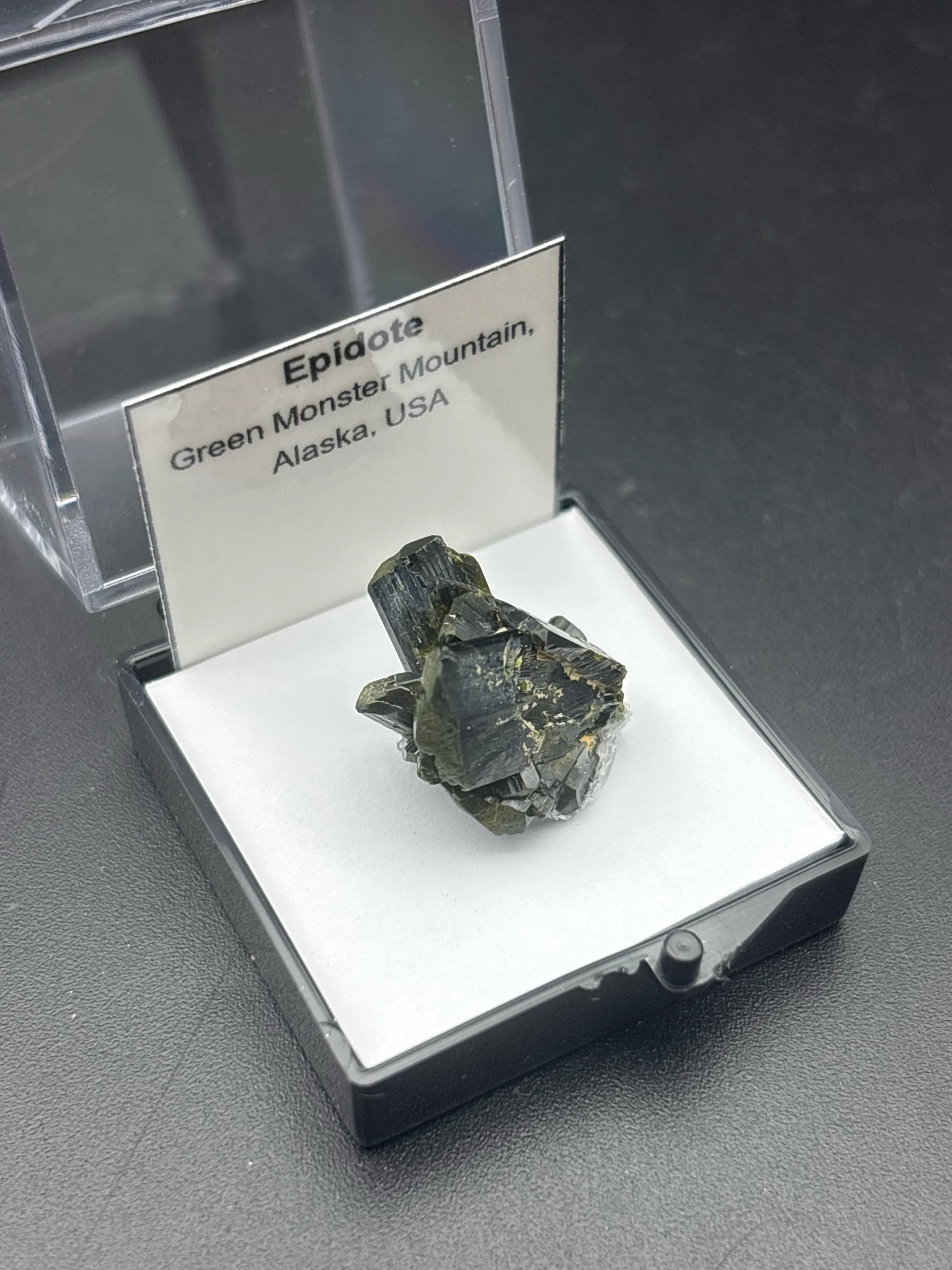
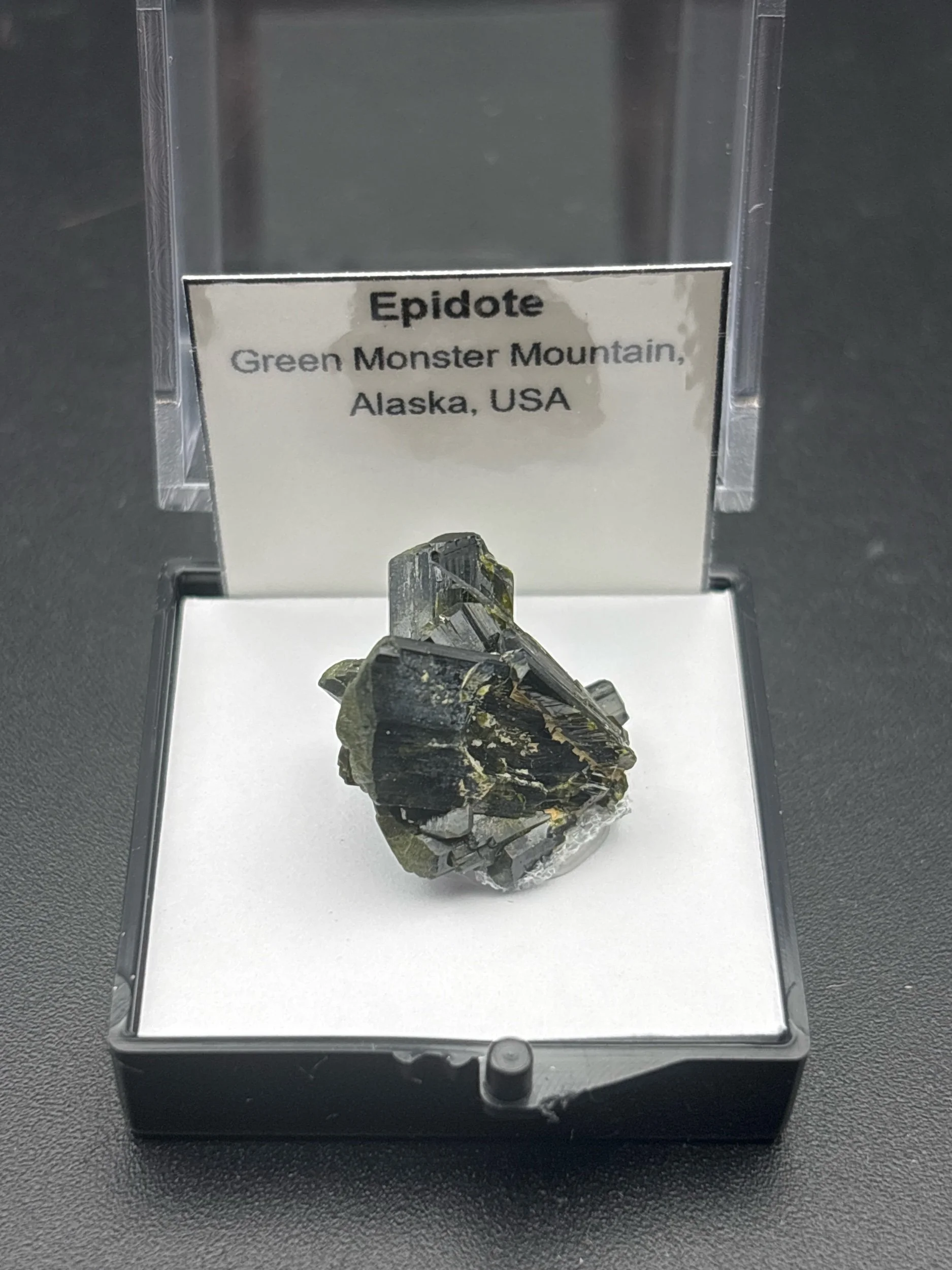
Epidote - Green Monster Mountain, Prince of Wales Island, Ketchikan Mining District, Prince of Wales-Hyder Census Area, Alaska, USA
Specimen shown in standard perky box
(Base - 1.25 × 1.25in - 31.5mm x 31.5mm)
Thank you so much for viewing! Please message for any further information
ORDERS SHIP MONDAYS
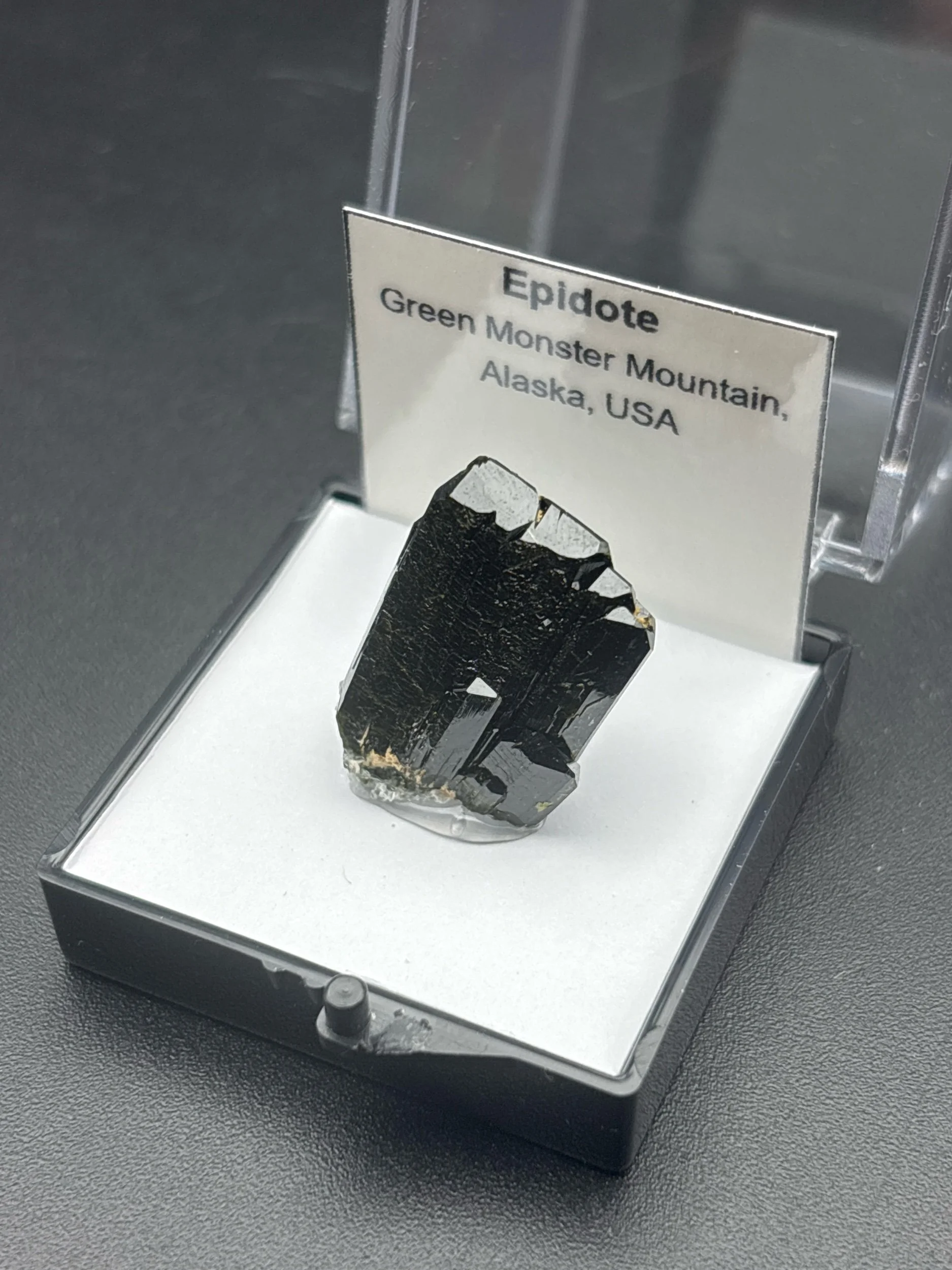
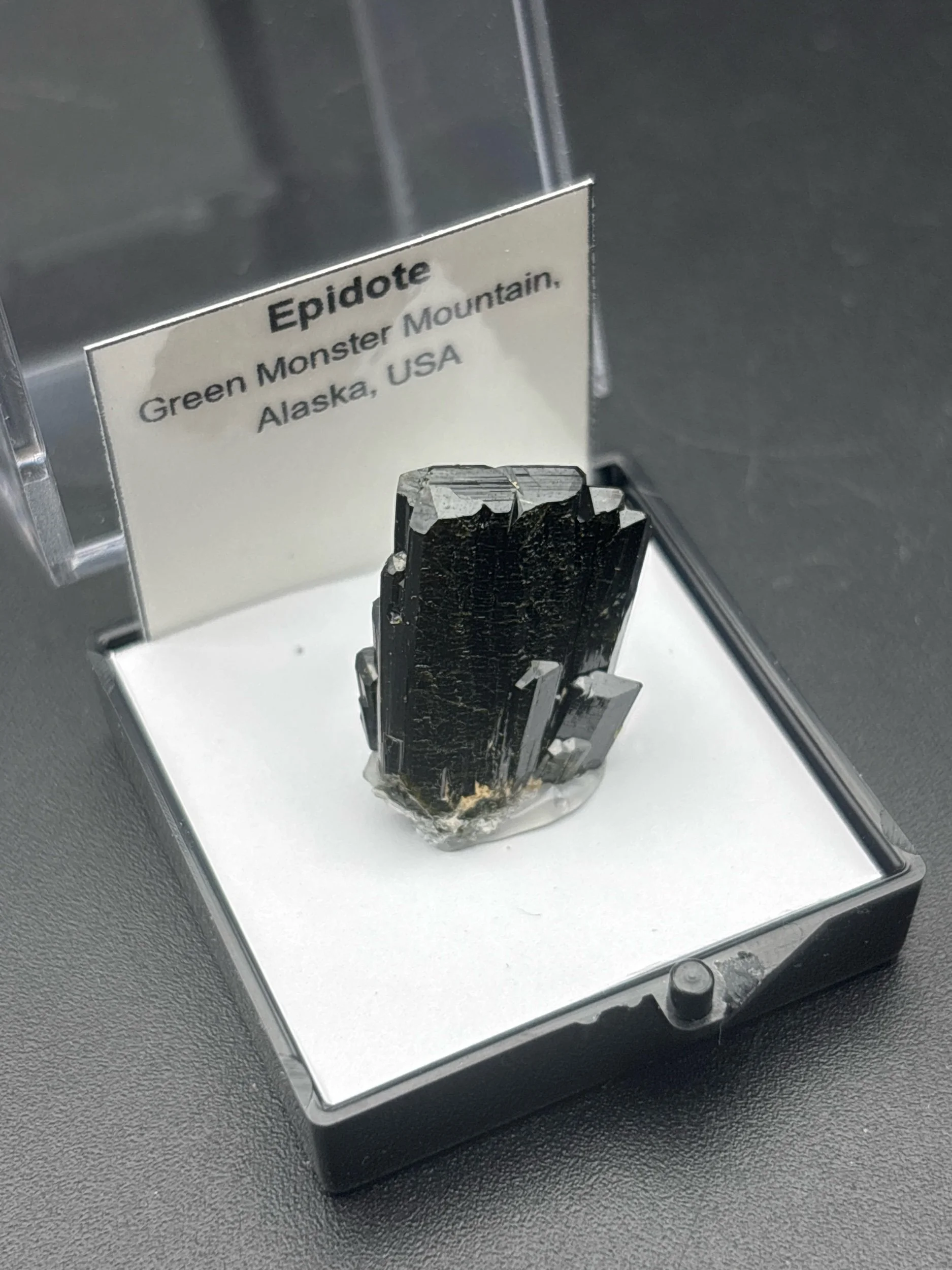
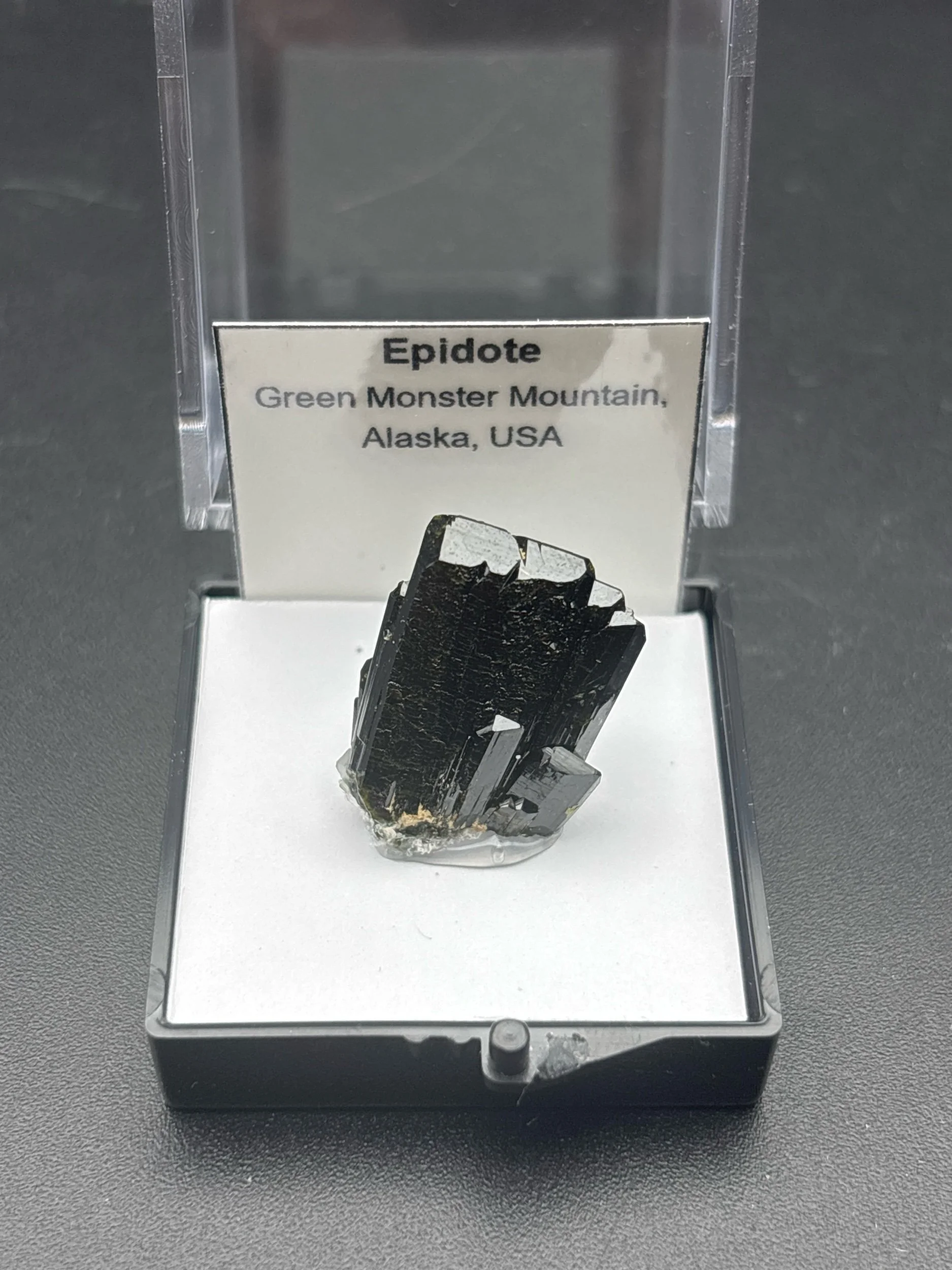
Epidote - Green Monster Mountain, Prince of Wales Island, Ketchikan Mining District, Prince of Wales-Hyder Census Area, Alaska, USA
Specimen shown in standard perky box
(Base - 1.25 × 1.25in - 31.5mm x 31.5mm)
Thank you so much for viewing! Please message for any further information
ORDERS SHIP MONDAYS
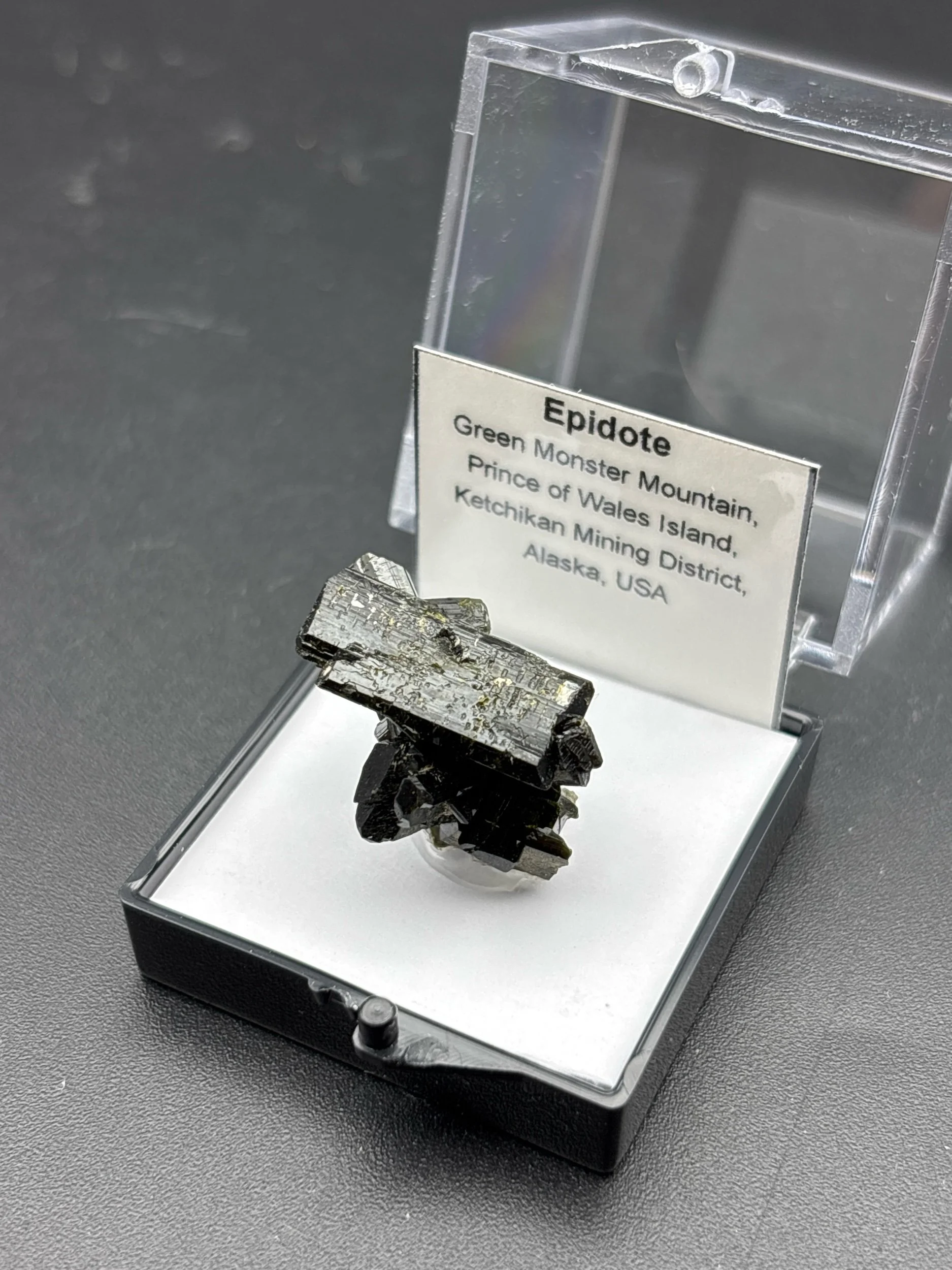
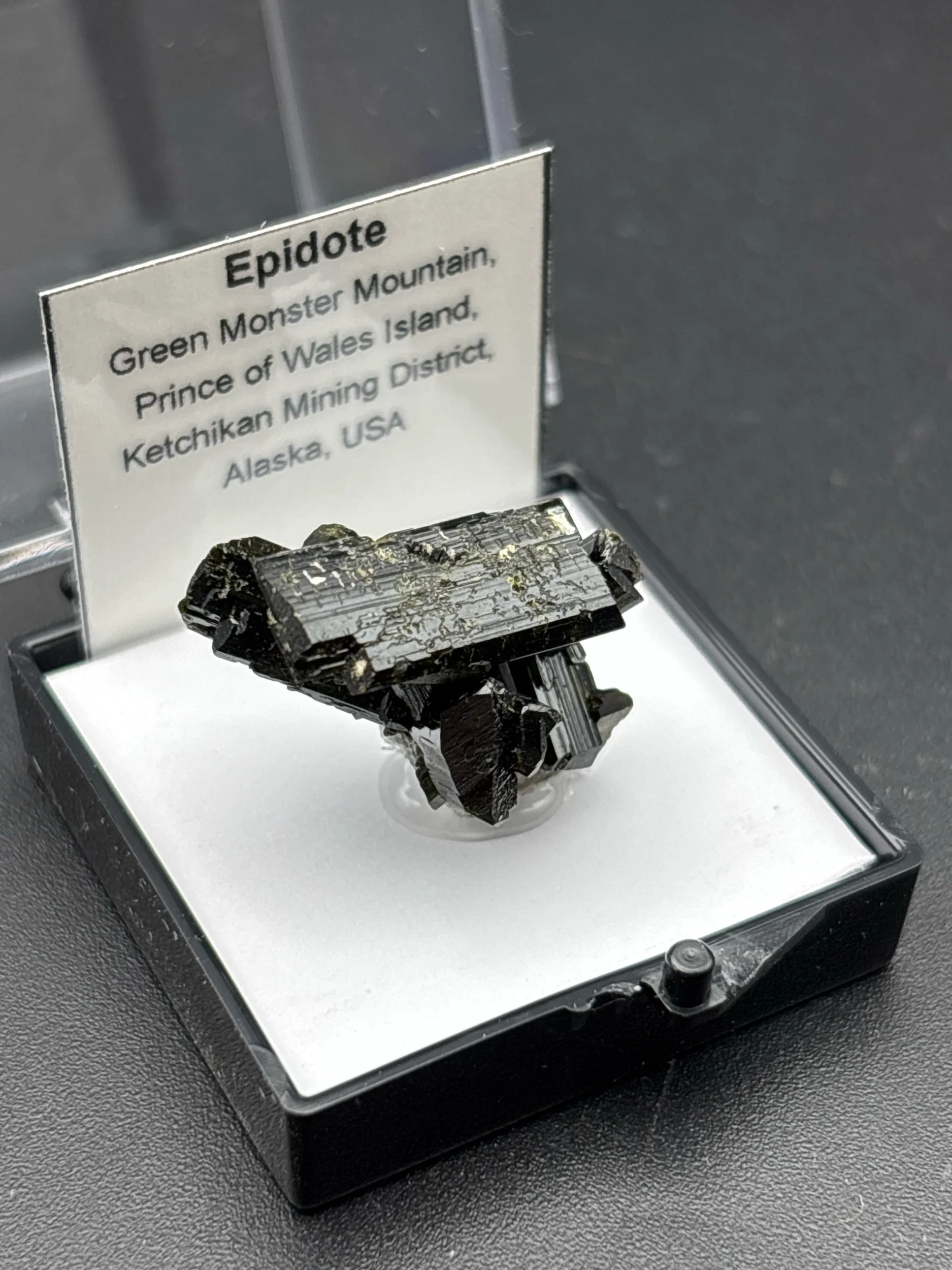
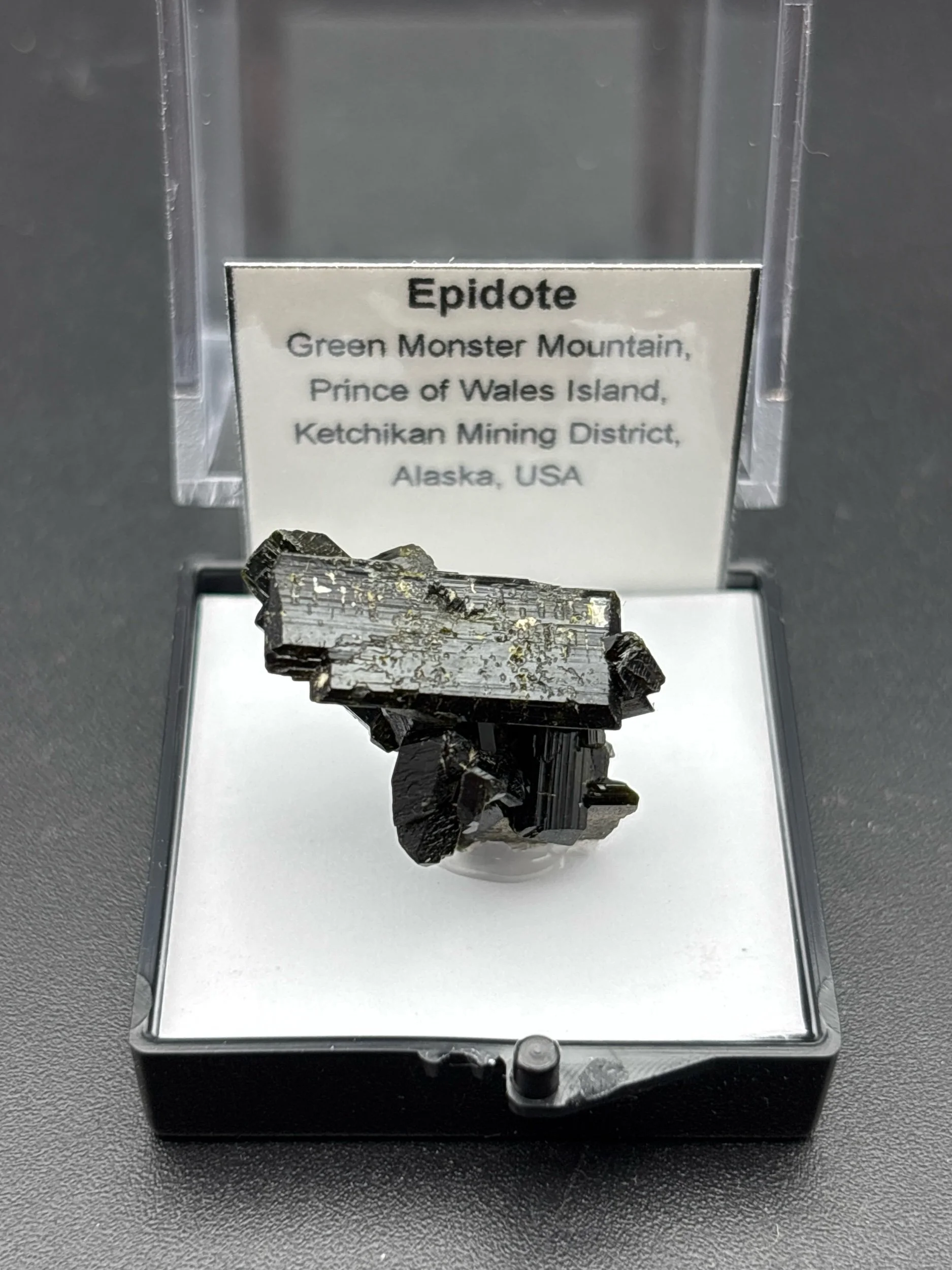
Epidote - Green Monster Mountain, Prince of Wales Island, Ketchikan Mining District, Prince of Wales-Hyder Census Area, Alaska, USA
Specimen shown in standard perky box
(Base - 1.25 × 1.25in - 31.5mm x 31.5mm)
Thank you so much for viewing! Please message for any further information
ORDERS SHIP MONDAYS
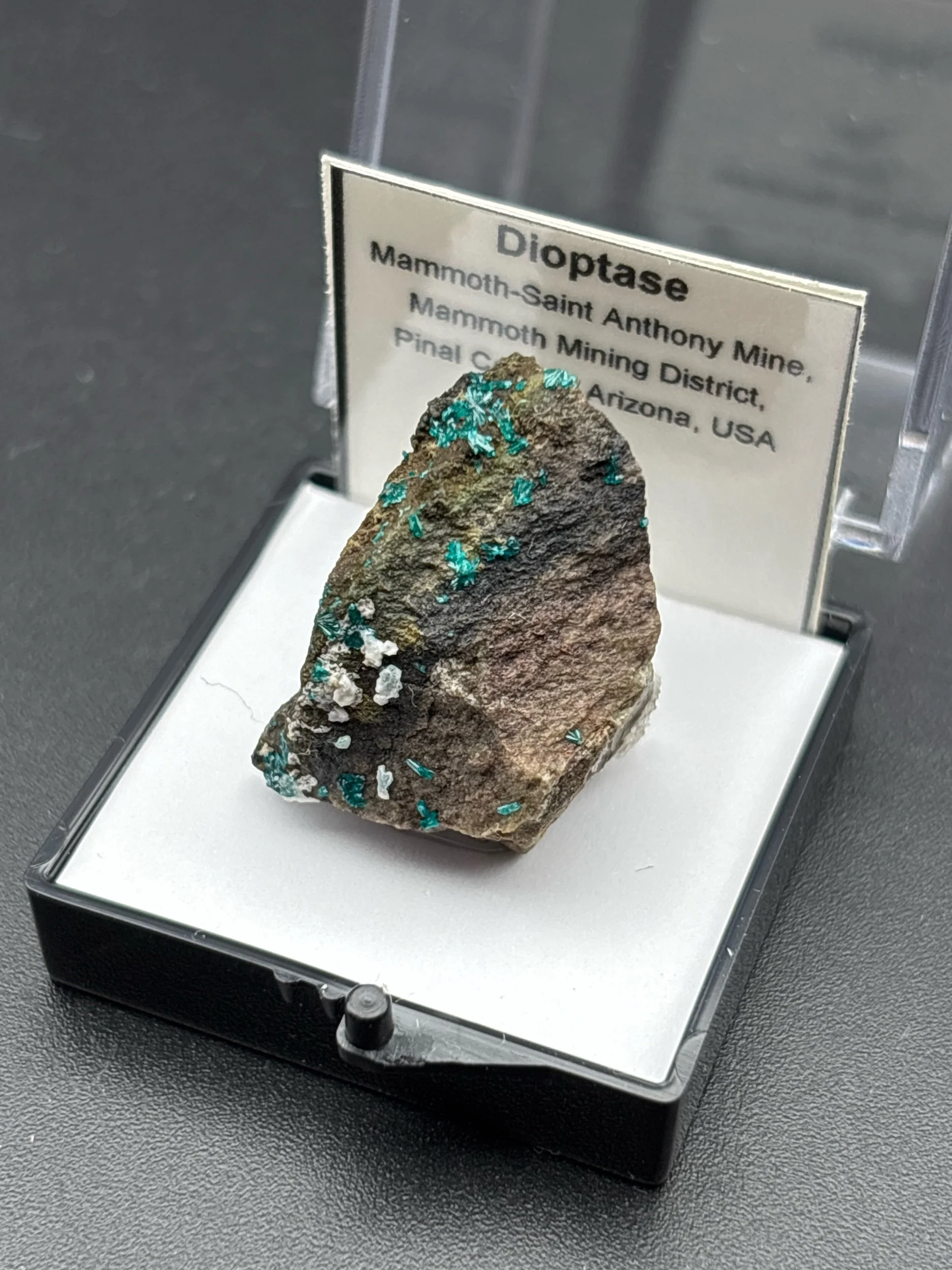
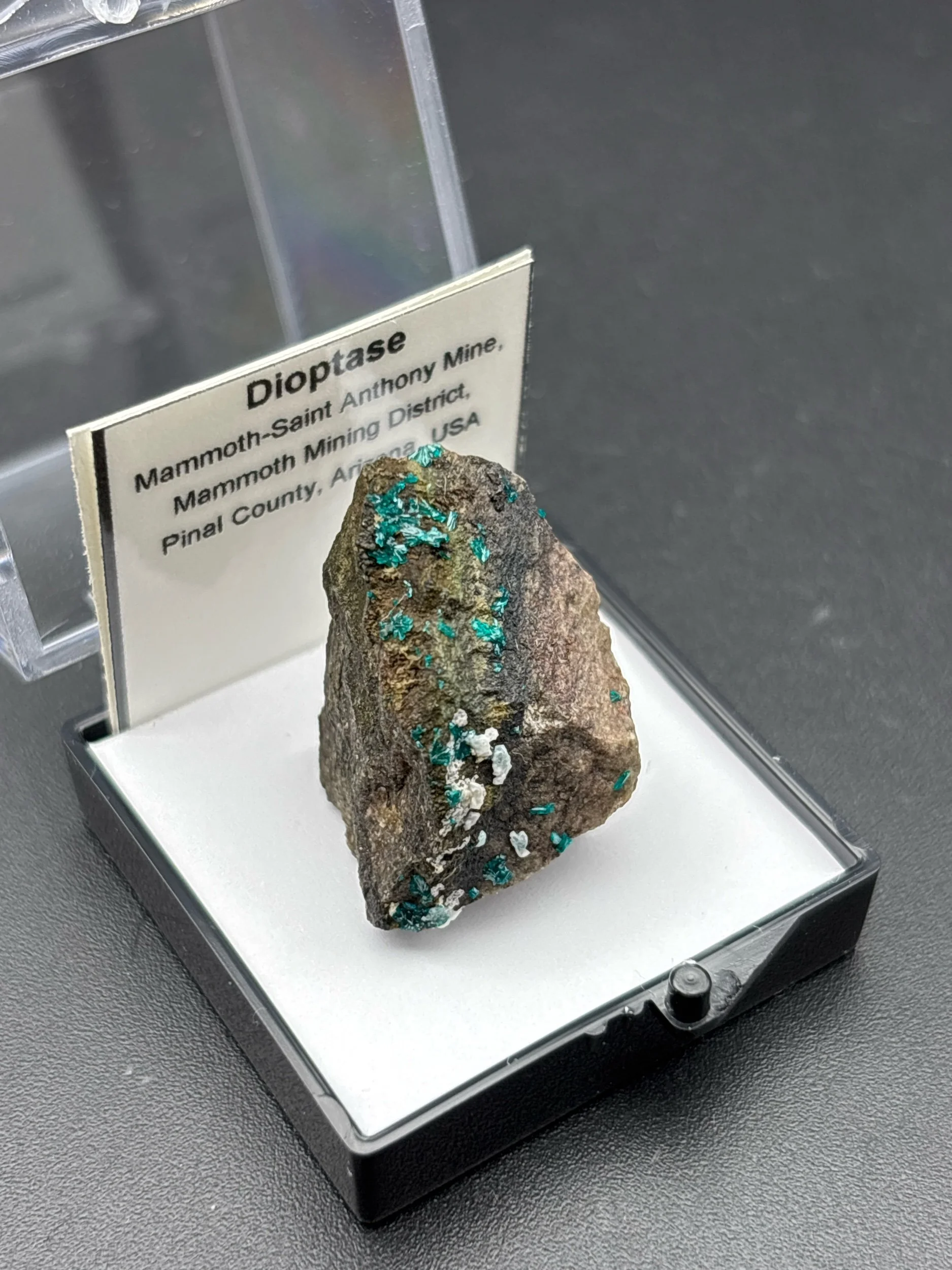
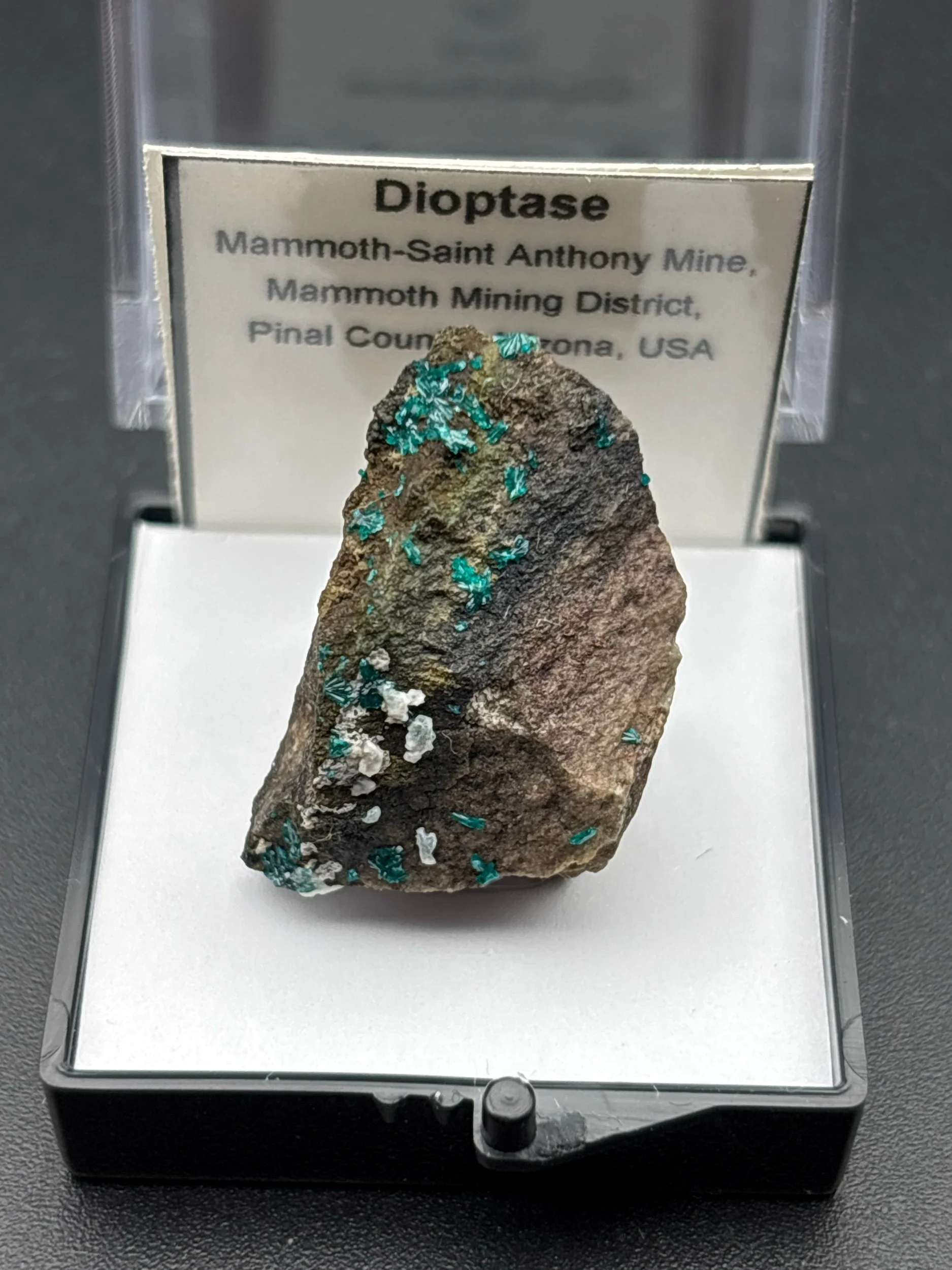
Dioptase - Mammoth-Saint Anthony Mine, St. Anthony deposit, Tiger, Mammoth Mining District, Pinal County, Arizona, USA
Specimen shown in standard perky box
(Base - 1.25 × 1.25in - 31.5mm x 31.5mm)
Thank you so much for viewing! Please message for any further information
ORDERS SHIP MONDAYS
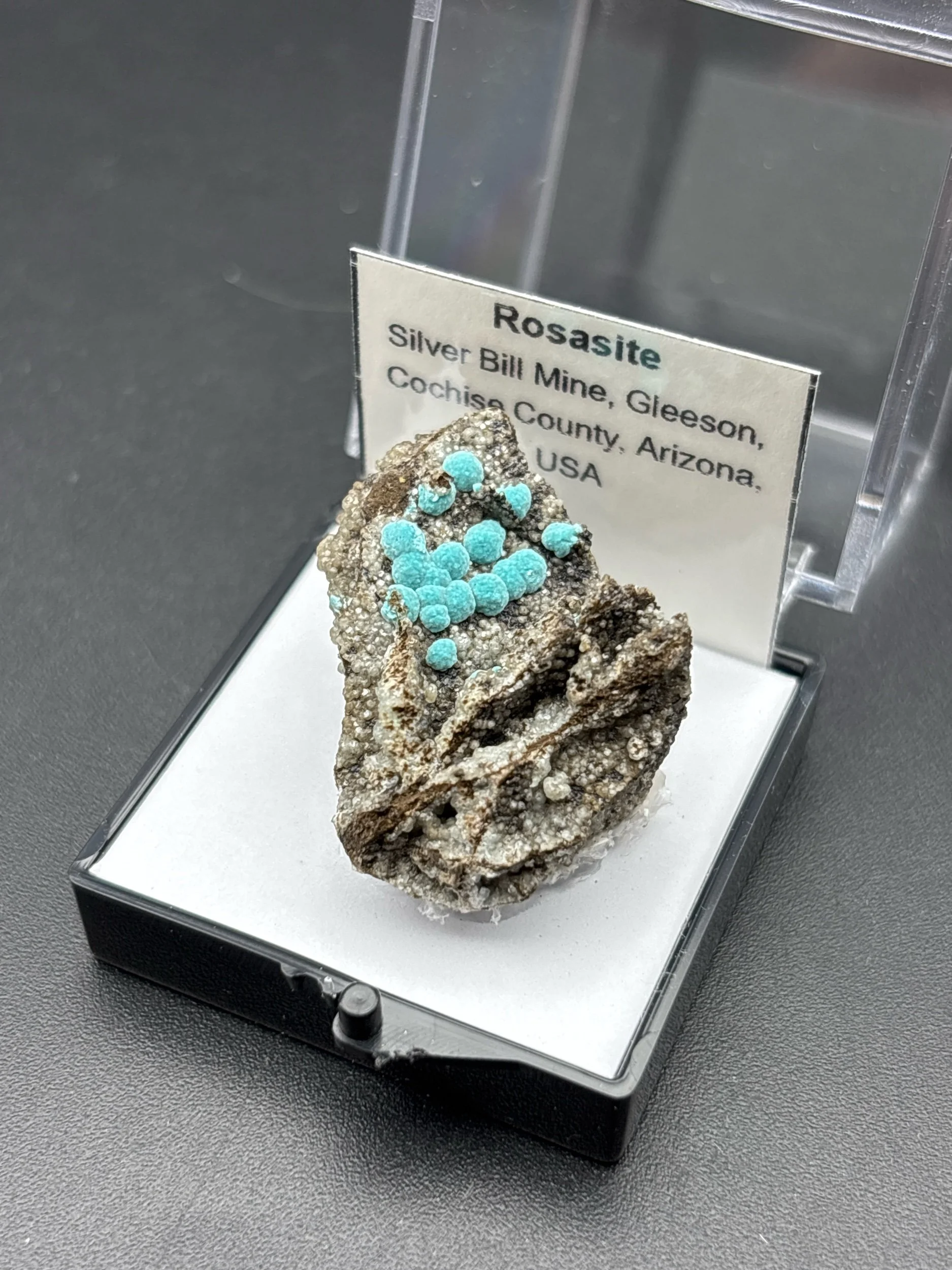
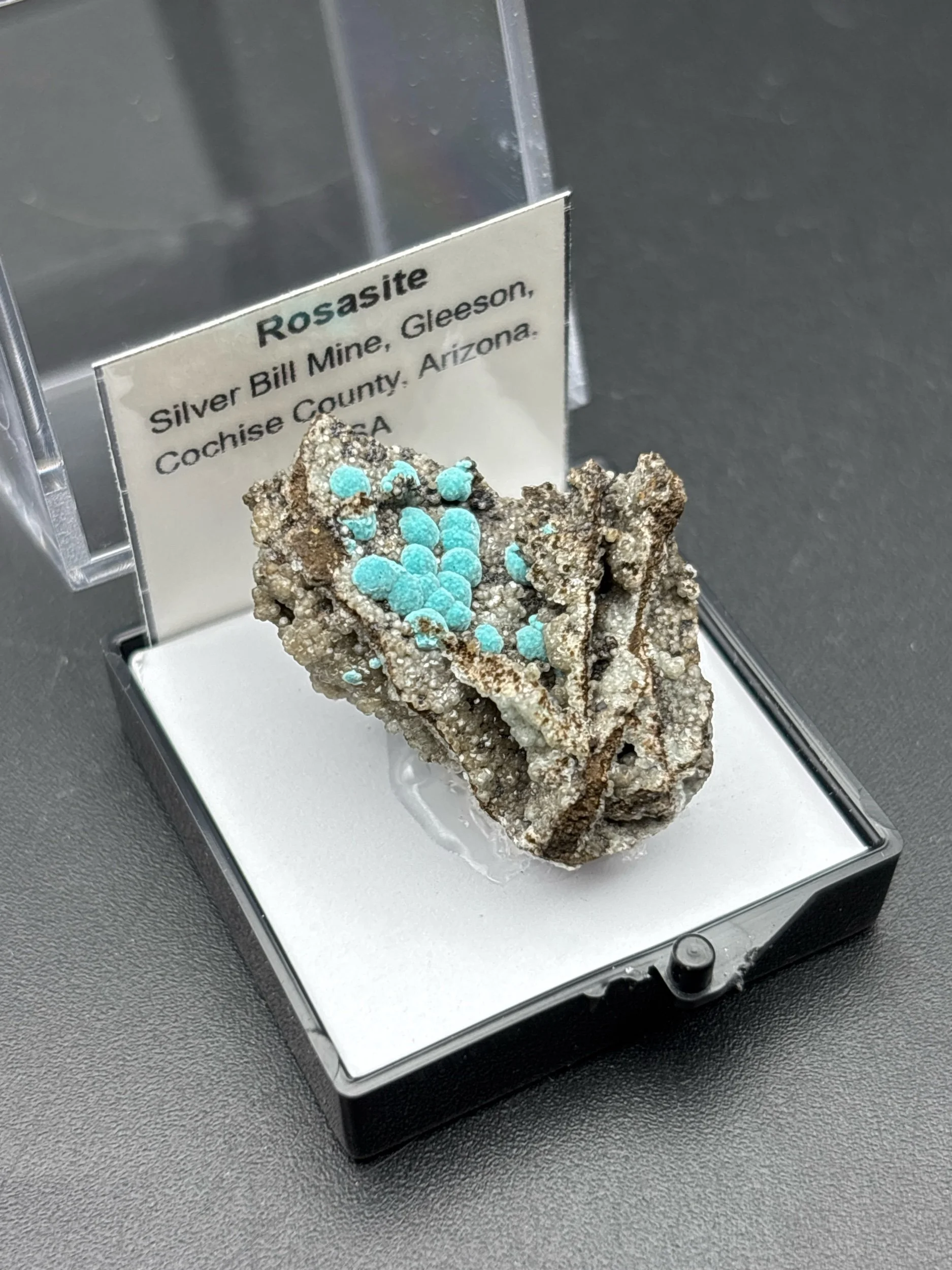
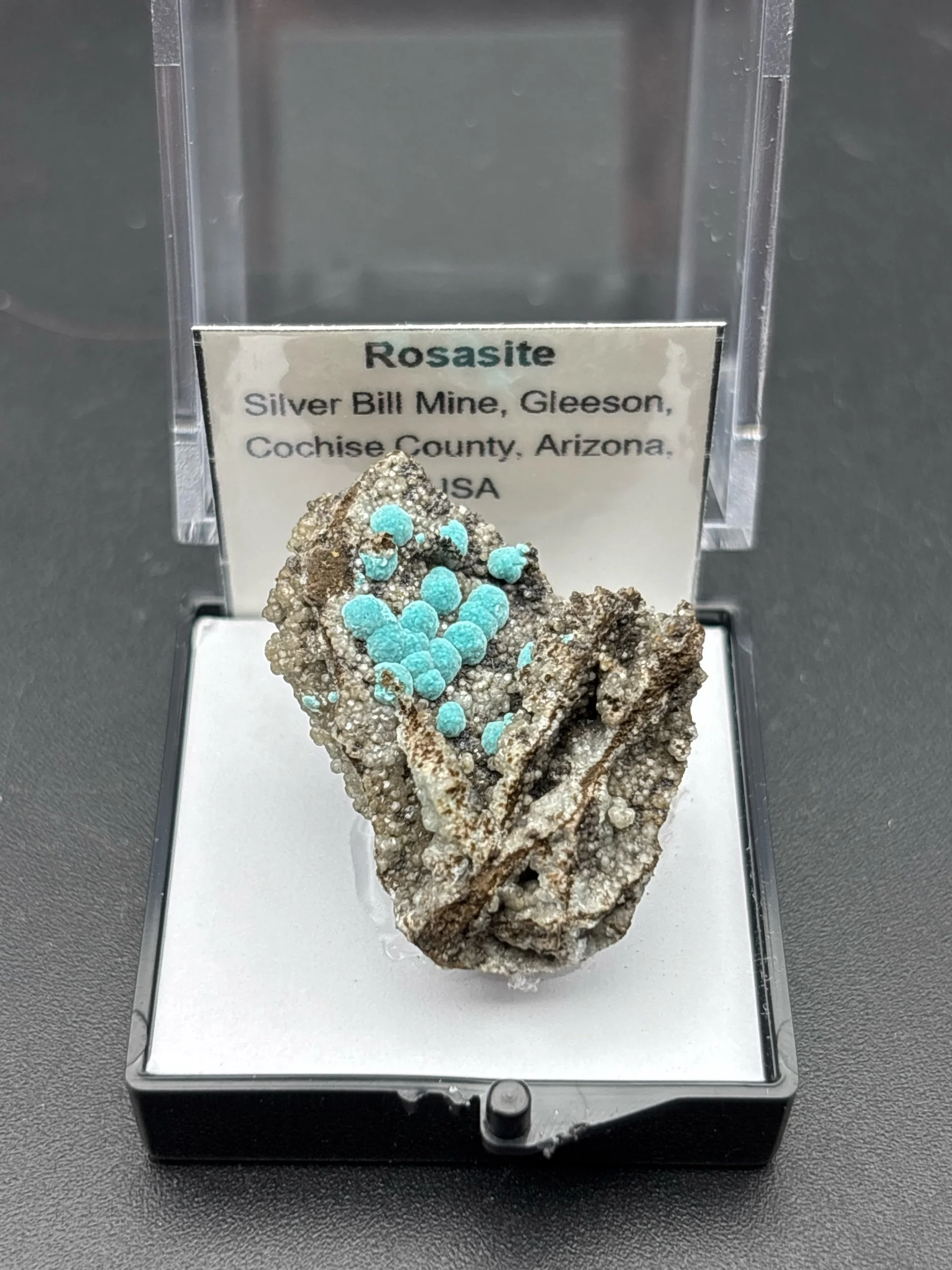
Rosasite - Silver Bill Mine, Costello Mine group, Gleeson, Turquoise Mining District (Courtland-Gleeson Mining District), Cochise County, Arizona, USA
Specimen shown in standard perky box
(Base - 1.25 × 1.25in - 31.5mm x 31.5mm)
Thank you so much for viewing! Please message for any further information
ORDERS SHIP MONDAYS
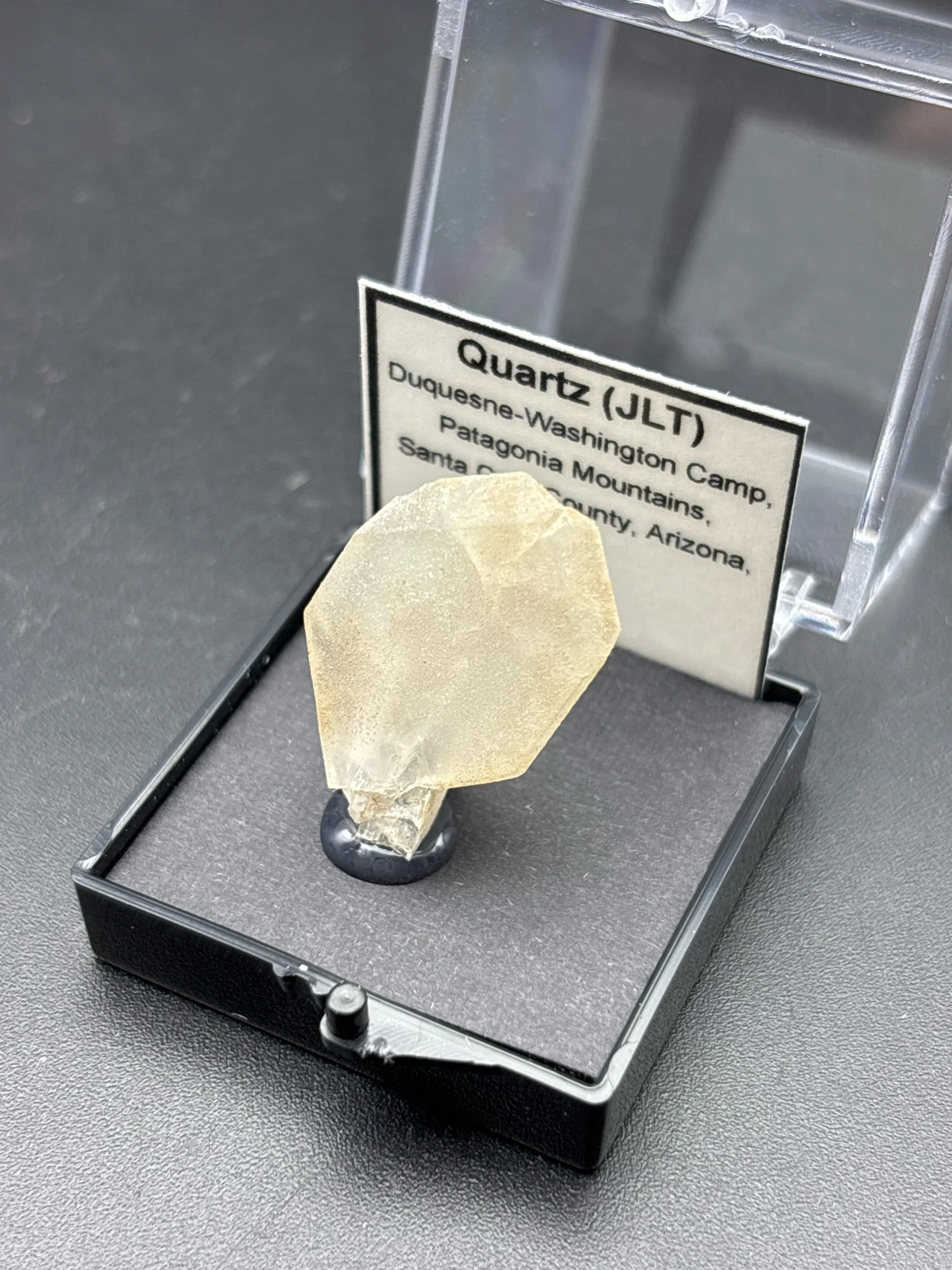
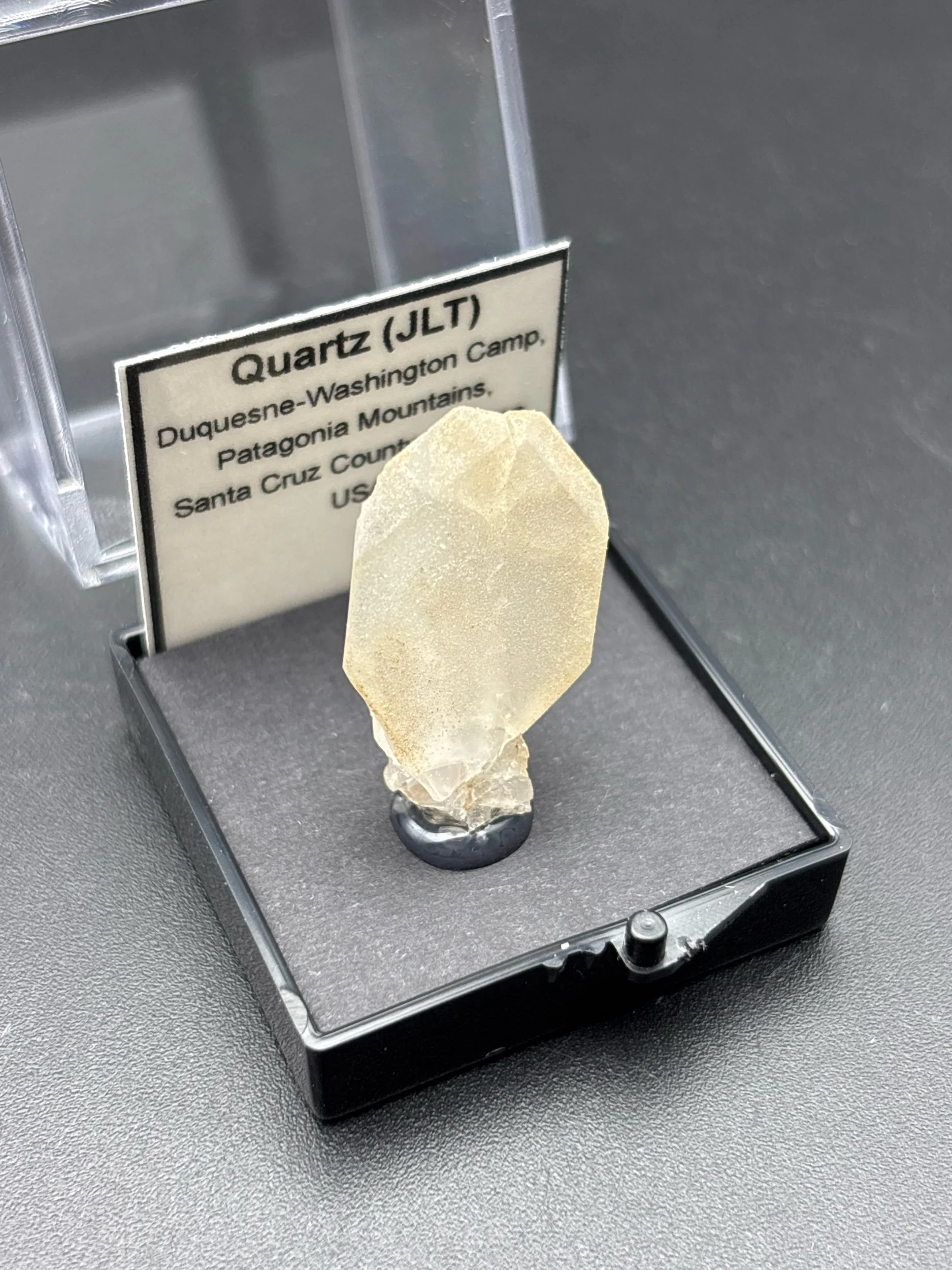
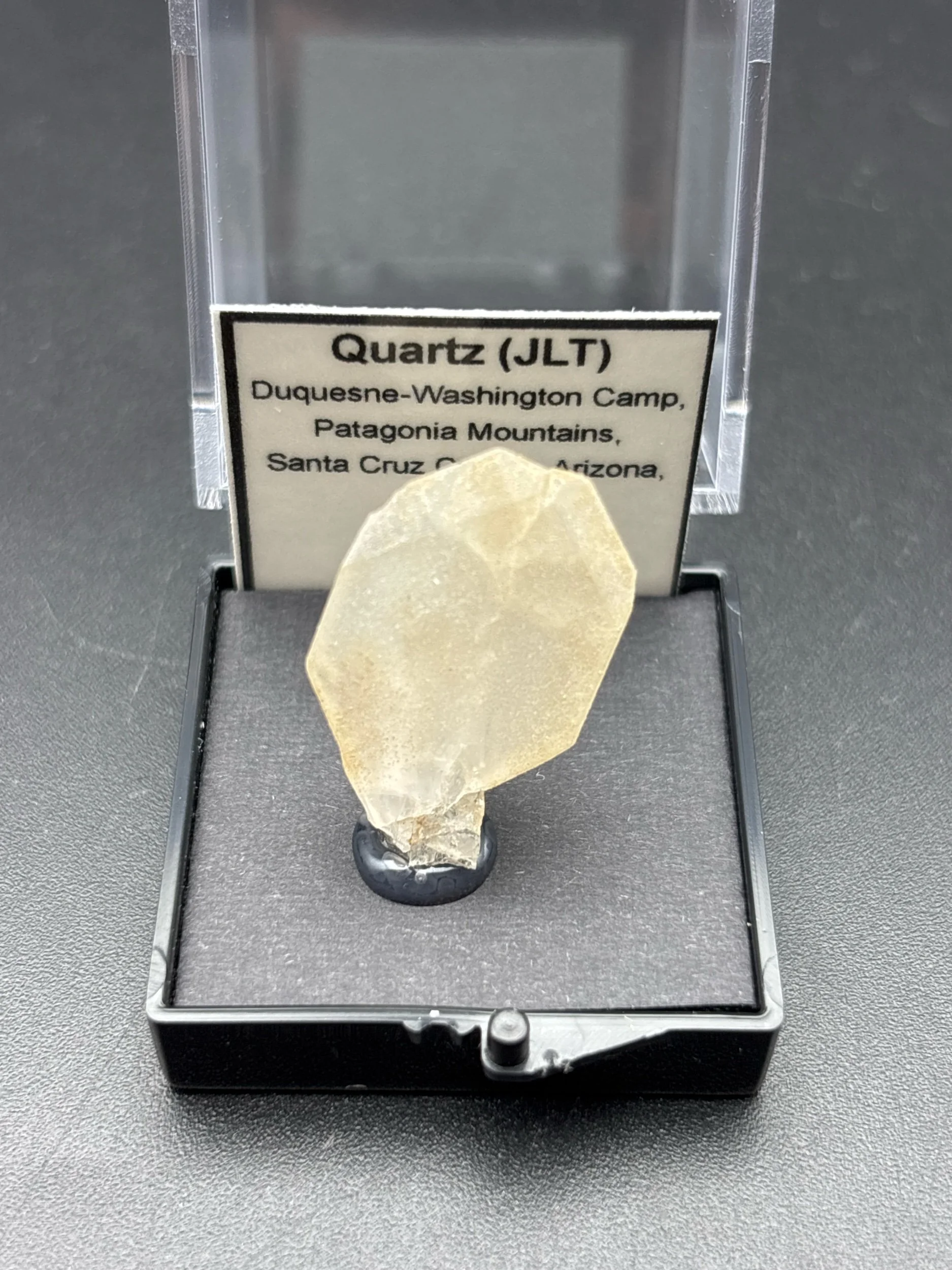
Quartz (Japan Law Twin) - Duquesne, Duquesne-Washington Camp, Patagonia Mining District, Patagonia Mountains, Santa Cruz County, Arizona, USA
Specimen shown in standard perky box
(Base - 1.25 × 1.25in - 31.5mm x 31.5mm)
Thank you so much for viewing! Please message for any further information
ORDERS SHIP MONDAYS
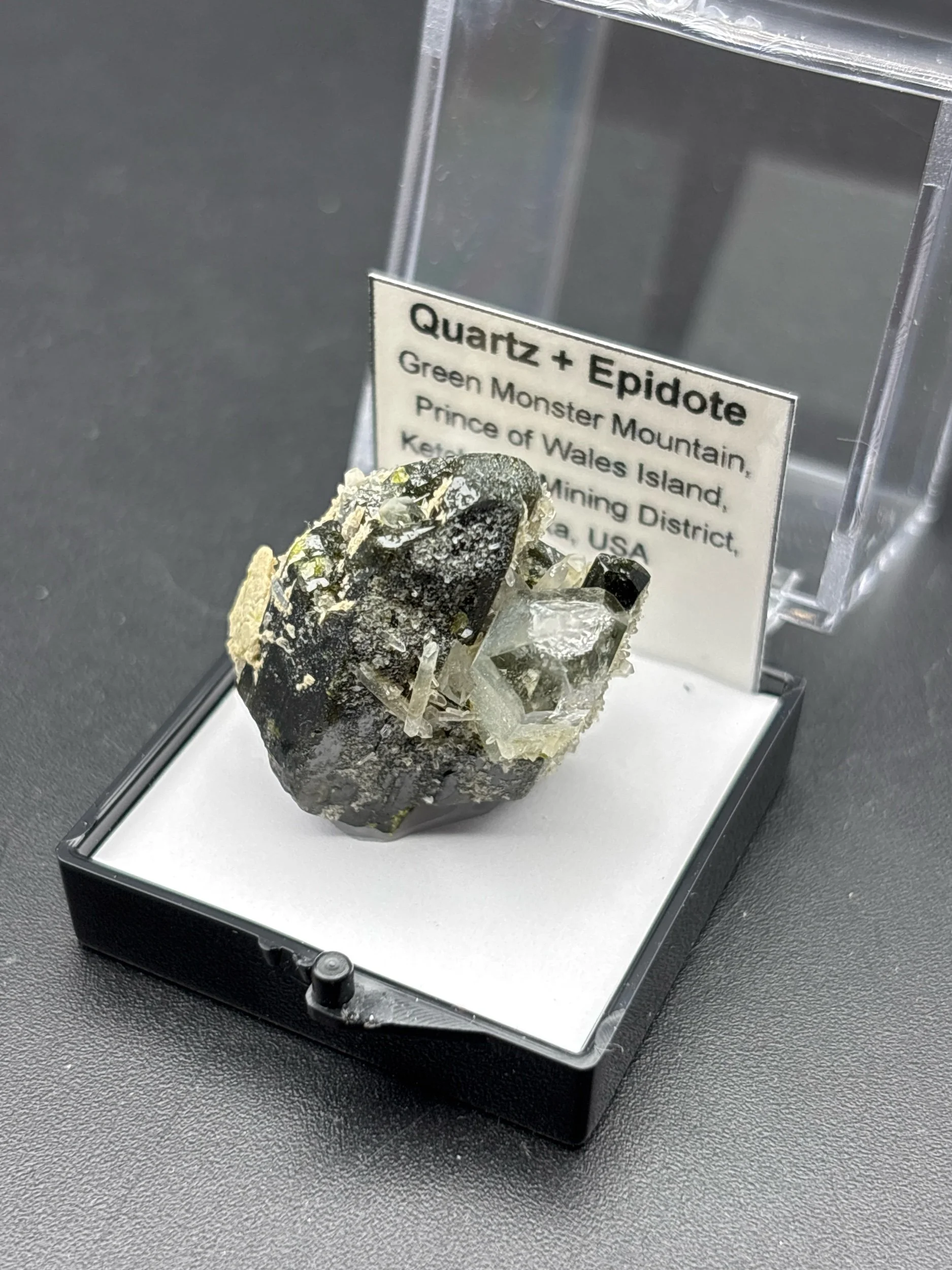
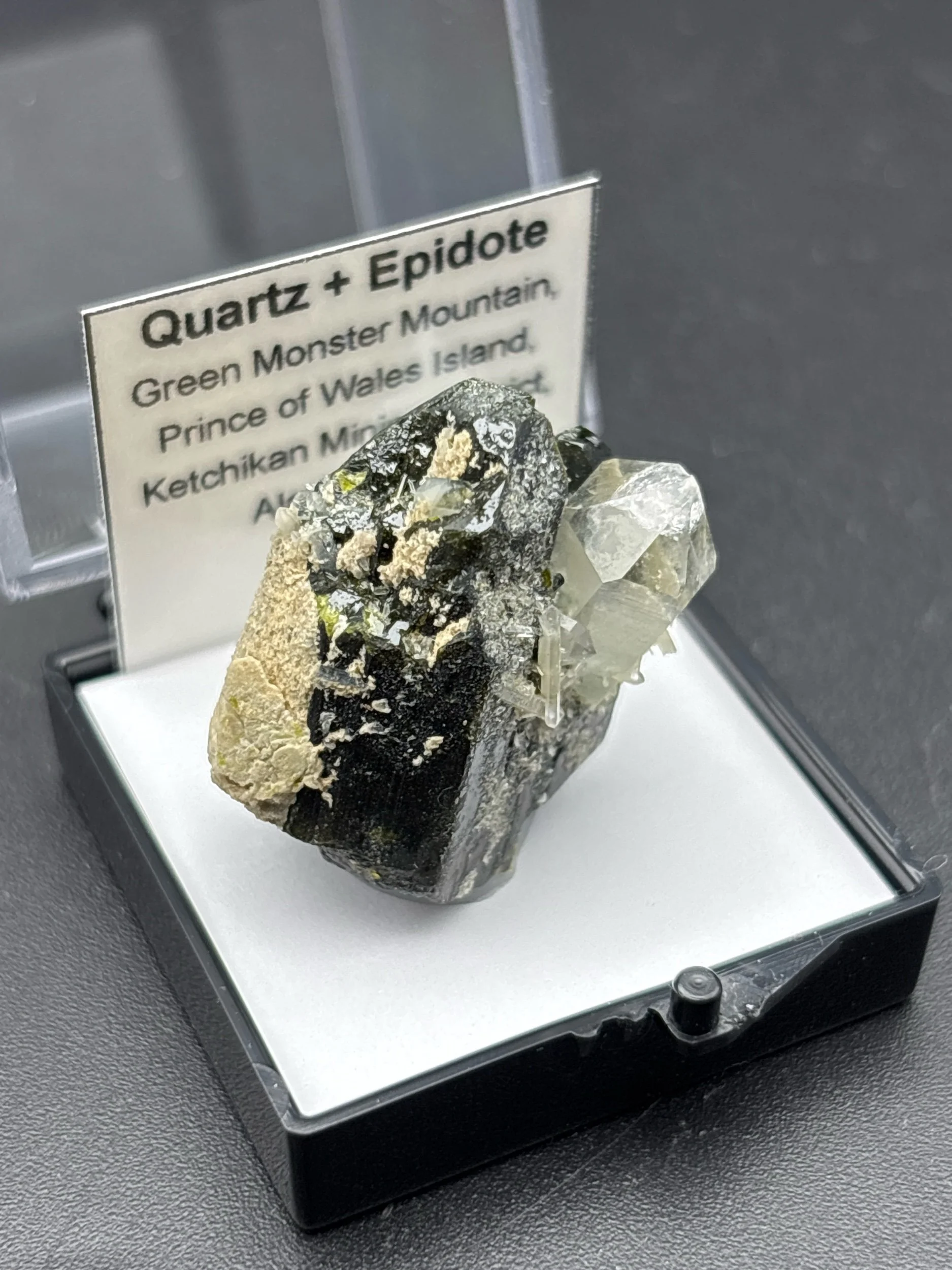
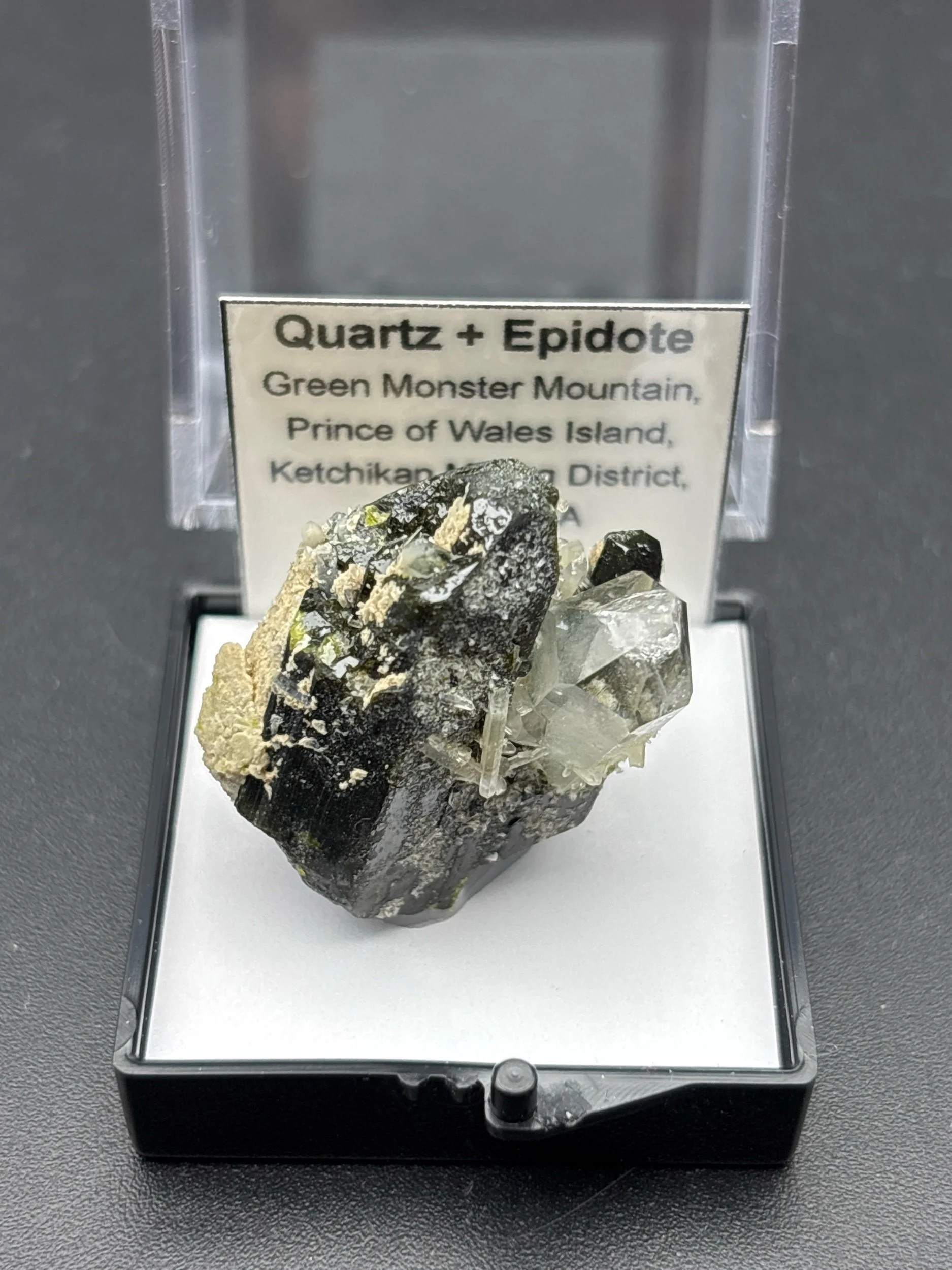
Quartz + Epidote - Green Monster Mountain, Prince of Wales Island, Ketchikan Mining District, Prince of Wales-Hyder Census Area, Alaska, USA
Specimen shown in standard perky box
(Base - 1.25 × 1.25in - 31.5mm x 31.5mm)
Thank you so much for viewing! Please message for any further information
ORDERS SHIP MONDAYS
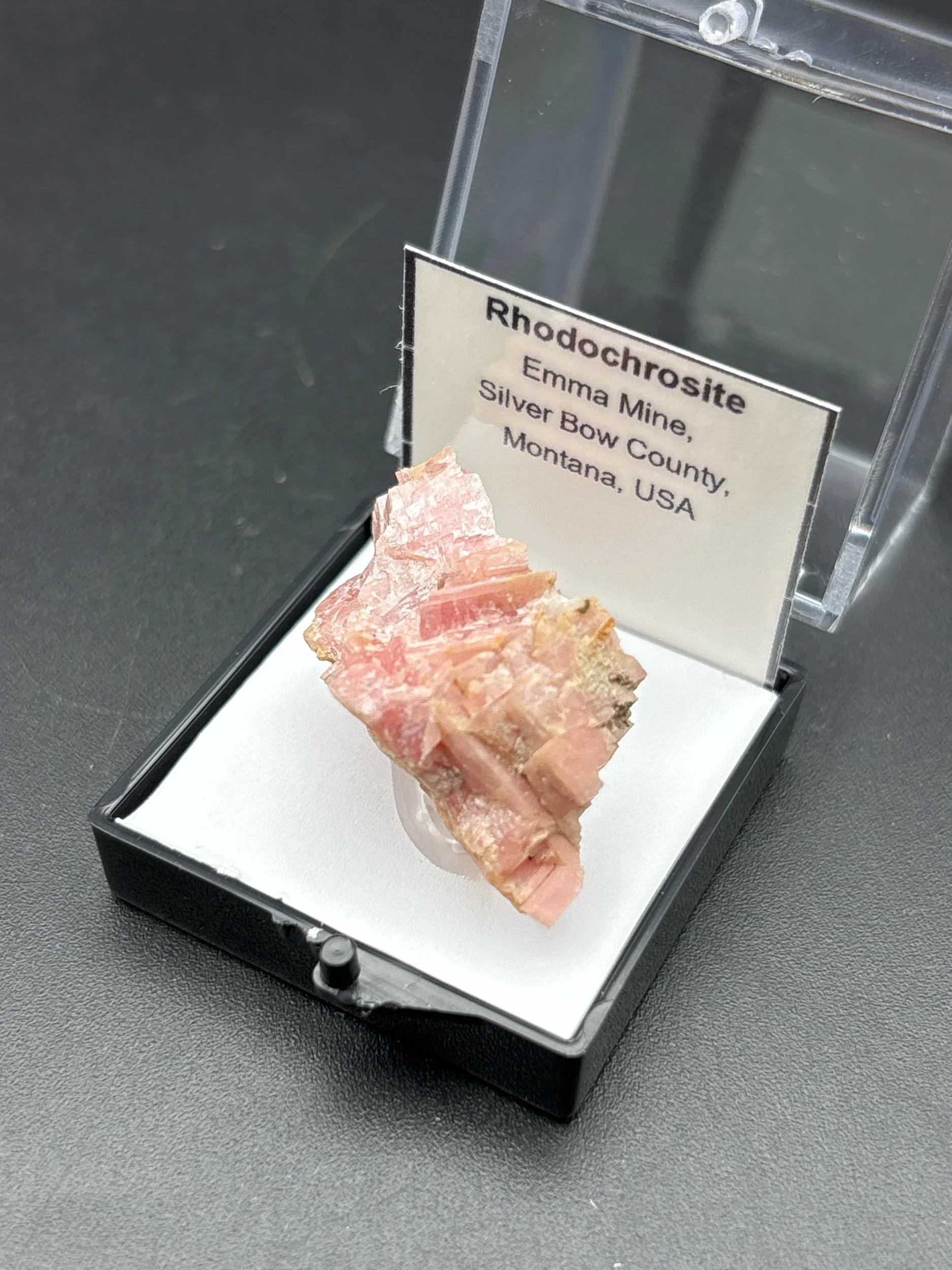
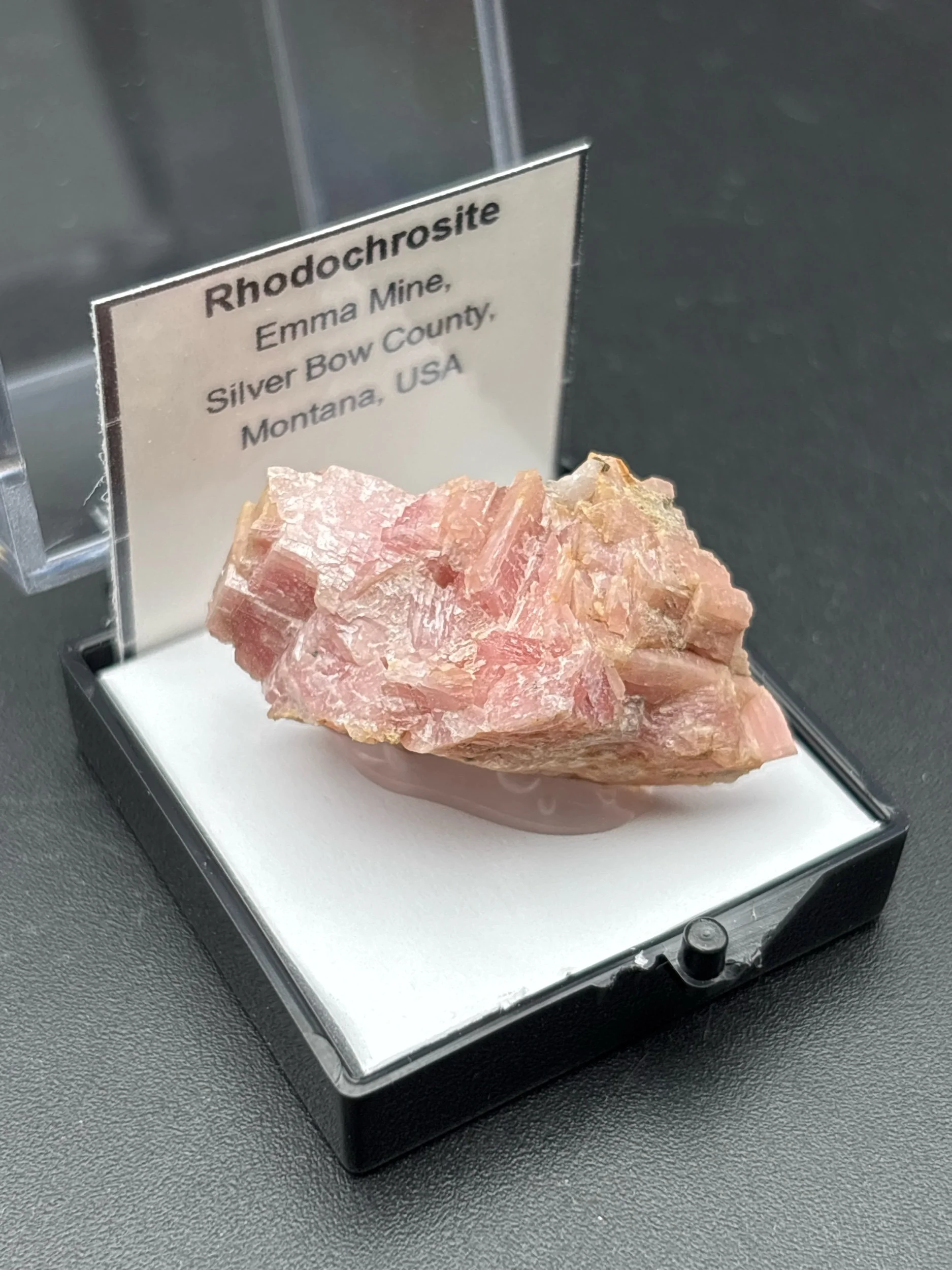
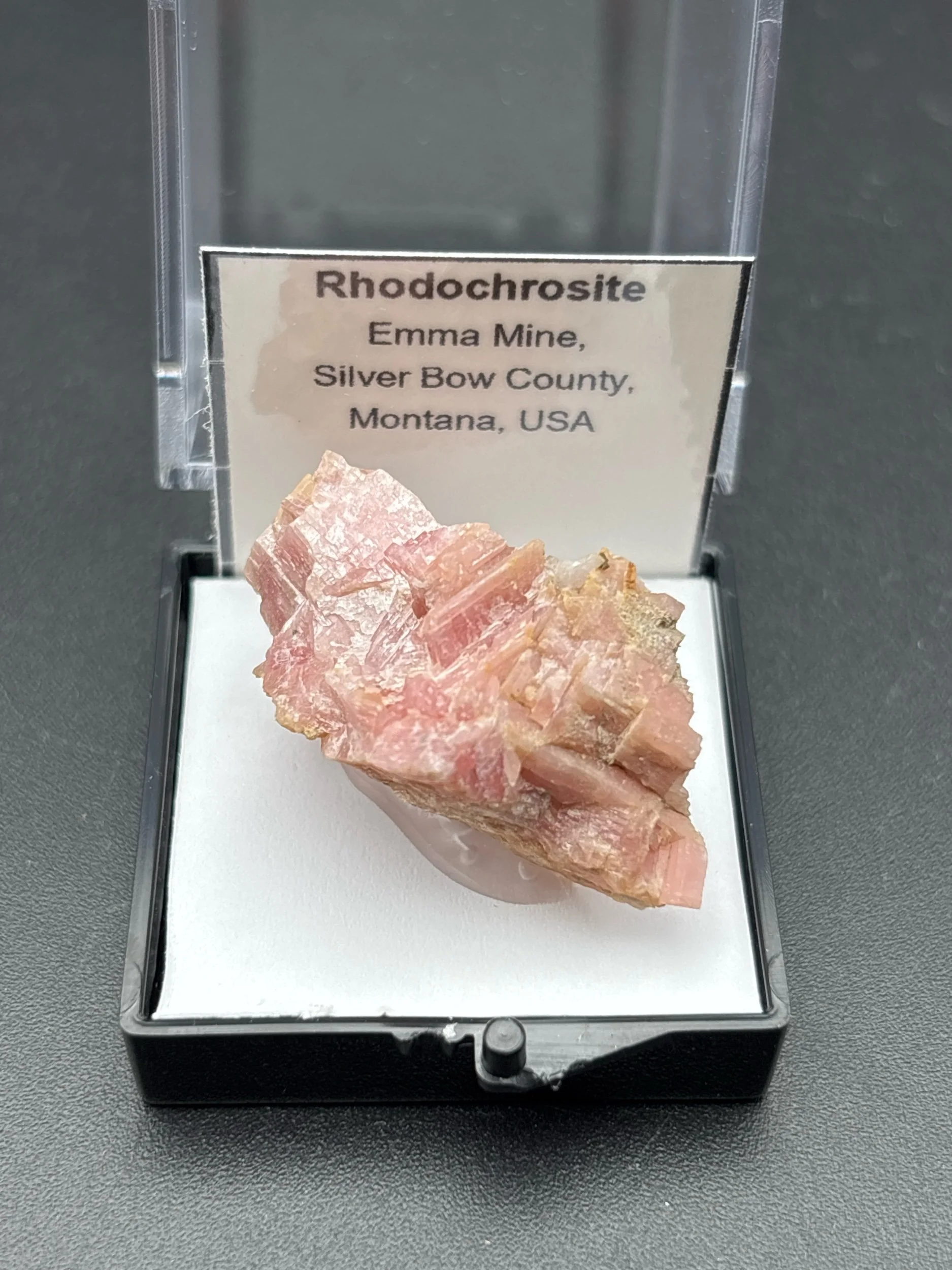
Rhodochrosite - Emma Mine, Silver Bow County, Butte, Montana, USA
Specimen shown in standard perky box
(Base - 1.25 × 1.25in - 31.5mm x 31.5mm)
Thank you so much for viewing! Please message for any further information
ORDERS SHIP MONDAYS
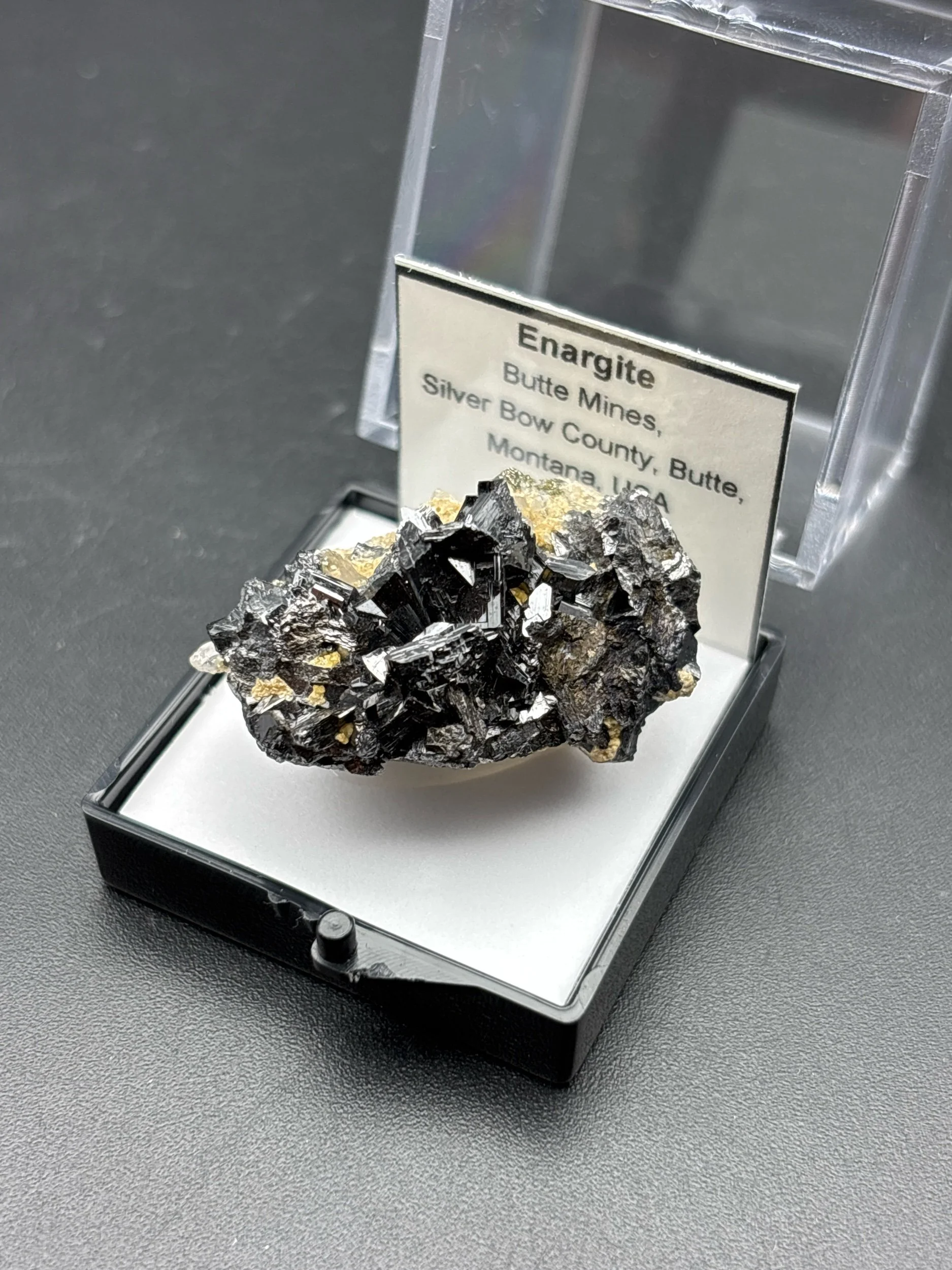
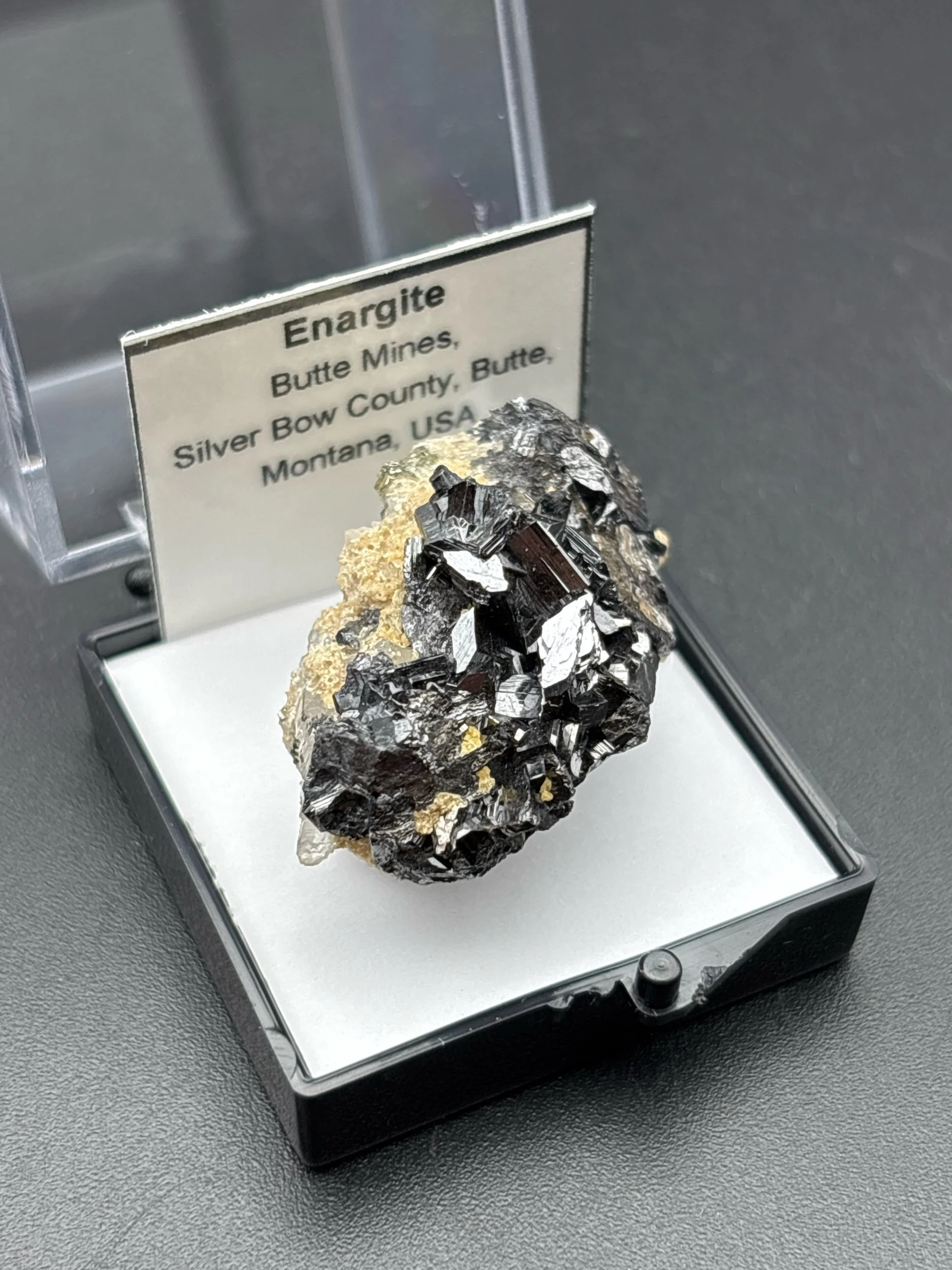
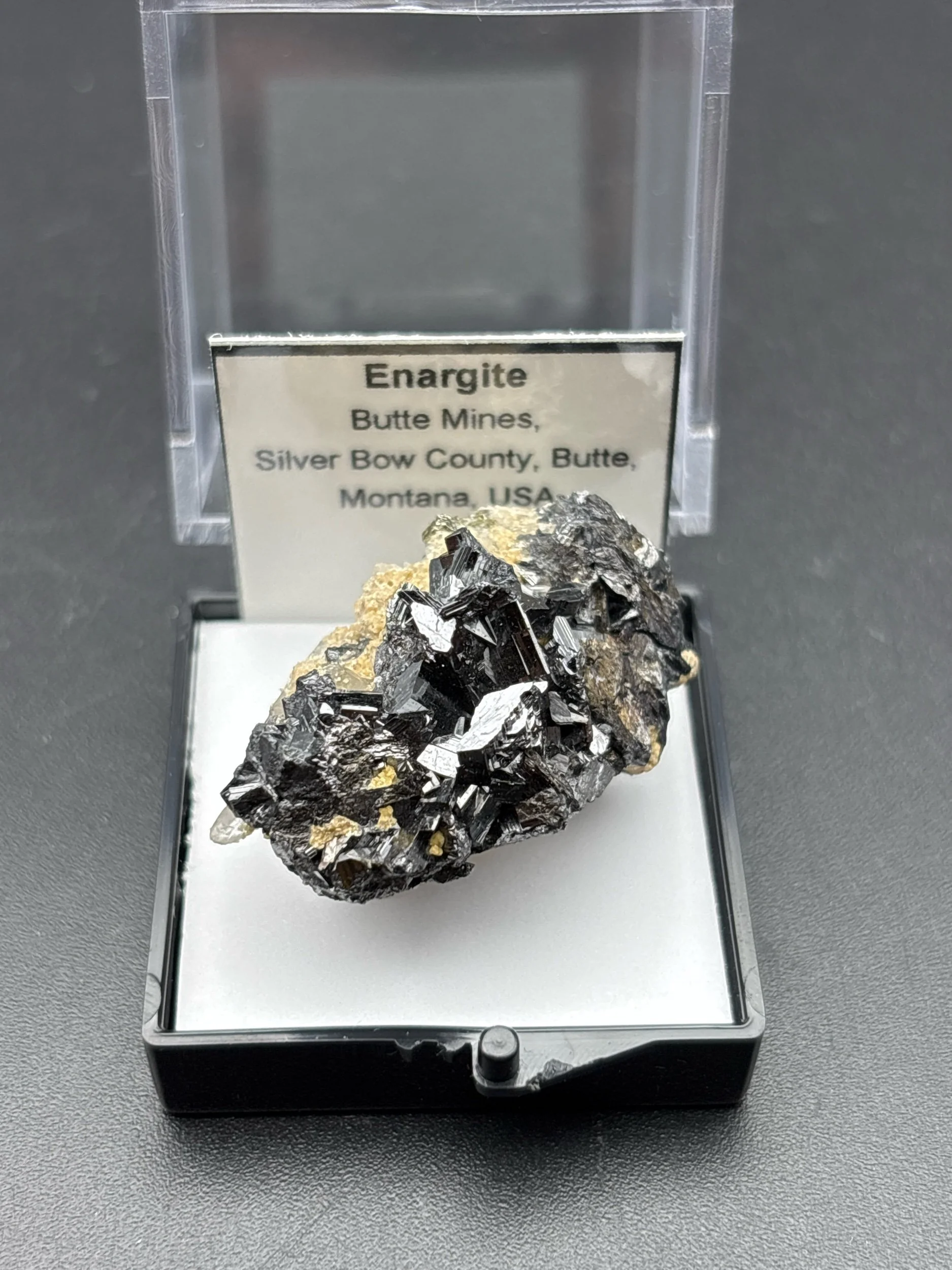
Enargite - Butte Mines, Silver Bow County, Butte, Montana, USA
Specimen shown in standard perky box
(Base - 1.25 × 1.25in - 31.5mm x 31.5mm)
Thank you so much for viewing! Please message for any further information
ORDERS SHIP MONDAYS
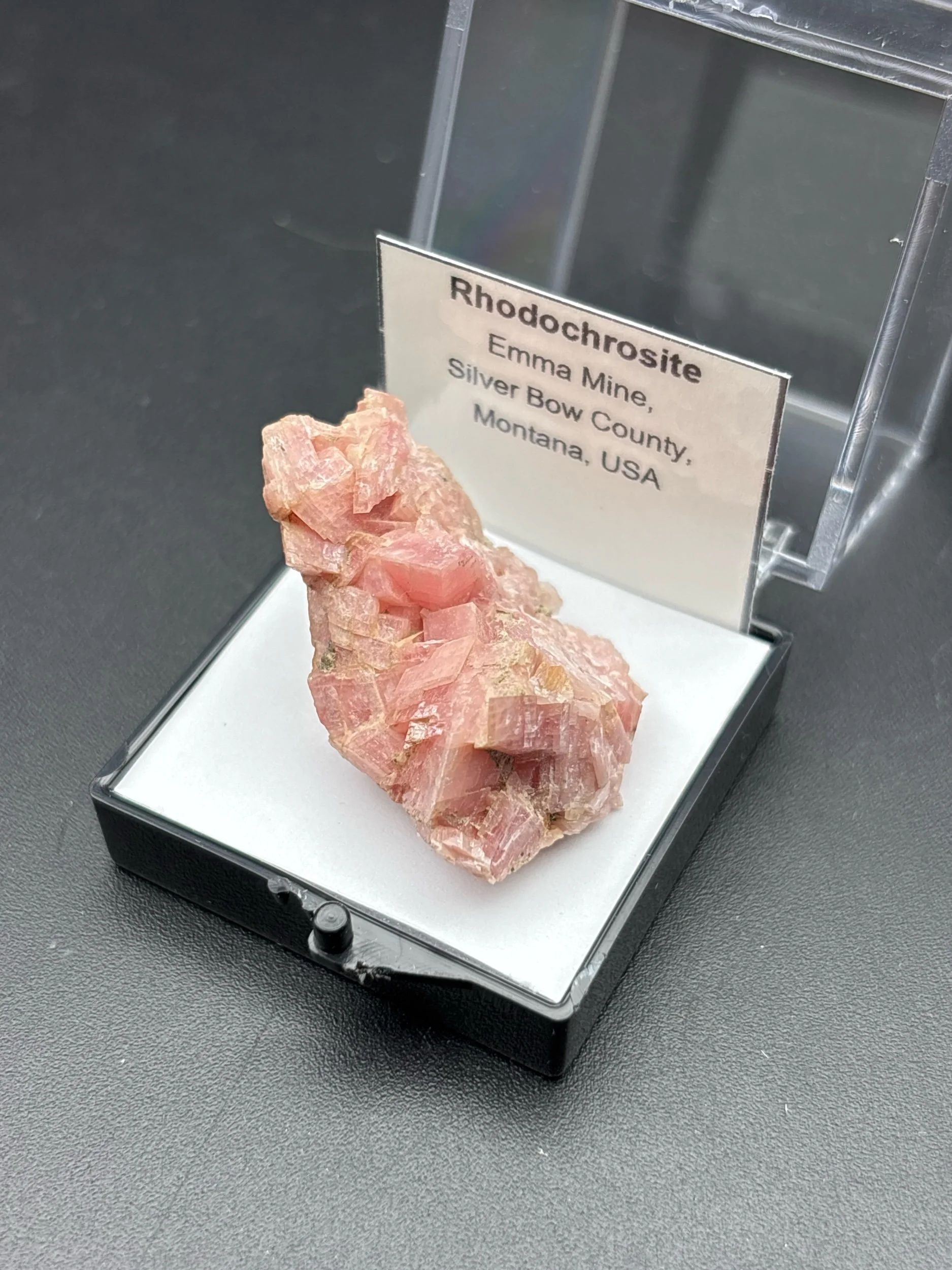
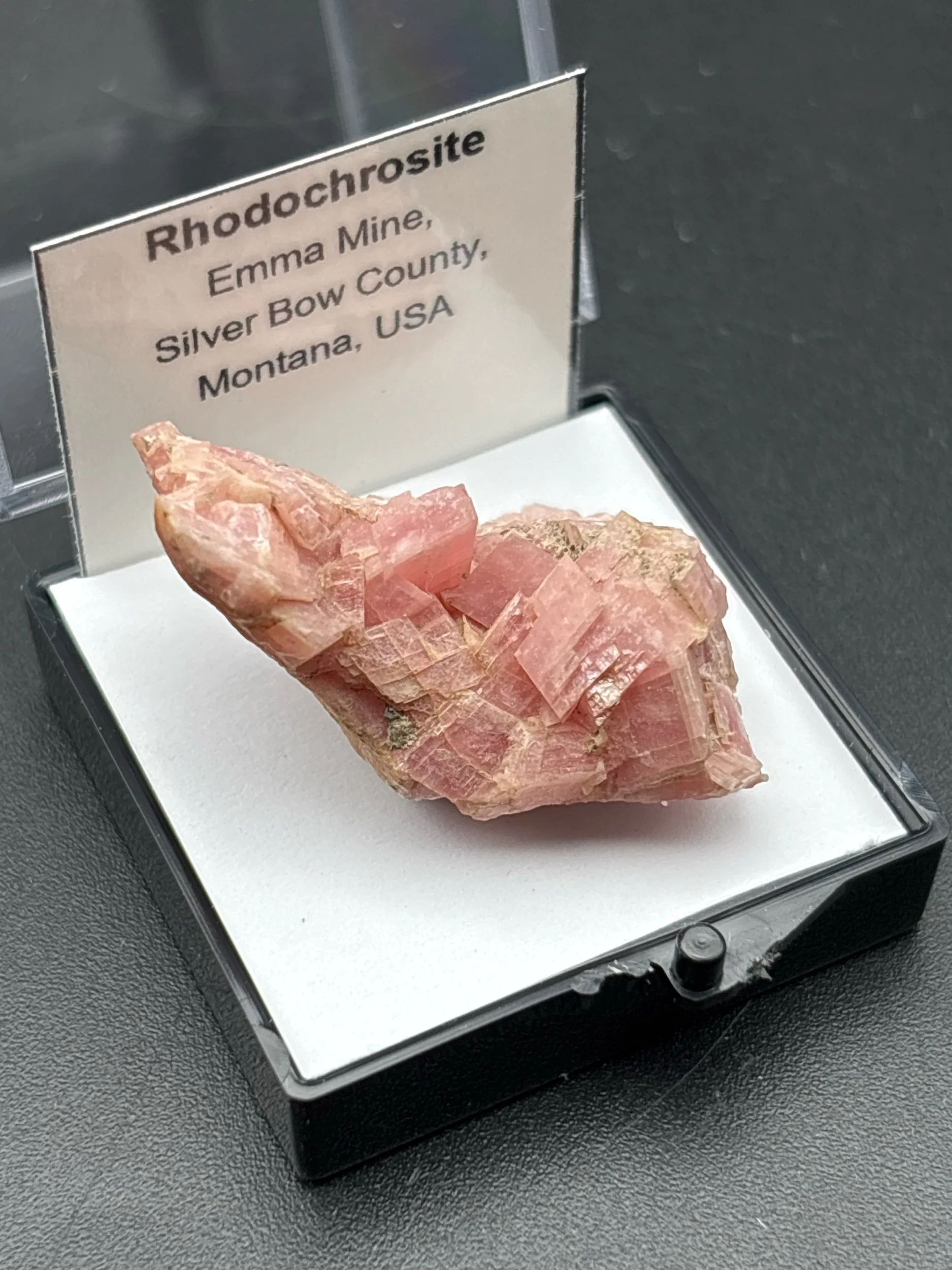
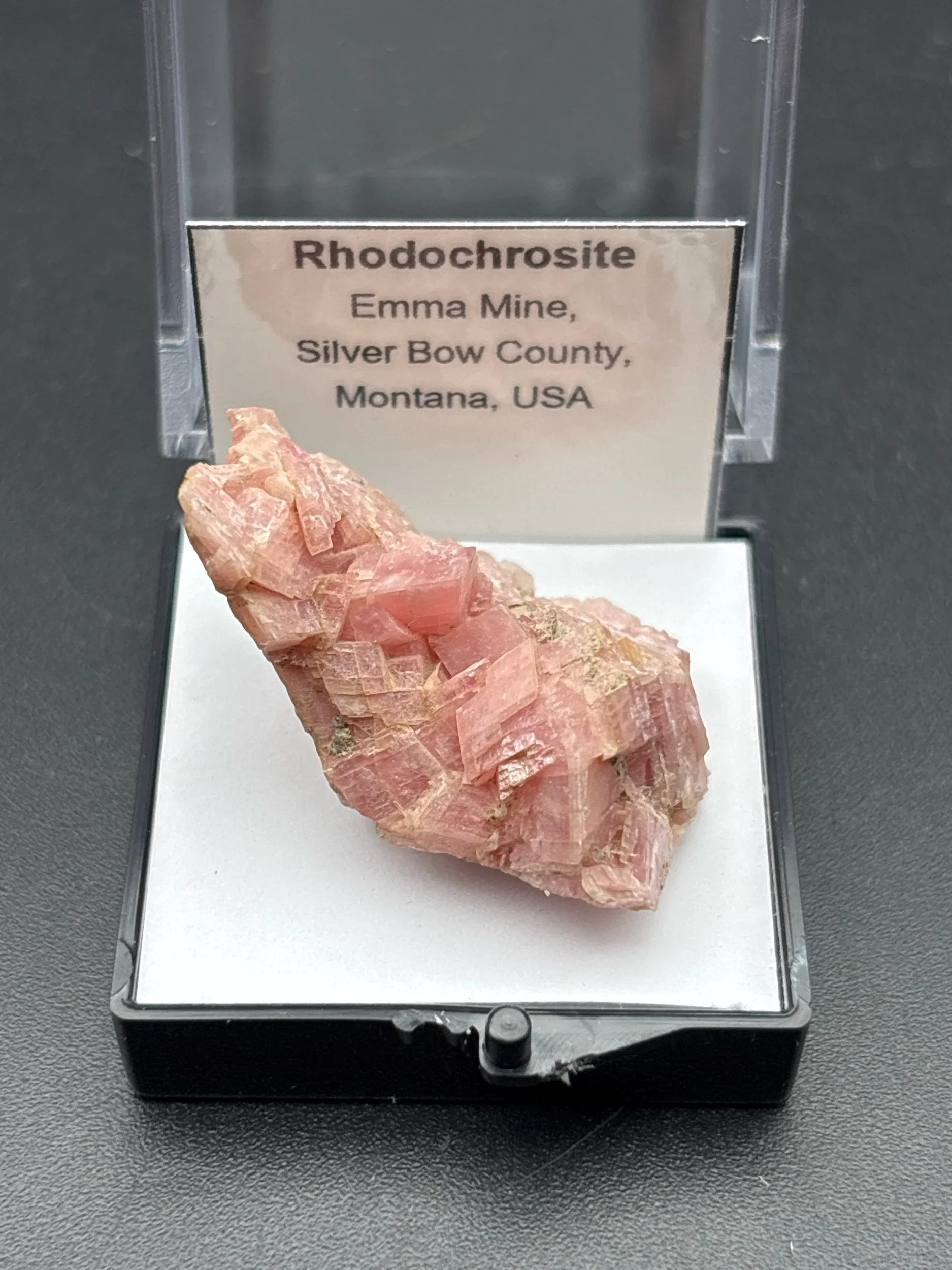
Rhodochrosite - Emma Mine, Silver Bow County, Butte, Montana, USA
Specimen shown in standard perky box
(Base - 1.25 × 1.25in - 31.5mm x 31.5mm)
Thank you so much for viewing! Please message for any further information
ORDERS SHIP MONDAYS
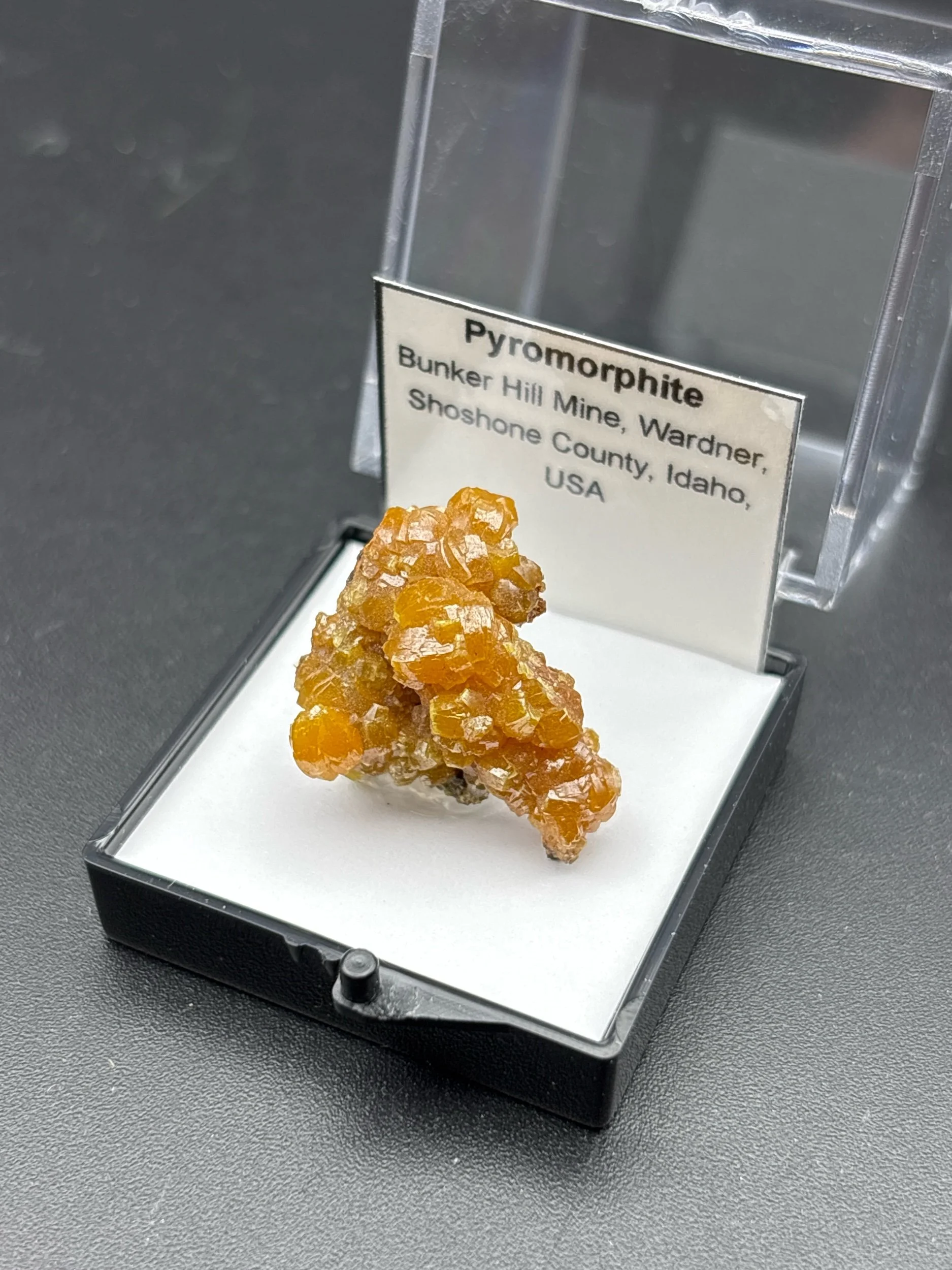
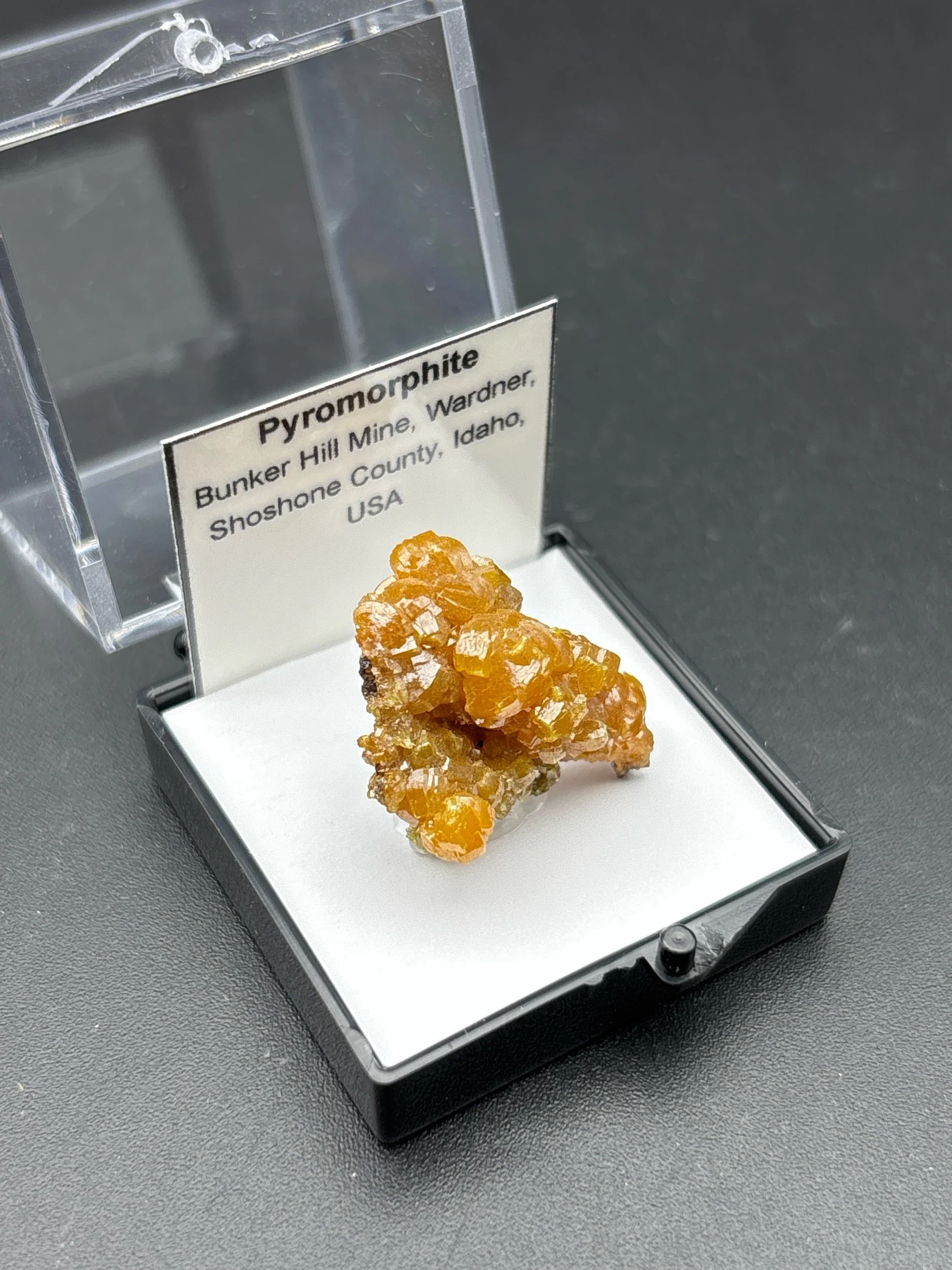
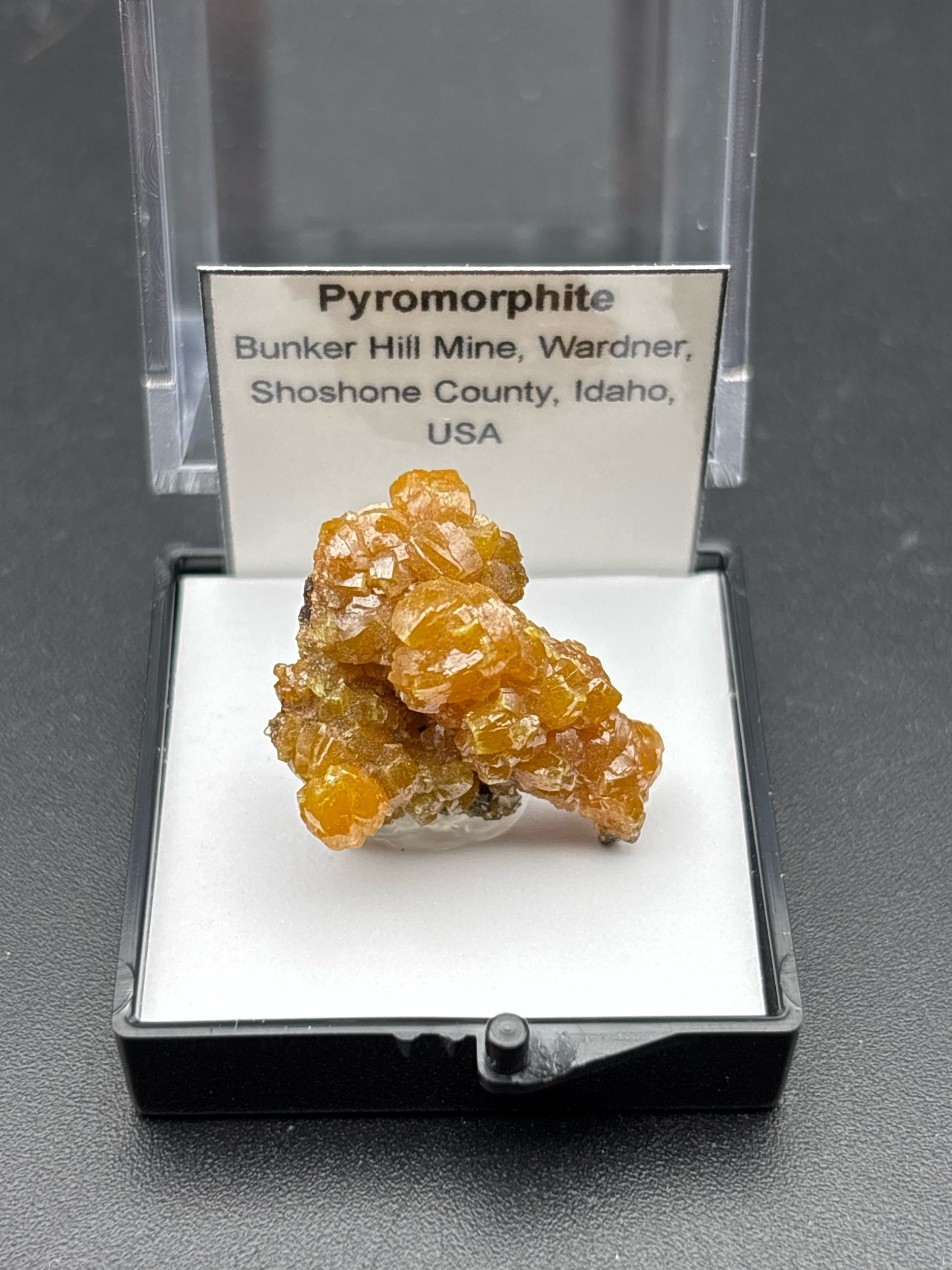
Pyromorphite - Bunker Hill Mine, Wardner, Shoshone County, Idaho, USA
Specimen shown in standard perky box
(Base - 1.25 × 1.25in - 31.5mm x 31.5mm)
Thank you so much for viewing! Please message for any further information
ORDERS SHIP MONDAYS
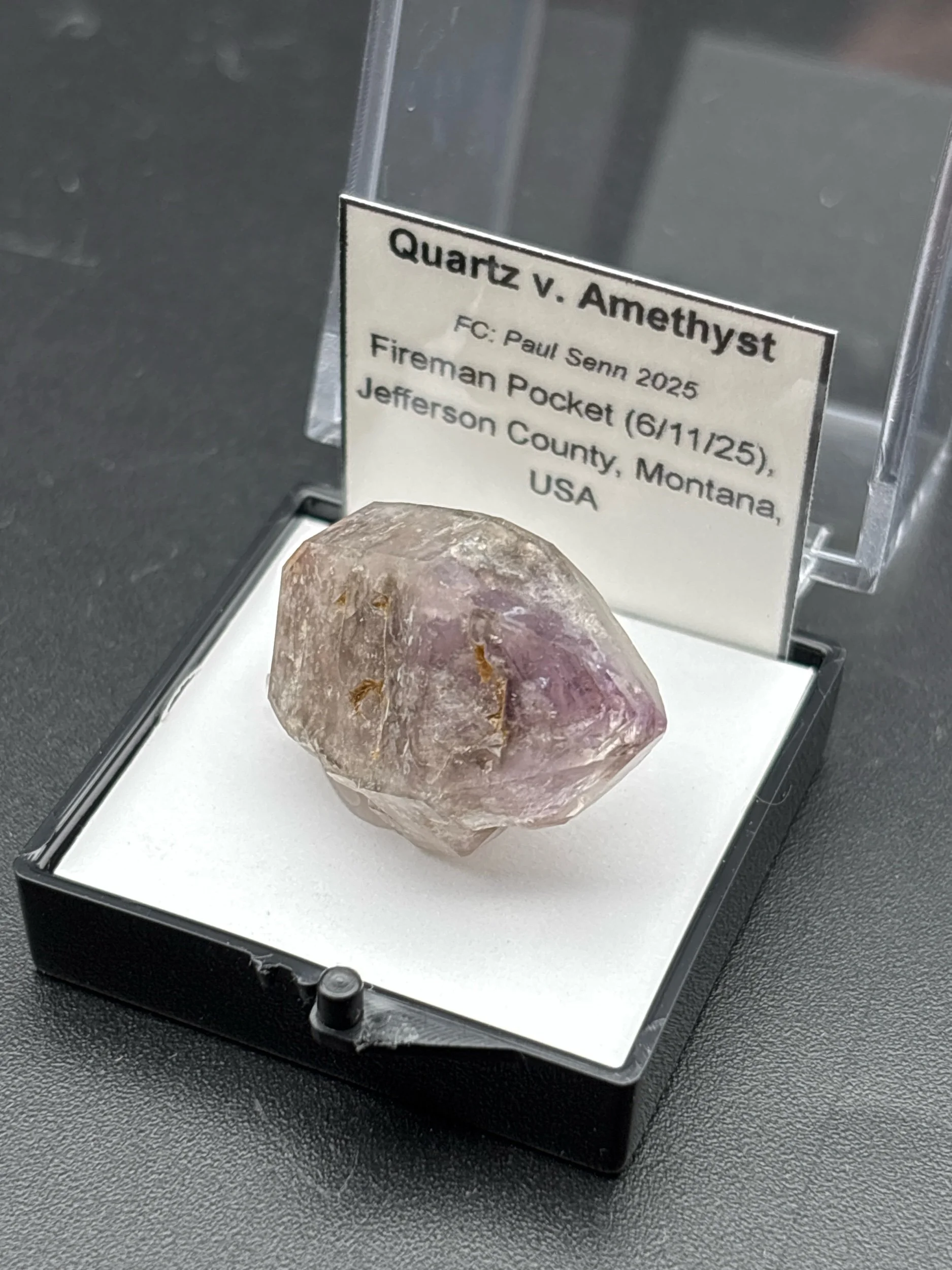
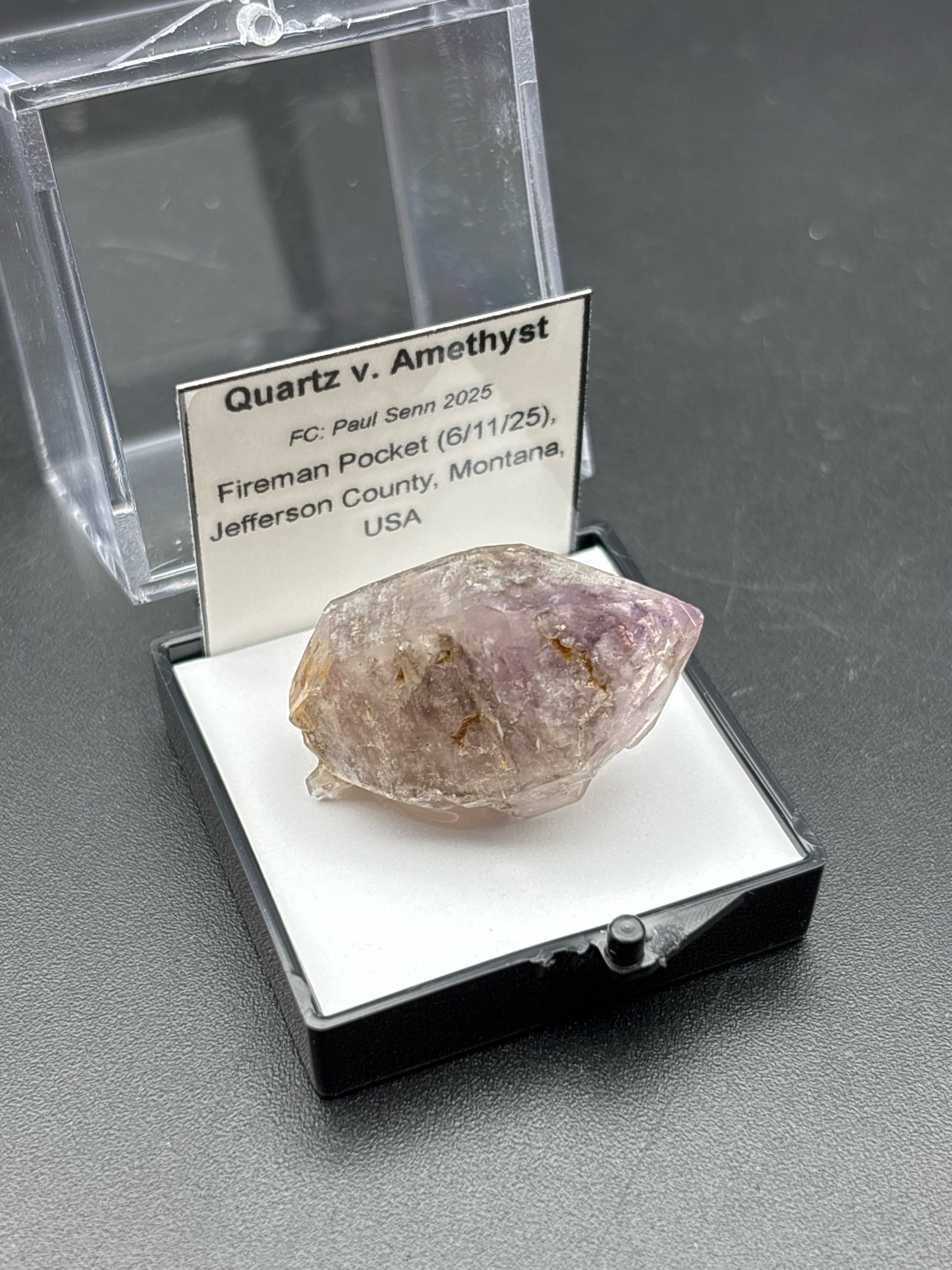
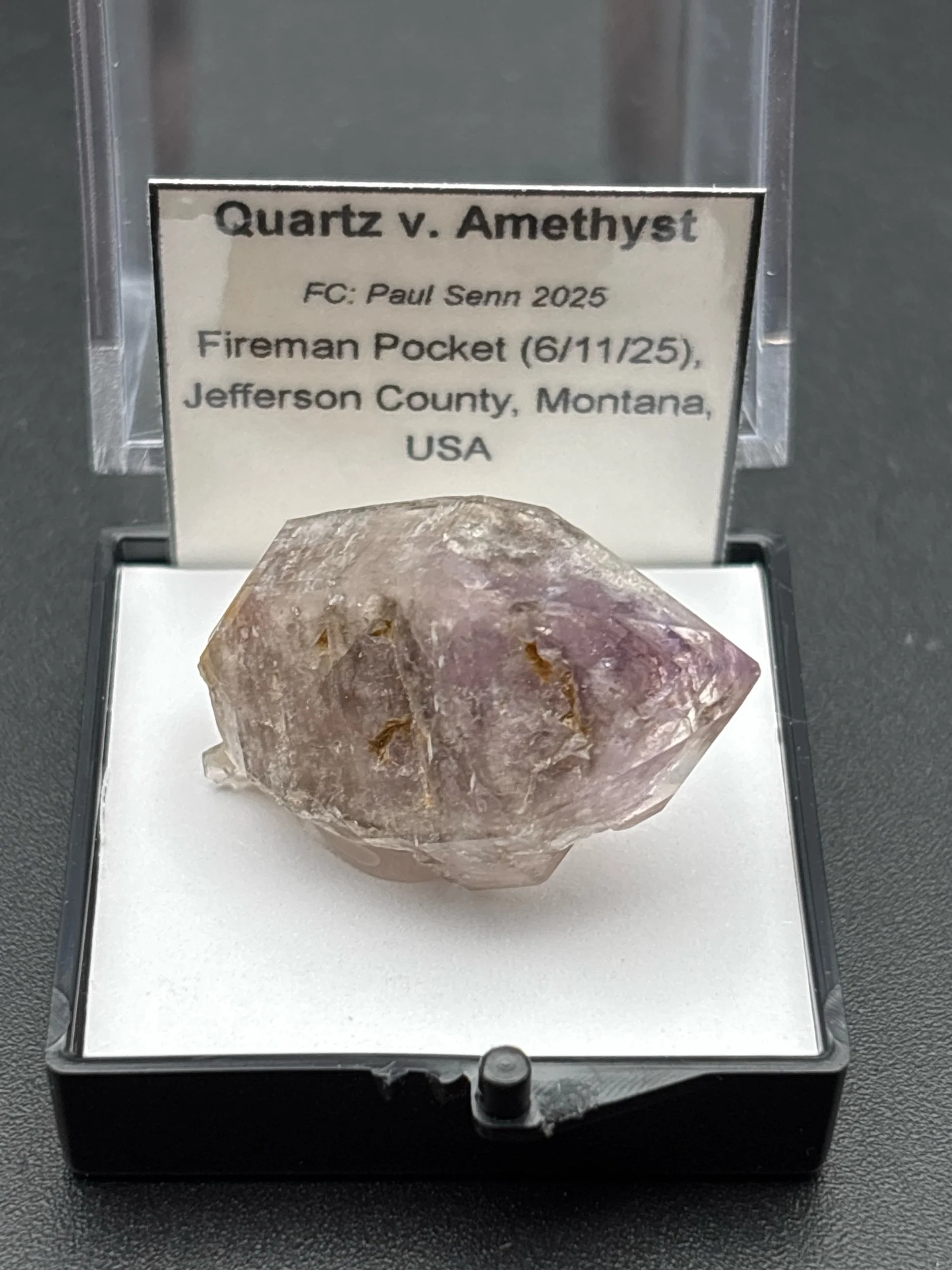
Amethyst - Fireman Pocket, Goldflint Mountain Jefferson County, Montana, USA
Specimen shown in standard perky box
(Base - 1.25 × 1.25in - 31.5mm x 31.5mm)
Thank you so much for viewing! Please message for any further information
ORDERS SHIP MONDAYS
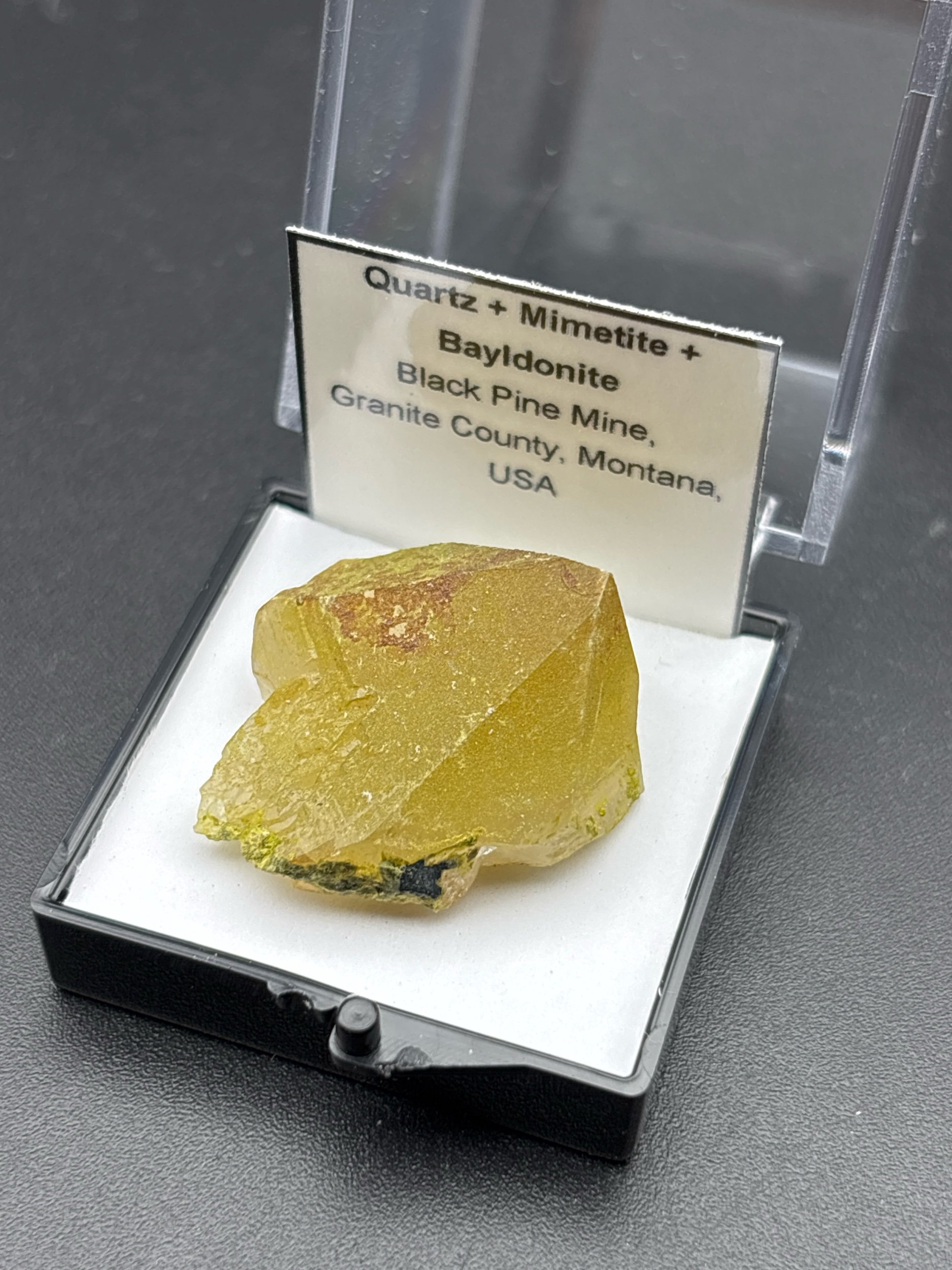
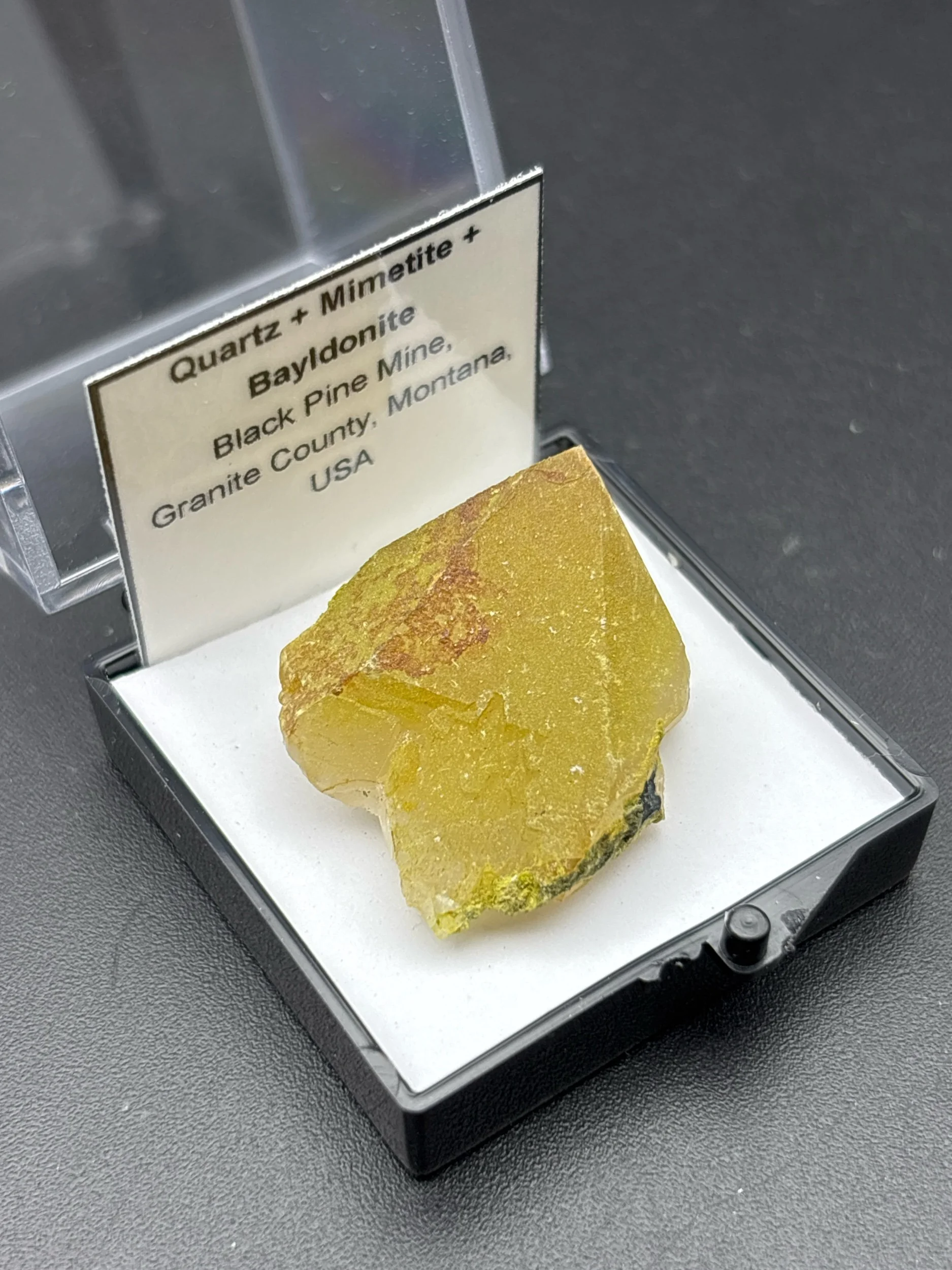
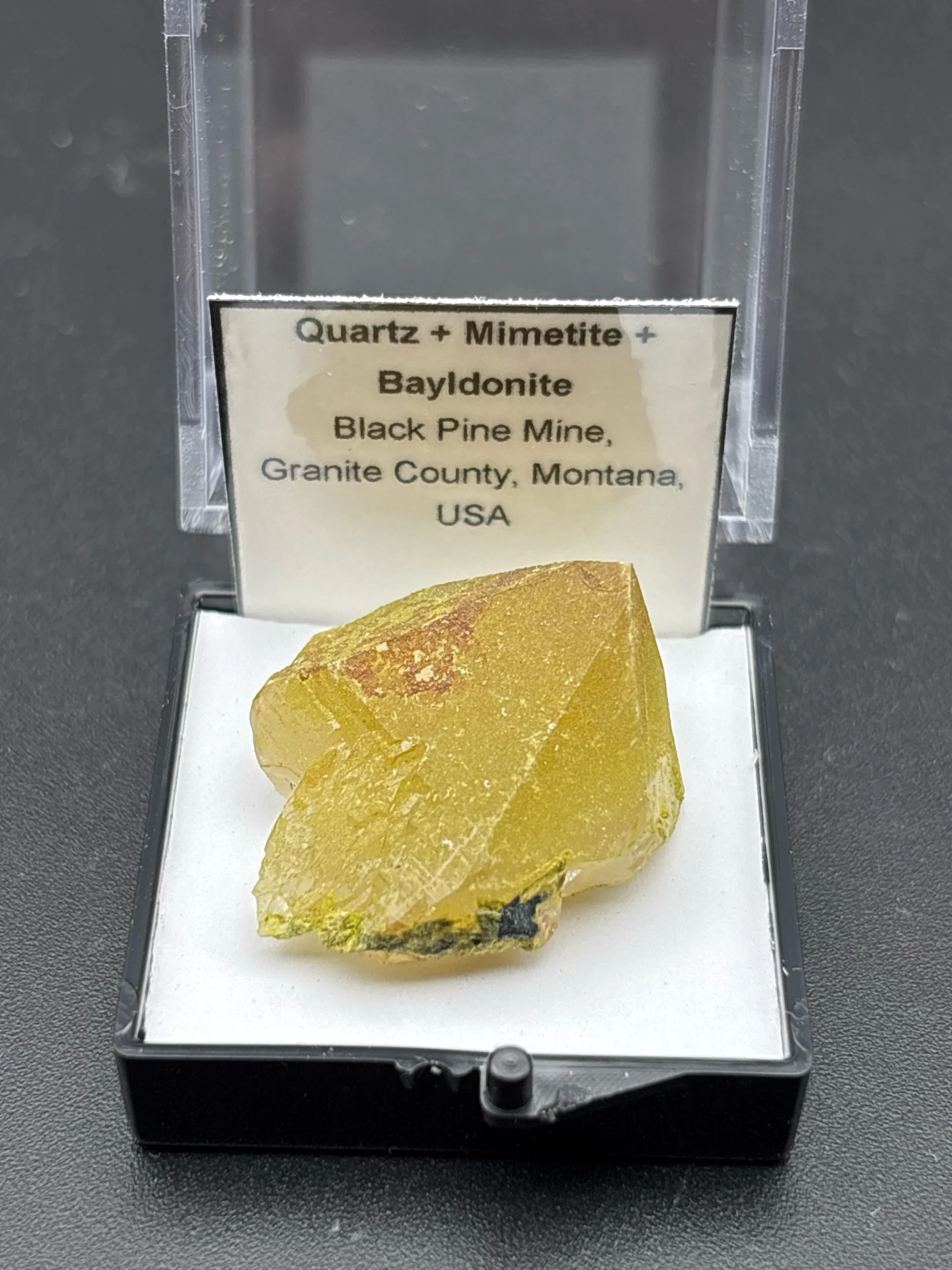
Mimetite + Bayldonite + Quartz - Black Pine Mine, Granite County, Montana, USA
Specimen shown in standard perky box
(Base - 1.25 × 1.25in - 31.5mm x 31.5mm)
Thank you so much for viewing! Please message for any further information
ORDERS SHIP MONDAYS
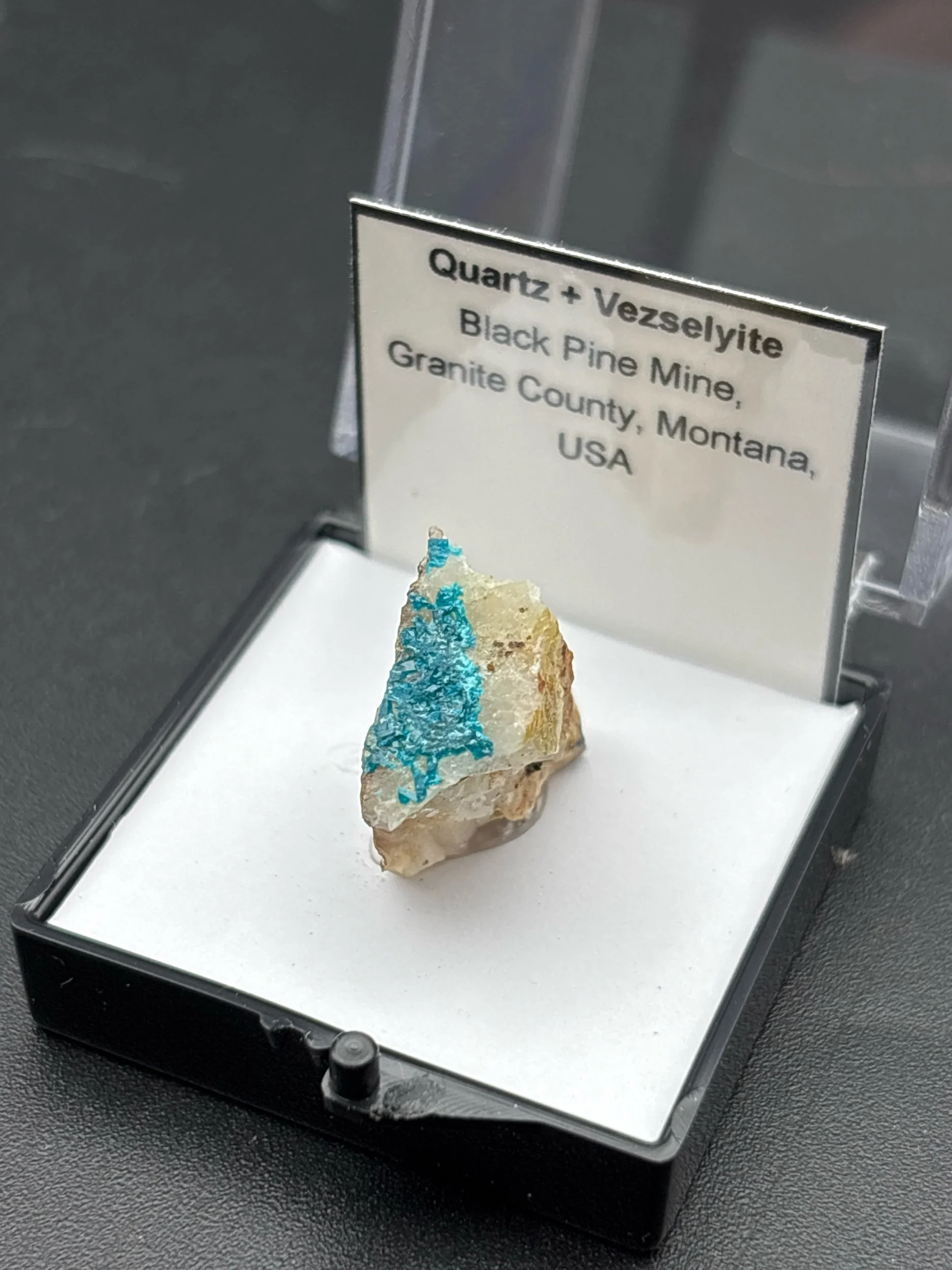
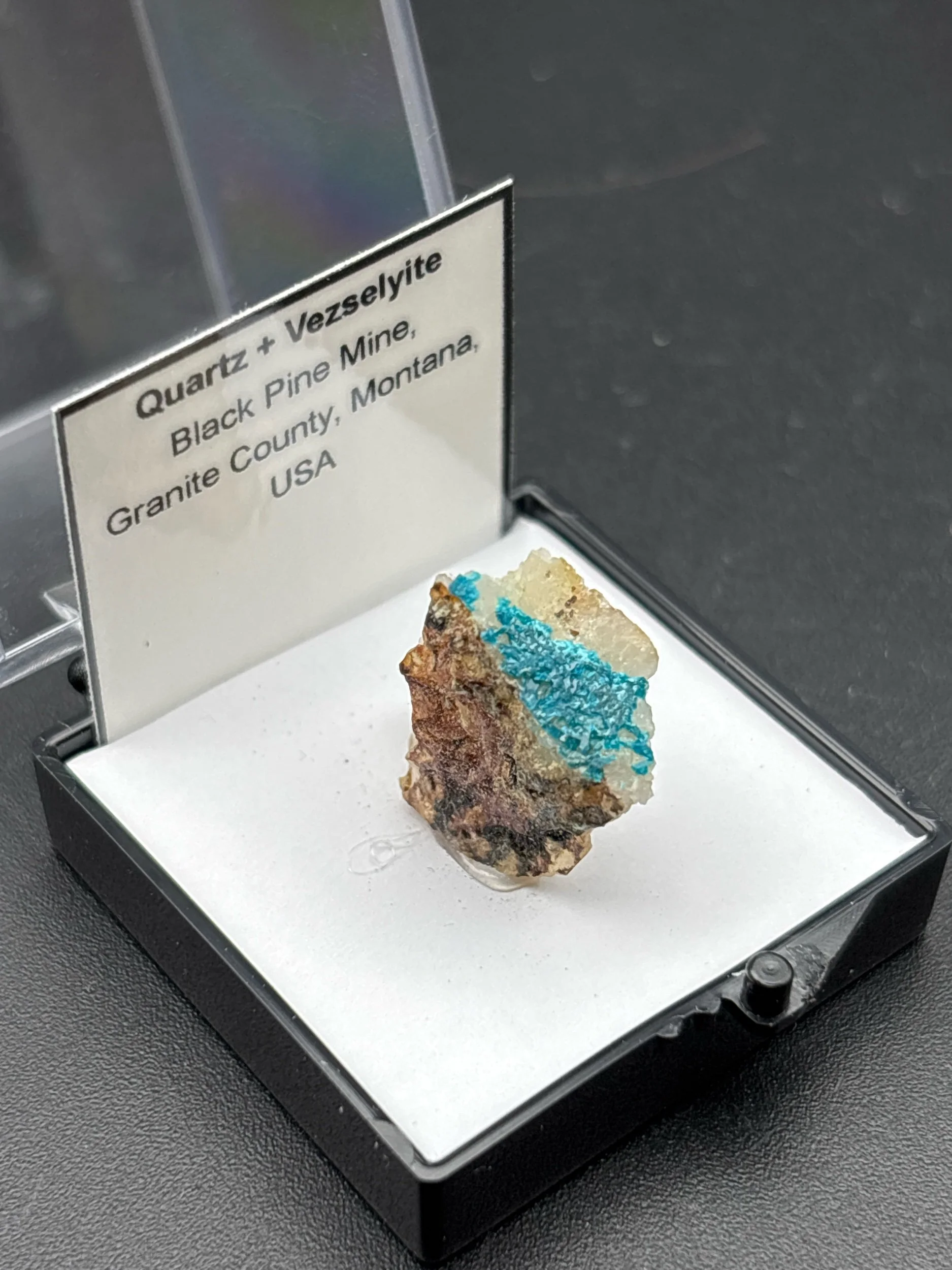
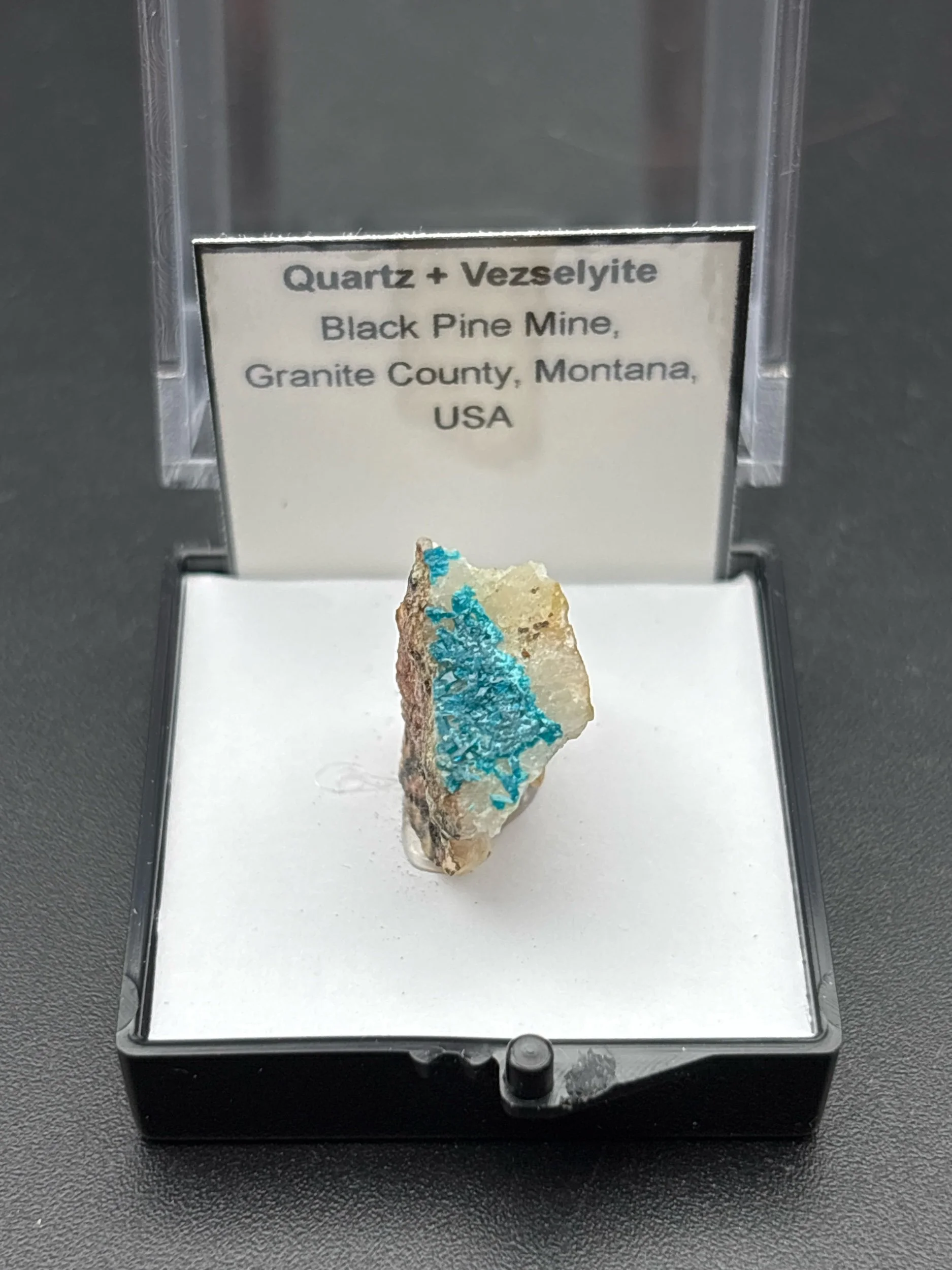
Veszelyite + Quartz - Black pine Mine, Granite County, Montana, USA
Specimen shown in standard perky box
(Base - 1.25 × 1.25in - 31.5mm x 31.5mm)
Thank you so much for viewing! Please message for any further information
ORDERS SHIP MONDAYS
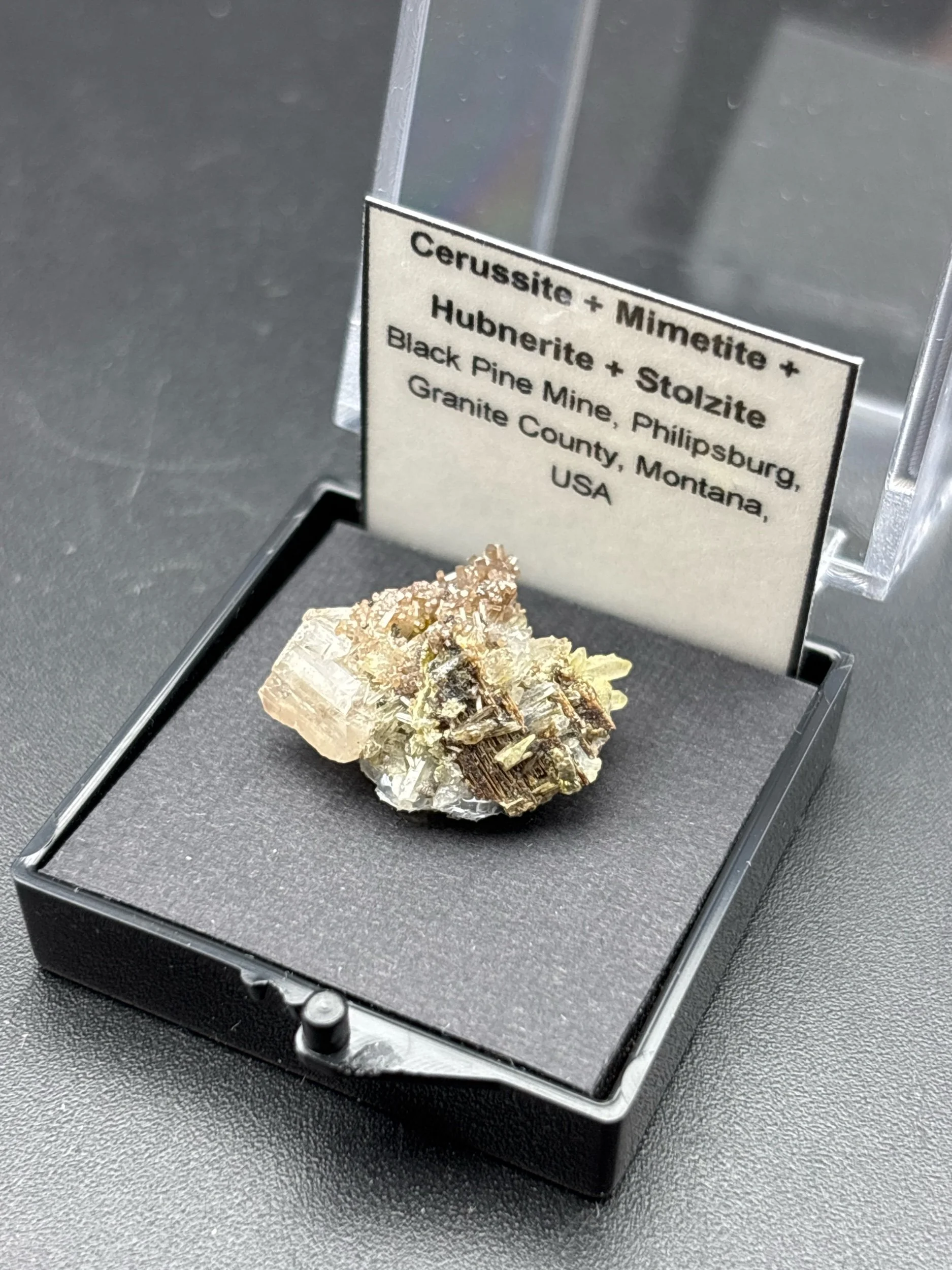
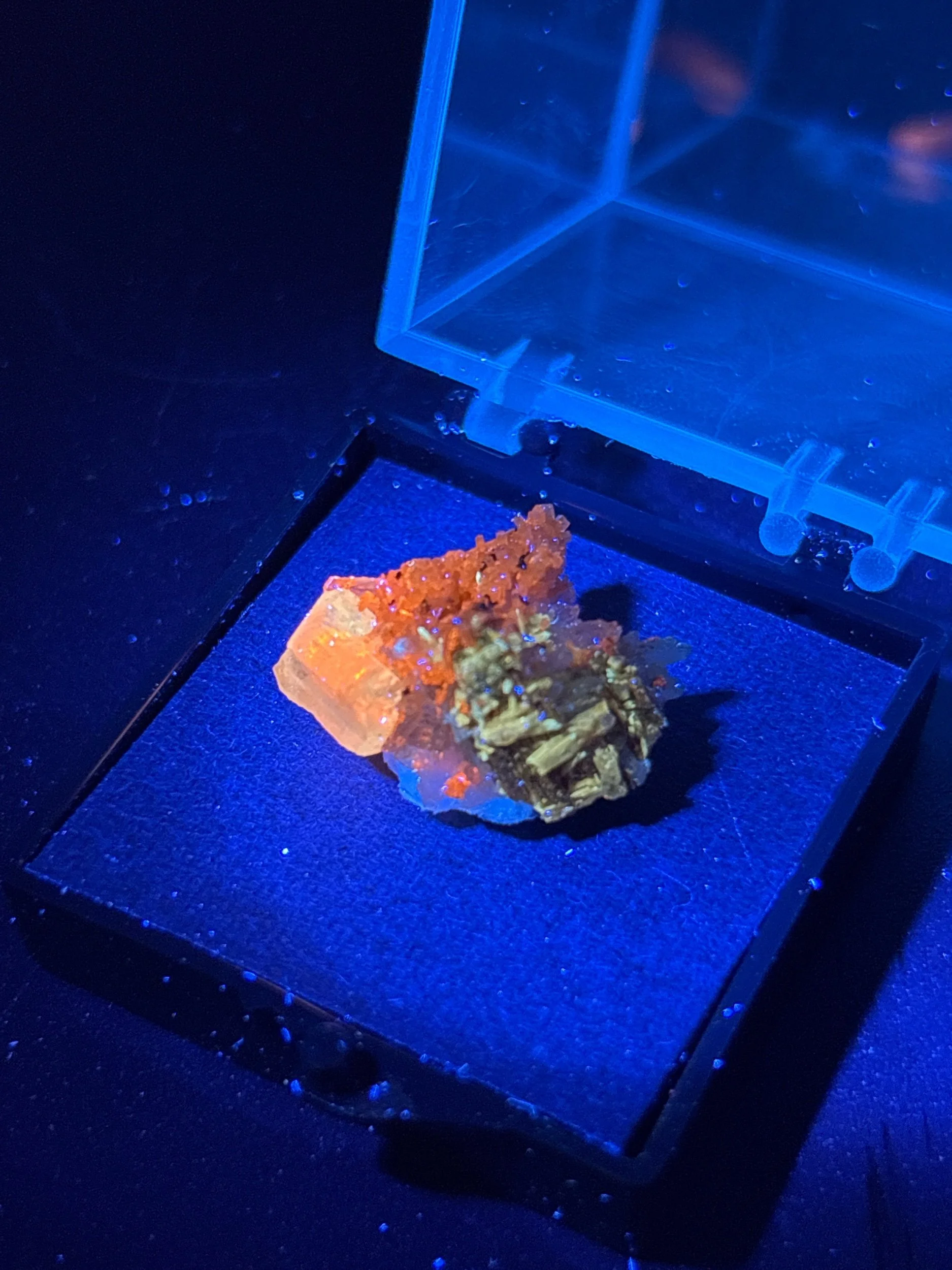
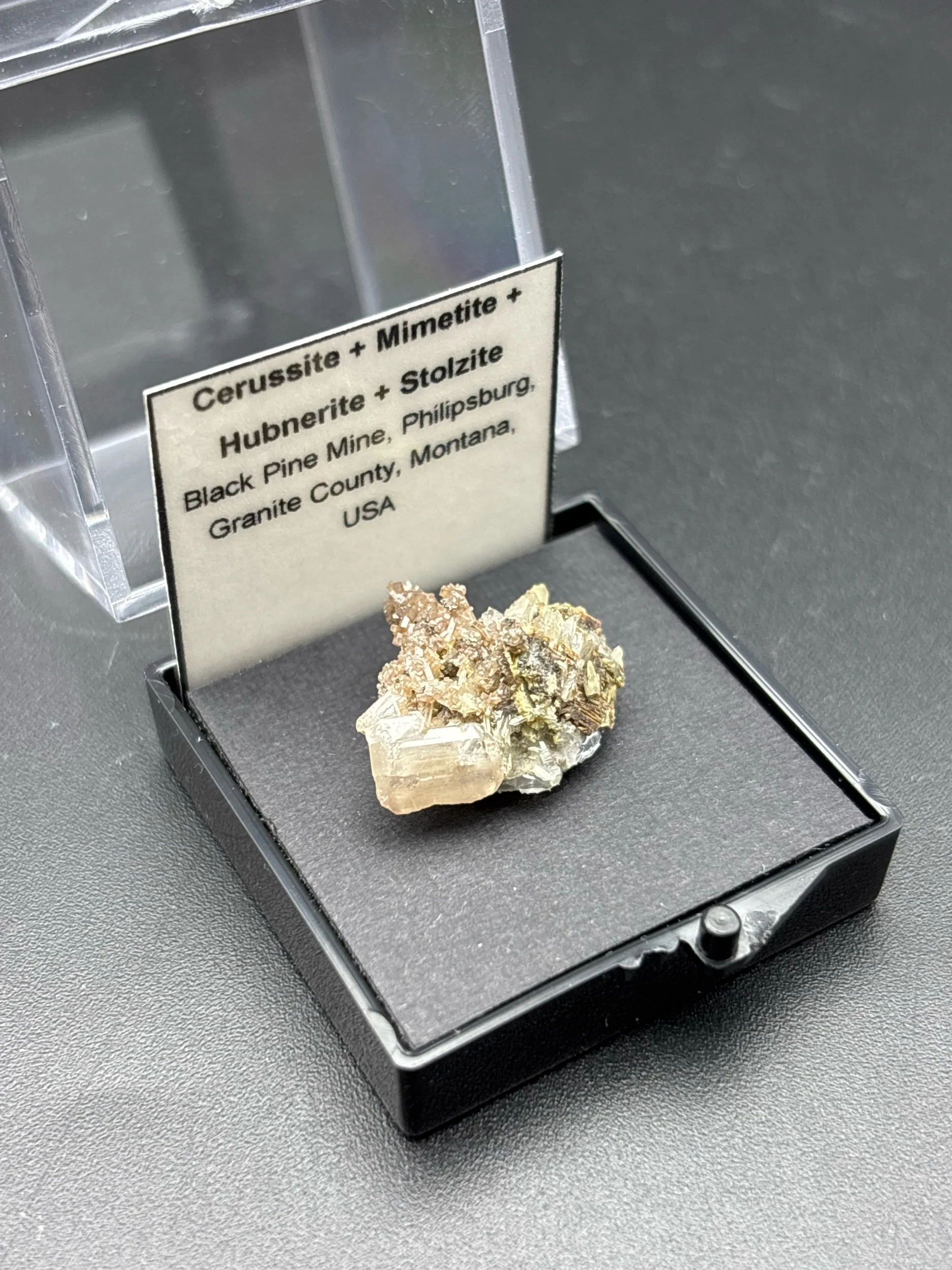
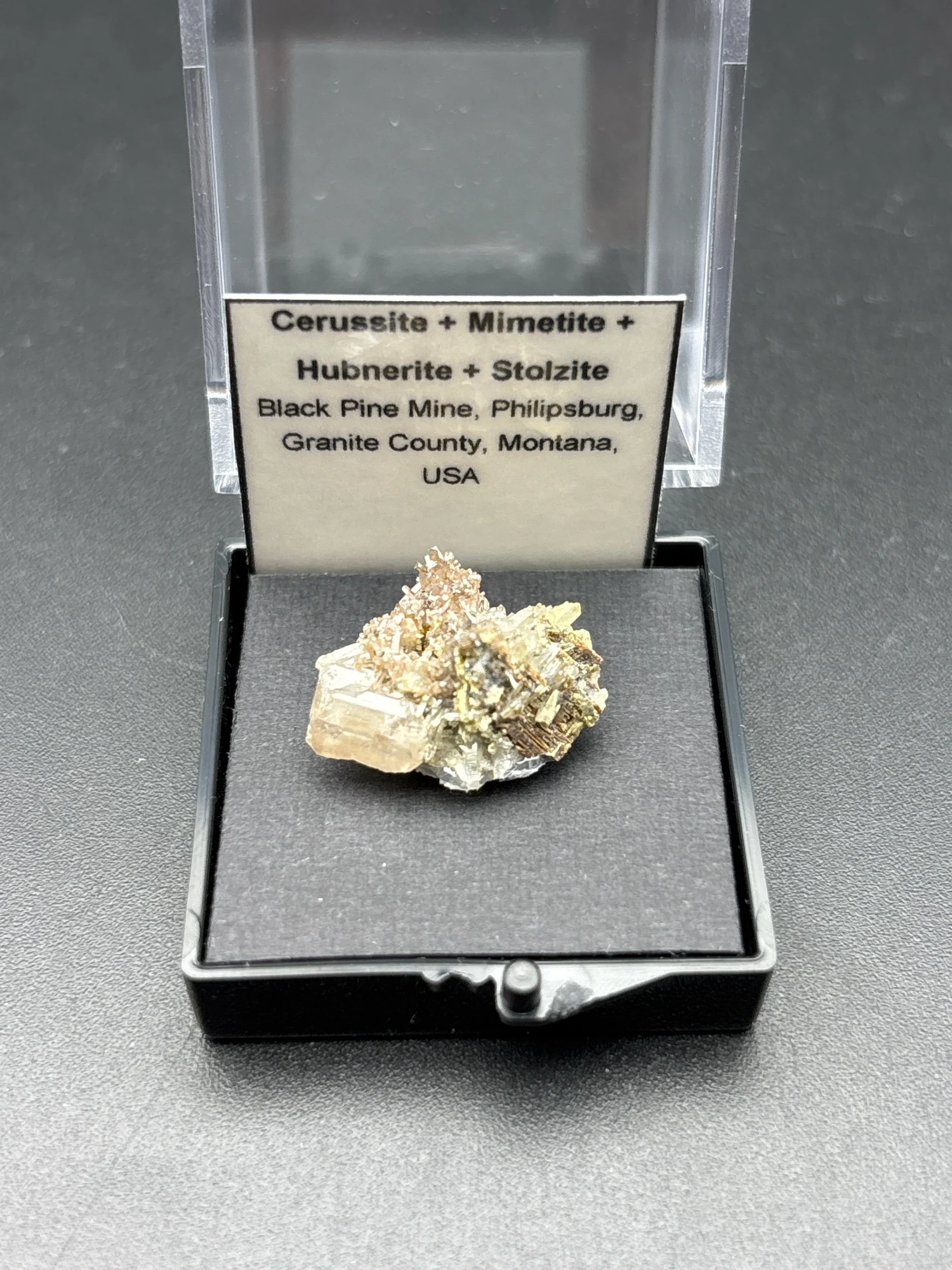
Cerussite + Mimetite + Hubnerite + Stolzite - Black pine Mine, Granite County, Montana, USA
Specimen shown in standard perky box
(Base - 1.25 × 1.25in - 31.5mm x 31.5mm)
Thank you so much for viewing! Please message for any further information
ORDERS SHIP MONDAYS
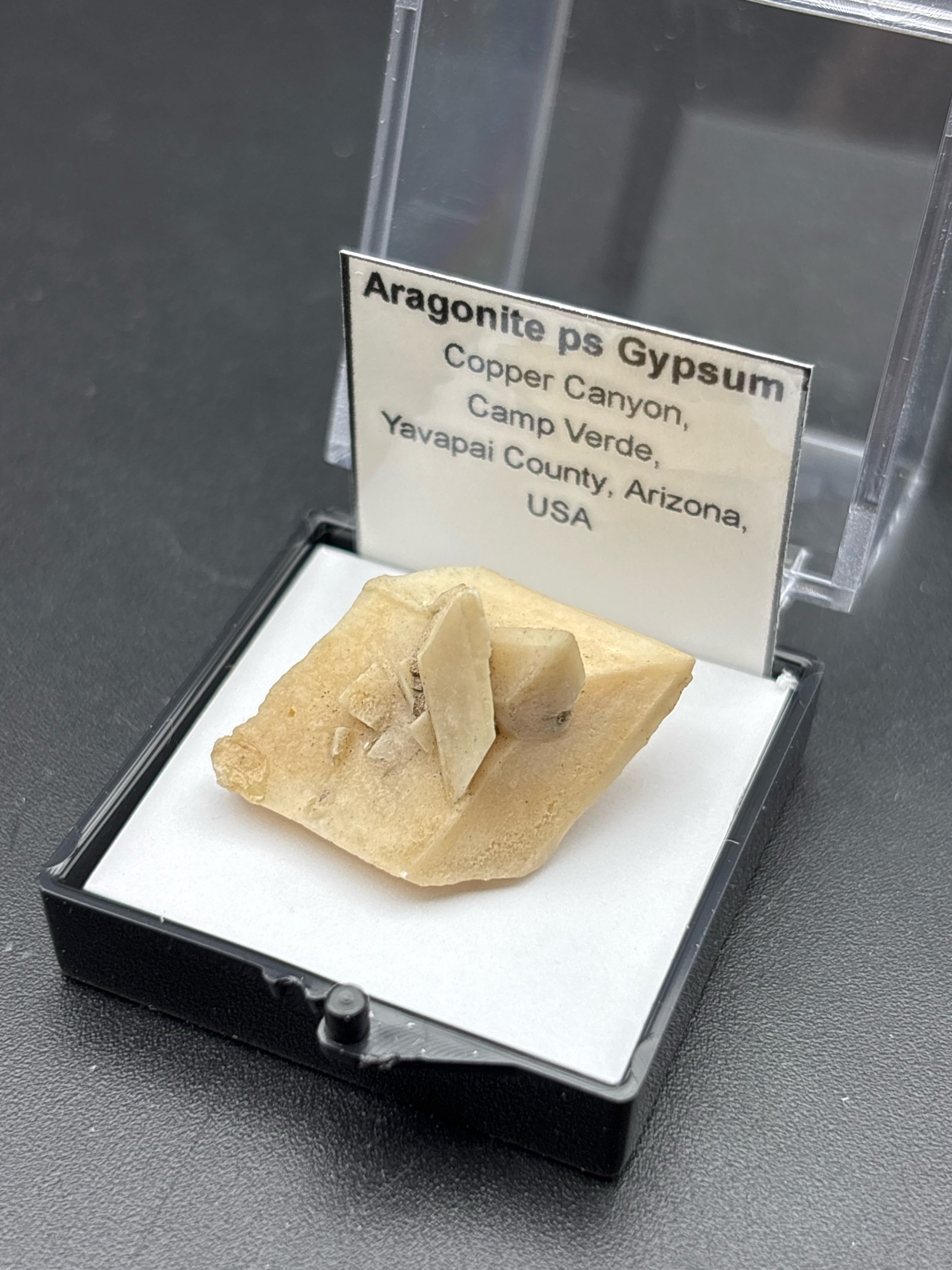
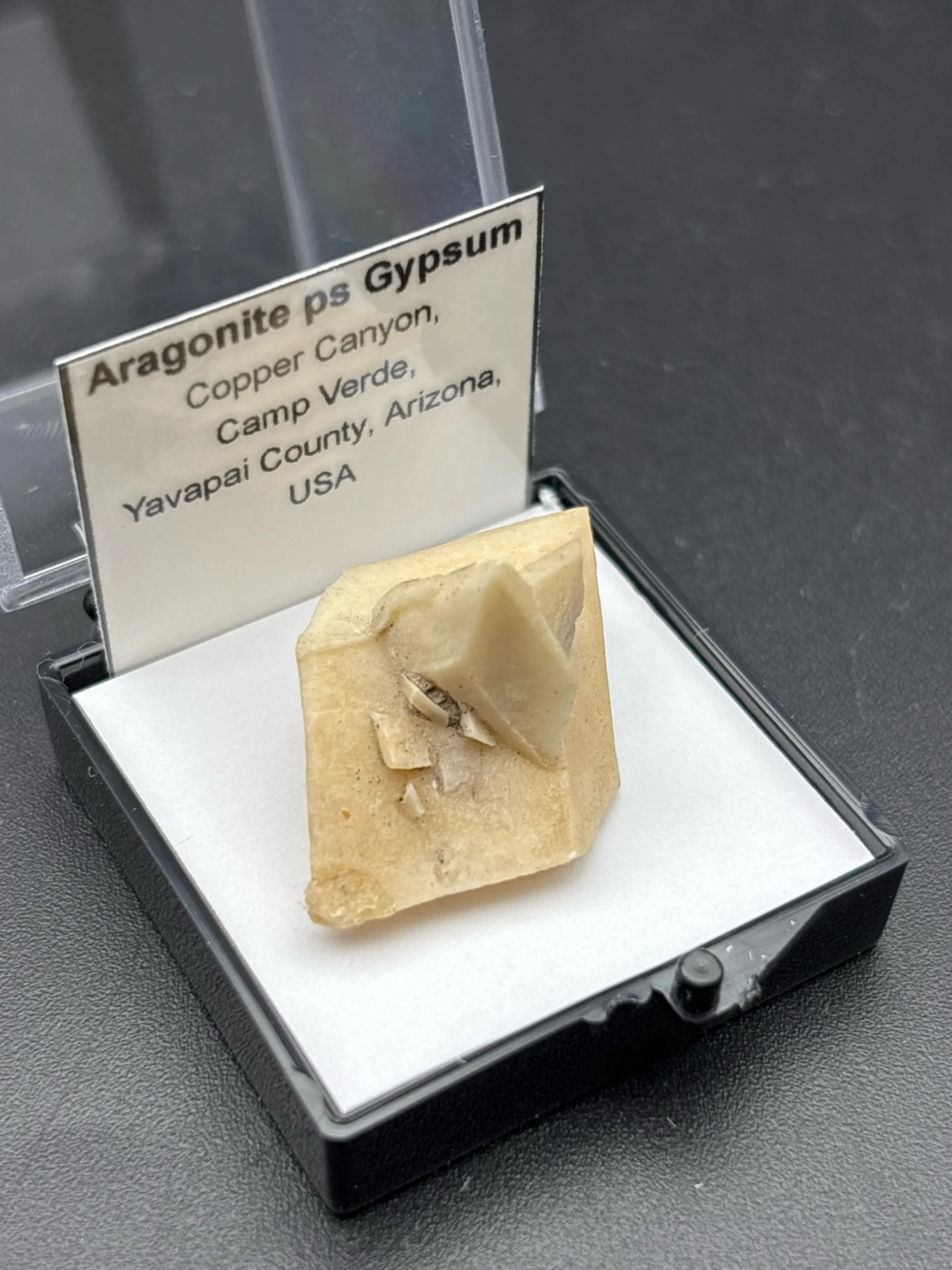
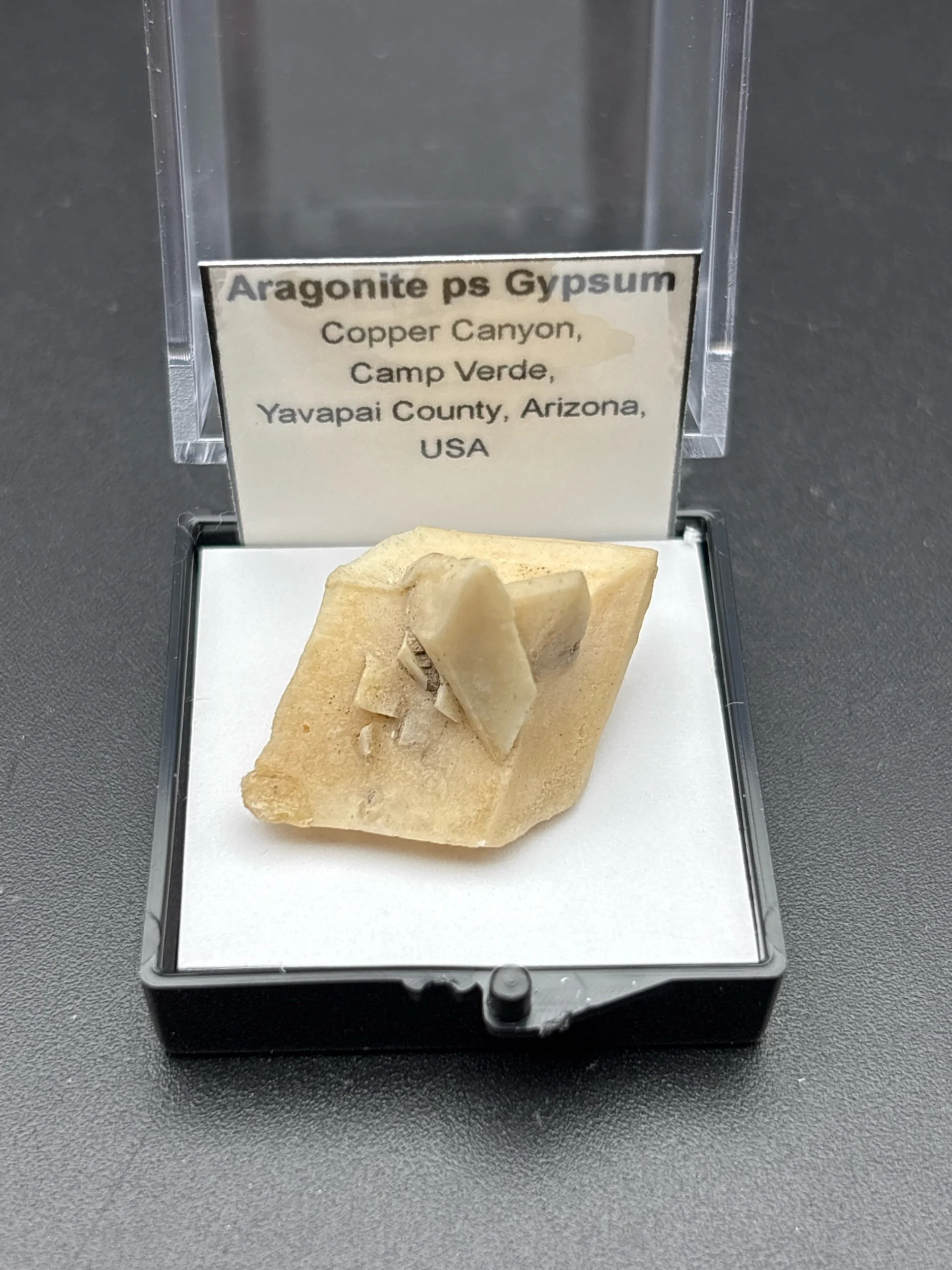
Aragonite ps Gypsum - Copper Canyon, Campe Verde, Yavapi County, Arizona, USA
Specimen shown in standard perky box
(Base - 1.25 × 1.25in - 31.5mm x 31.5mm)
Thank you so much for viewing! Please message for any further information
ORDERS SHIP MONDAYS
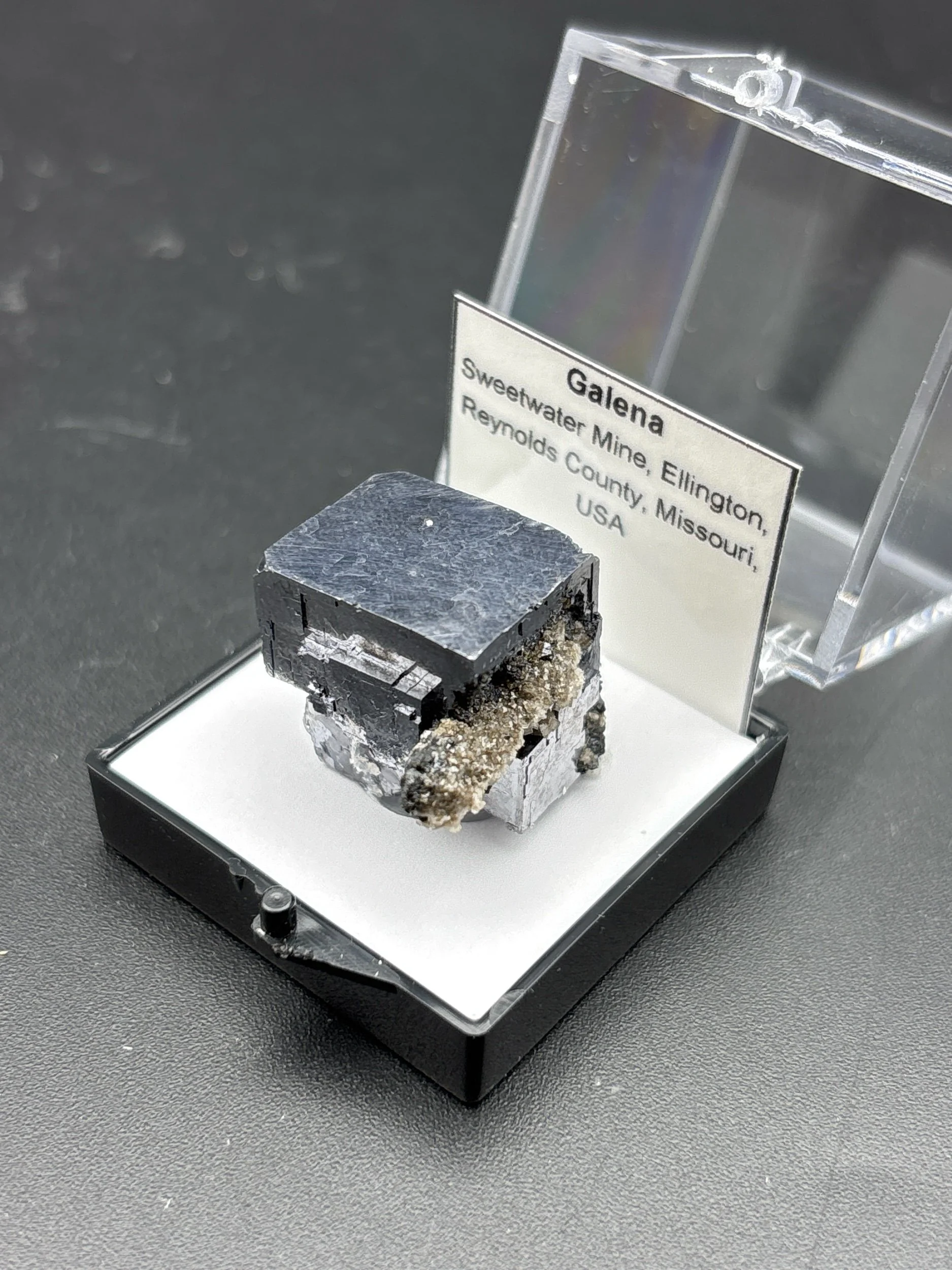
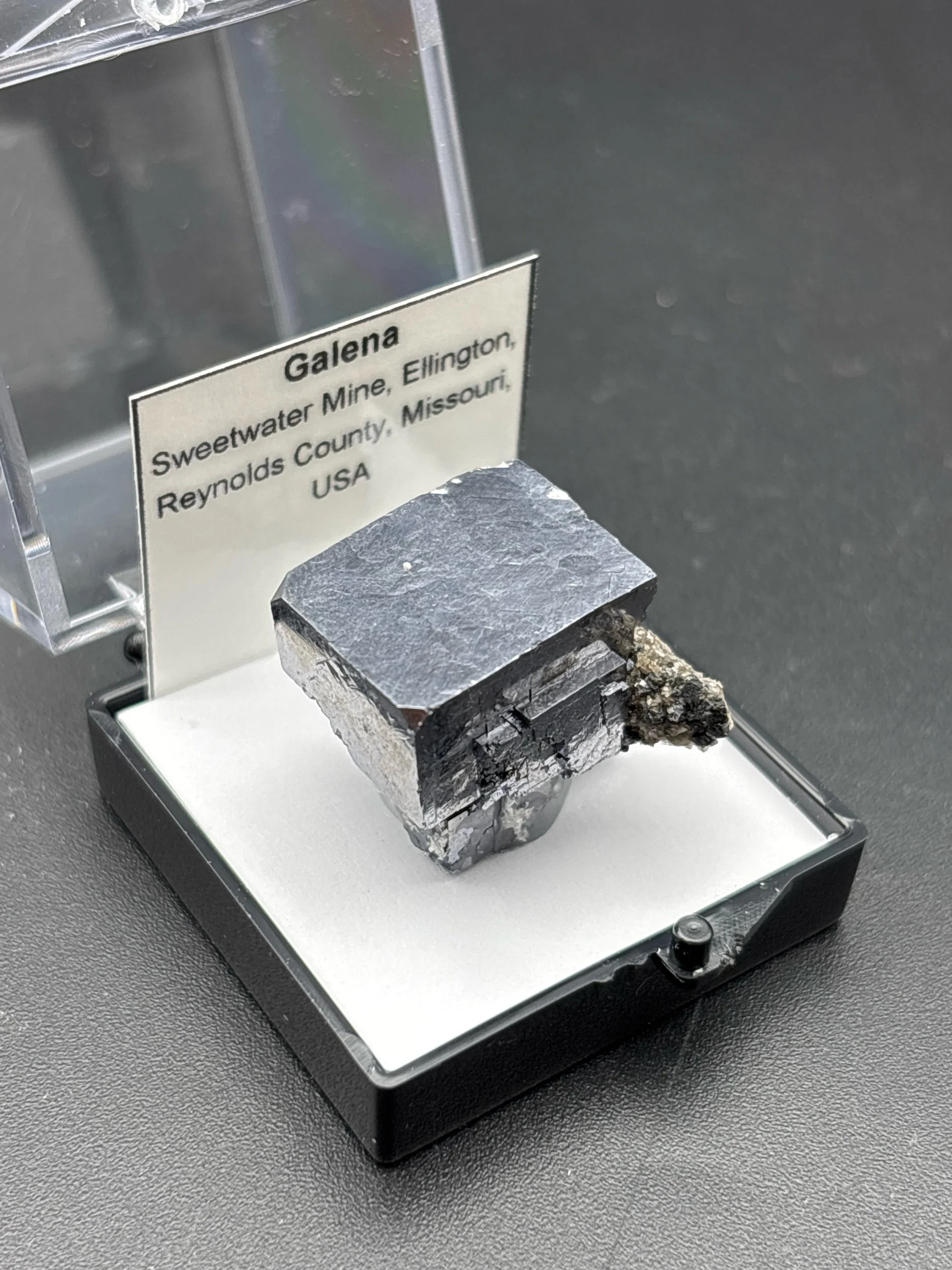
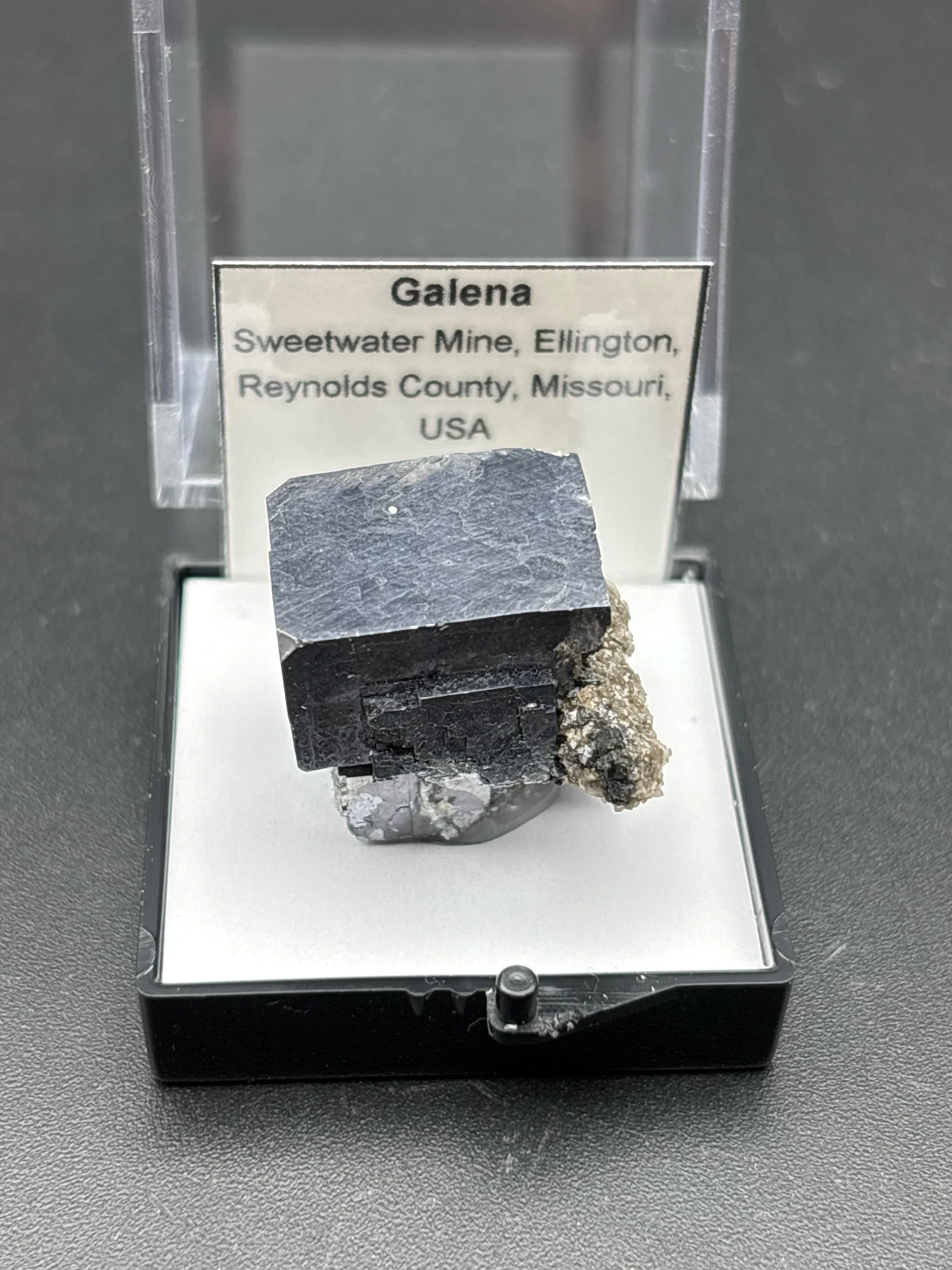
Galena - Sweetwater Mine, Ellington, Reynolds County, Missouri, USA
Specimen shown in standard perky box
(Base - 1.25 × 1.25in - 31.5mm x 31.5mm)
Thank you so much for viewing! Please message for any further information
ORDERS SHIP MONDAYS
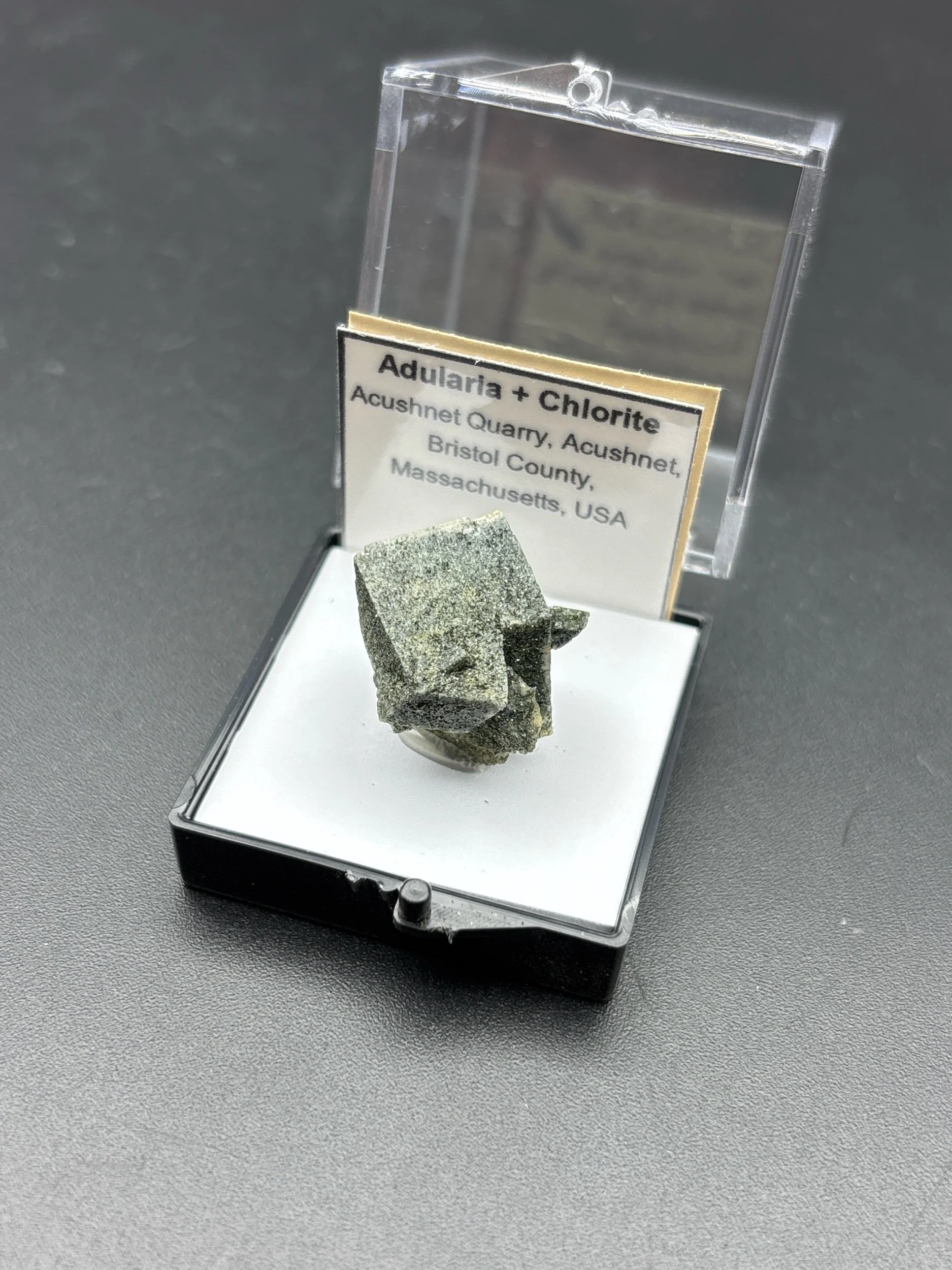
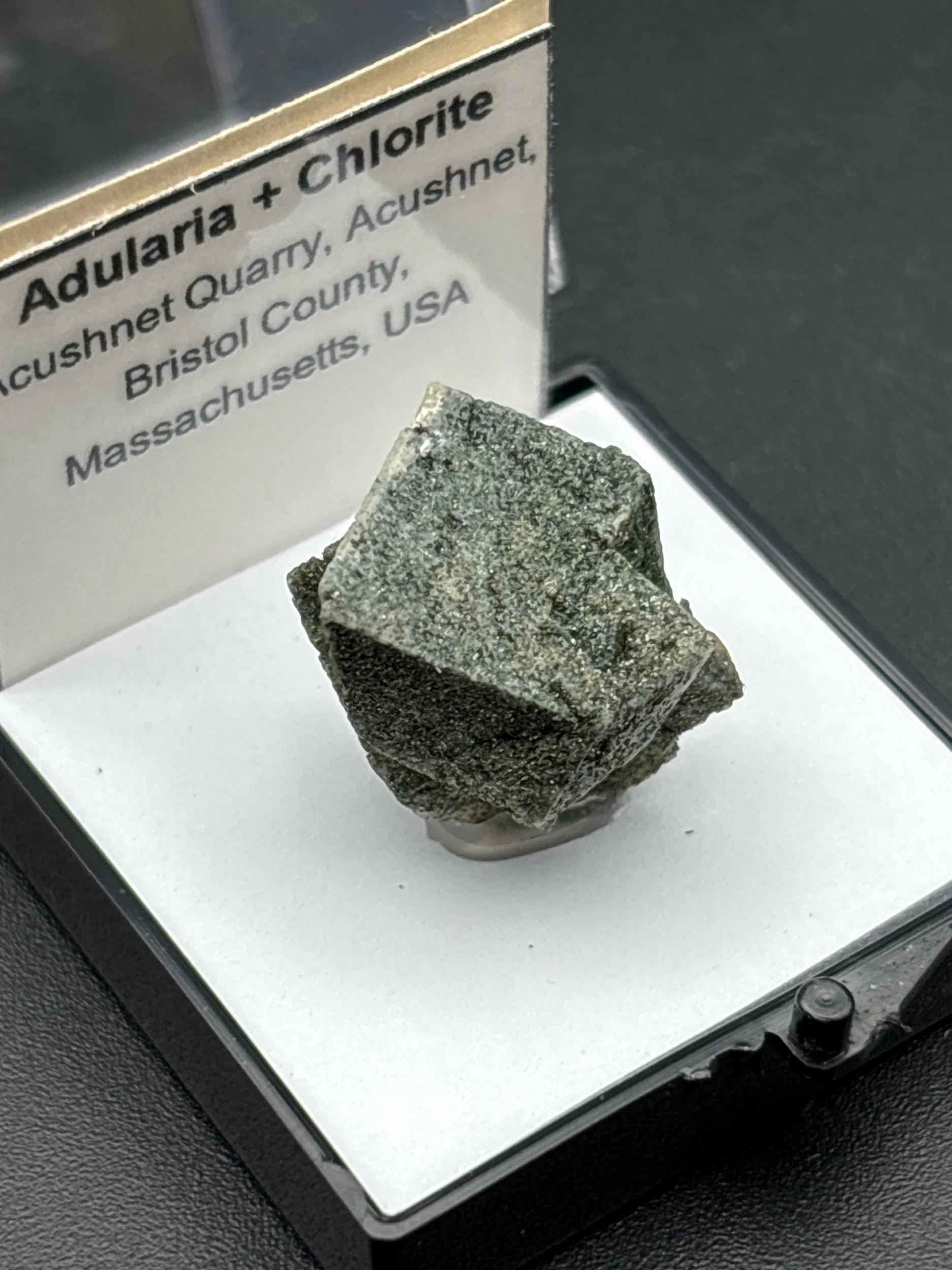
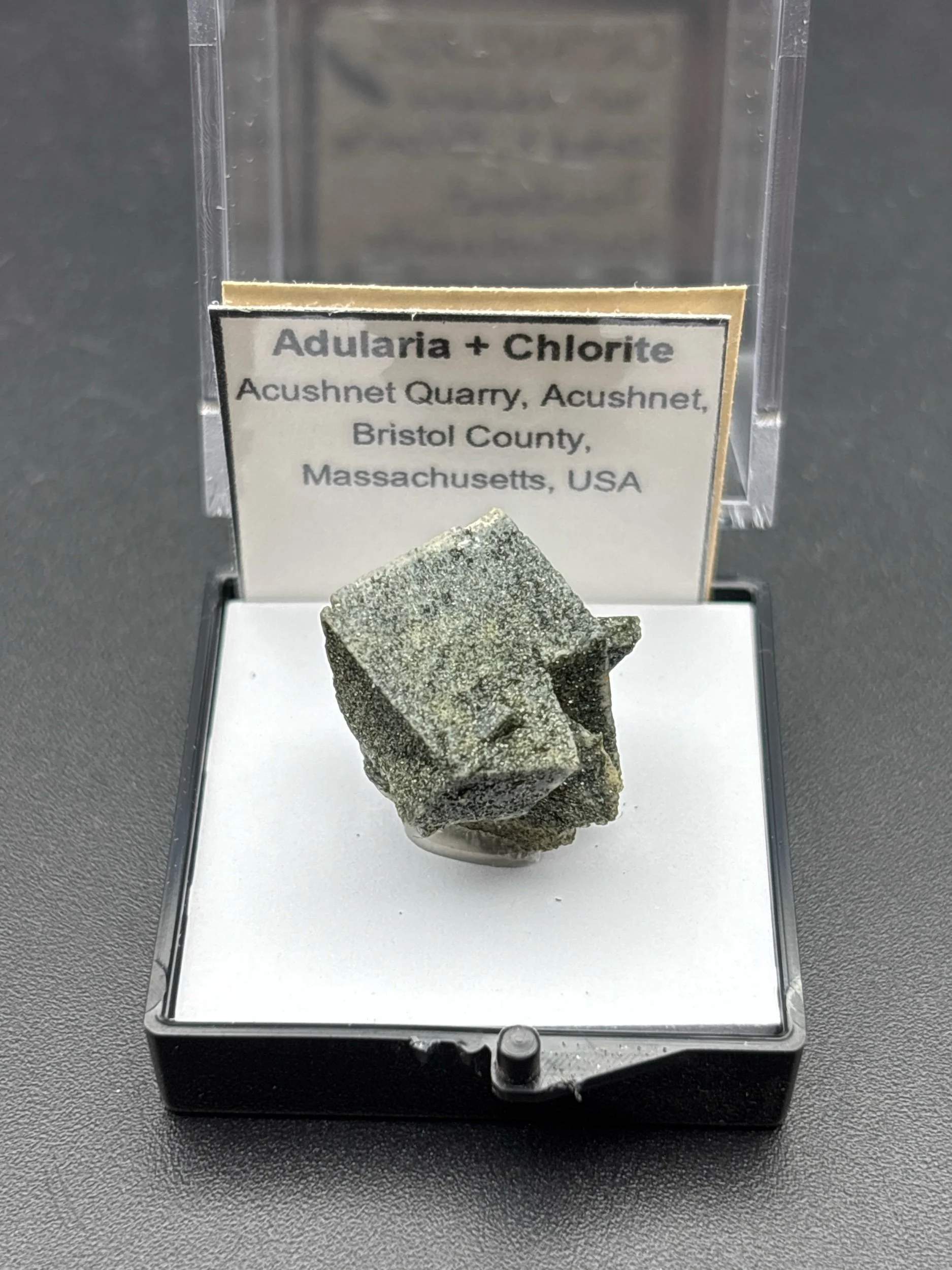
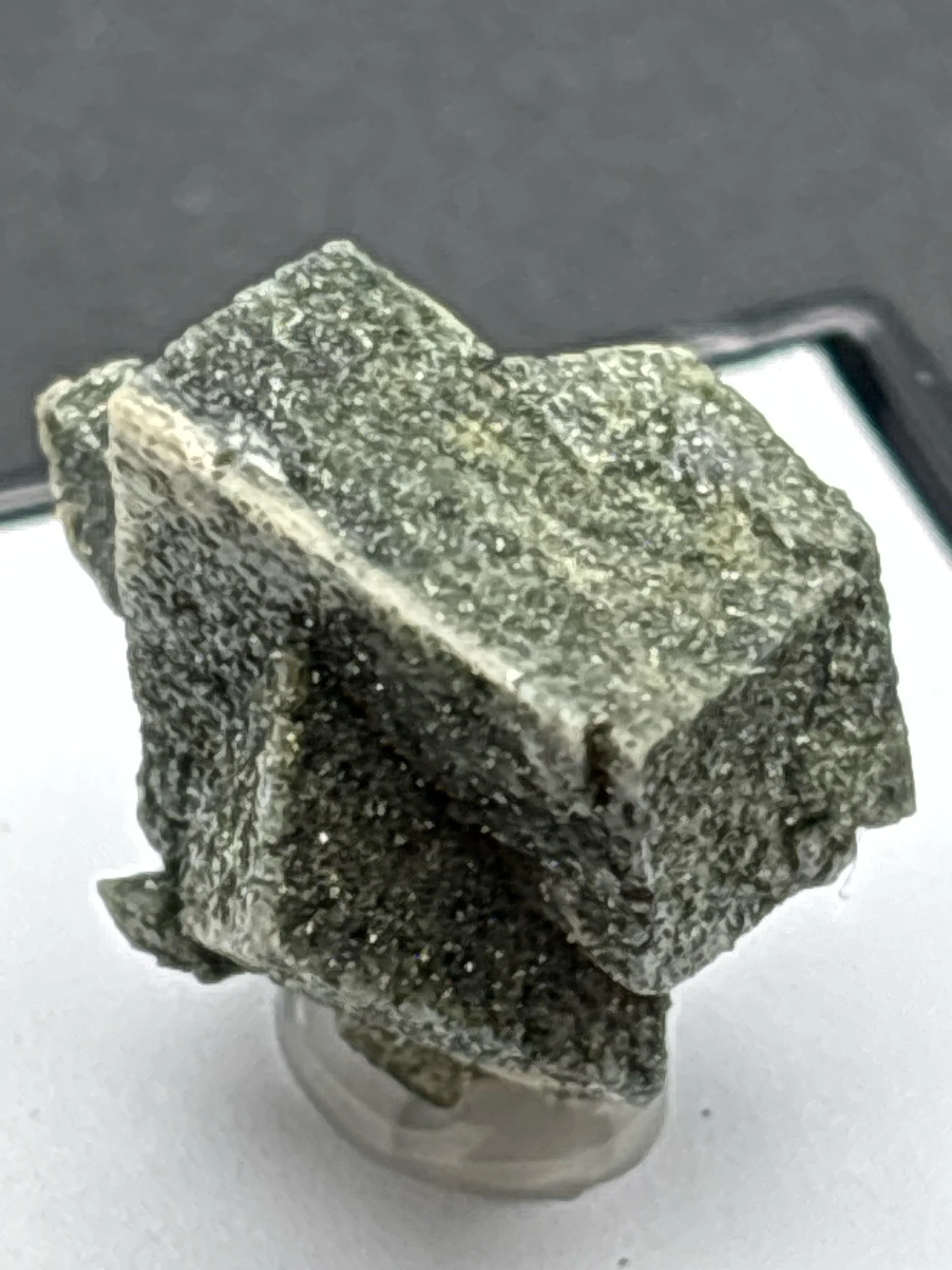
Adularia + Chlorite - Acushnet, Bristol County, Massachusetts, USA
Specimen shown in standard perky box
(Base - 1.25 × 1.25in - 31.5mm x 31.5mm)
Thank you so much for viewing! Please message for any further information
ORDERS SHIP MONDAYS
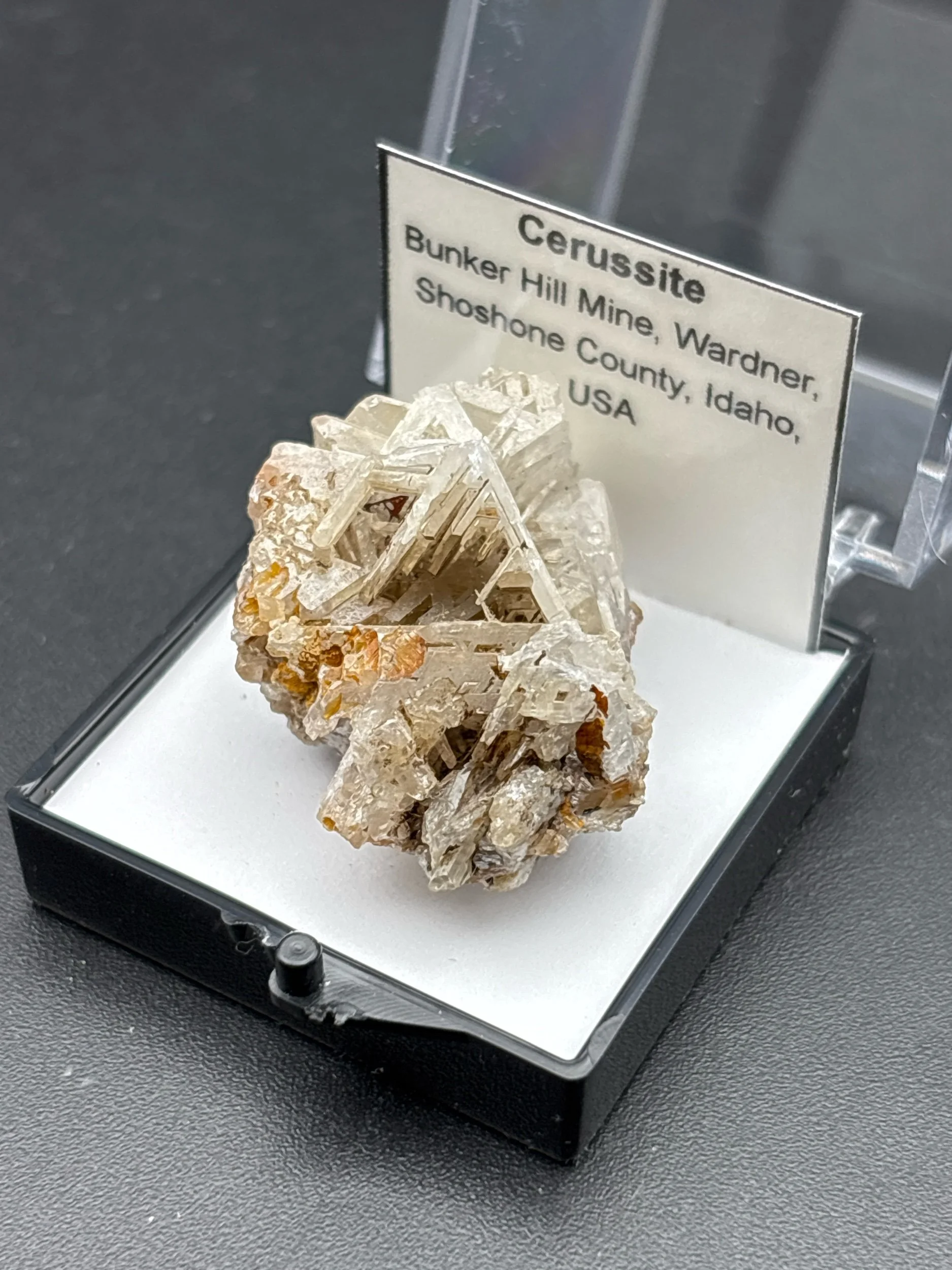
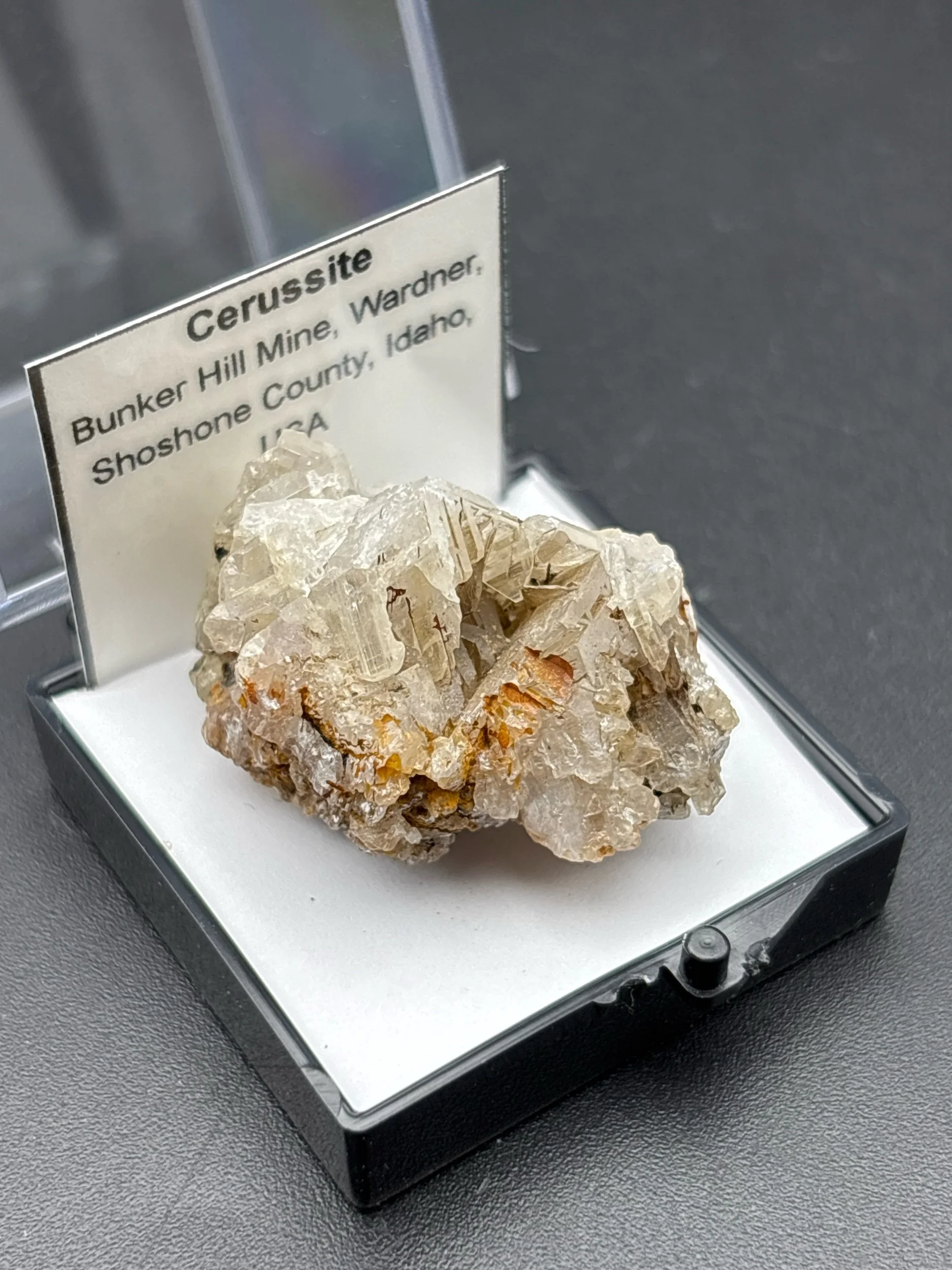
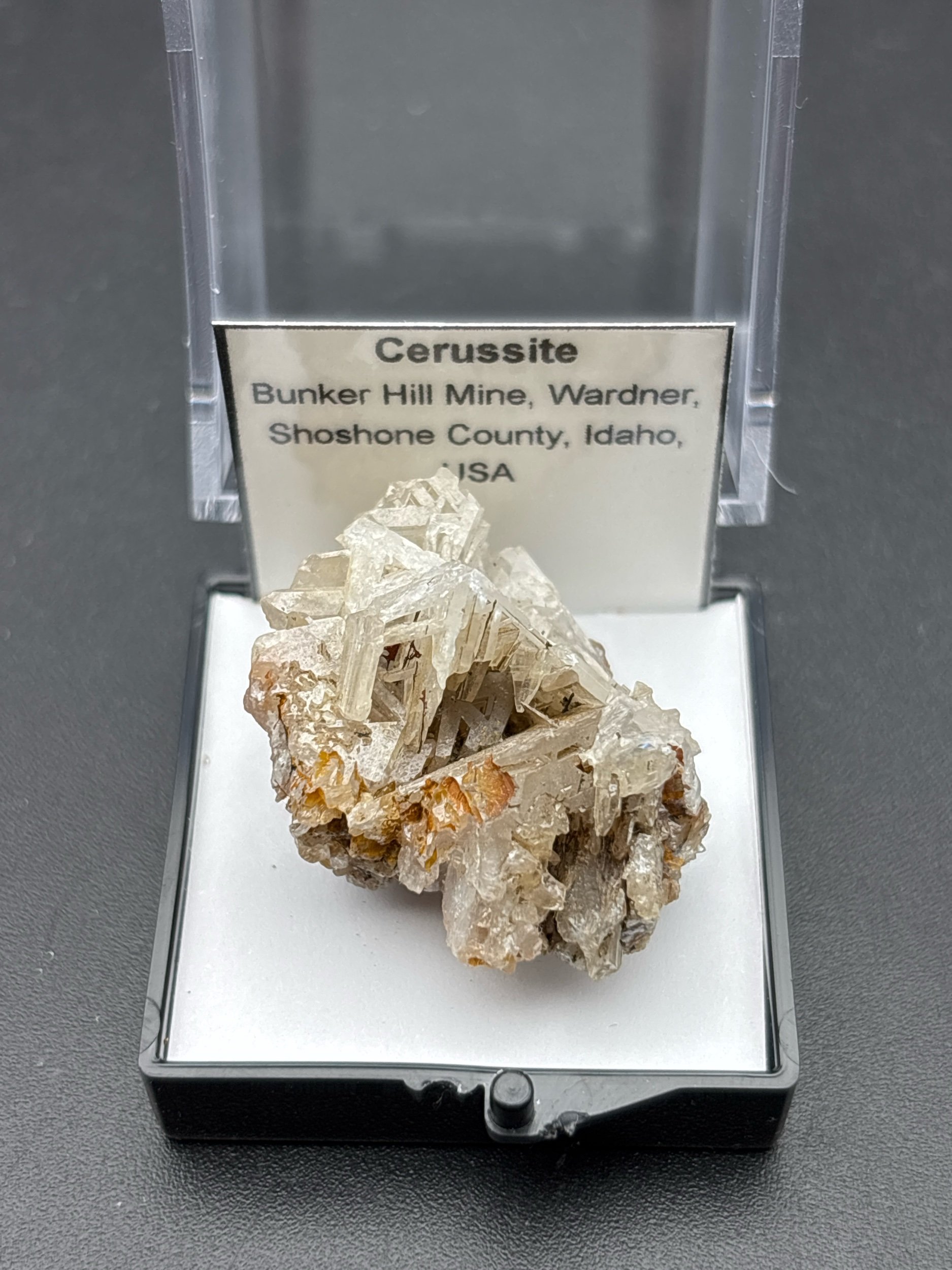
Cerussite - Bunker Hill Mine, Wardner, Shoshone County, Idaho, USA
Specimen shown in standard perky box
(Base - 1.25 × 1.25in - 31.5mm x 31.5mm)
Thank you so much for viewing! Please message for any further information
ORDERS SHIP MONDAYS
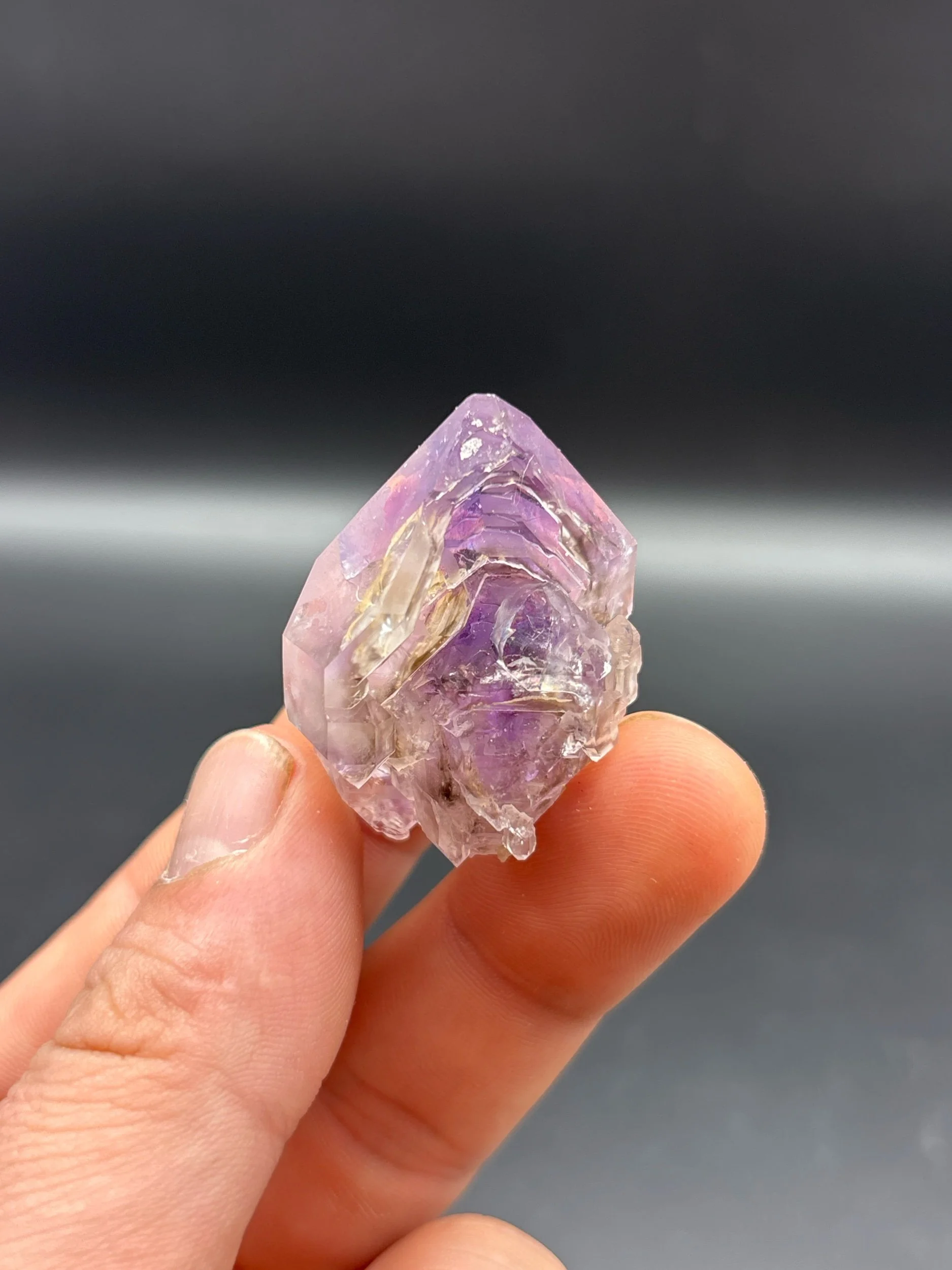
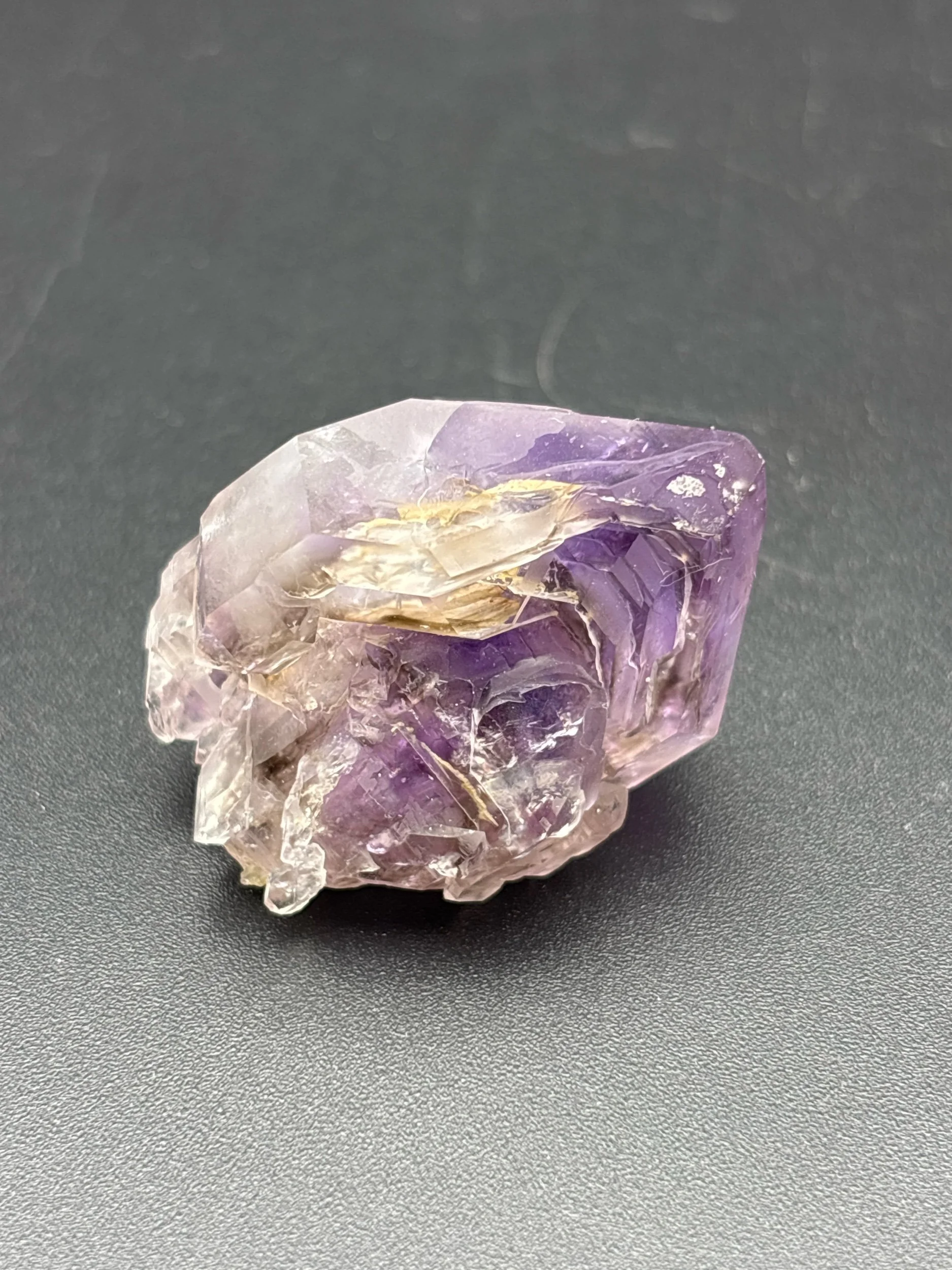
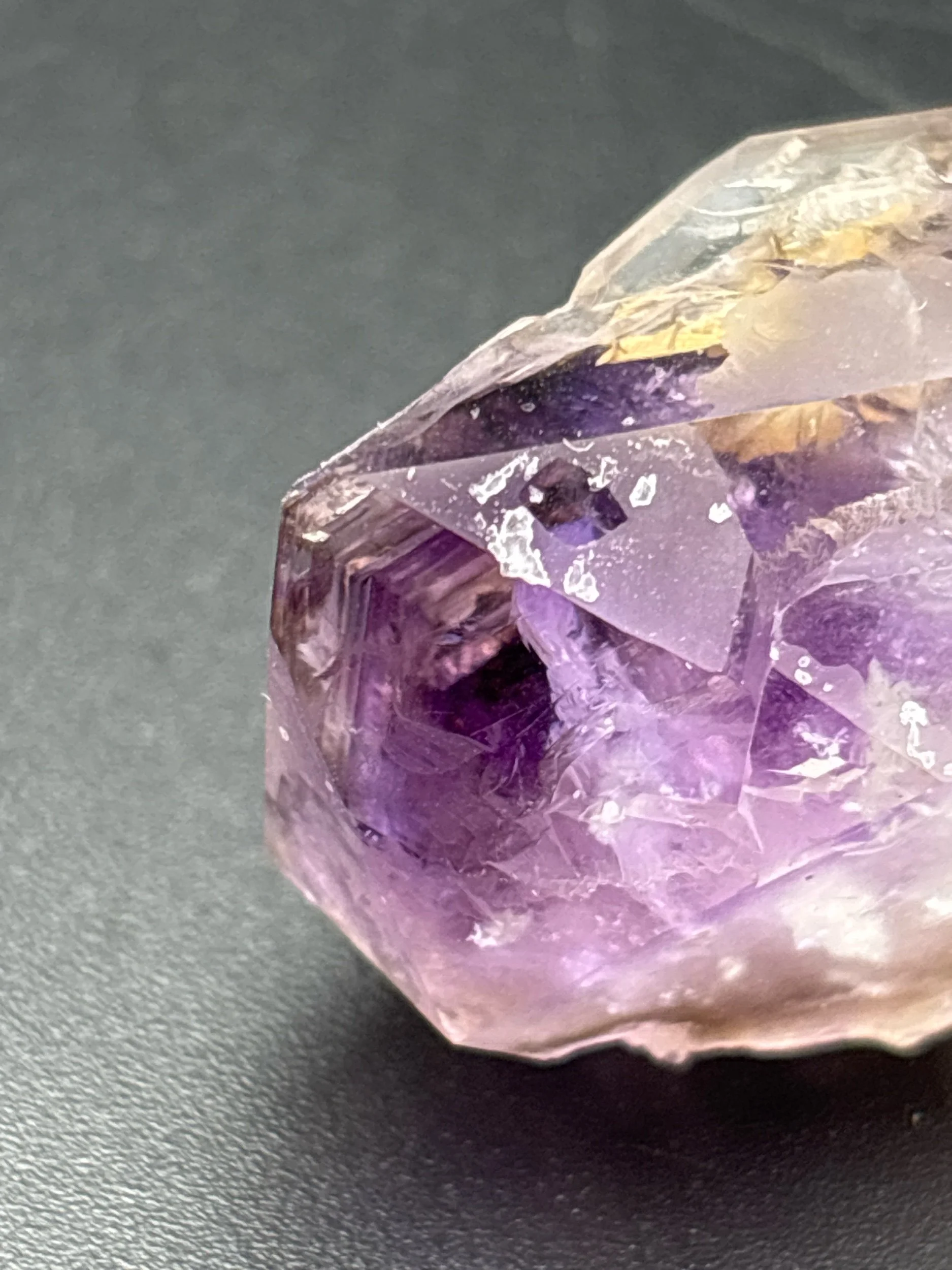
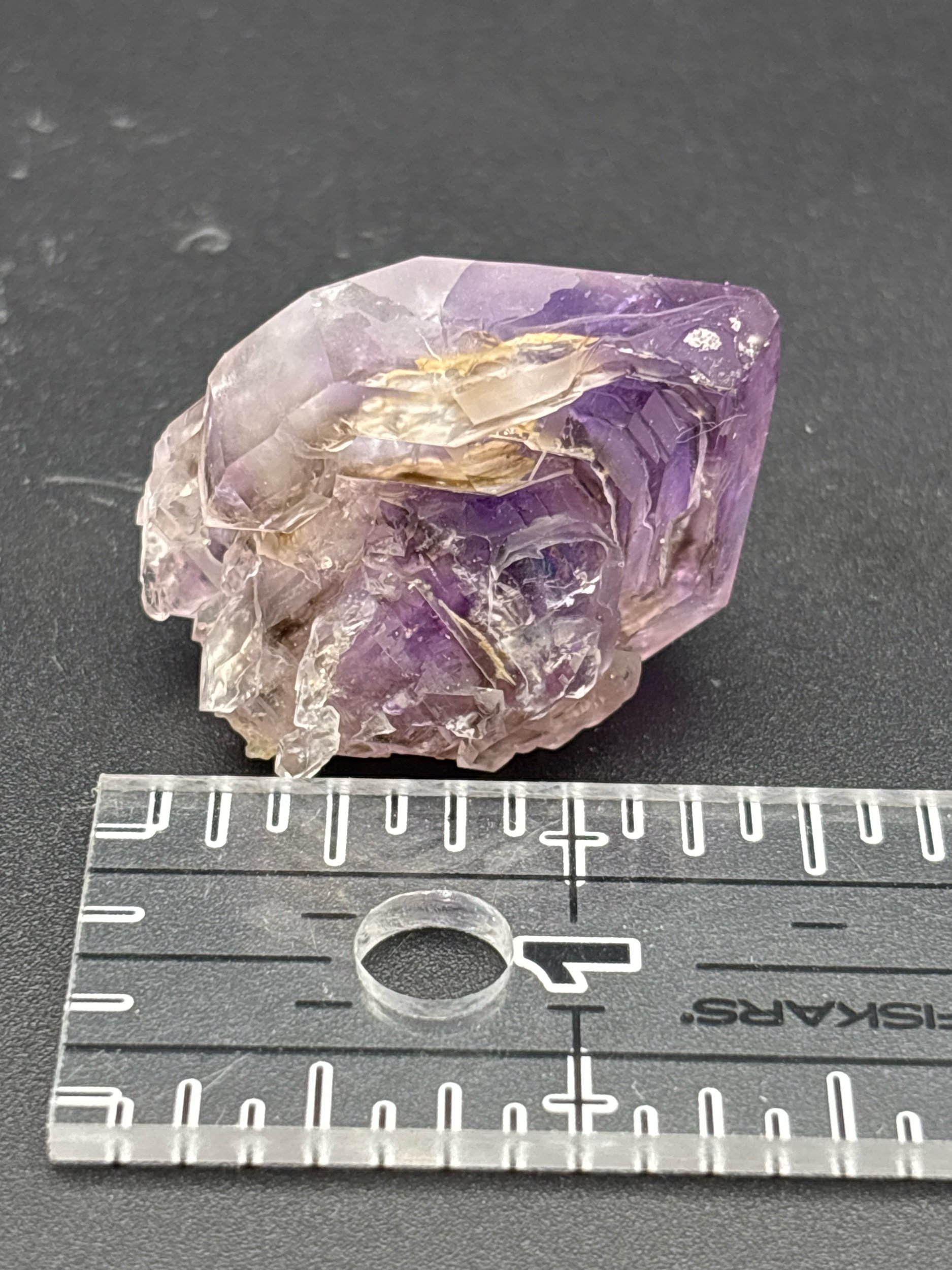
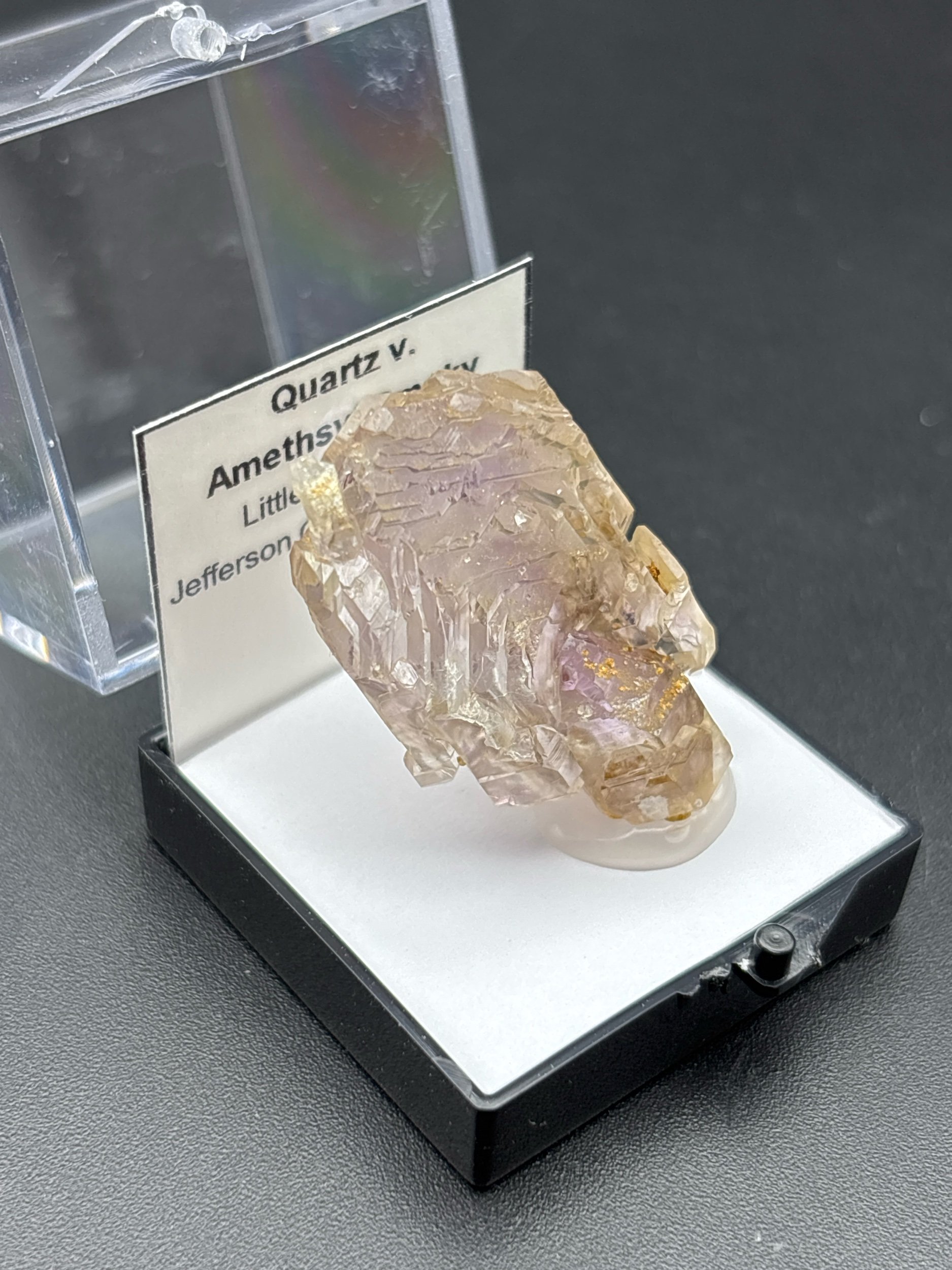
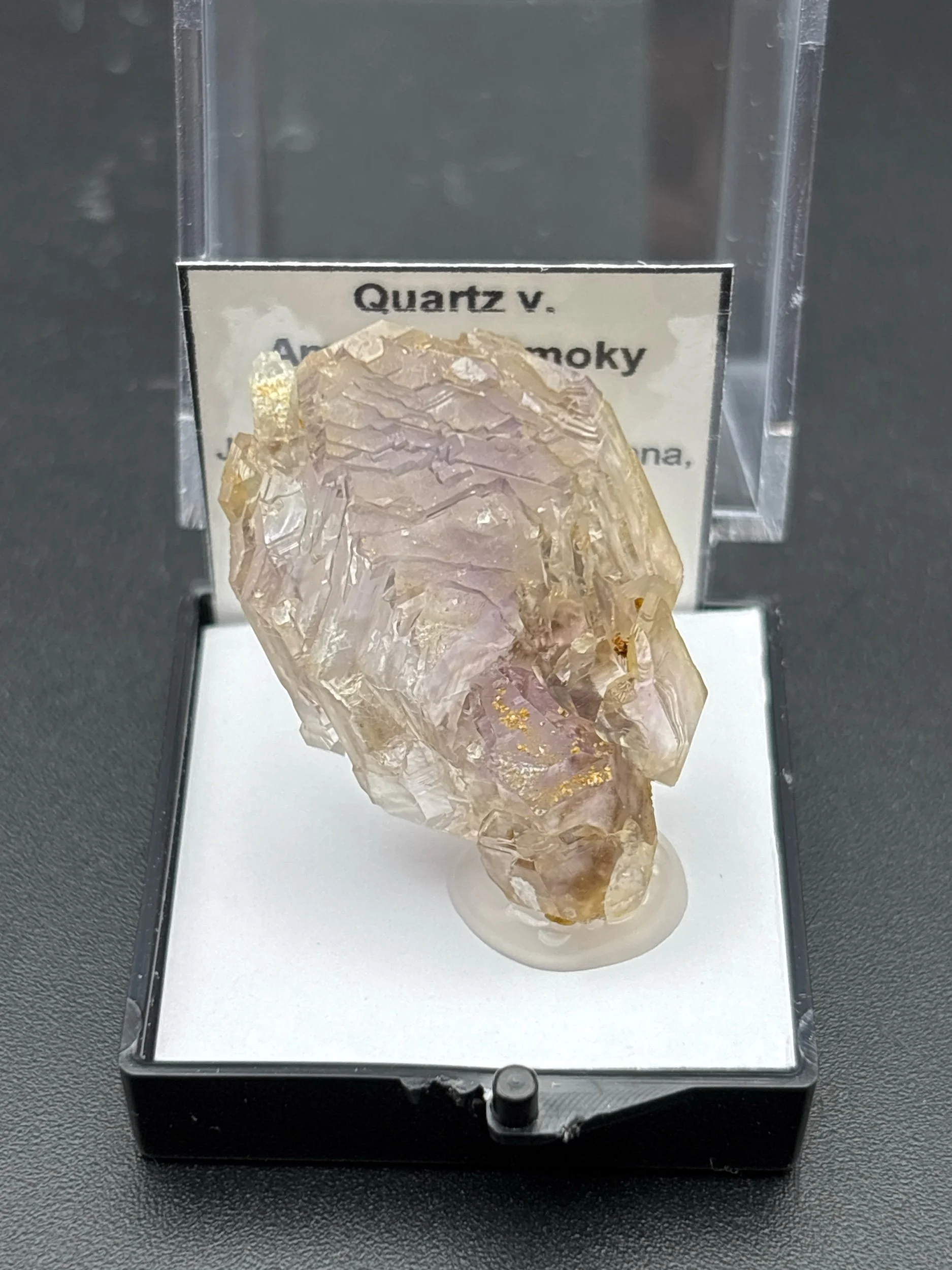
The Little Gem Mine was discovered by local gold prospectors in 1886. An article in "The Mineralogist" written in 1941 describes the travel from Butte by covered wagon, to the Nine Mile Inn, then subsequent travel to the deposit where collectors "filled their packs with amethyst" during the original find. In 1958 a Claim was filed by Oregon Geologist Jerry Gray. Gray worked the surface sporadically for 30+ years, brought in heavy equipment to build road access in the early 1990's. His goal was to create a secure working environment protected from trespassers. He tunneled about 100 feet through solid granite to reach the core, where he then put a raise. The narrow raise follows an aplite zone upwards and east; the raise opened a series of pockets that he extended into a drift, which ran parallel to the core. The present owner, Russ Hage, purchased the claim after Gray's death. Hage and working partner Mike Uphus together brought to light innumerable fine specimens. In 2013 the old drift in aplite was de-roofed and its access buried. In summer of 2022, local prospector Paul Senn took over mine management working side by side with owner Russ Hage. Since 2010 it has been worked from the surface, primarily by hand aided by small scale blasting and an excavator. Current work has exposed many pockets containing fine amethyst scepters and jacare' texture amethyst. Jacare' is a Portuguese term denoting alligator skin texture.
“The perfect miniature doesnt exis…” This is an absolutely lovely example of a singular amethyst crystal from the 2025 production. Numerous generations of amethyst pile over one another to create this beautiful end result.
Thank you so much for viewing! Please message for any further information
(1.1 × 0.8 × 1.5 in - 2.7 × 2.0 × 3.8 cm) 0.9oz / 24g
ORDERS SHIP MONDAYS
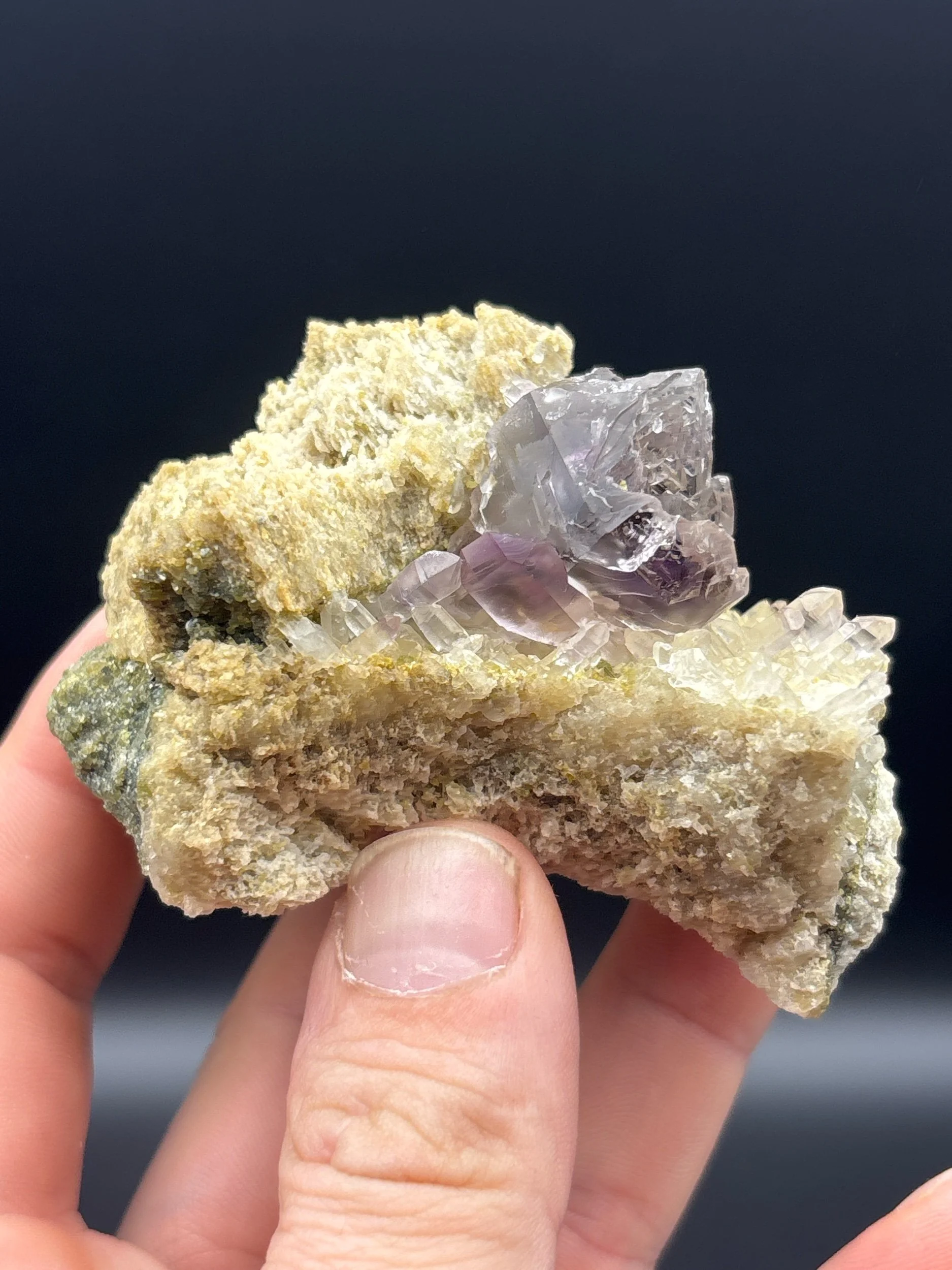
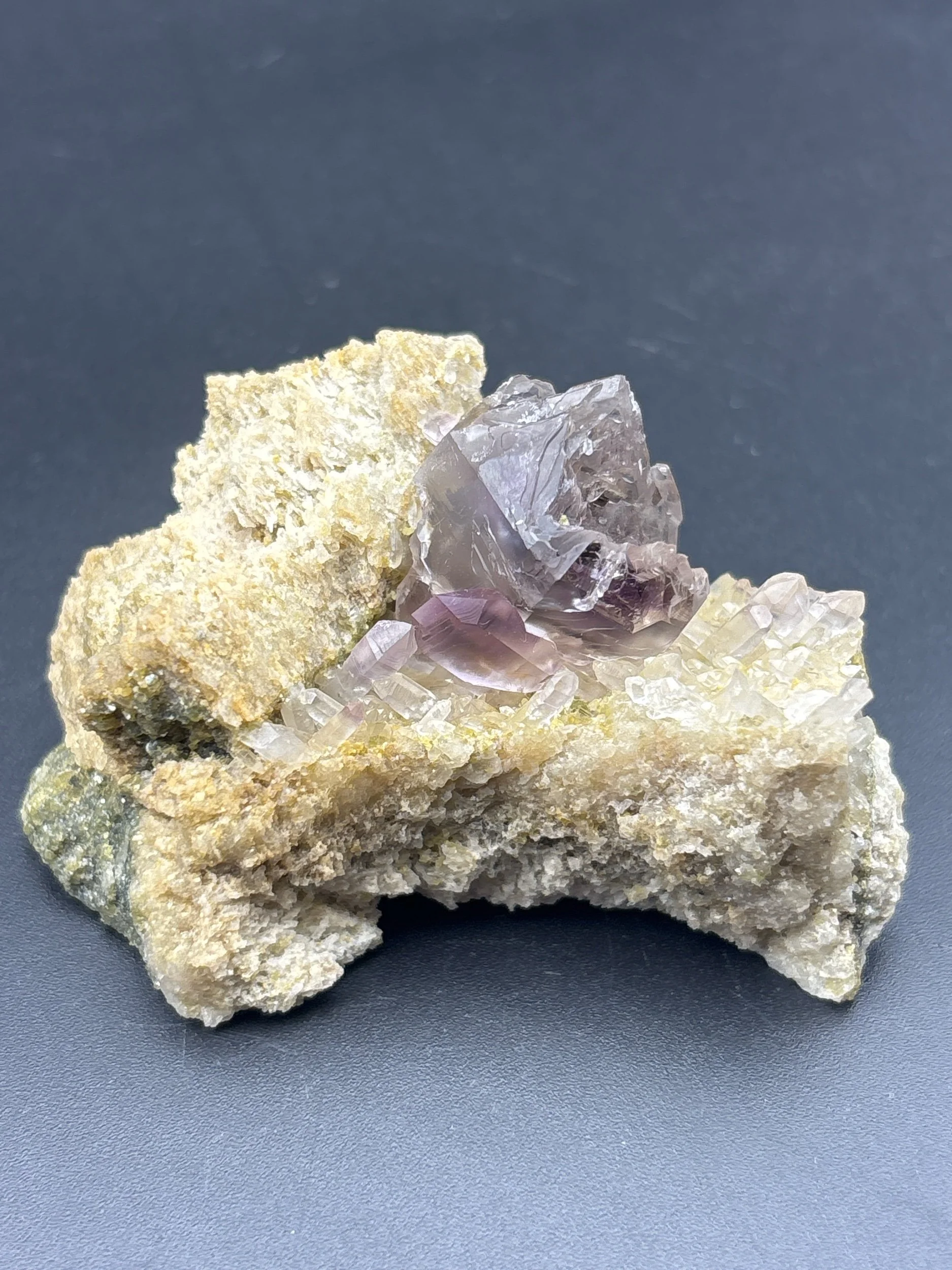
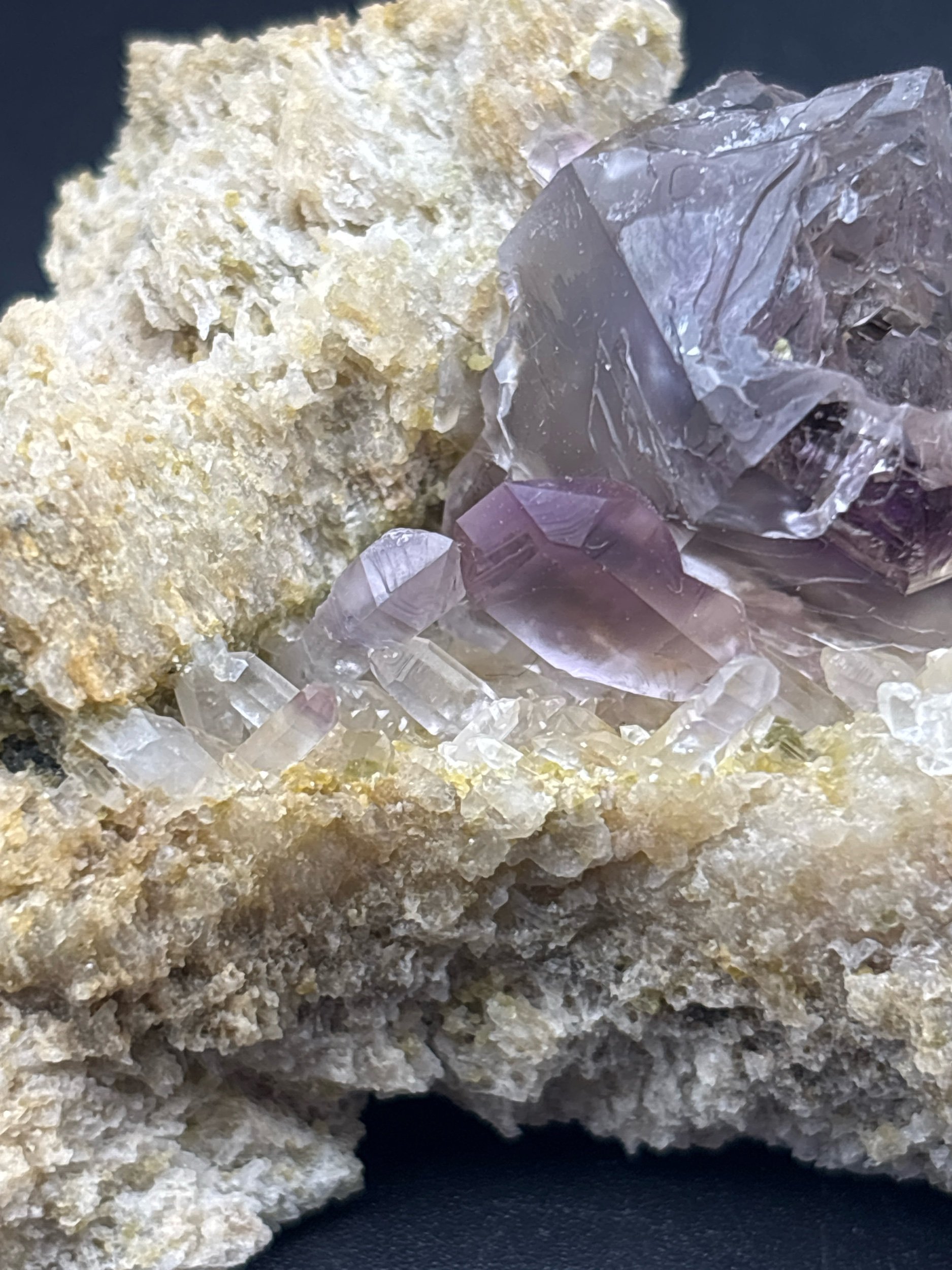
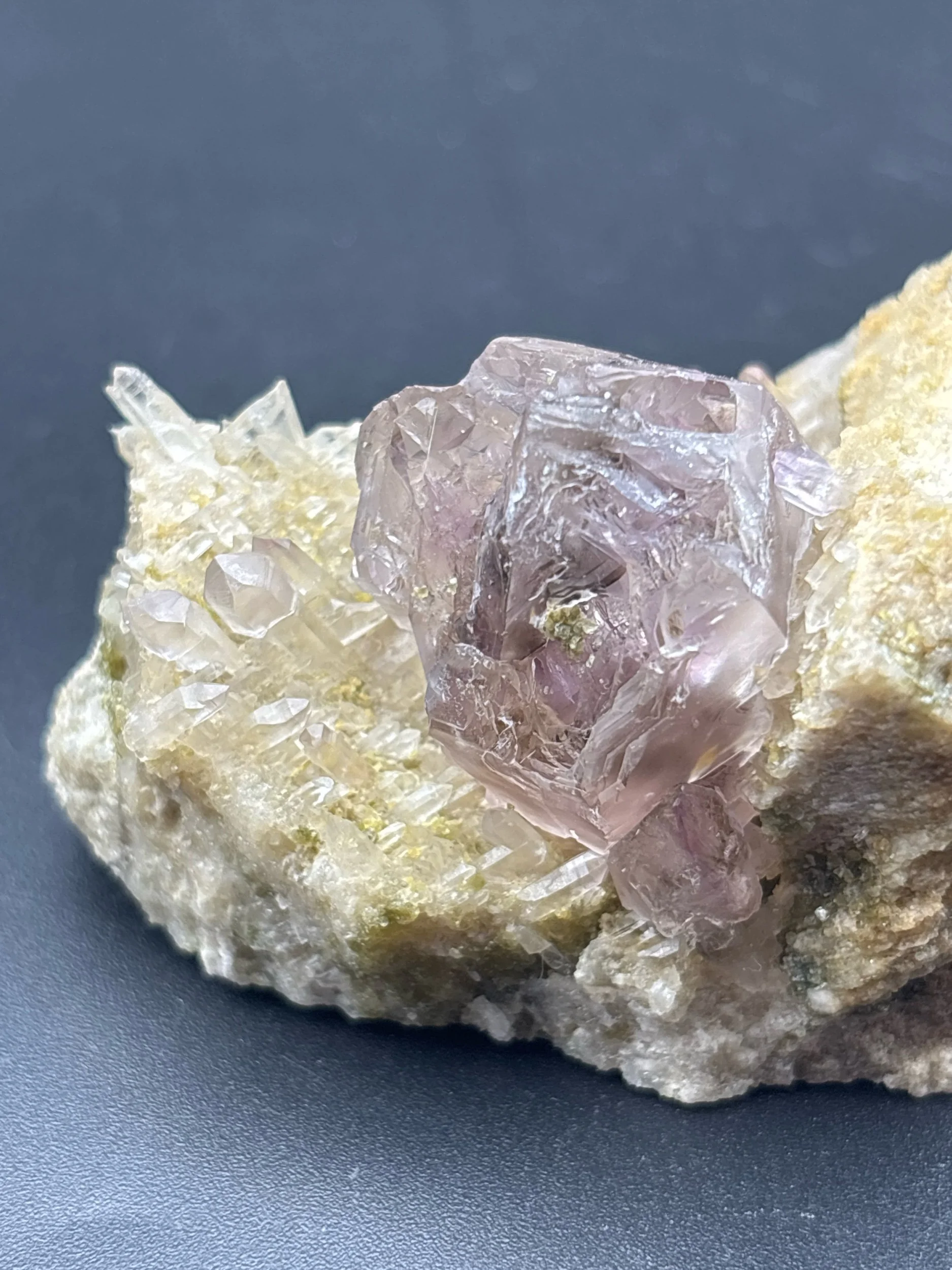
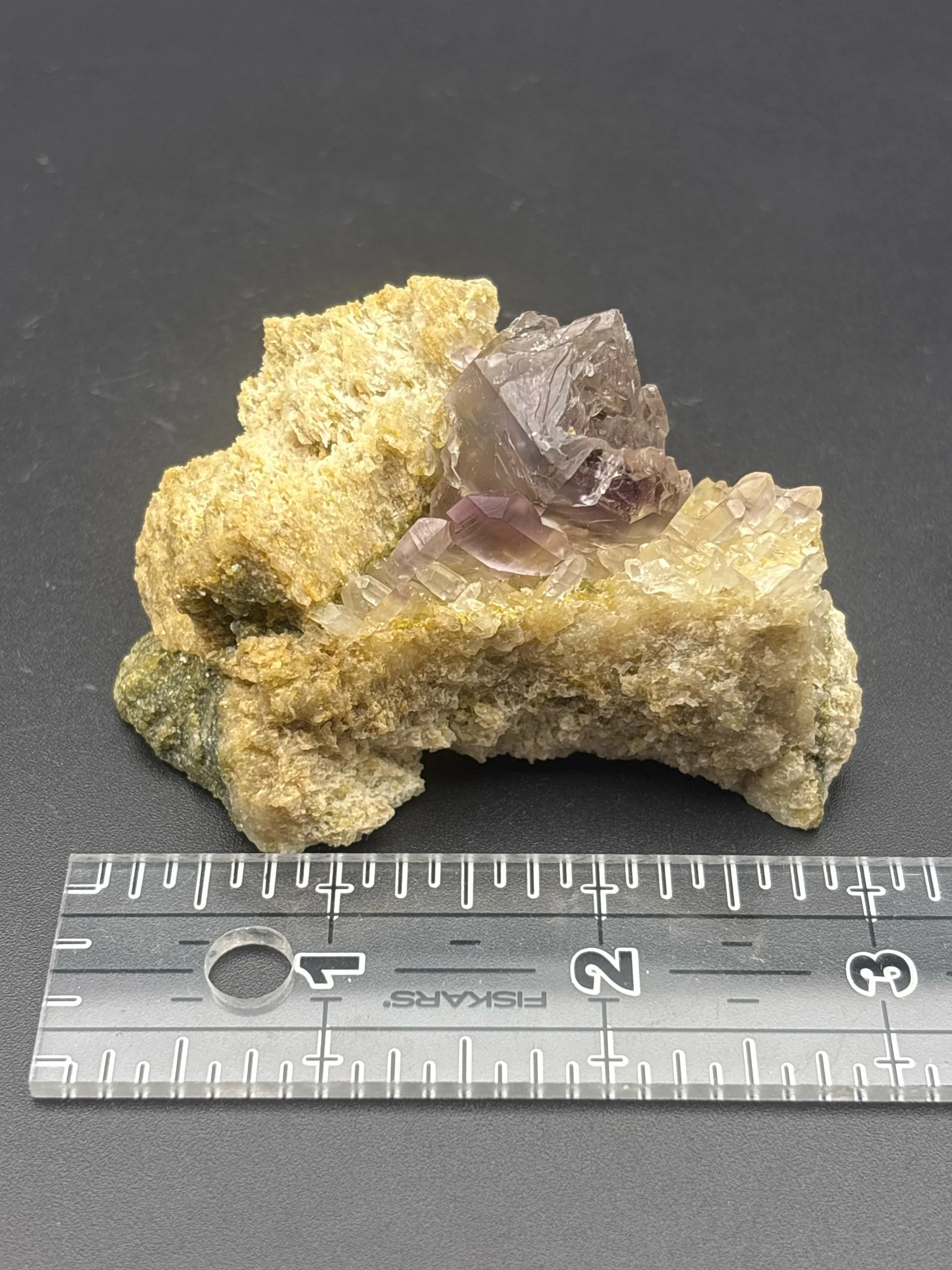
The Little Gem Mine was discovered by local gold prospectors in 1886. An article in "The Mineralogist" written in 1941 describes the travel from Butte by covered wagon, to the Nine Mile Inn, then subsequent travel to the deposit where collectors "filled their packs with amethyst" during the original find. In 1958 a Claim was filed by Oregon Geologist Jerry Gray. Gray worked the surface sporadically for 30+ years, brought in heavy equipment to build road access in the early 1990's. His goal was to create a secure working environment protected from trespassers. He tunneled about 100 feet through solid granite to reach the core, where he then put a raise. The narrow raise follows an aplite zone upwards and east; the raise opened a series of pockets that he extended into a drift, which ran parallel to the core. The present owner, Russ Hage, purchased the claim after Gray's death. Hage and working partner Mike Uphus together brought to light innumerable fine specimens. In 2013 the old drift in aplite was de-roofed and its access buried. In summer of 2022, local prospector Paul Senn took over mine management working side by side with owner Russ Hage. Since 2010 it has been worked from the surface, primarily by hand aided by small scale blasting and an excavator. Current work has exposed many pockets containing fine amethyst scepters and jacare' texture amethyst. Jacare' is a Portuguese term denoting alligator skin texture.
This specimen is an exceptional miniature example of microcline gently coated in sericite mica, with a protruding amethyst harvested in the 2025 season. Formatted for display, numerous quartz crystals line the base of the etched feldspar grading into a prominent crystal with Brazil twinning! Skeletal features are reminiscent in the specimen, and it retains its place as a superb and uncommon example of matrix from the Little Gem.
Thank you so much for viewing! Please message for any further information
(3.0 × 1.8 × 1.5 in - 7.6 × 4.5 × 3.8 cm) 4.6oz / 130g
ORDERS SHIP MONDAYS
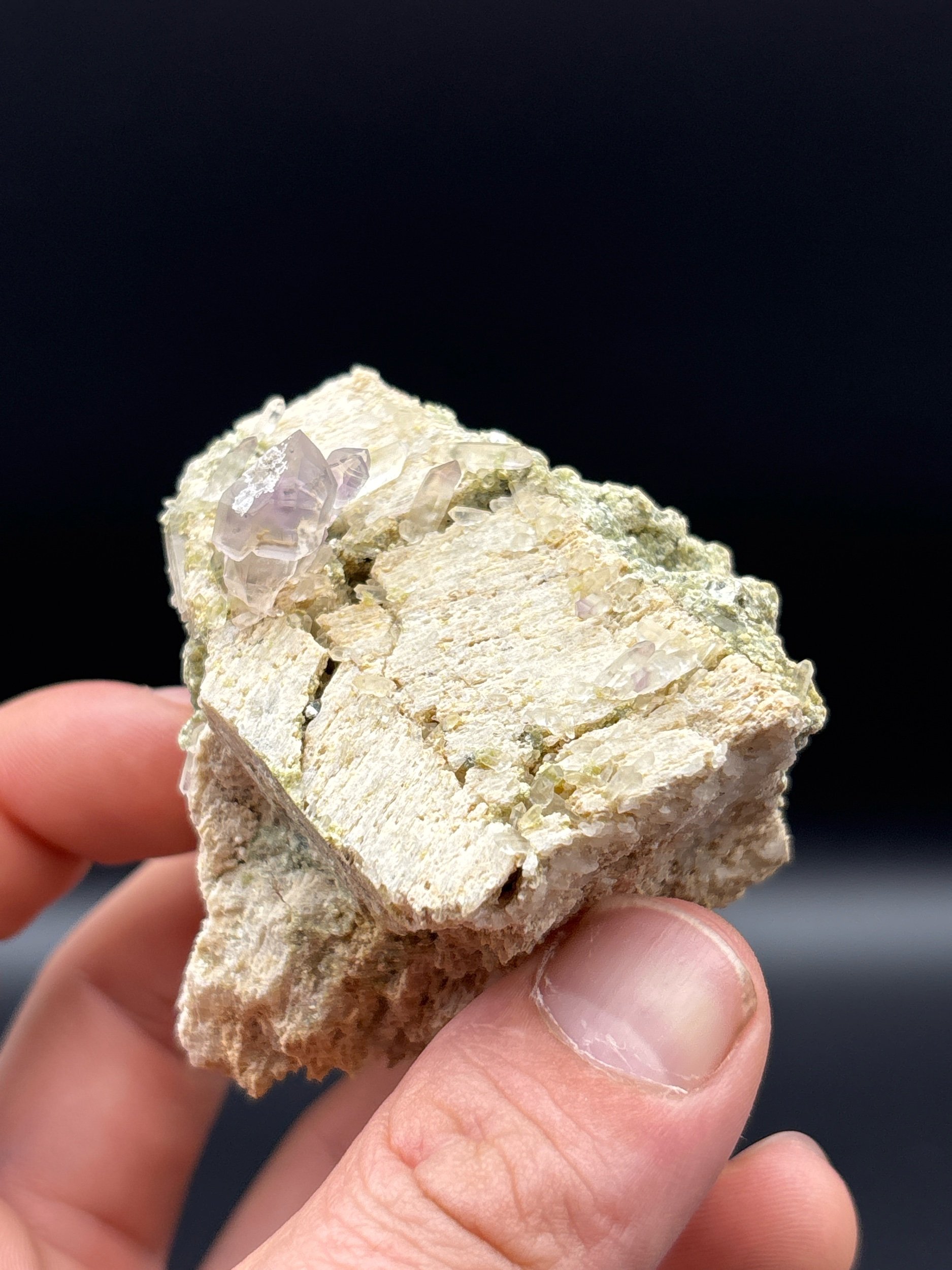
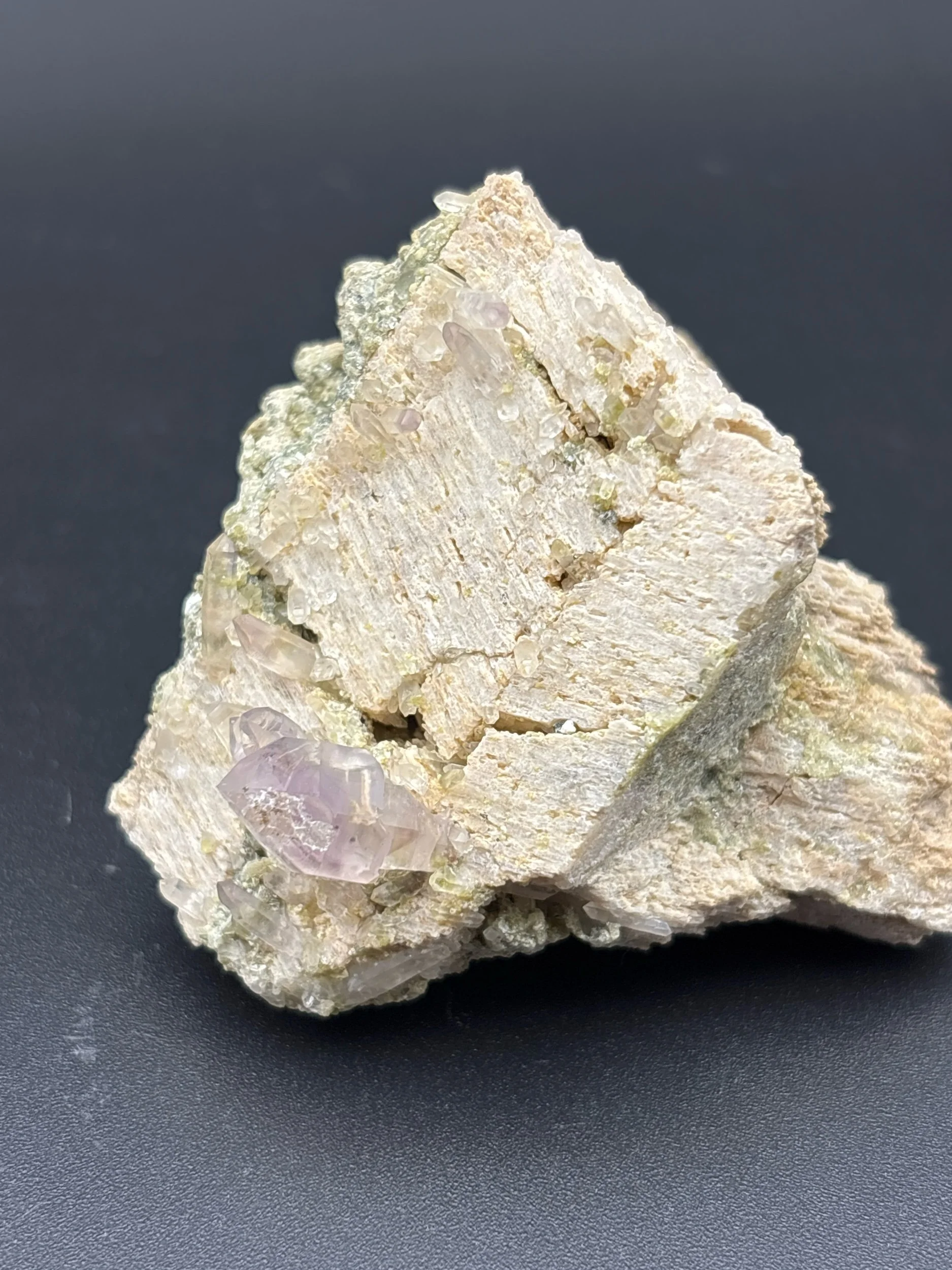
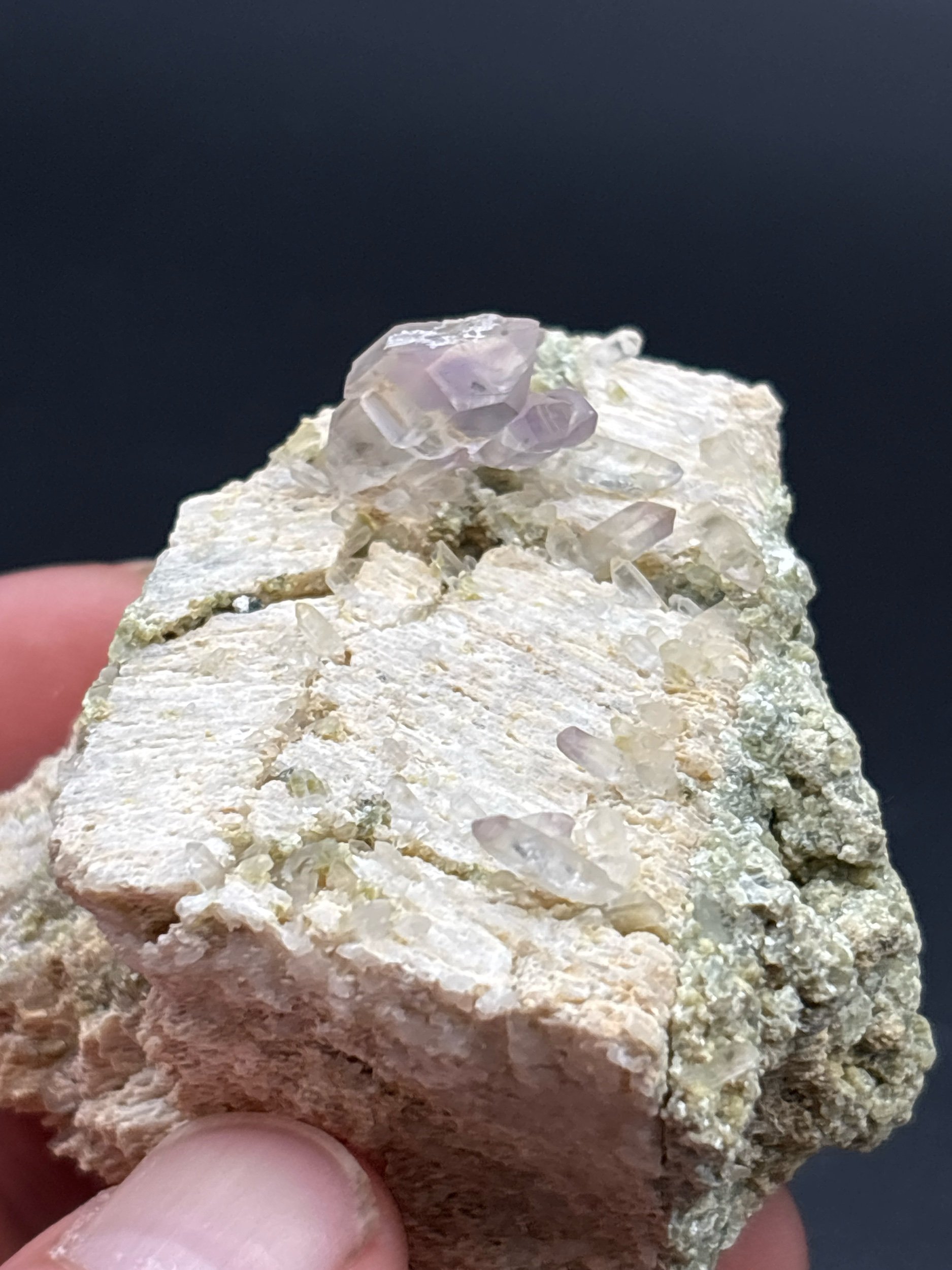
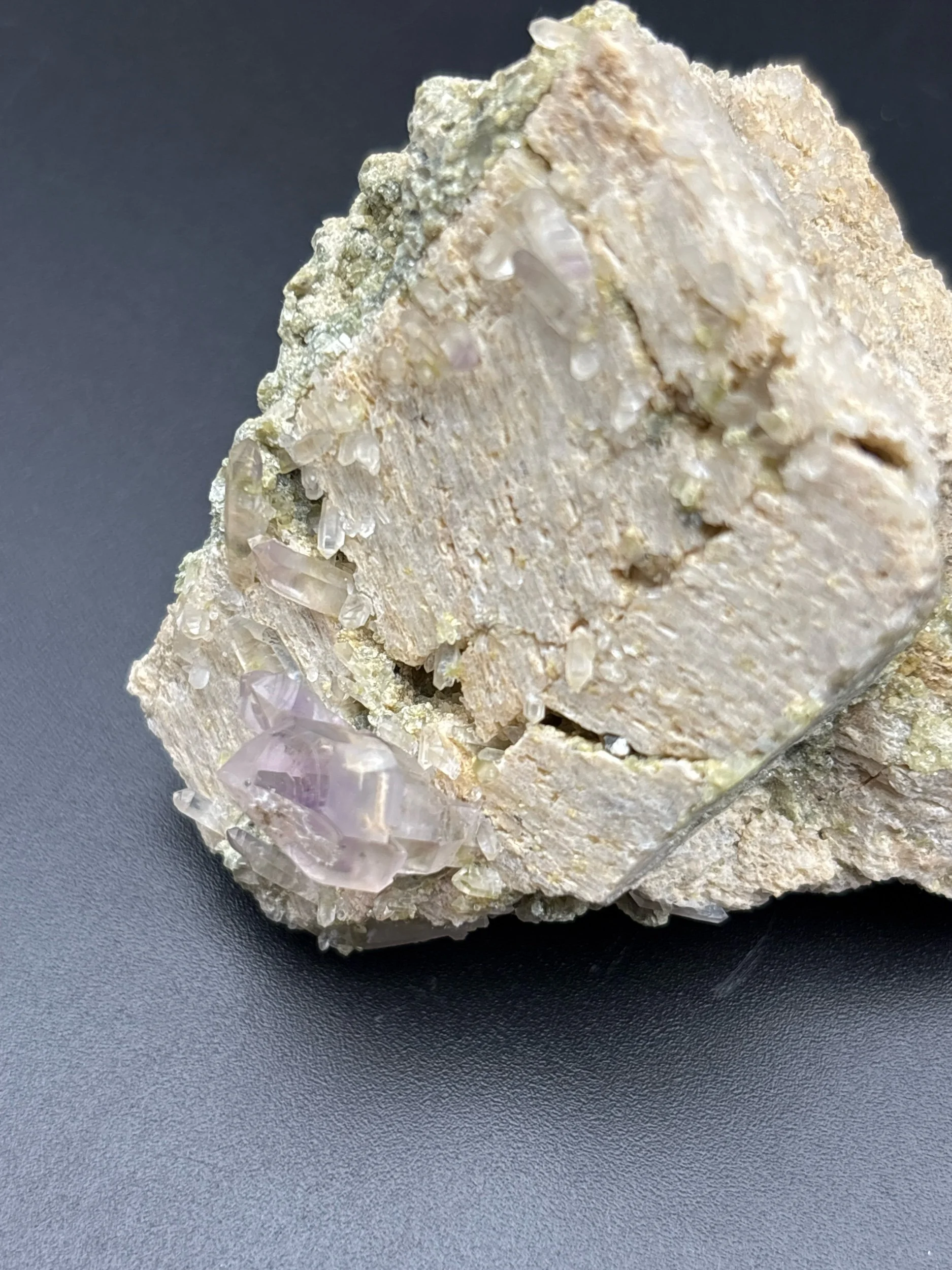
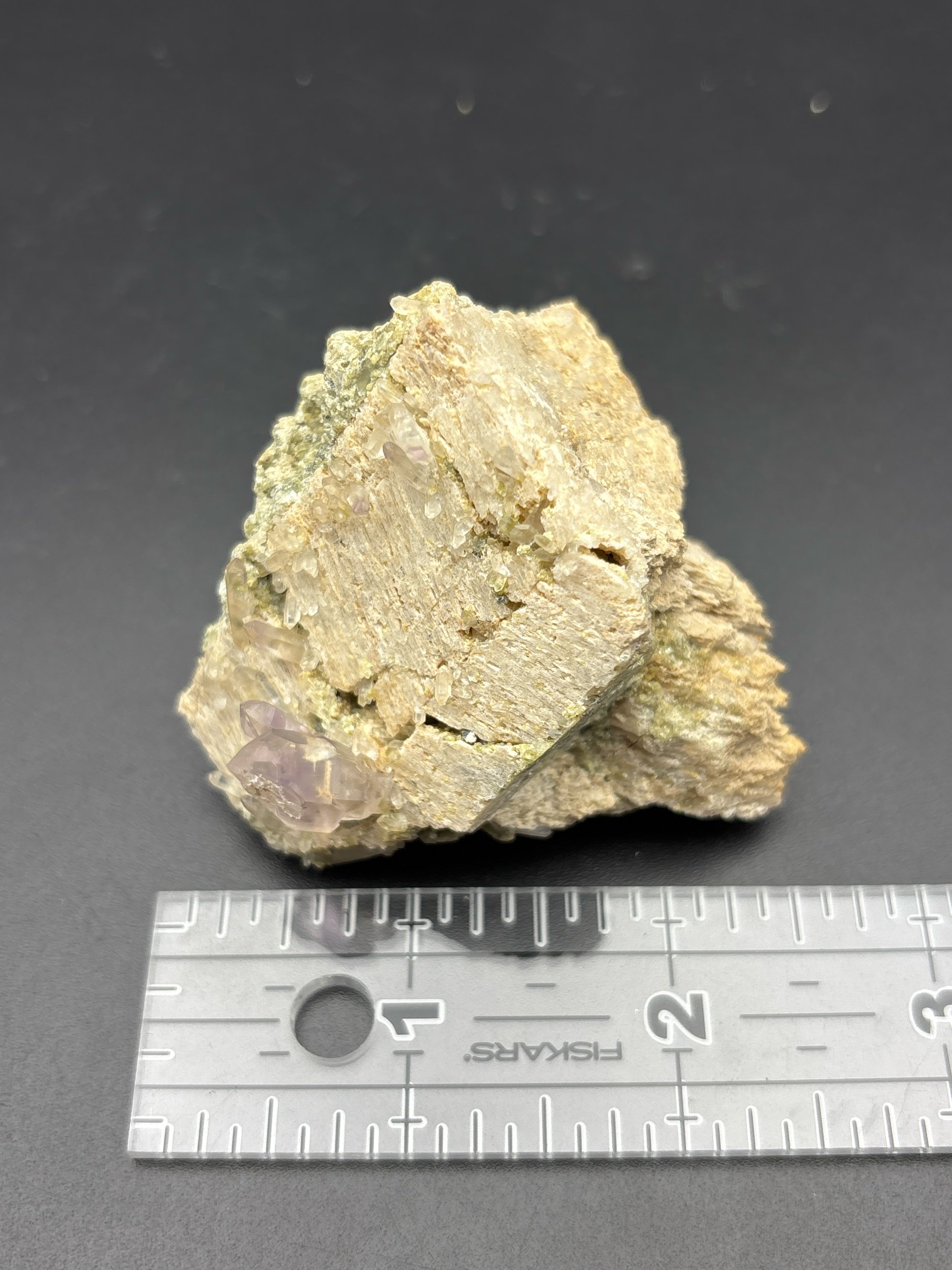
The Little Gem Mine was discovered by local gold prospectors in 1886. An article in "The Mineralogist" written in 1941 describes the travel from Butte by covered wagon, to the Nine Mile Inn, then subsequent travel to the deposit where collectors "filled their packs with amethyst" during the original find. In 1958 a Claim was filed by Oregon Geologist Jerry Gray. Gray worked the surface sporadically for 30+ years, brought in heavy equipment to build road access in the early 1990's. His goal was to create a secure working environment protected from trespassers. He tunneled about 100 feet through solid granite to reach the core, where he then put a raise. The narrow raise follows an aplite zone upwards and east; the raise opened a series of pockets that he extended into a drift, which ran parallel to the core. The present owner, Russ Hage, purchased the claim after Gray's death. Hage and working partner Mike Uphus together brought to light innumerable fine specimens. In 2013 the old drift in aplite was de-roofed and its access buried. In summer of 2022, local prospector Paul Senn took over mine management working side by side with owner Russ Hage. Since 2010 it has been worked from the surface, primarily by hand aided by small scale blasting and an excavator. Current work has exposed many pockets containing fine amethyst scepters and jacare' texture amethyst. Jacare' is a Portuguese term denoting alligator skin texture.
This specimen is an exceptional miniature example of etched microcline lightly coated in sericite mica, with a protruding amethyst harvested in the 2025 season. For how small the amethyst is, the scepter displays wonderful pink color. From a geologic perspective, it is worth noting the etched zones on the microcline allowed ready nucleation sites for the later stage quartz!
Thank you so much for viewing! Please message for any further information
(2.0 × 2.0 × 2.4 in - 5.0 × 5.0 × 6.0 cm) 3.9oz / 111g
ORDERS SHIP MONDAYS
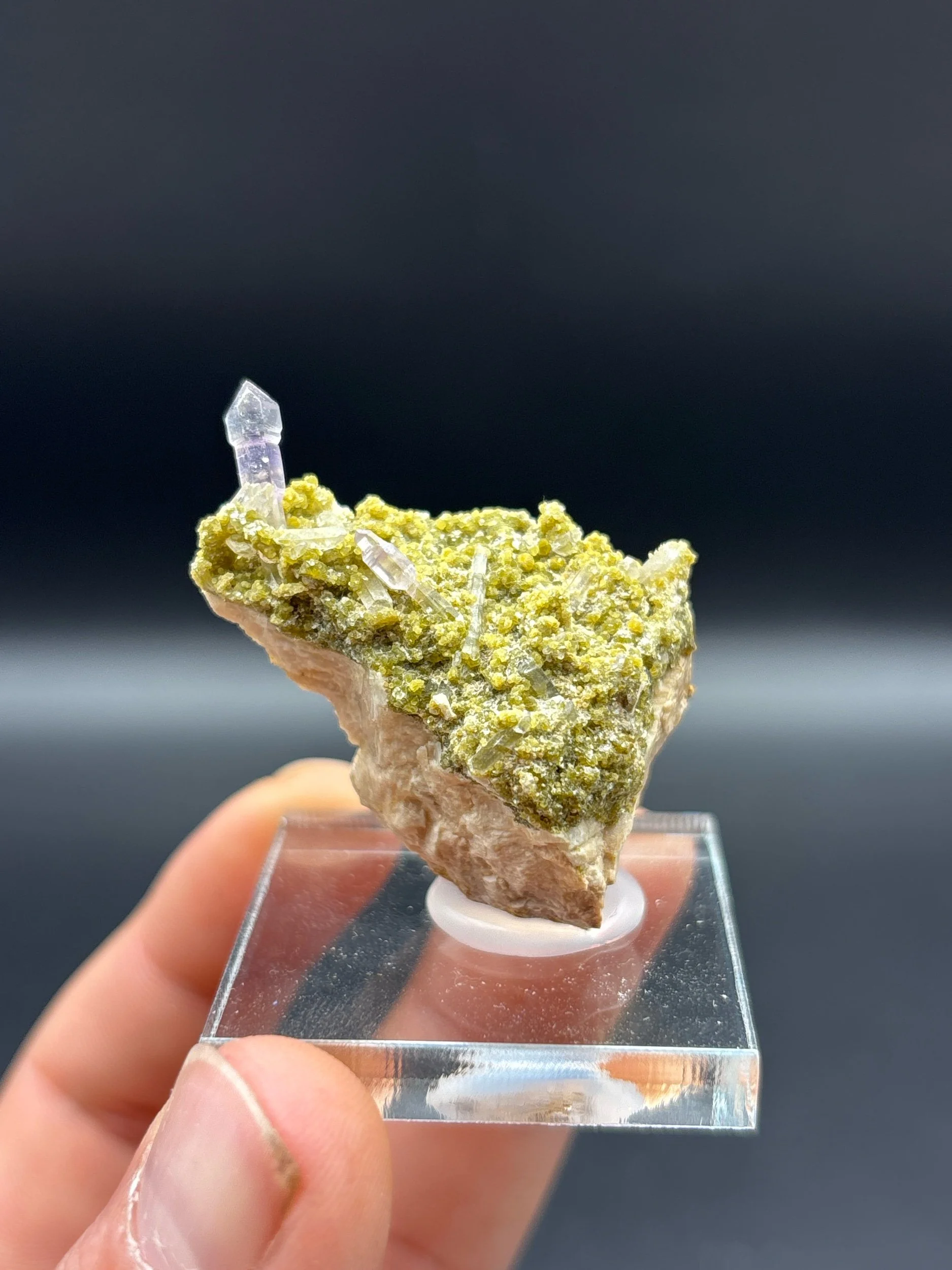
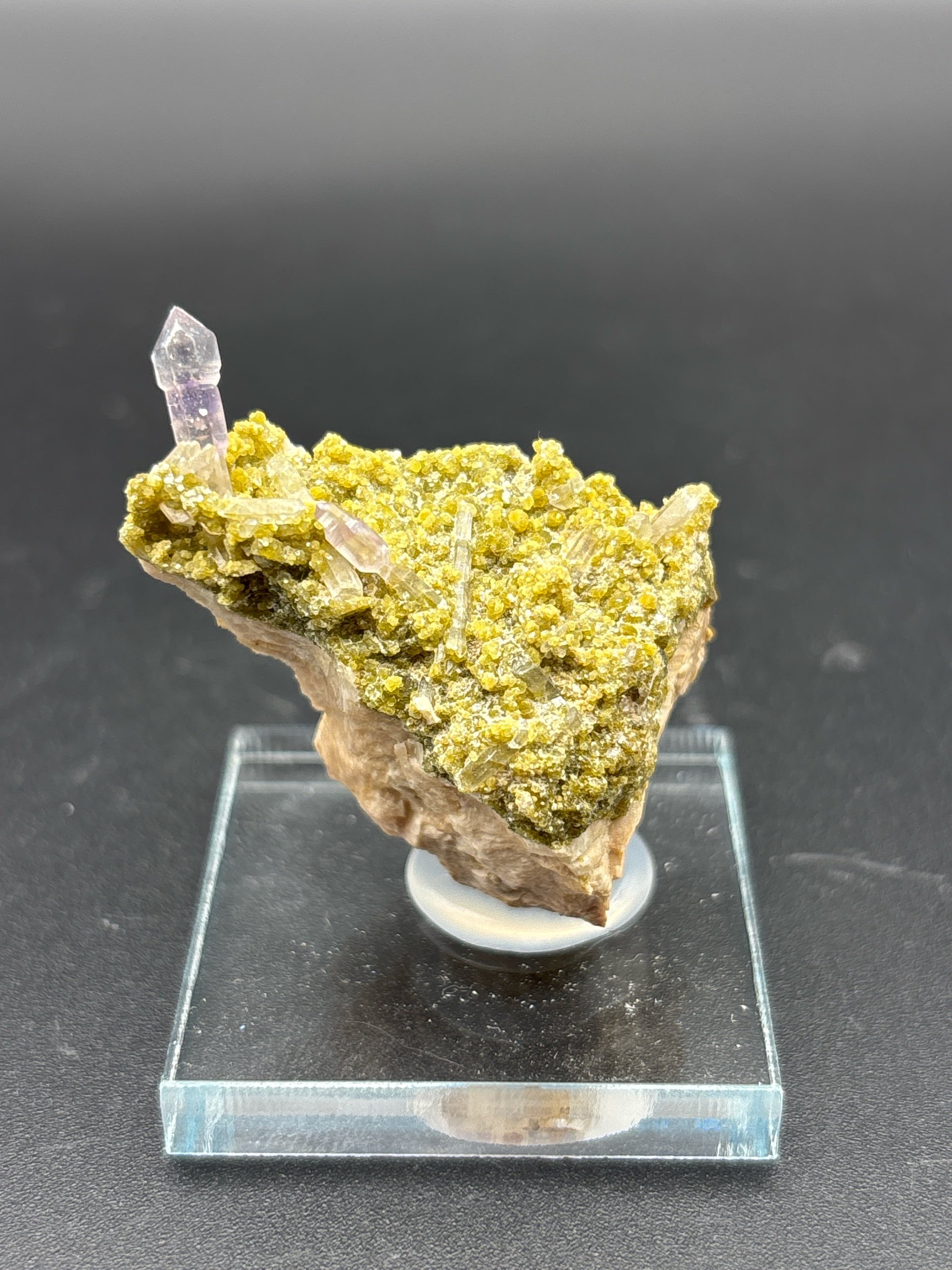
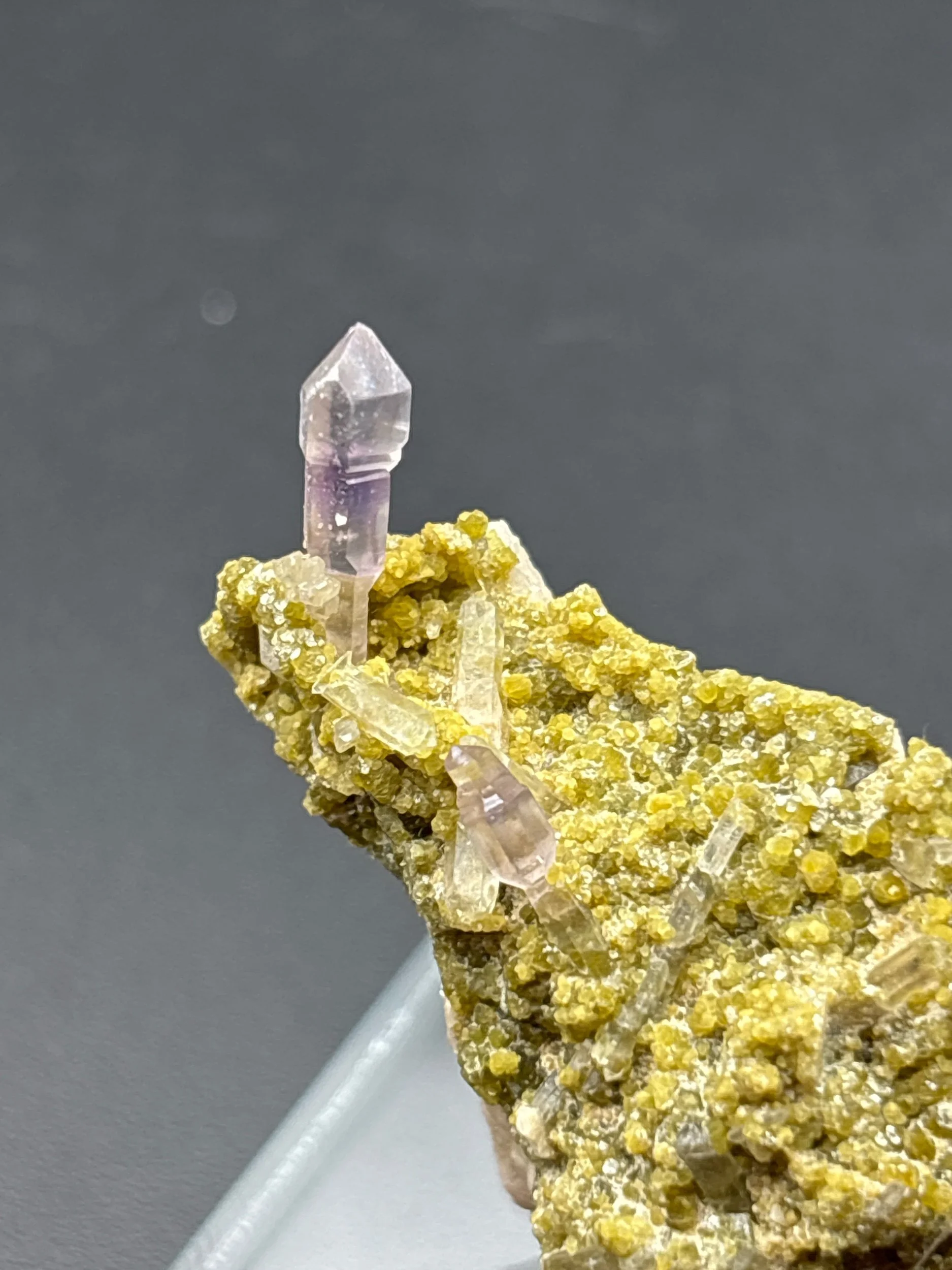
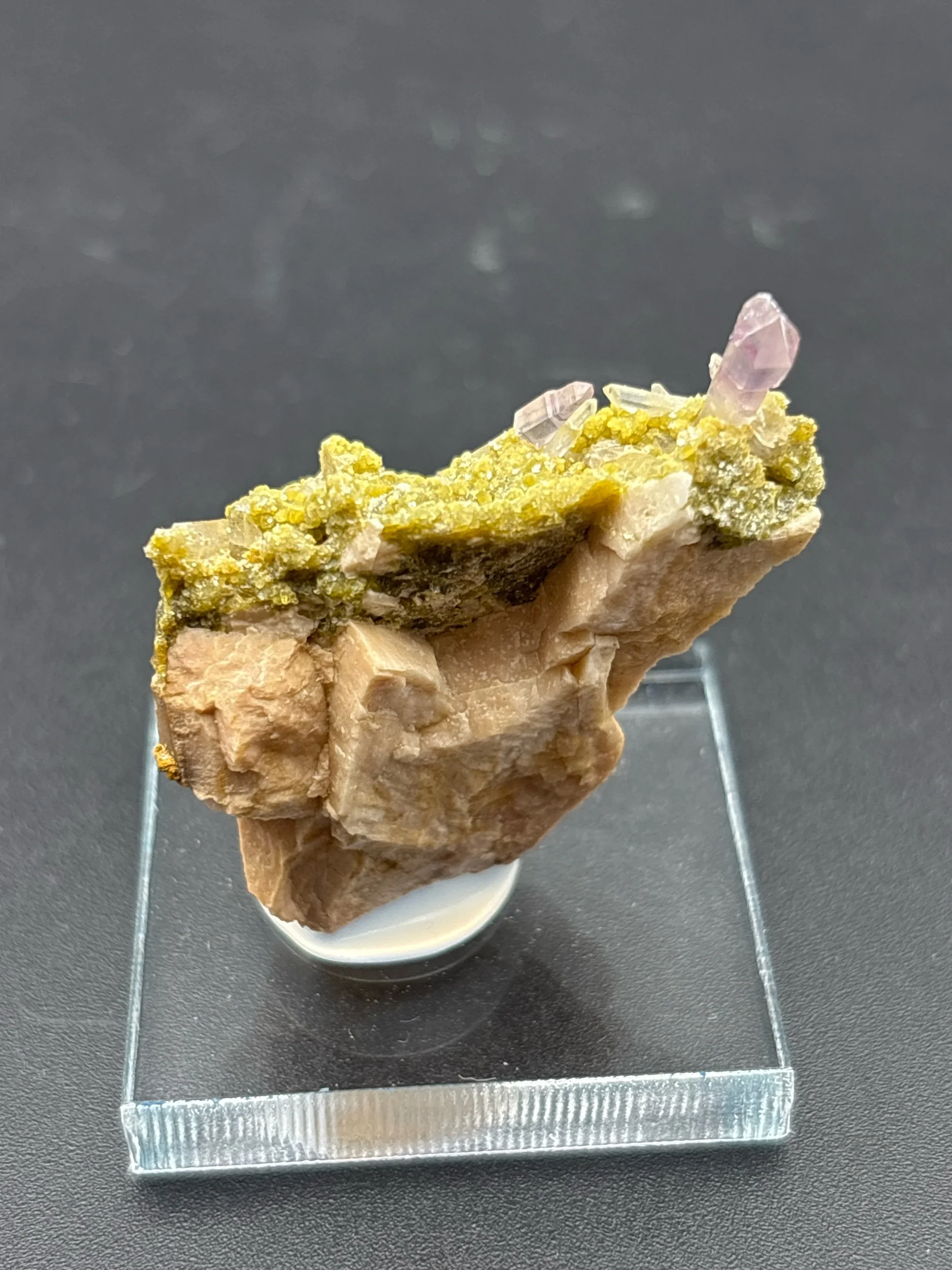
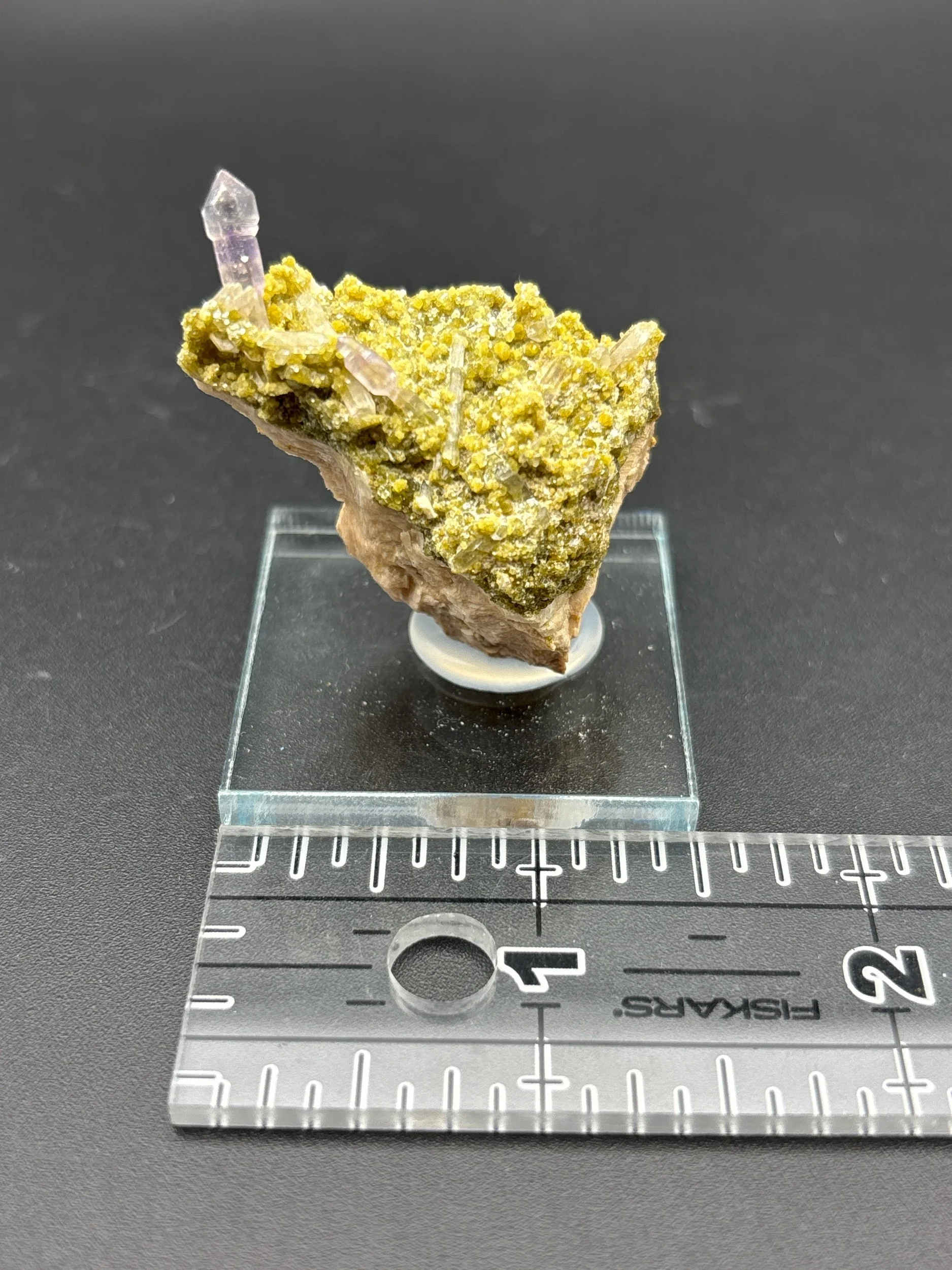
The Little Gem Mine was discovered by local gold prospectors in 1886. An article in "The Mineralogist" written in 1941 describes the travel from Butte by covered wagon, to the Nine Mile Inn, then subsequent travel to the deposit where collectors "filled their packs with amethyst" during the original find. In 1958 a Claim was filed by Oregon Geologist Jerry Gray. Gray worked the surface sporadically for 30+ years, brought in heavy equipment to build road access in the early 1990's. His goal was to create a secure working environment protected from trespassers. He tunneled about 100 feet through solid granite to reach the core, where he then put a raise. The narrow raise follows an aplite zone upwards and east; the raise opened a series of pockets that he extended into a drift, which ran parallel to the core. The present owner, Russ Hage, purchased the claim after Gray's death. Hage and working partner Mike Uphus together brought to light innumerable fine specimens. In 2013 the old drift in aplite was de-roofed and its access buried. In summer of 2022, local prospector Paul Senn took over mine management working side by side with owner Russ Hage. Since 2010 it has been worked from the surface, primarily by hand aided by small scale blasting and an excavator. Current work has exposed many pockets containing fine amethyst scepters and jacare' texture amethyst. Jacare' is a Portuguese term denoting alligator skin texture.
This specimen is an exceptional miniature example of microcline coated in sericite mica, with a protruding amethyst harvested in the 2023 season. One word really defines this piece: CUTE! For how small the amethyst is, the scepter displays wonderful color in contrast especially to the green sericite.
Thank you so much for viewing! Please message for any further information
(1.5 × 1.9 × 1.6 in - 3.8 × 4.8 × 4.0 cm) 1.1oz / 31g
ORDERS SHIP MONDAYS
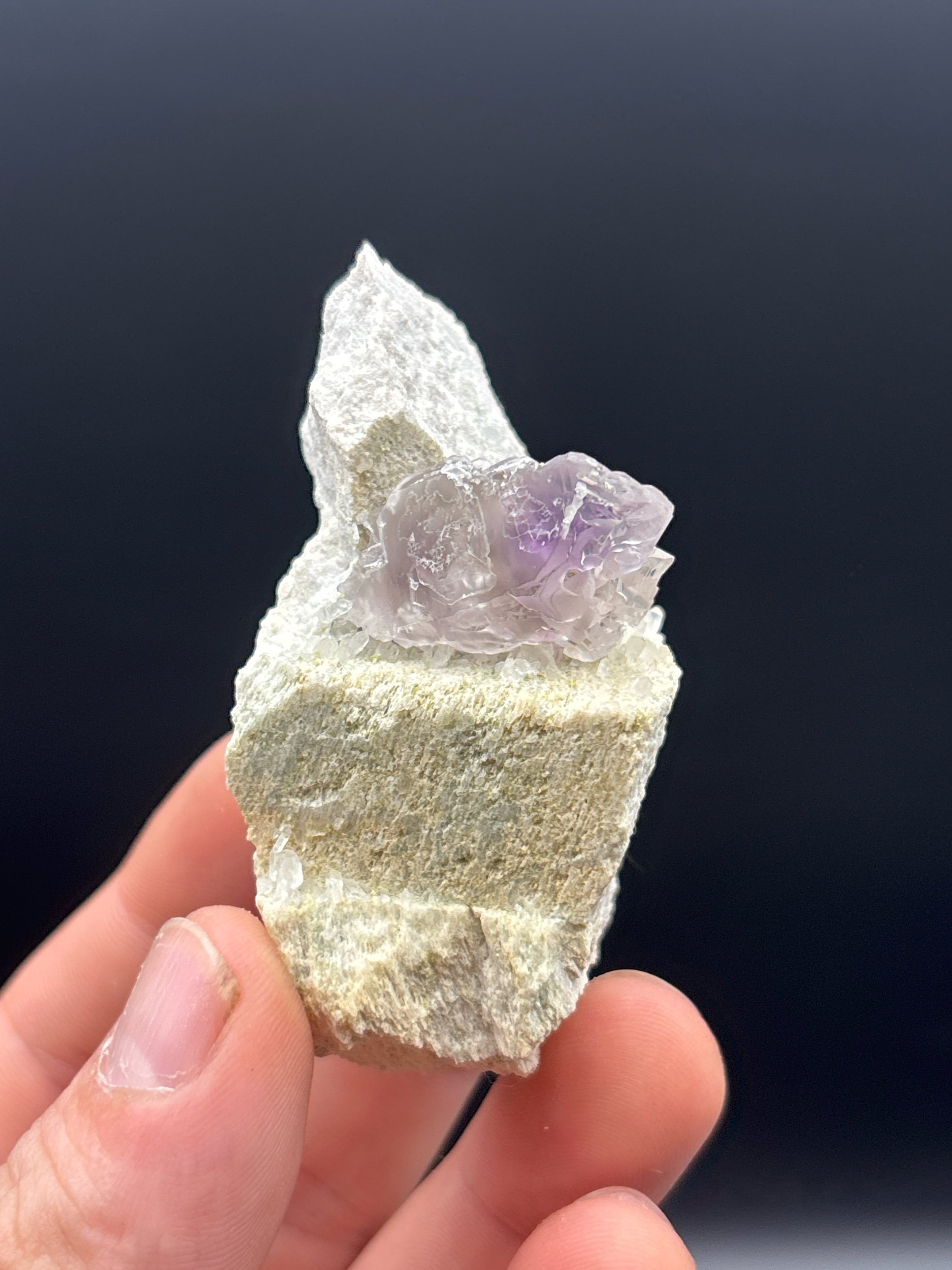
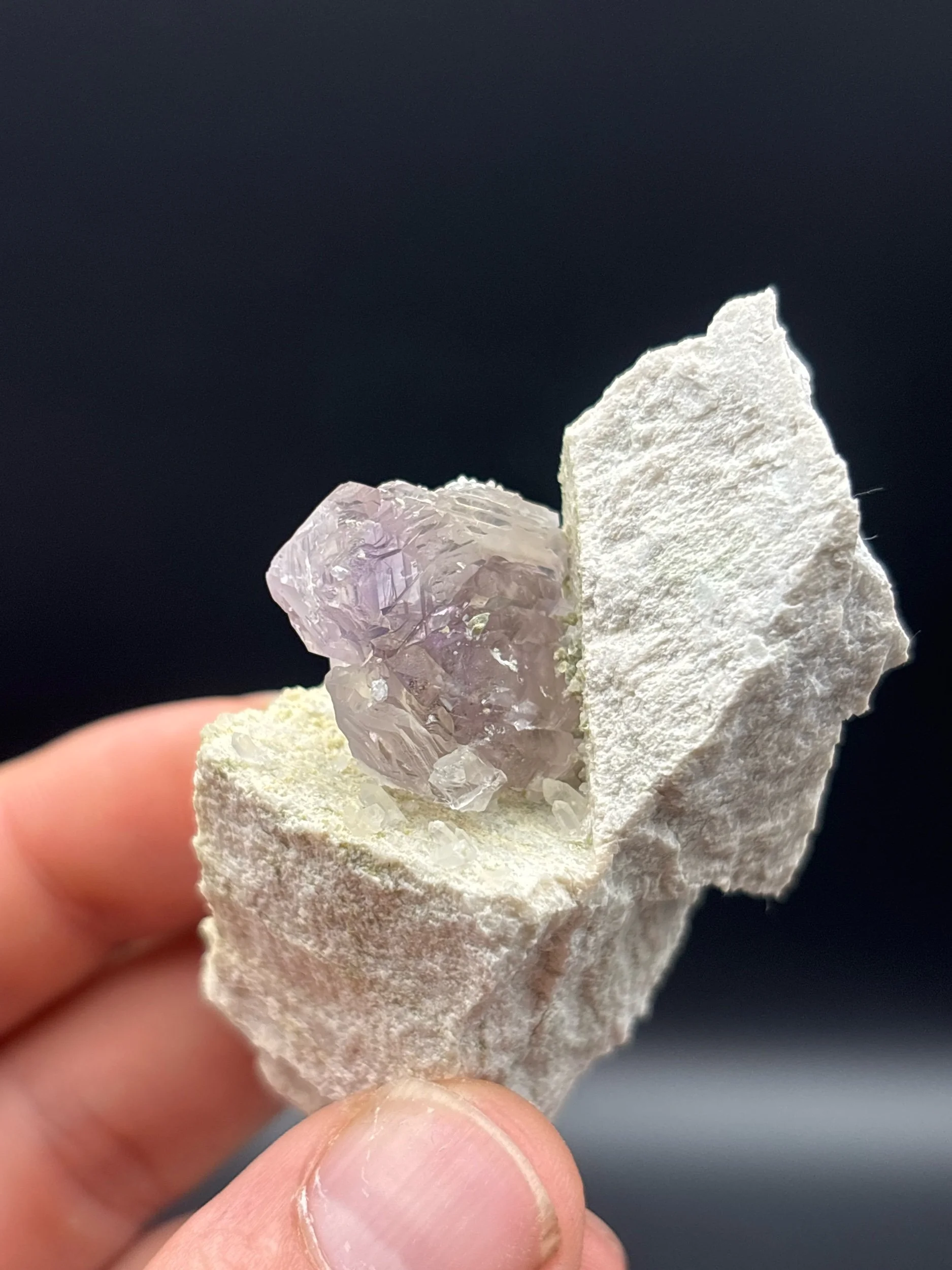
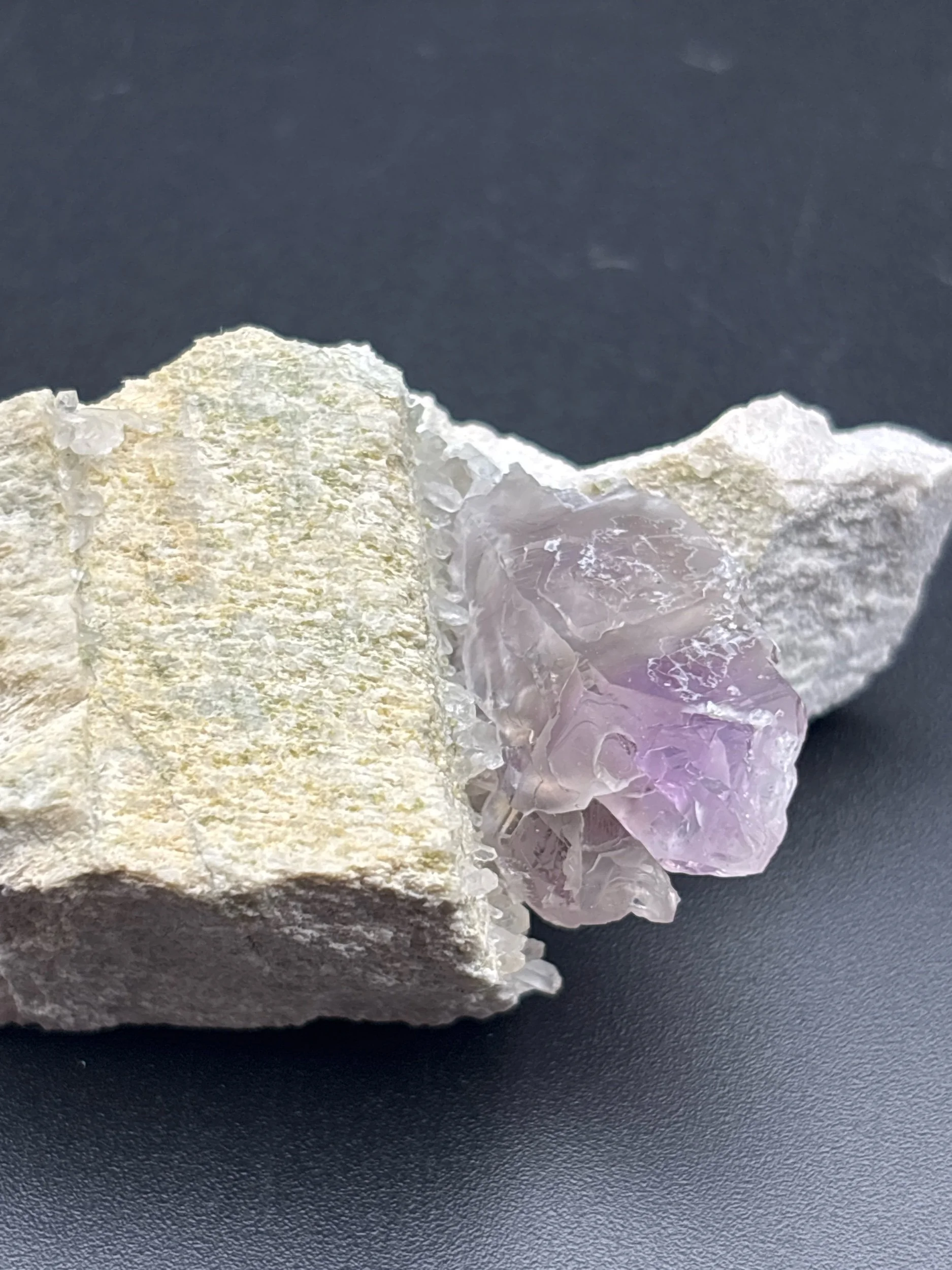
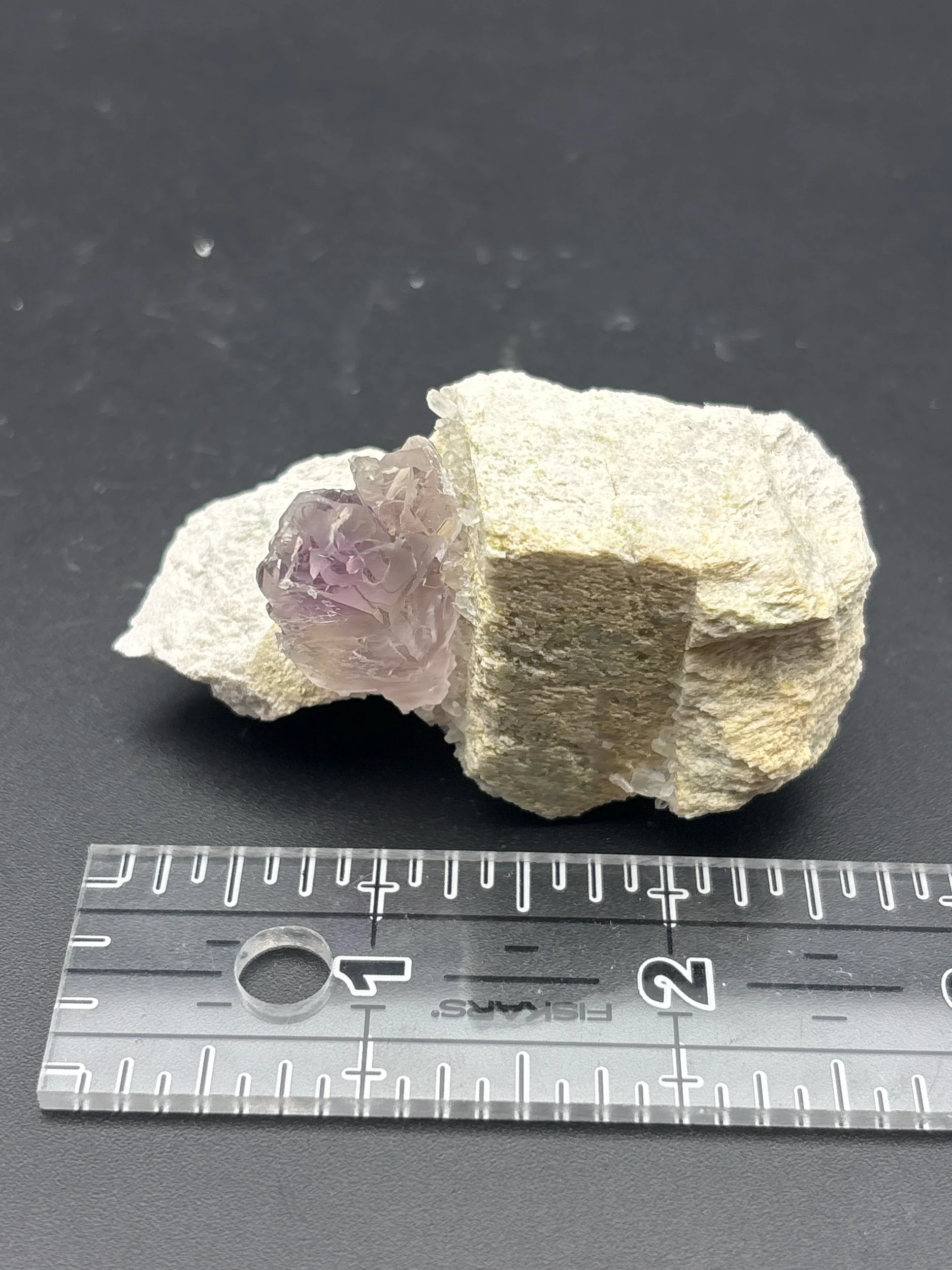
The Little Gem Mine was discovered by local gold prospectors in 1886. An article in "The Mineralogist" written in 1941 describes the travel from Butte by covered wagon, to the Nine Mile Inn, then subsequent travel to the deposit where collectors "filled their packs with amethyst" during the original find. In 1958 a Claim was filed by Oregon Geologist Jerry Gray. Gray worked the surface sporadically for 30+ years, brought in heavy equipment to build road access in the early 1990's. His goal was to create a secure working environment protected from trespassers. He tunneled about 100 feet through solid granite to reach the core, where he then put a raise. The narrow raise follows an aplite zone upwards and east; the raise opened a series of pockets that he extended into a drift, which ran parallel to the core. The present owner, Russ Hage, purchased the claim after Gray's death. Hage and working partner Mike Uphus together brought to light innumerable fine specimens. In 2013 the old drift in aplite was de-roofed and its access buried. In summer of 2022, local prospector Paul Senn took over mine management working side by side with owner Russ Hage. Since 2010 it has been worked from the surface, primarily by hand aided by small scale blasting and an excavator. Current work has exposed many pockets containing fine amethyst scepters and jacare' texture amethyst. Jacare' is a Portuguese term denoting alligator skin texture.
This specimen is a beautiful miniature example of microcline with a protruding amethyst, harvested in the 2023 season. It exhibits excellent luster and good color. The importance of such a specimen is to show the unique conditions the “fingerprint” style amethyst grows in, encompassing nearly the entirety of its feldspar walled pocket. Simple, yet elegant.
Thank you so much for viewing! Please message for any further information
(2.7 × 1.4 × 1.3 in - 6.8 × 3.5 × 3.3 cm) 2.6oz / 73g
ORDERS SHIP MONDAYS
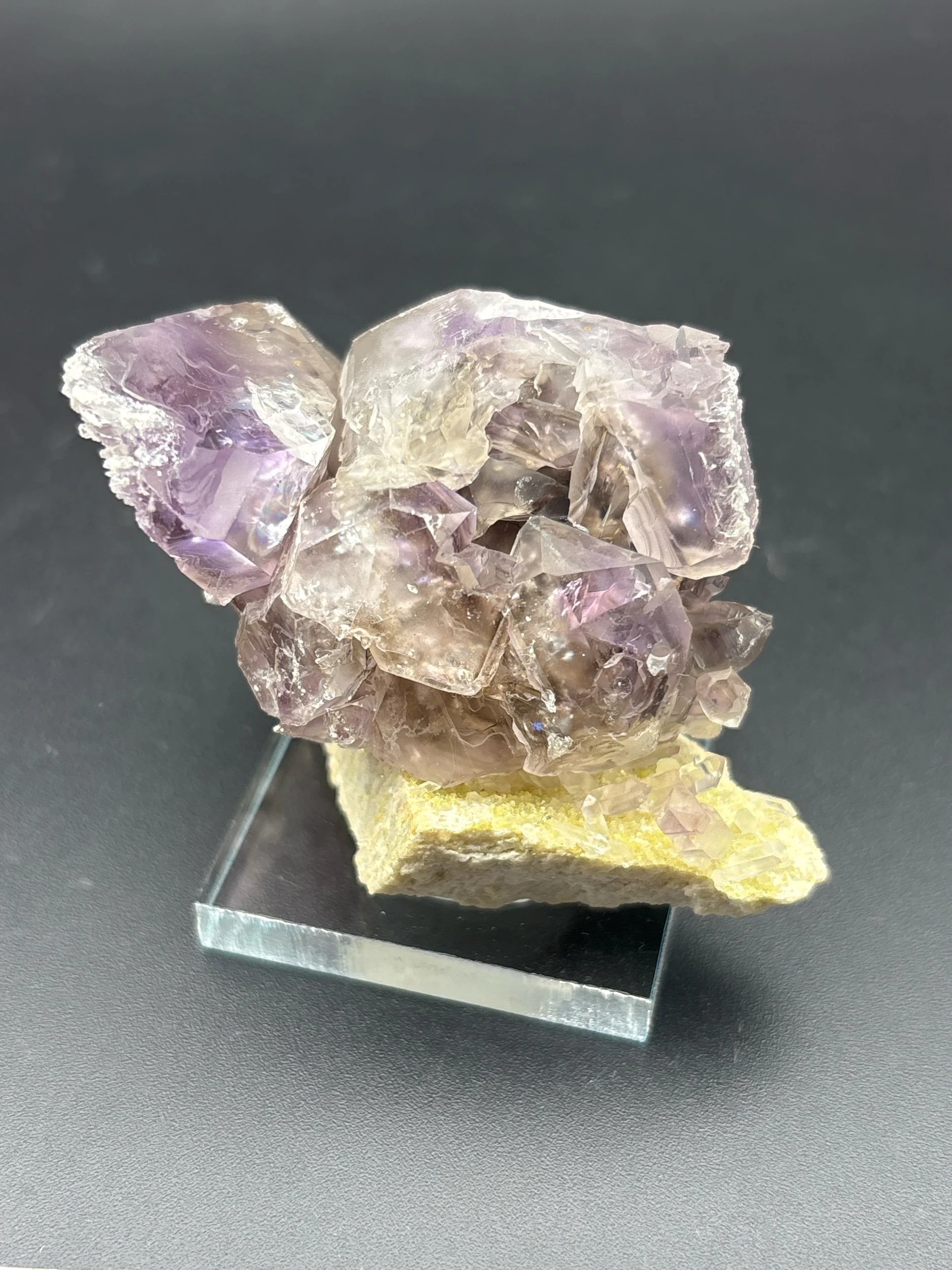
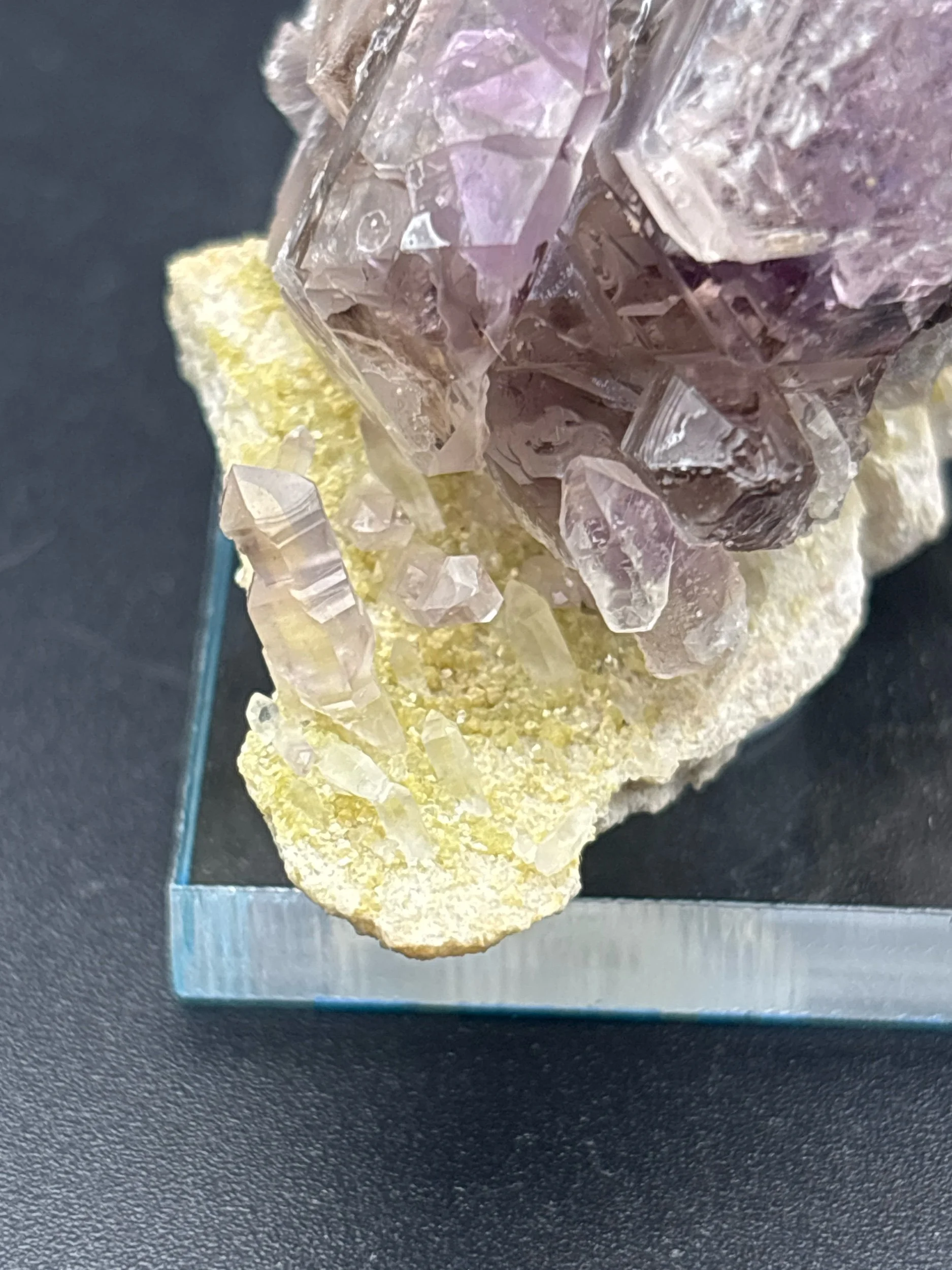
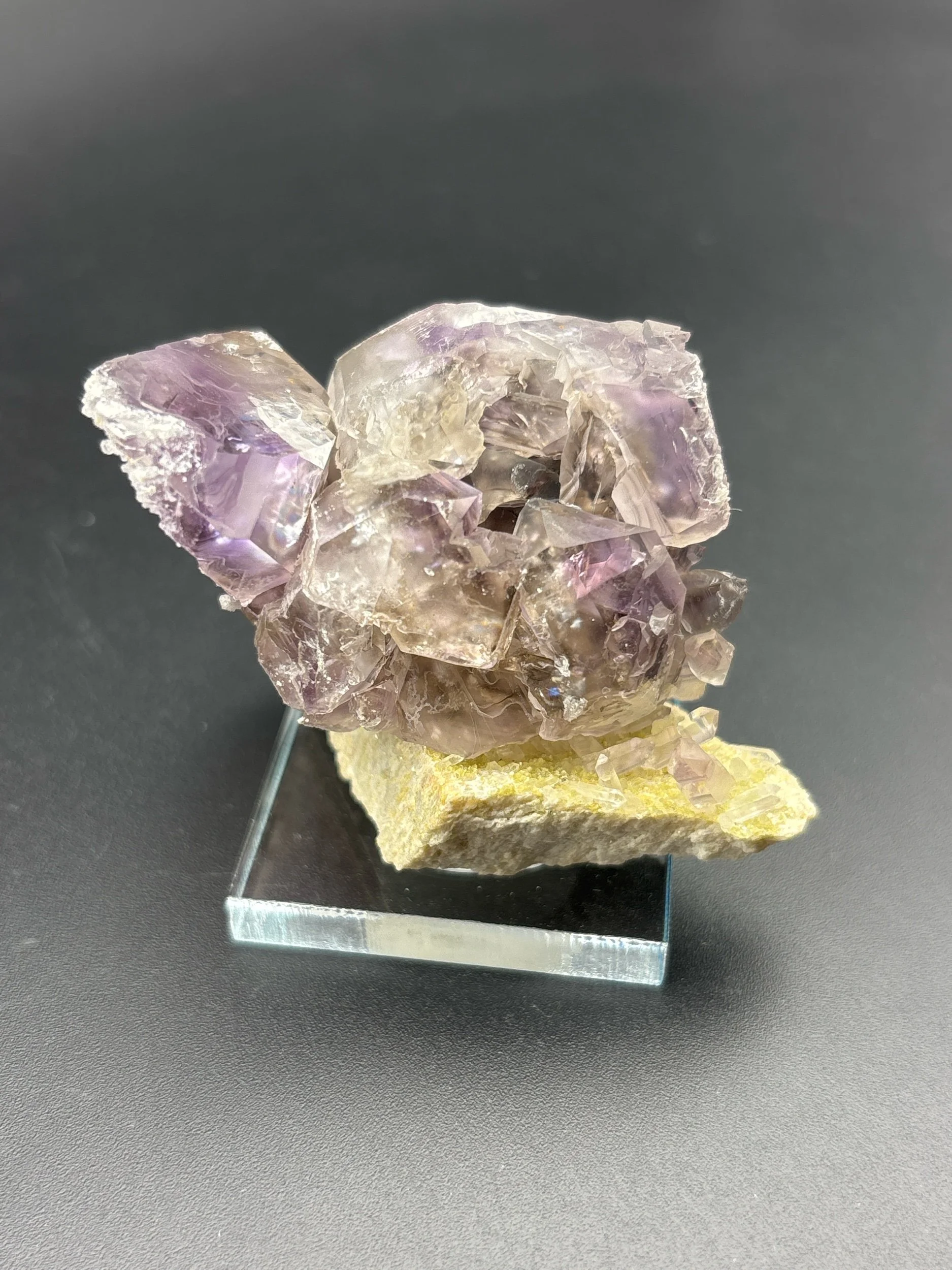
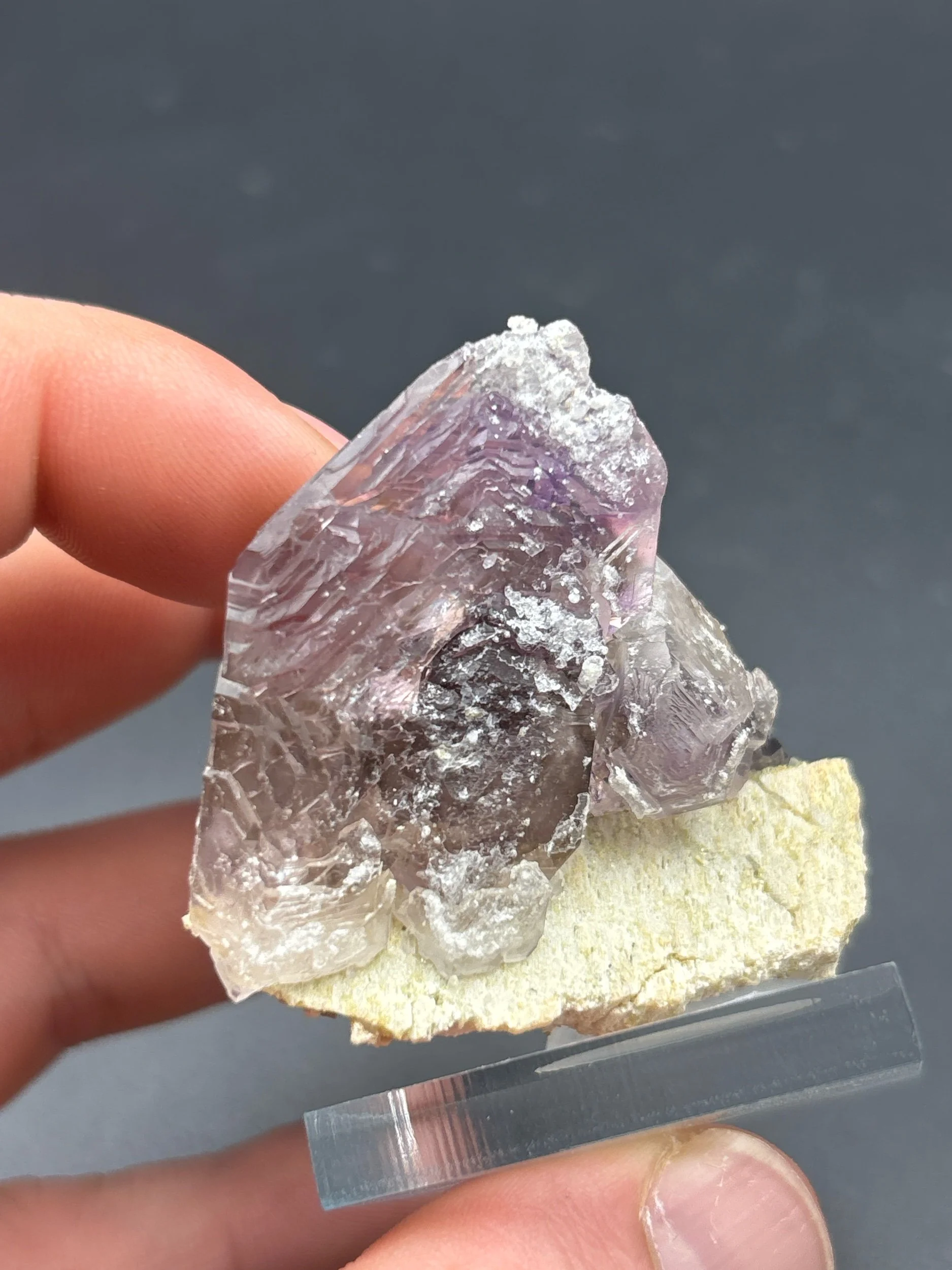
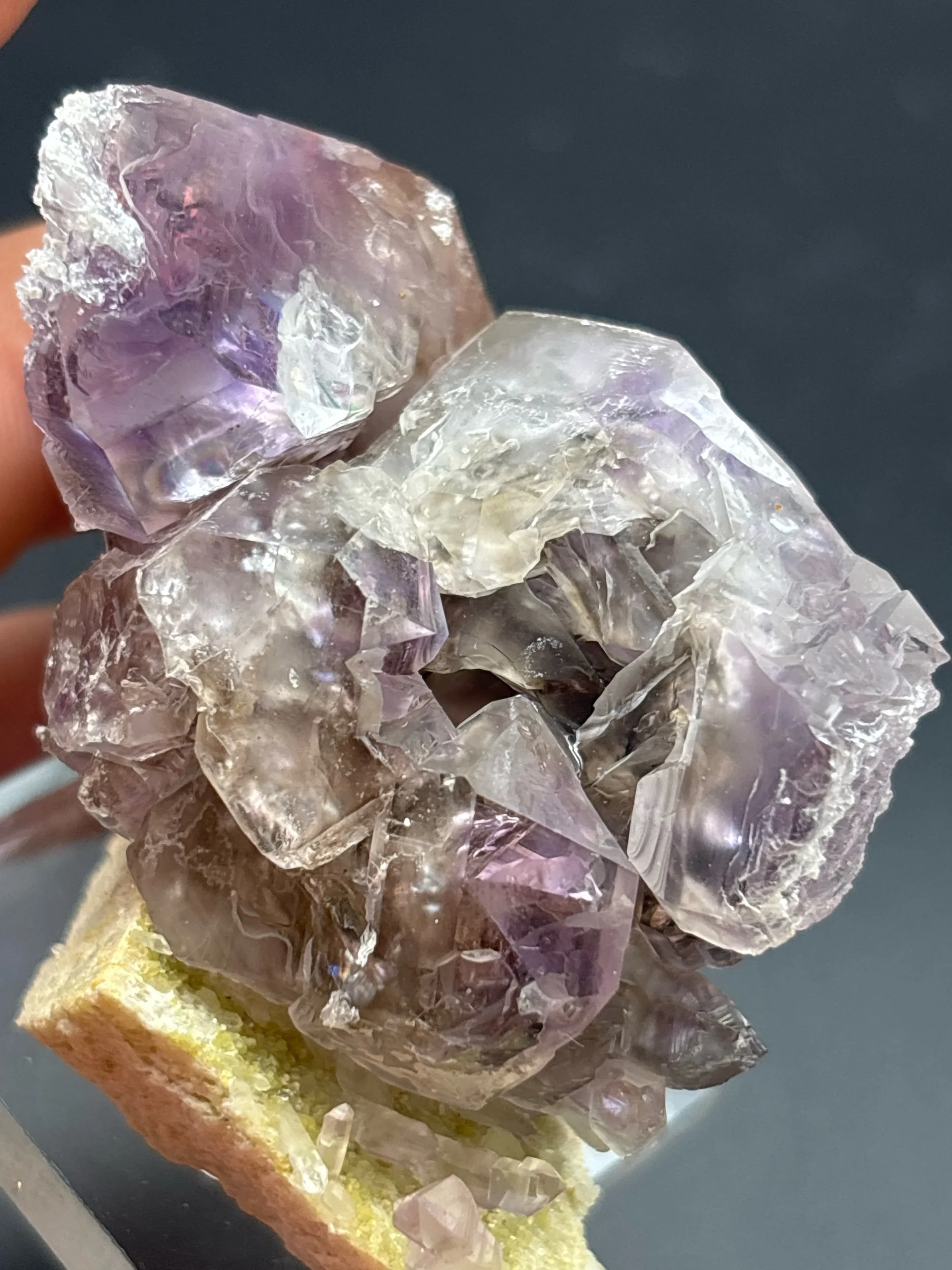
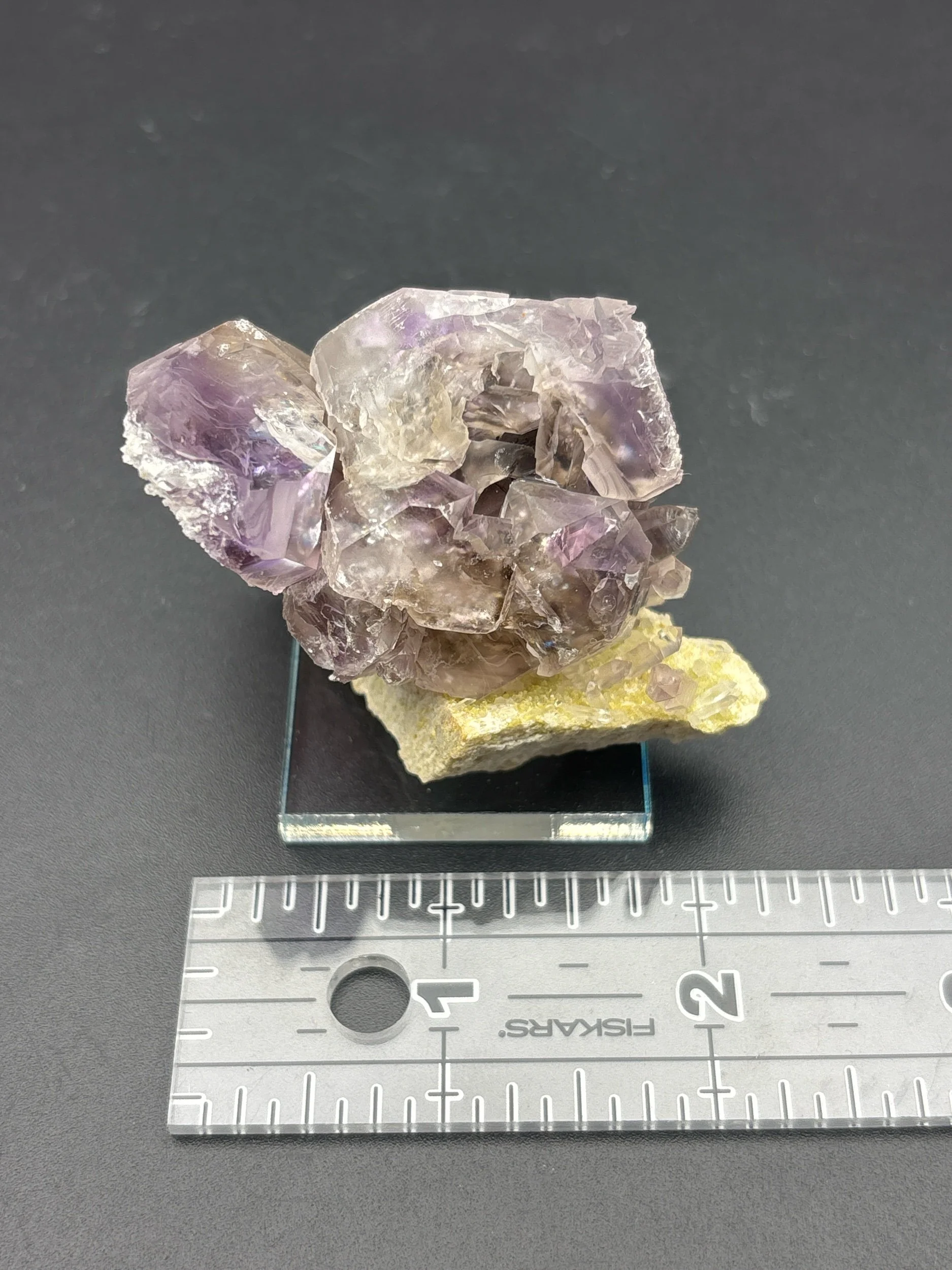
The Little Gem Mine was discovered by local gold prospectors in 1886. An article in "The Mineralogist" written in 1941 describes the travel from Butte by covered wagon, to the Nine Mile Inn, then subsequent travel to the deposit where collectors "filled their packs with amethyst" during the original find. In 1958 a Claim was filed by Oregon Geologist Jerry Gray. Gray worked the surface sporadically for 30+ years, brought in heavy equipment to build road access in the early 1990's. His goal was to create a secure working environment protected from trespassers. He tunneled about 100 feet through solid granite to reach the core, where he then put a raise. The narrow raise follows an aplite zone upwards and east; the raise opened a series of pockets that he extended into a drift, which ran parallel to the core. The present owner, Russ Hage, purchased the claim after Gray's death. Hage and working partner Mike Uphus together brought to light innumerable fine specimens. In 2013 the old drift in aplite was de-roofed and its access buried. In summer of 2022, local prospector Paul Senn took over mine management working side by side with owner Russ Hage. Since 2010 it has been worked from the surface, primarily by hand aided by small scale blasting and an excavator. Current work has exposed many pockets containing fine amethyst scepters and jacare' texture amethyst. Jacare' is a Portuguese term denoting alligator skin texture.
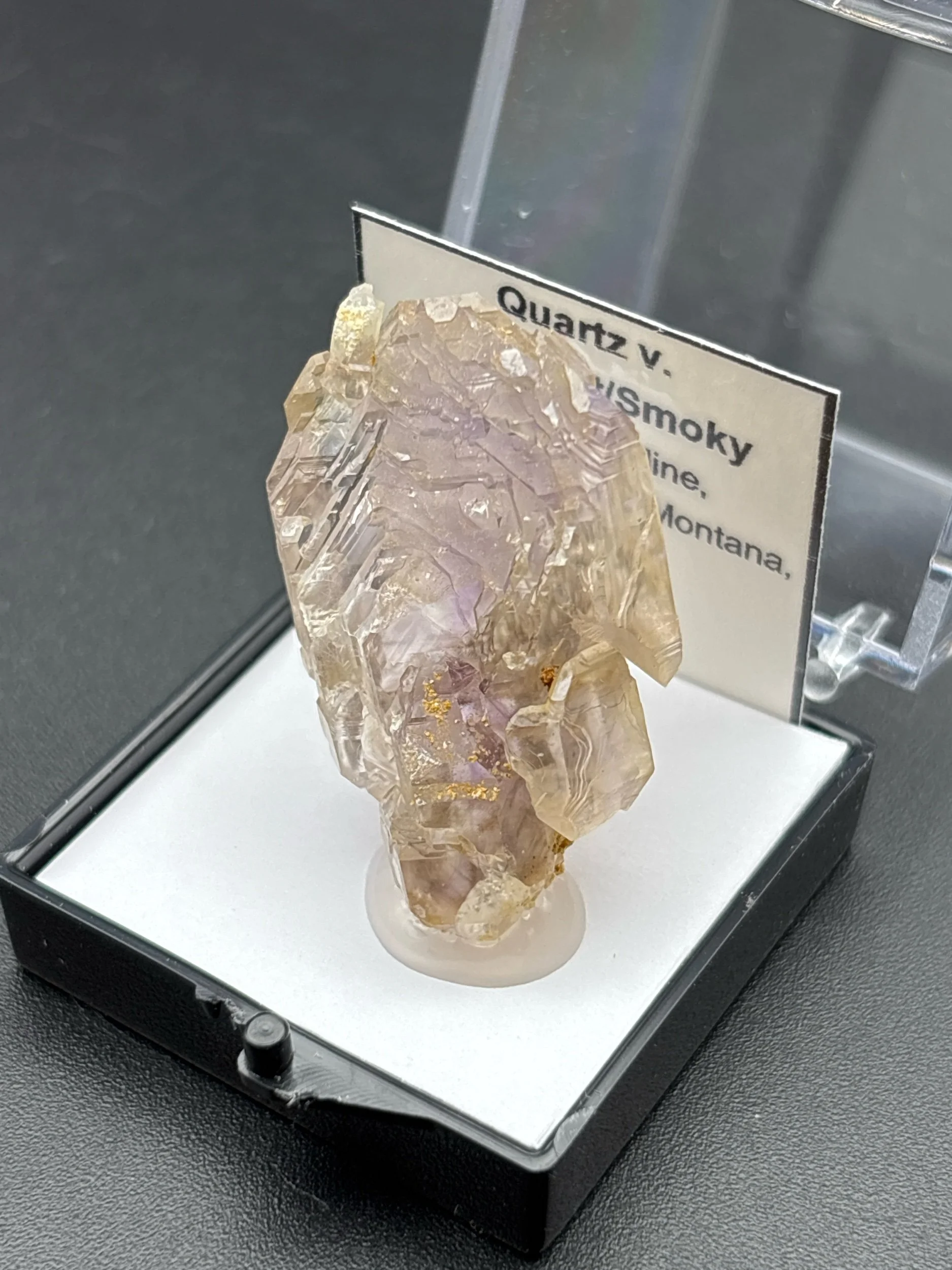
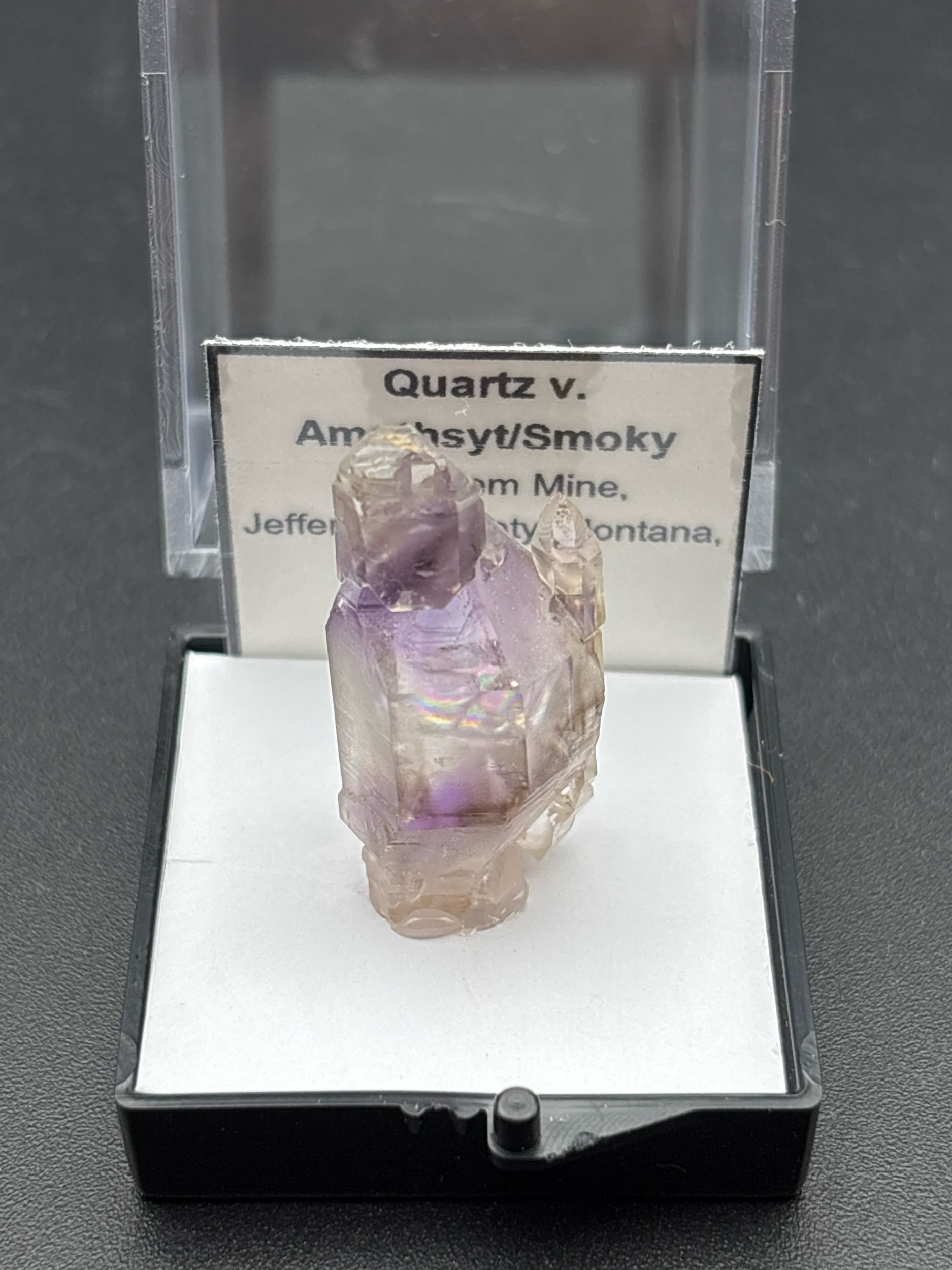
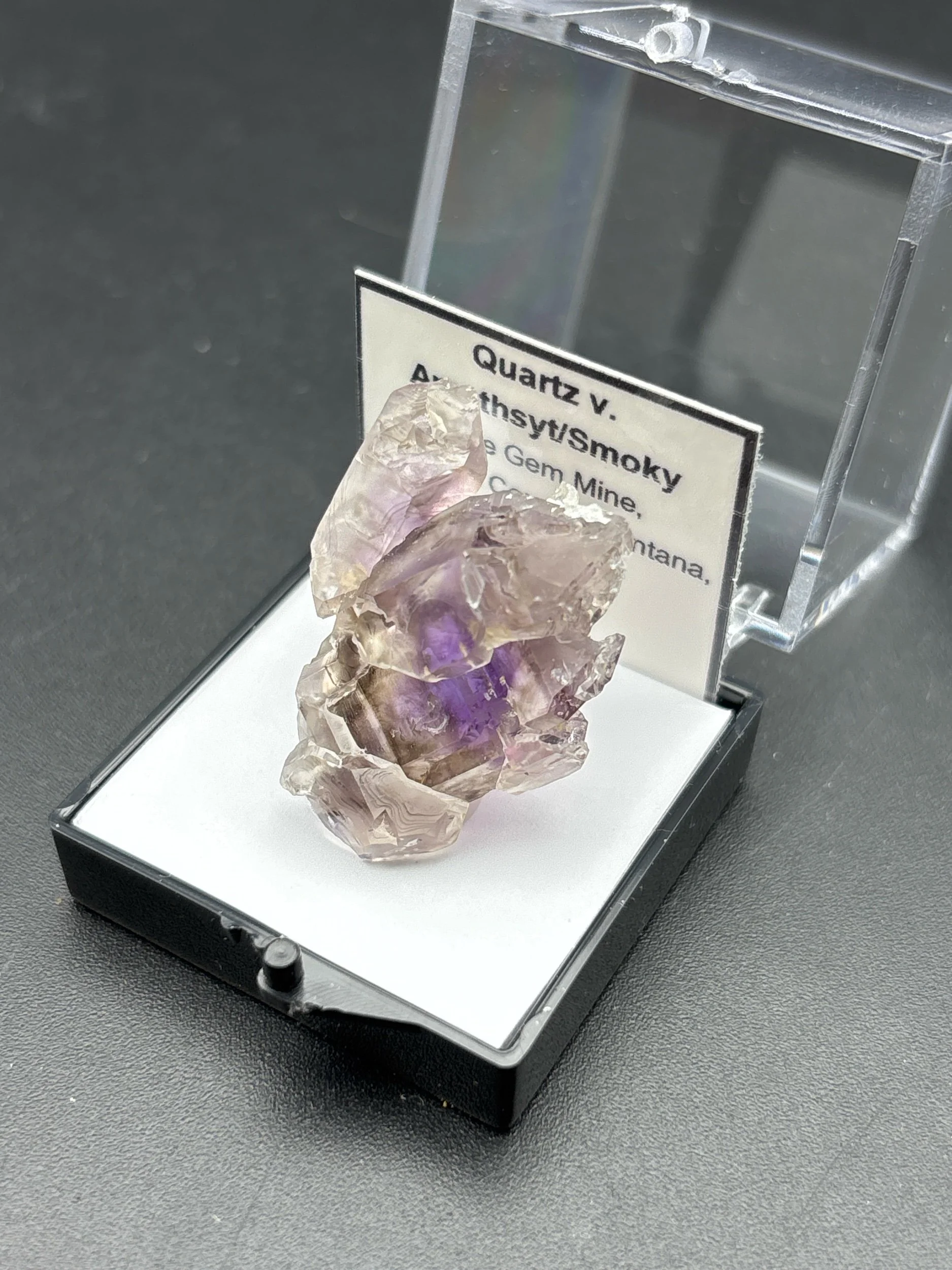
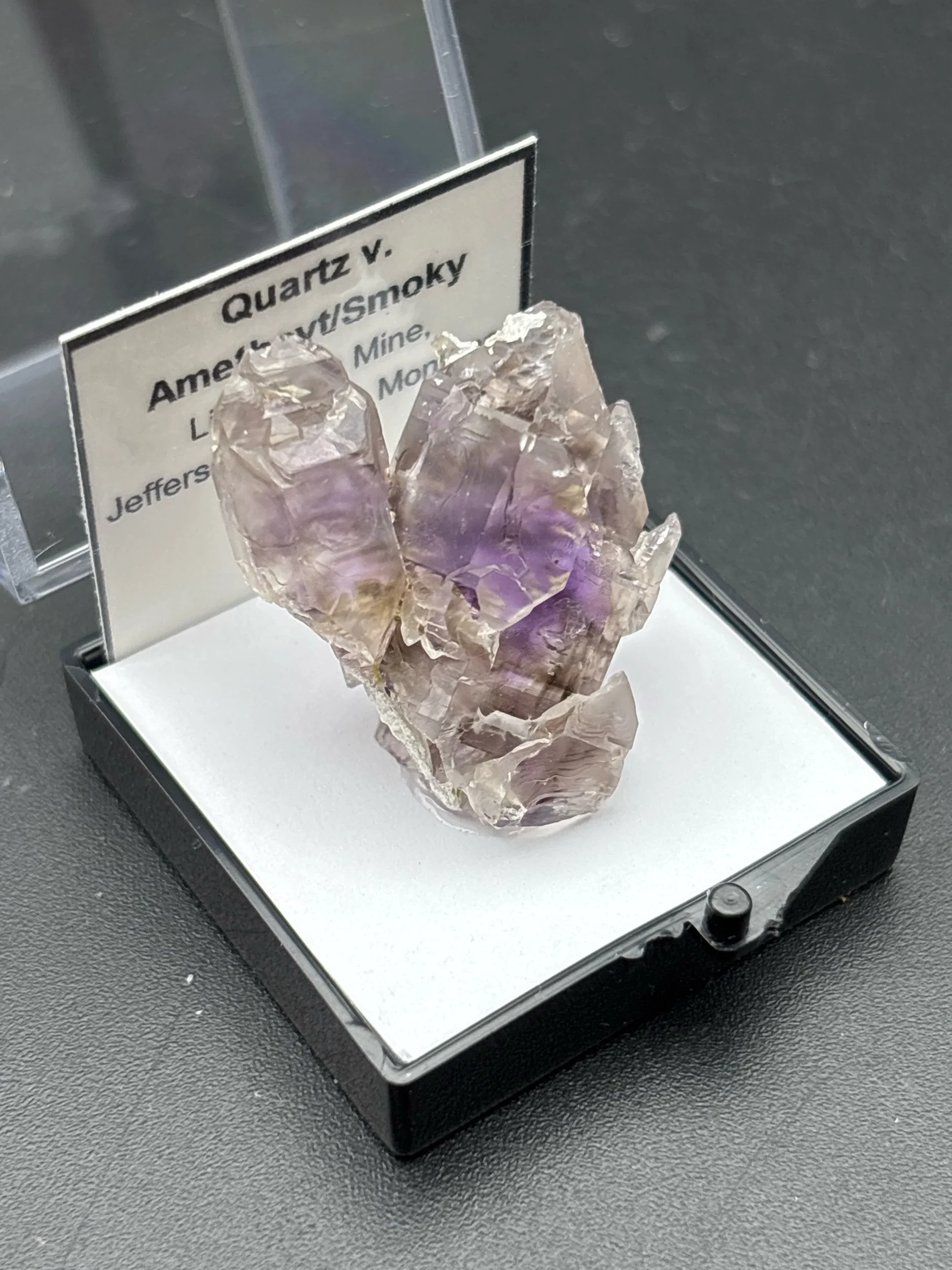
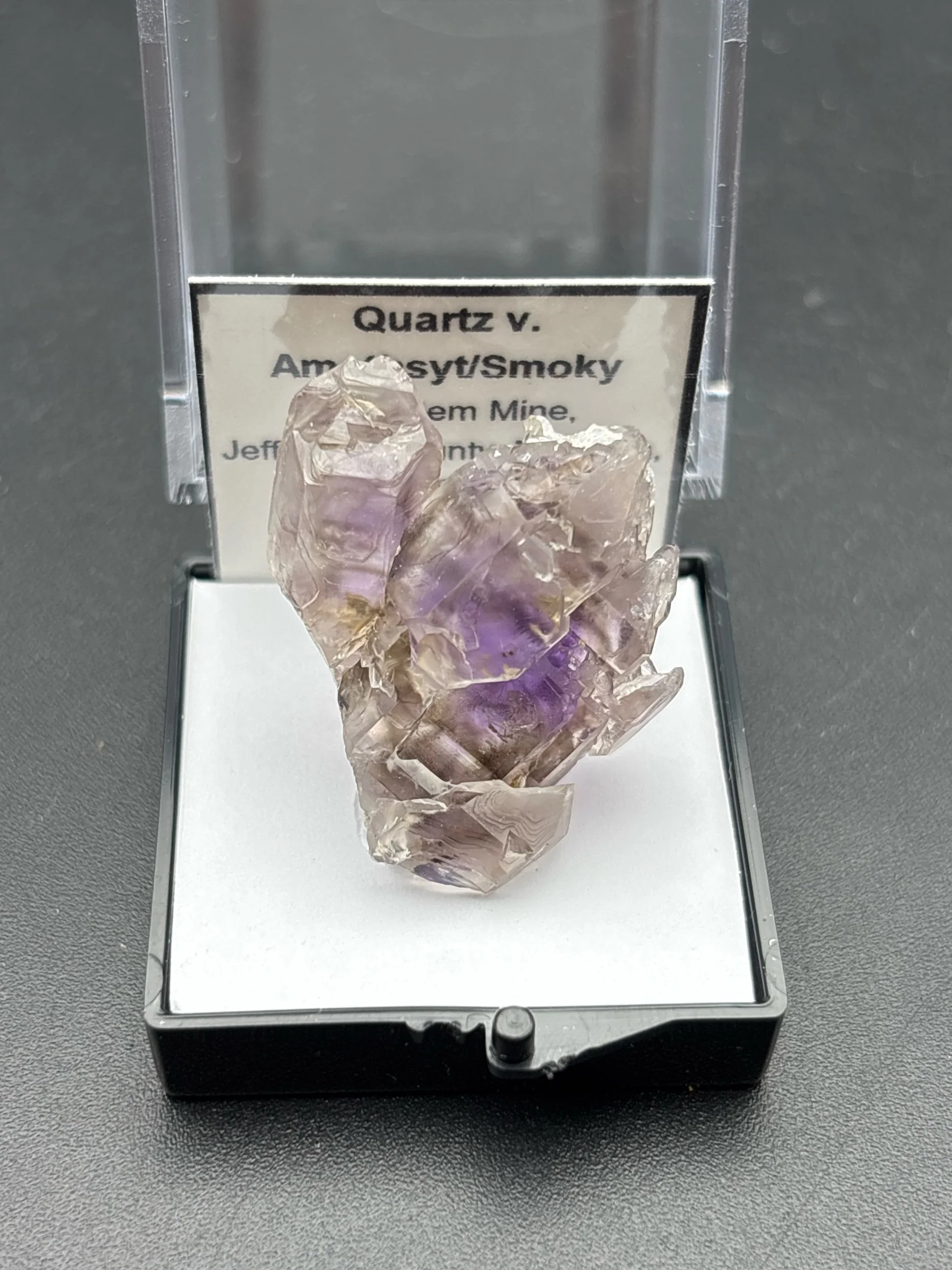
This specimen is a beautiful miniature example of microcline with a protruding quartz capped by amethyst, harvested in the 2024 season. It exhibits a complex intergrowth of “fingerprint” style amethyst, and smaller scepters in the periphery. This specimen represents a remarkable example of character only found in one zone of the mine. Specimens on feldspar are quite uncommon. The white crust on the terminations is shortwave reactive Hyalite opal
Thank you so much for viewing! Please message for any further information
(2.5 × 1.5 × 1.7 in - 6.3 × 3.8 × 4.3 cm) 3.5oz / 100g
ORDERS SHIP MONDAYS
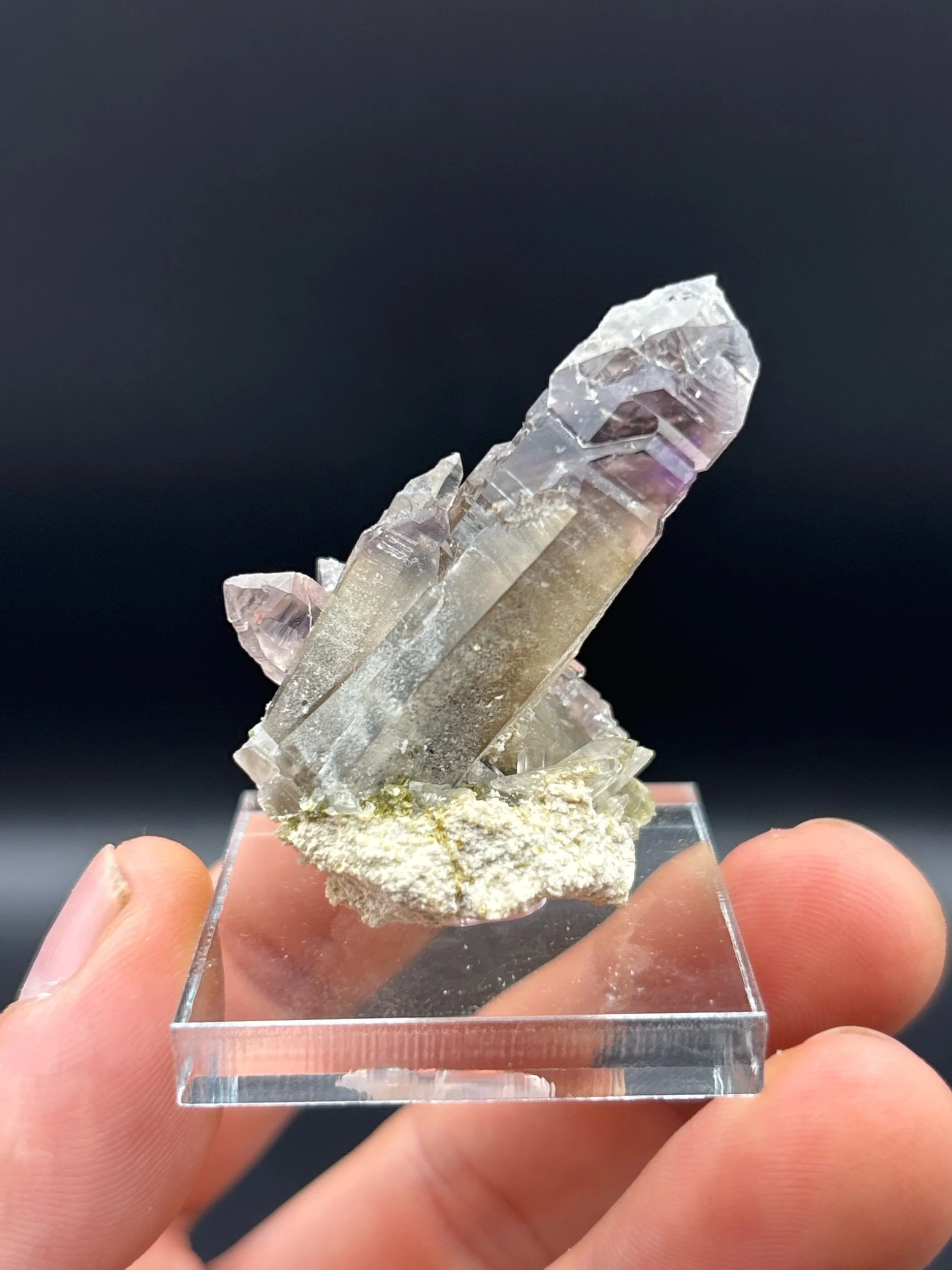
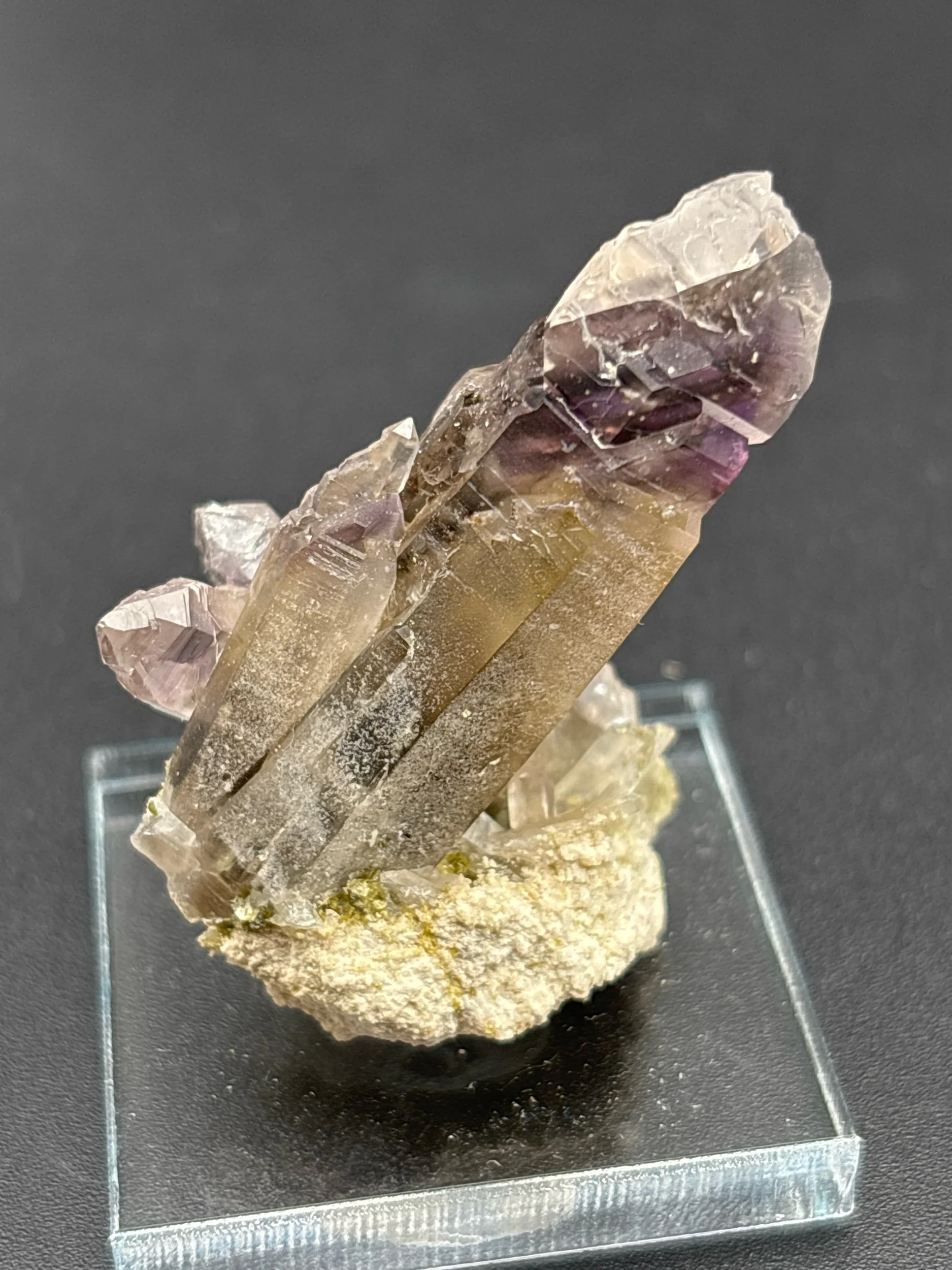
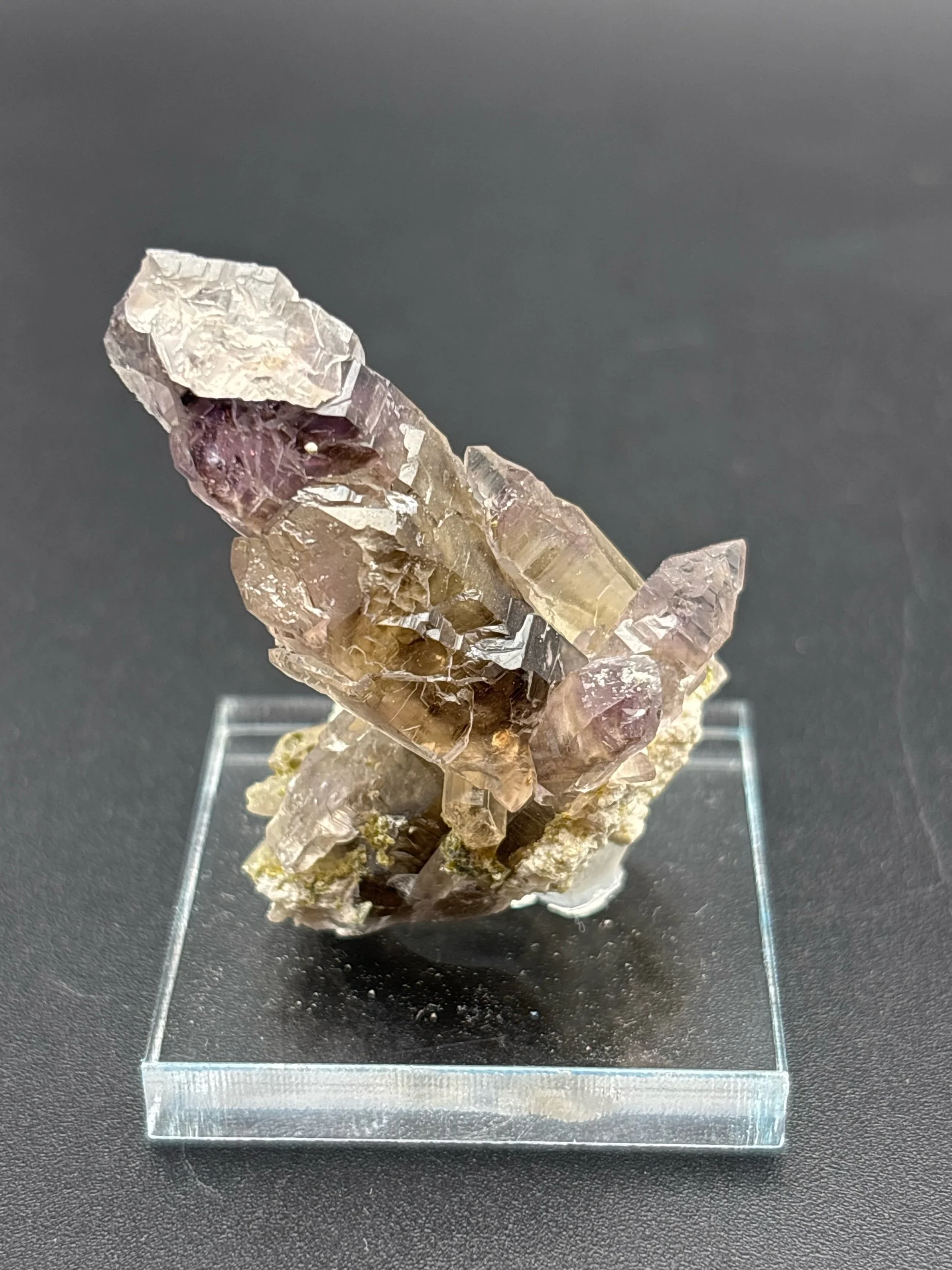
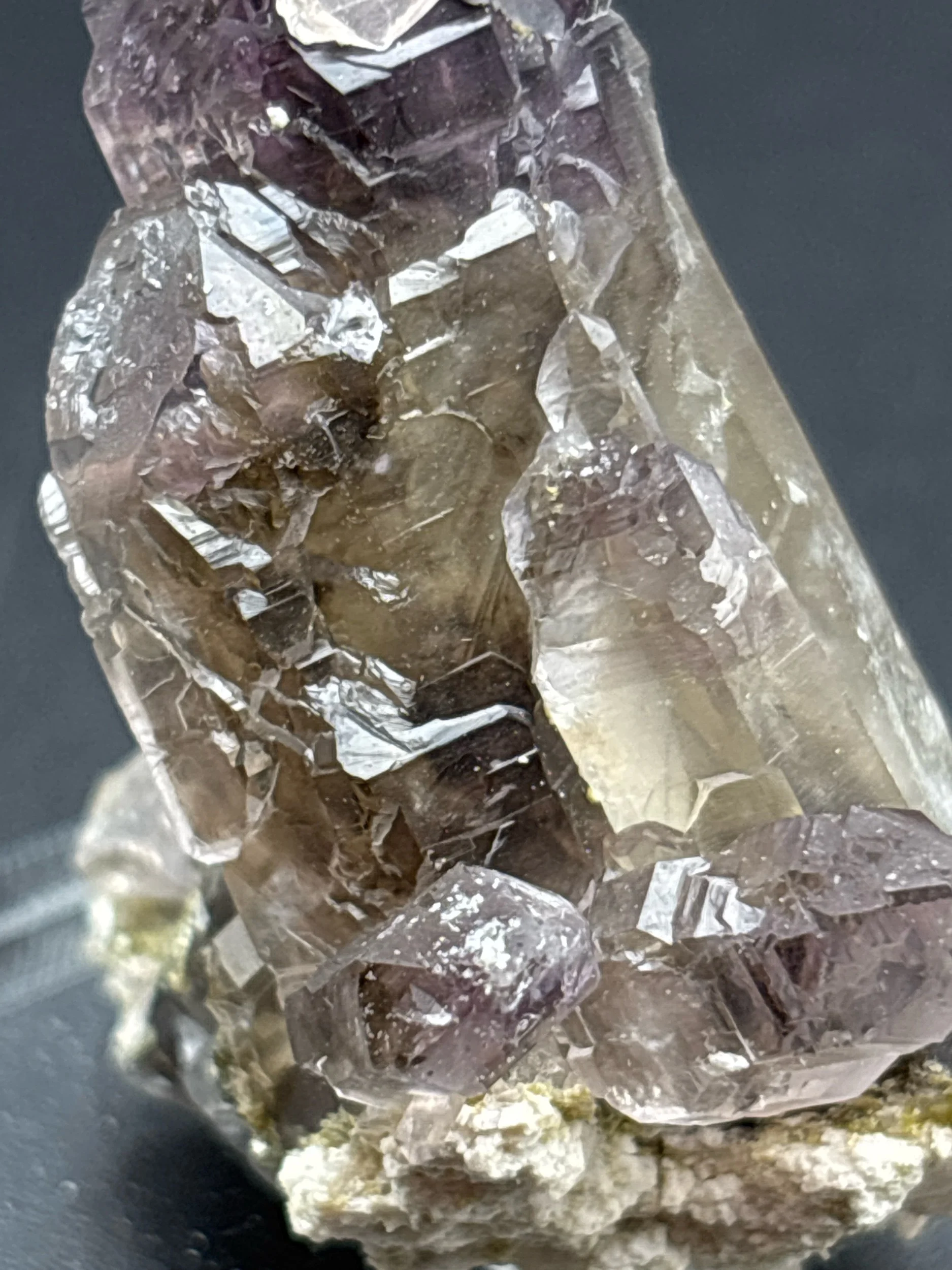
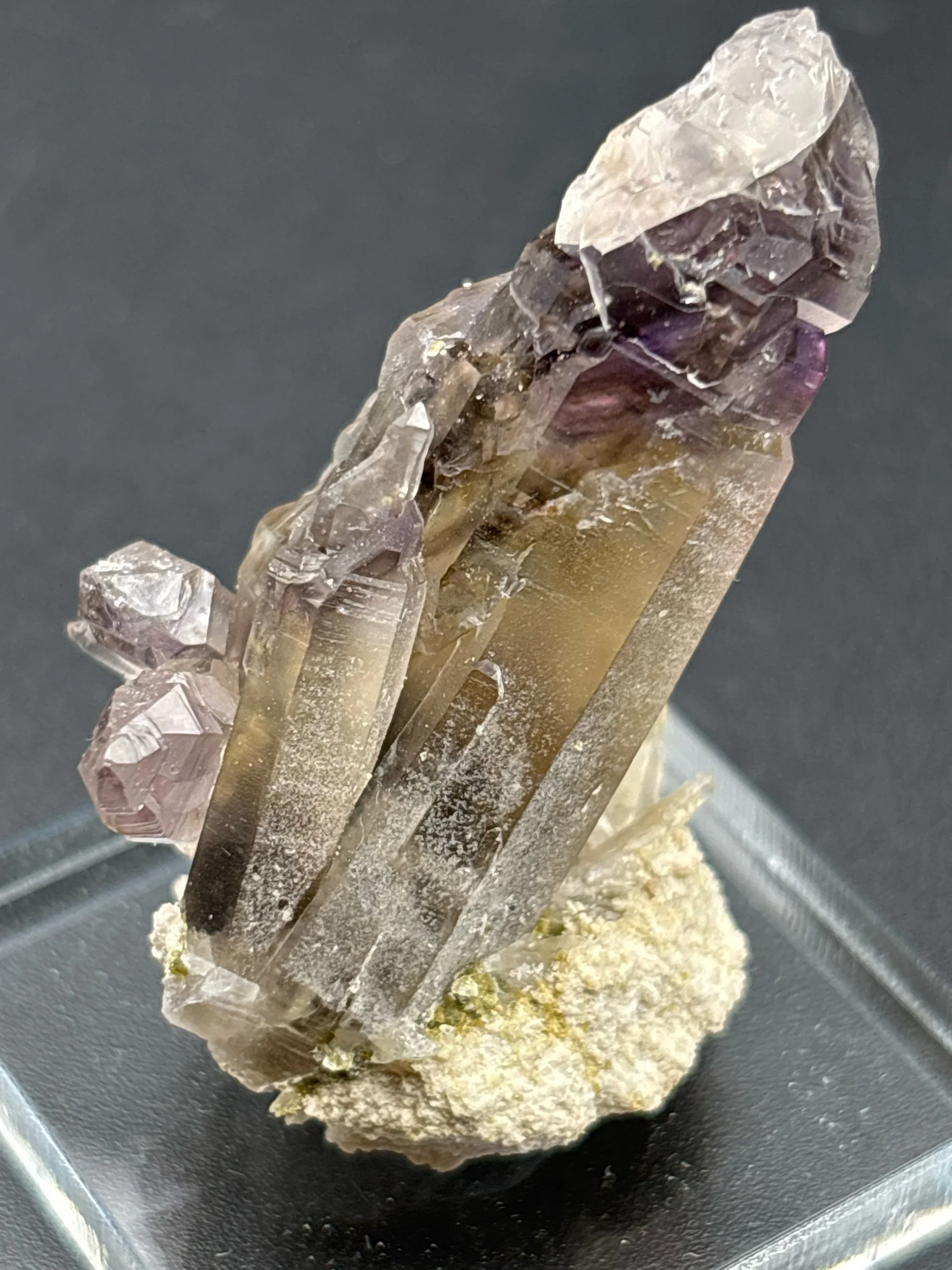
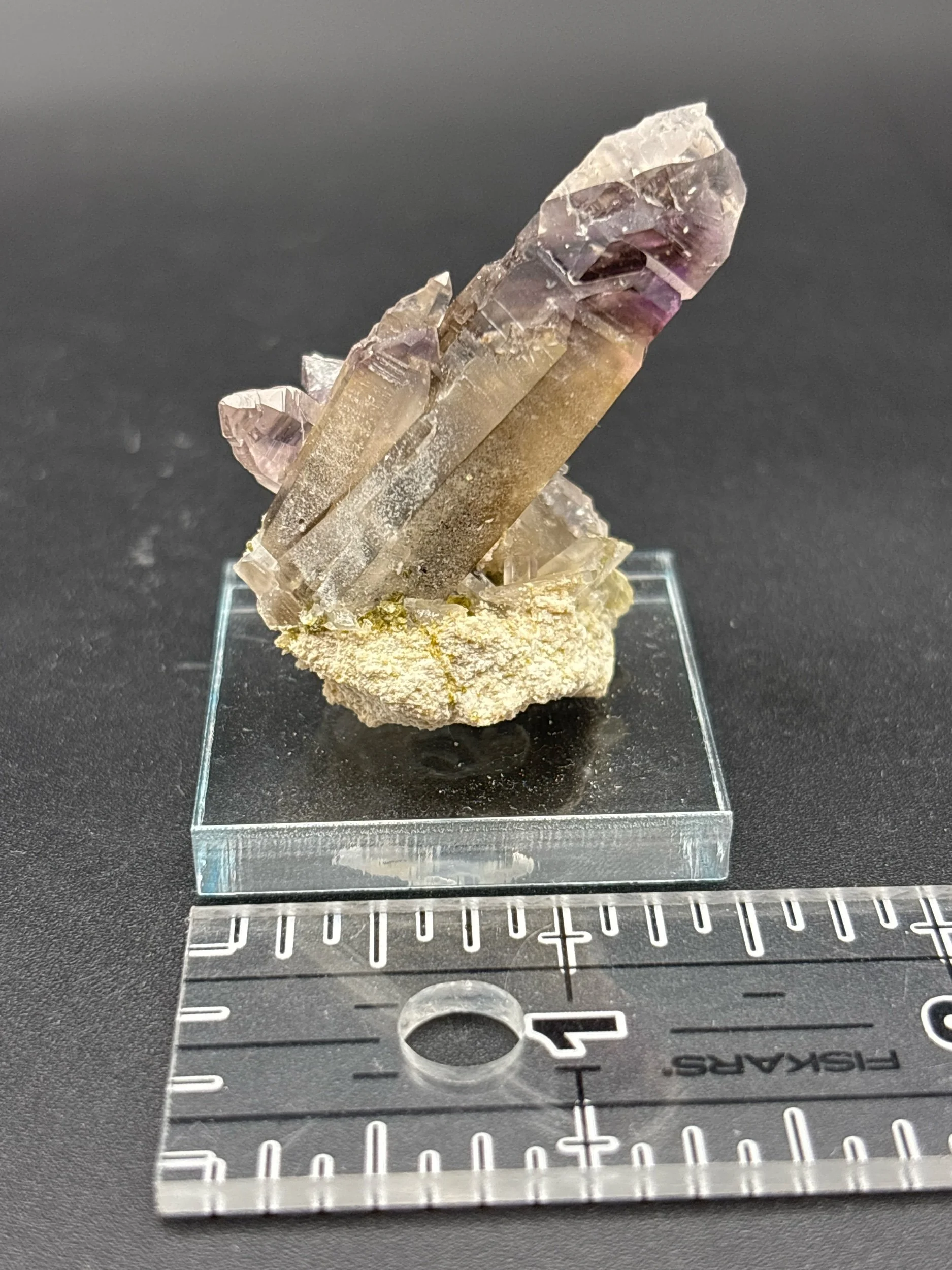
The Little Gem Mine was discovered by local gold prospectors in 1886. An article in "The Mineralogist" written in 1941 describes the travel from Butte by covered wagon, to the Nine Mile Inn, then subsequent travel to the deposit where collectors "filled their packs with amethyst" during the original find. In 1958 a Claim was filed by Oregon Geologist Jerry Gray. Gray worked the surface sporadically for 30+ years, brought in heavy equipment to build road access in the early 1990's. His goal was to create a secure working environment protected from trespassers. He tunneled about 100 feet through solid granite to reach the core, where he then put a raise. The narrow raise follows an aplite zone upwards and east; the raise opened a series of pockets that he extended into a drift, which ran parallel to the core. The present owner, Russ Hage, purchased the claim after Gray's death. Hage and working partner Mike Uphus together brought to light innumerable fine specimens. In 2013 the old drift in aplite was de-roofed and its access buried. In summer of 2022, local prospector Paul Senn took over mine management working side by side with owner Russ Hage. Since 2010 it has been worked from the surface, primarily by hand aided by small scale blasting and an excavator. Current work has exposed many pockets containing fine amethyst scepters and jacare' texture amethyst. Jacare' is a Portuguese term denoting alligator skin texture.
This specimen is a beautiful scepter displaying epitaxy on the feldspar. The amethyst has a light color, and micro pyrite inclusions are present when magnified. In total, 5 crystals terminate on this specimen. A classic Little Gem Mine piece
Thank you so much for viewing! Please message for any further information
(1.2 × 0.9 × 1.7 in - 3.0 × 2.2 × 4.3 cm) 1.3oz / 36g (With base)
ORDERS SHIP MONDAYS
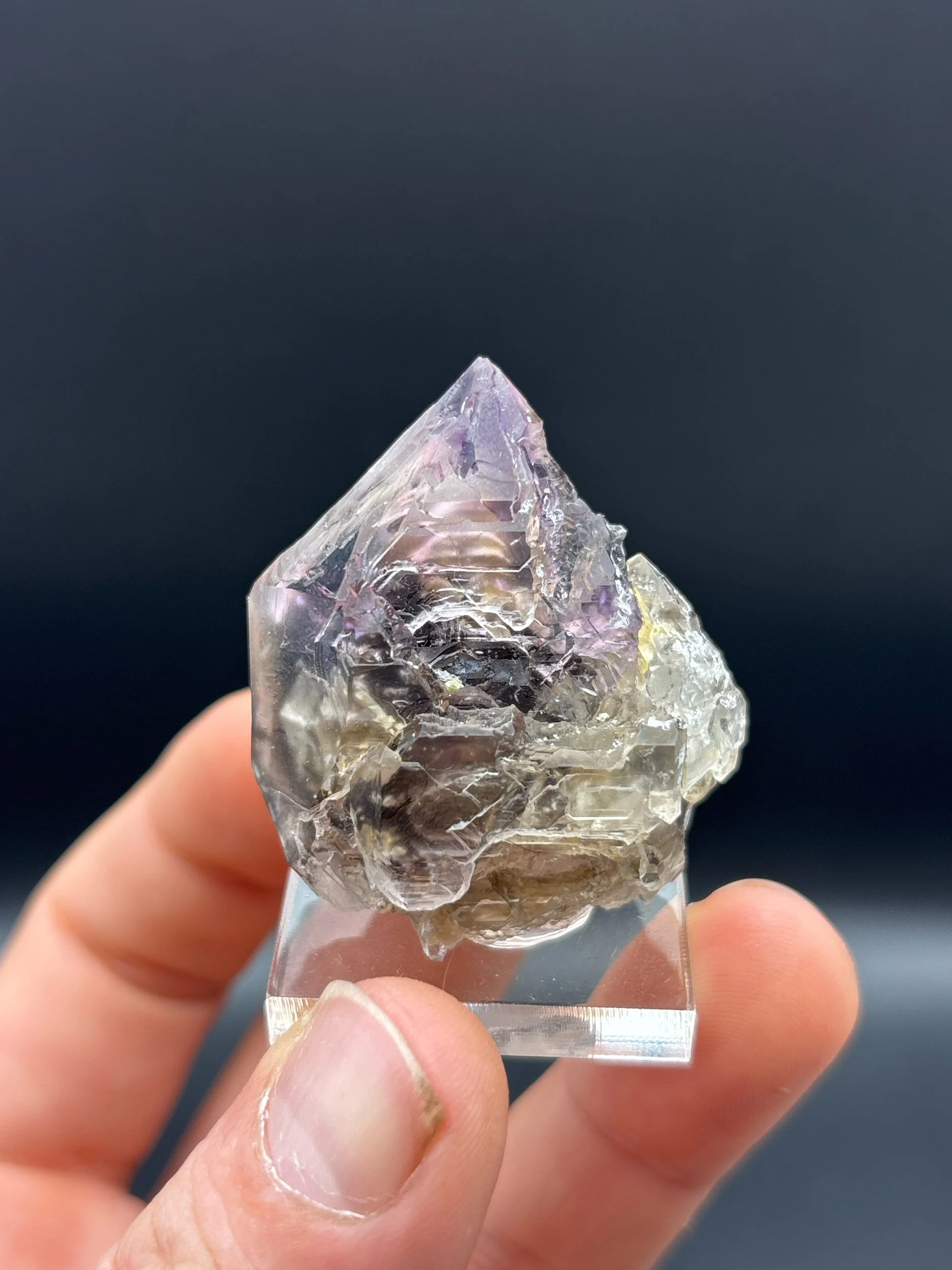
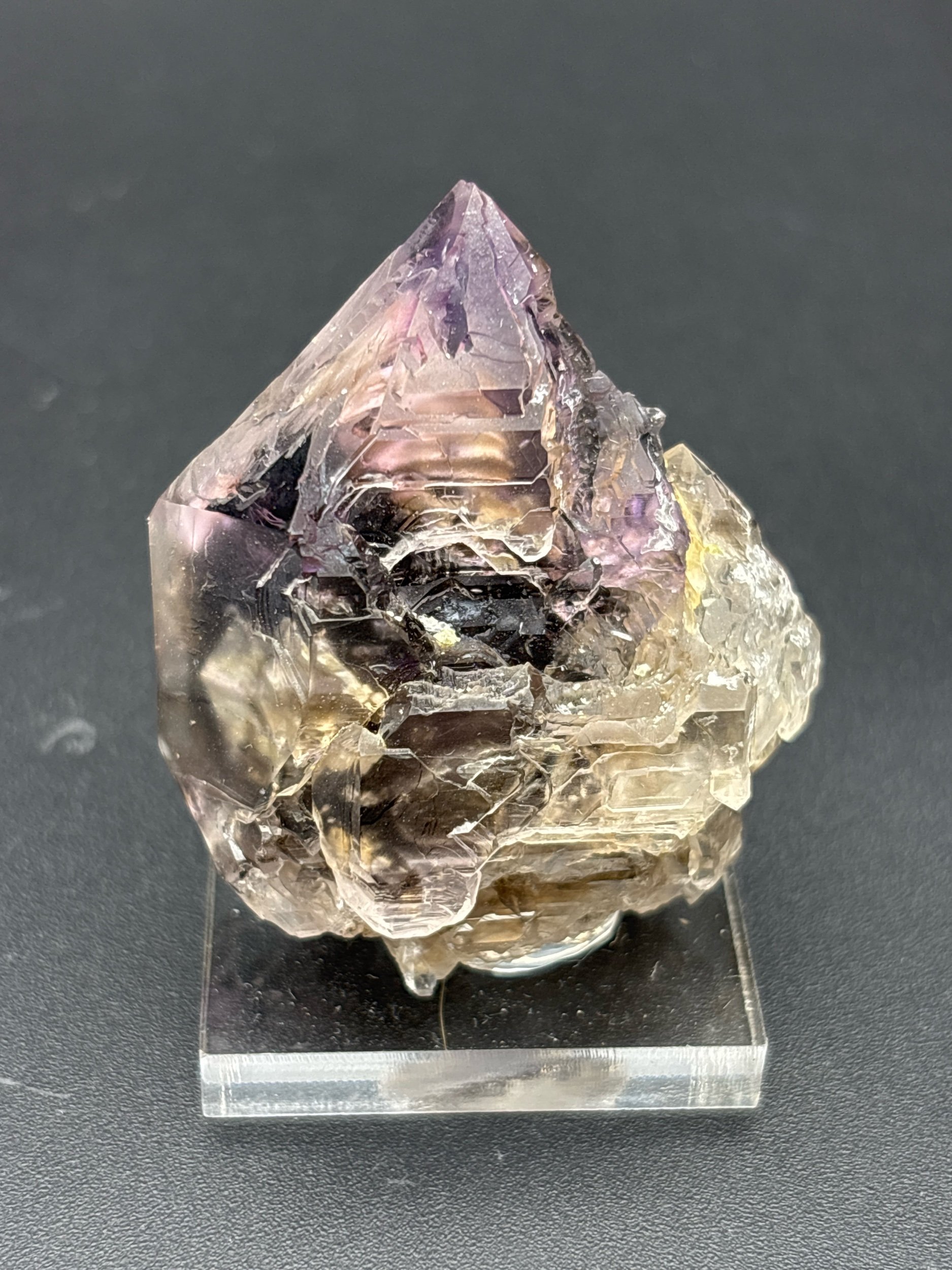
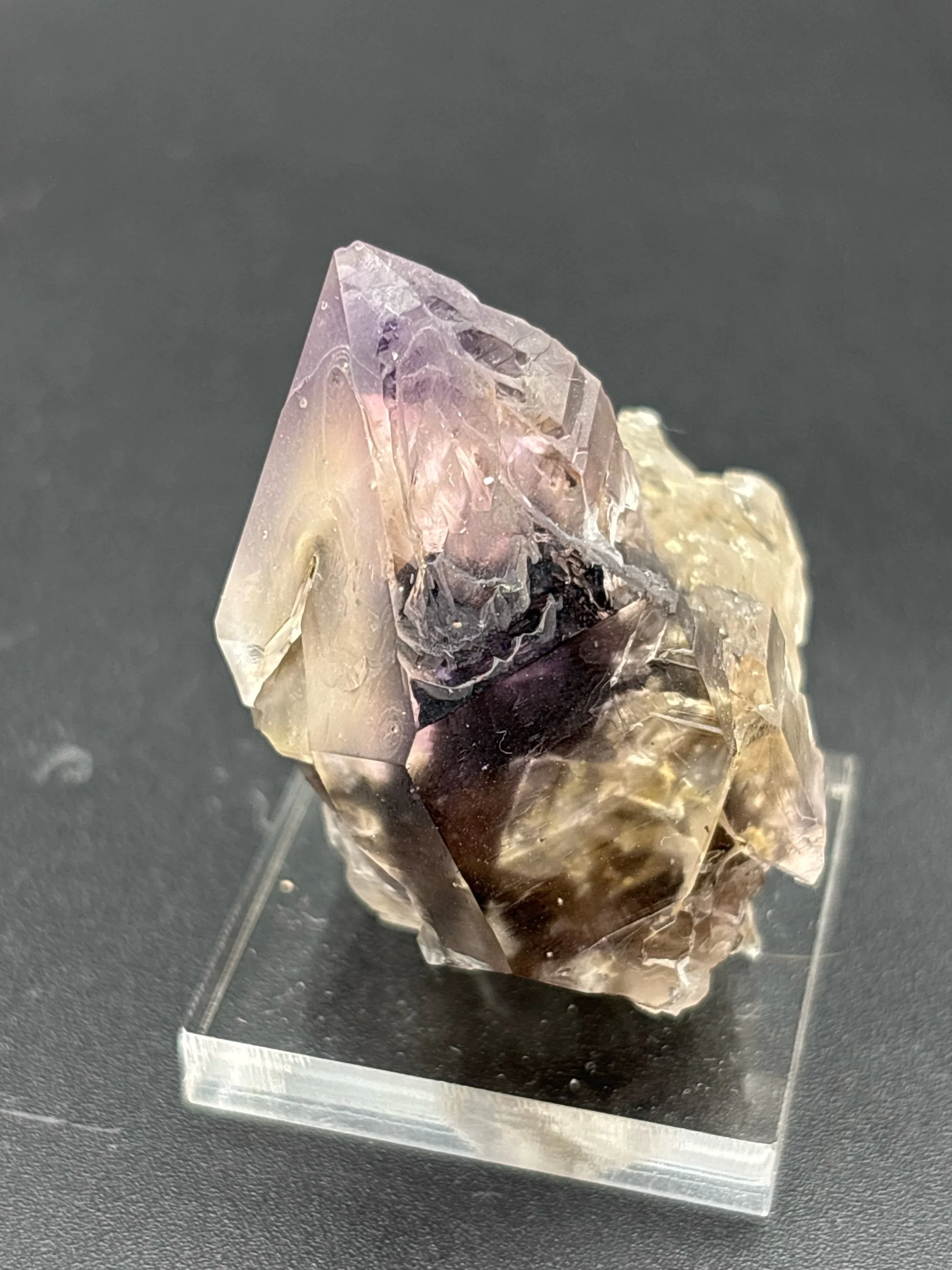
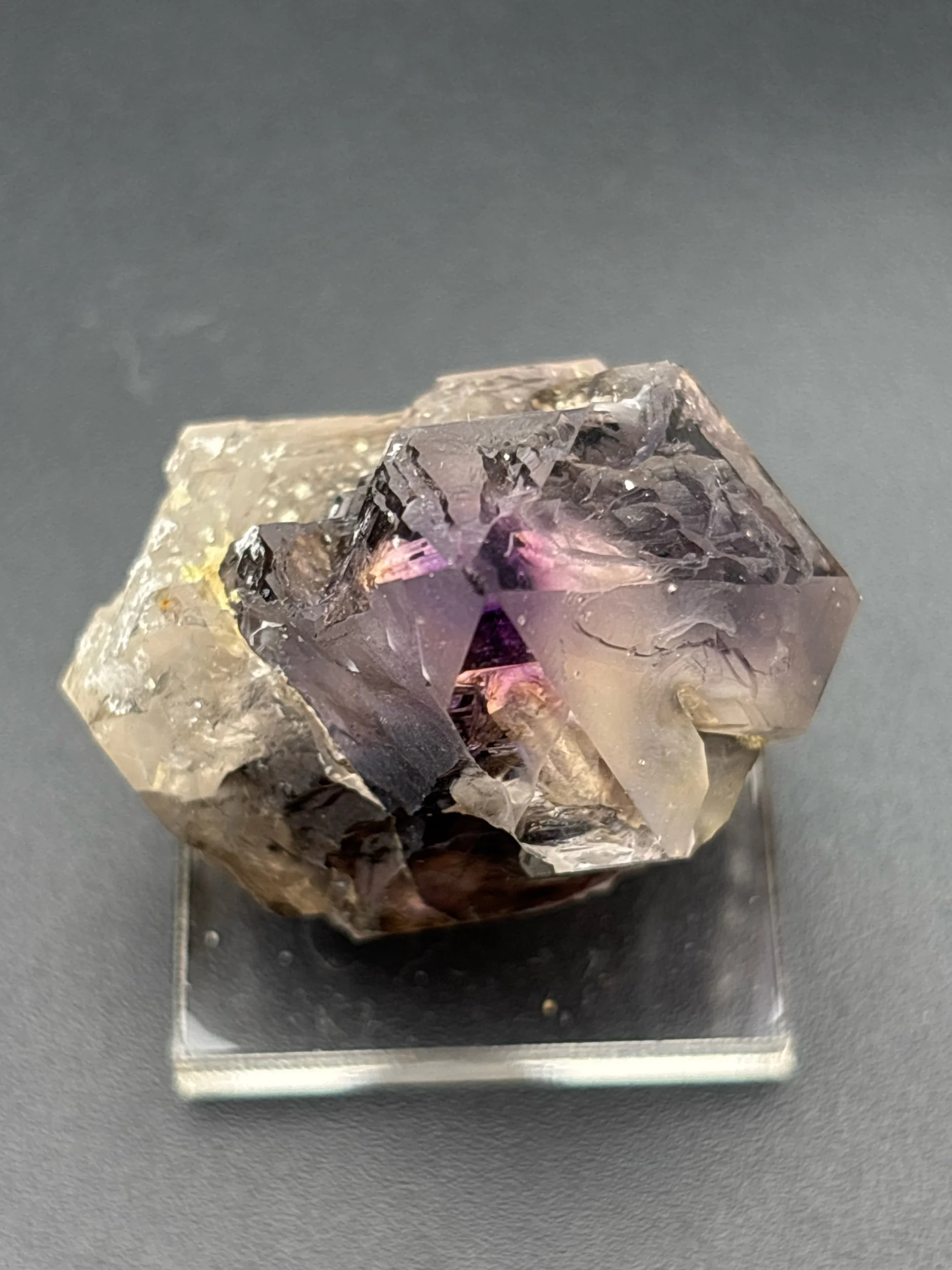
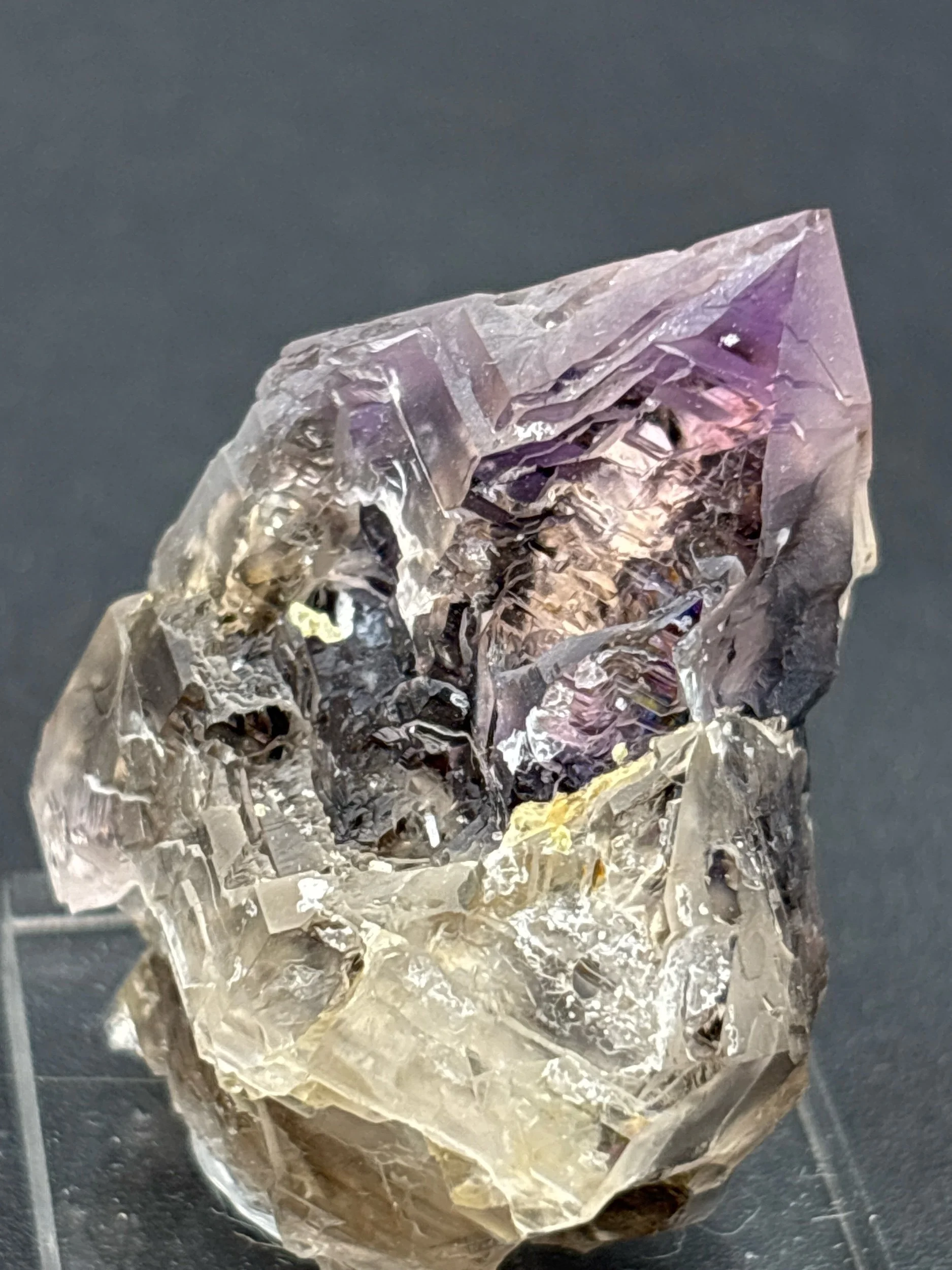
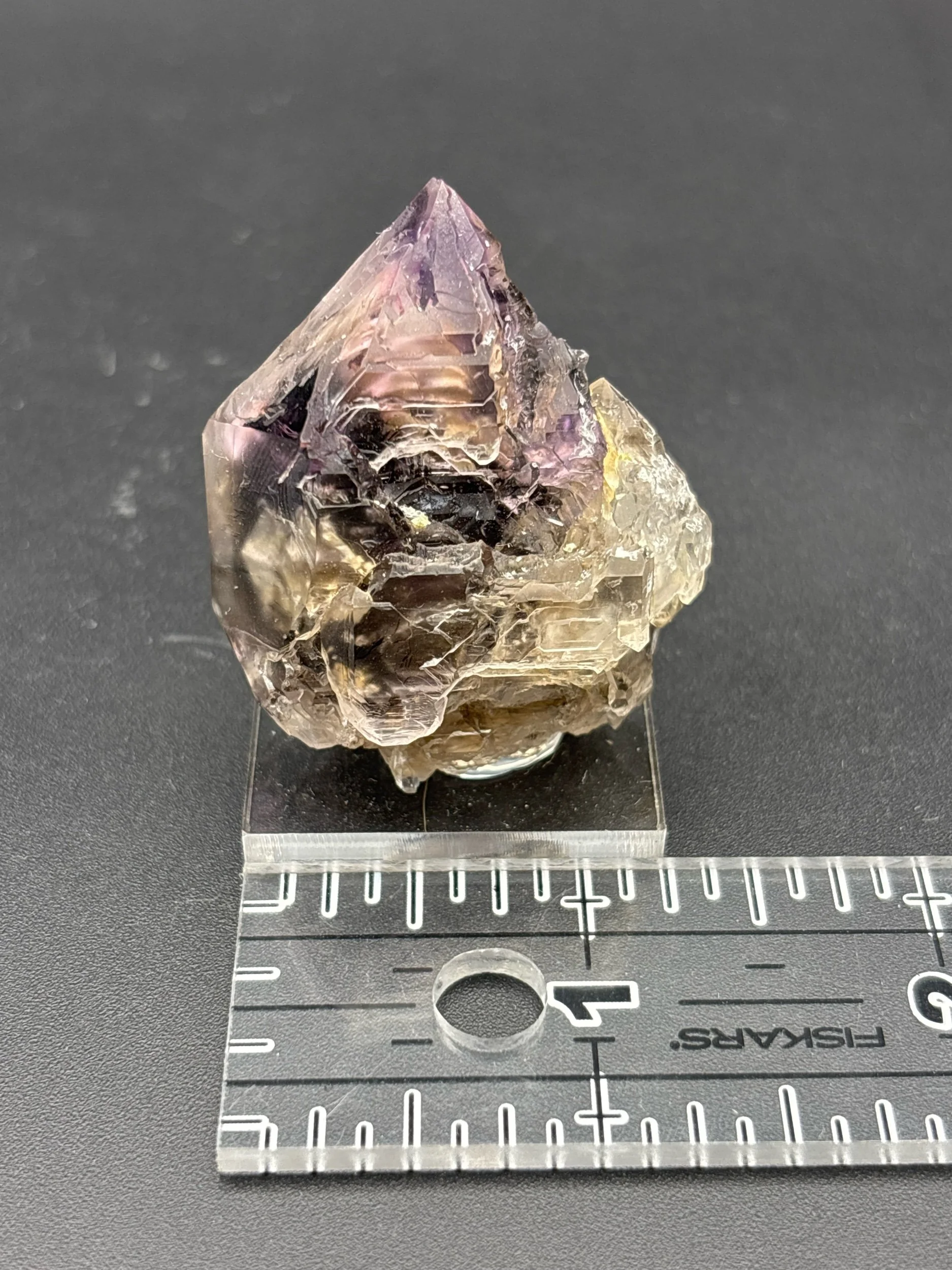
The Little Gem Mine was discovered by local gold prospectors in 1886. An article in "The Mineralogist" written in 1941 describes the travel from Butte by covered wagon, to the Nine Mile Inn, then subsequent travel to the deposit where collectors "filled their packs with amethyst" during the original find. In 1958 a Claim was filed by Oregon Geologist Jerry Gray. Gray worked the surface sporadically for 30+ years, brought in heavy equipment to build road access in the early 1990's. His goal was to create a secure working environment protected from trespassers. He tunneled about 100 feet through solid granite to reach the core, where he then put a raise. The narrow raise follows an aplite zone upwards and east; the raise opened a series of pockets that he extended into a drift, which ran parallel to the core. The present owner, Russ Hage, purchased the claim after Gray's death. Hage and working partner Mike Uphus together brought to light innumerable fine specimens. In 2013 the old drift in aplite was de-roofed and its access buried. In summer of 2022, local prospector Paul Senn took over mine management working side by side with owner Russ Hage. Since 2010 it has been worked from the surface, primarily by hand aided by small scale blasting and an excavator. Current work has exposed many pockets containing fine amethyst scepters and jacare' texture amethyst. Jacare' is a Portuguese term denoting alligator skin texture.
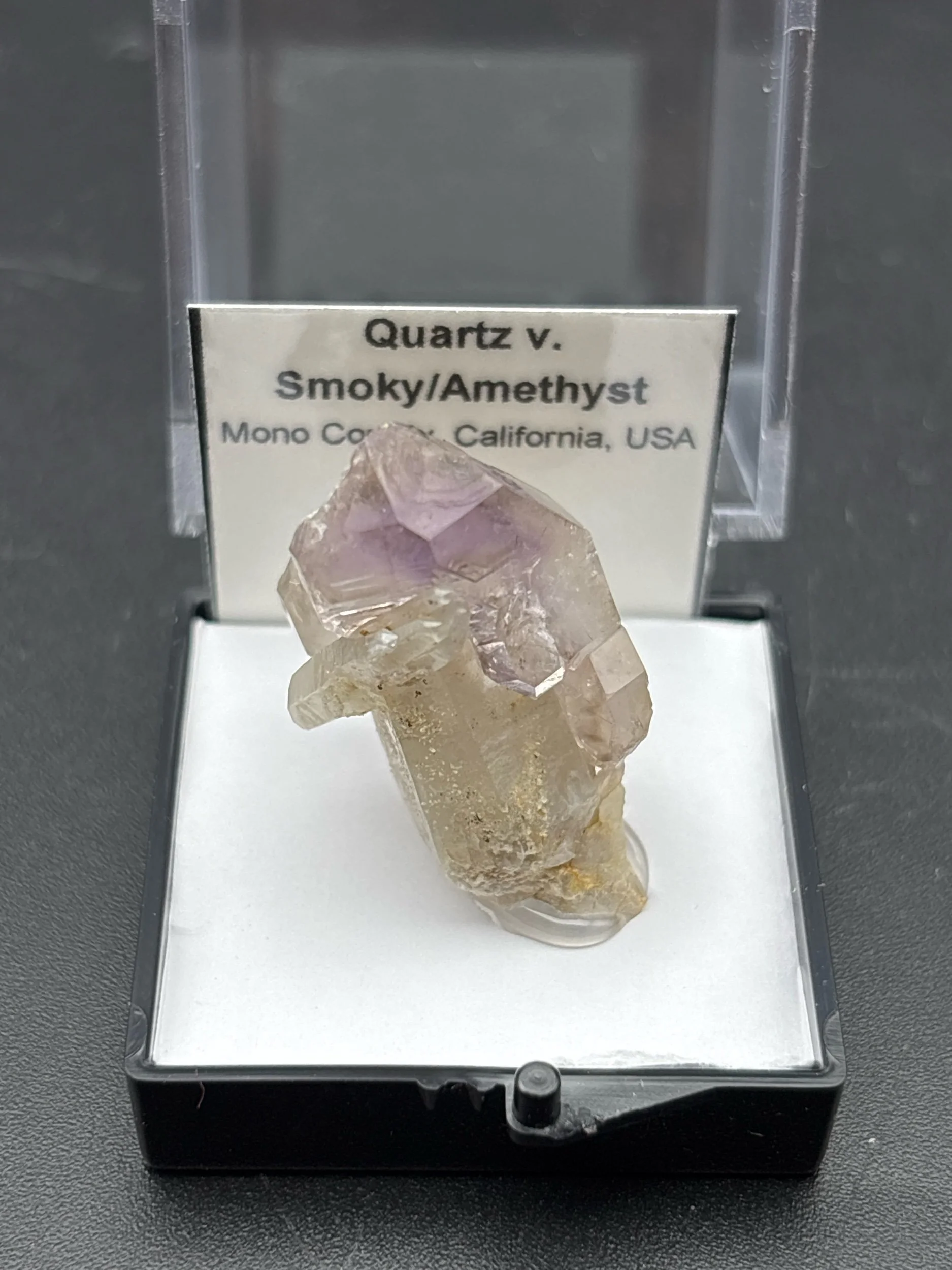
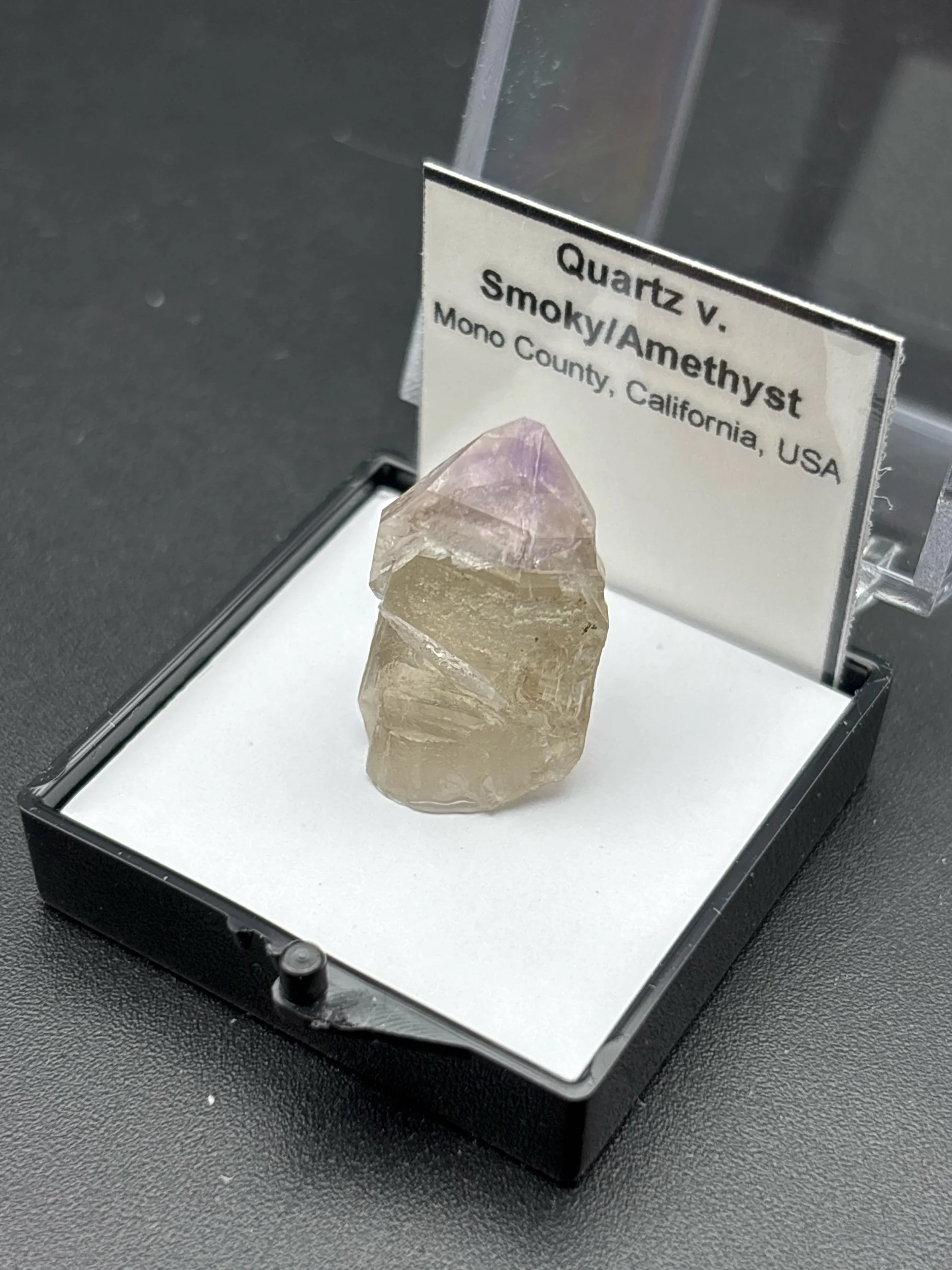
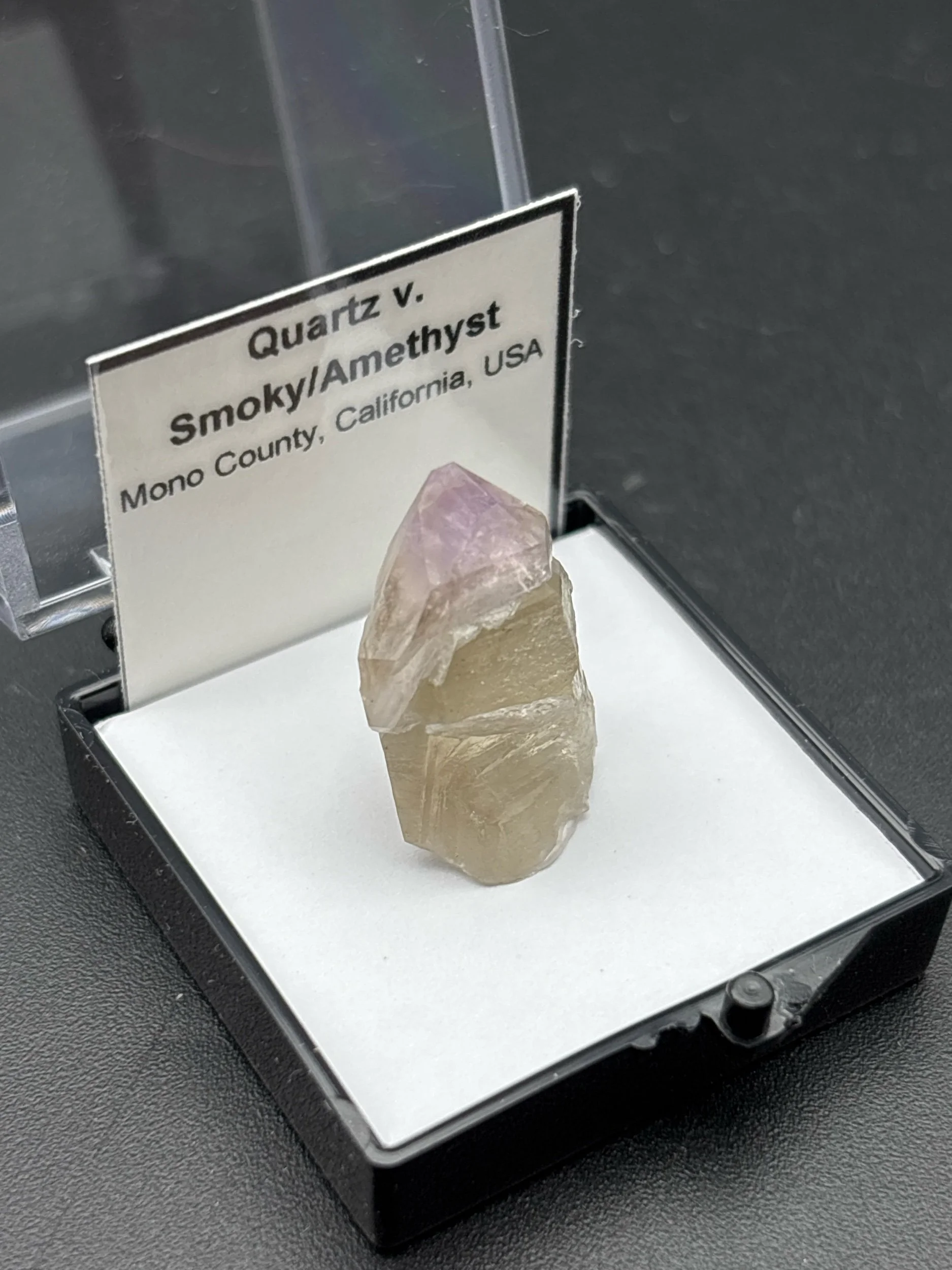
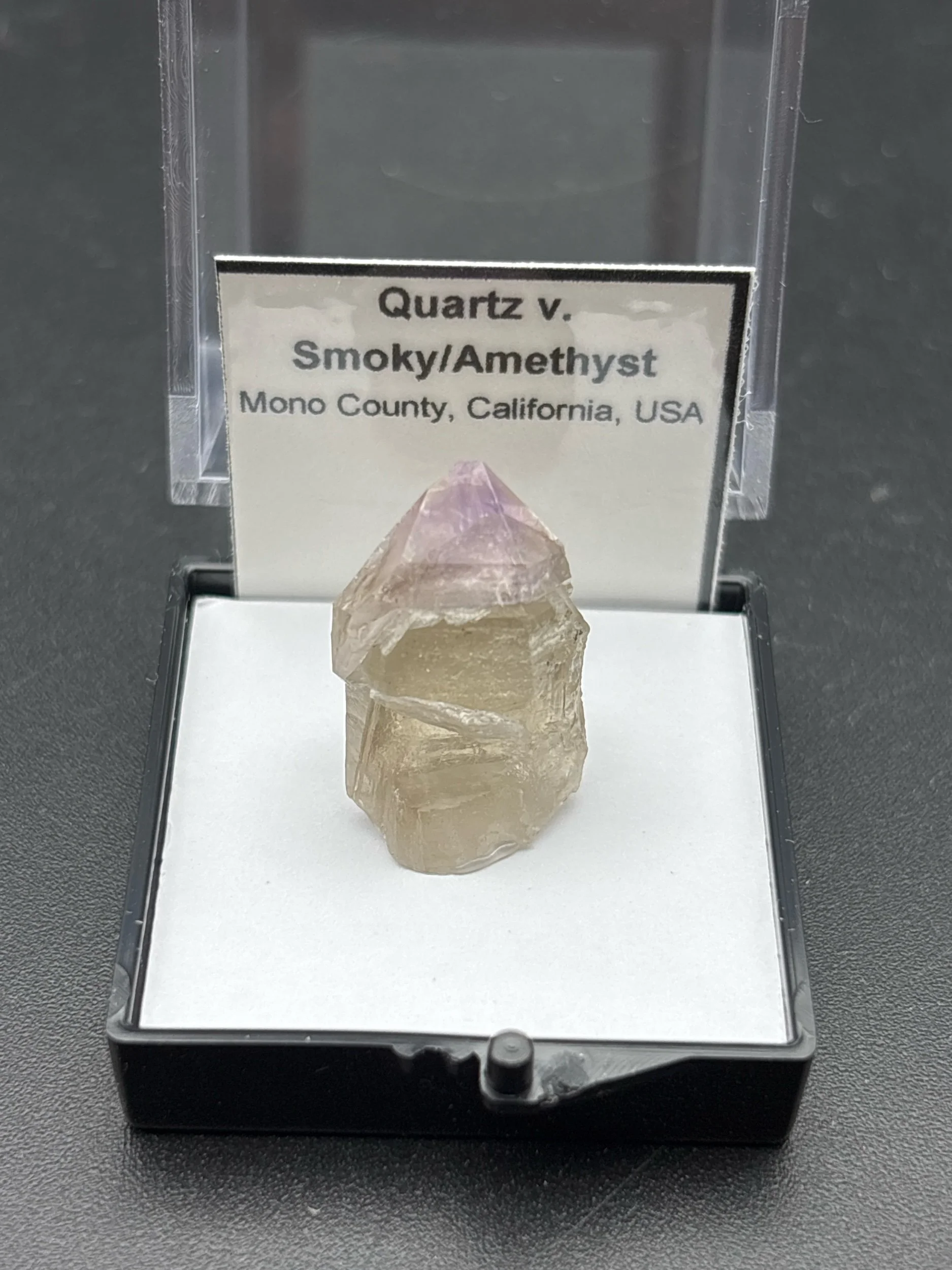
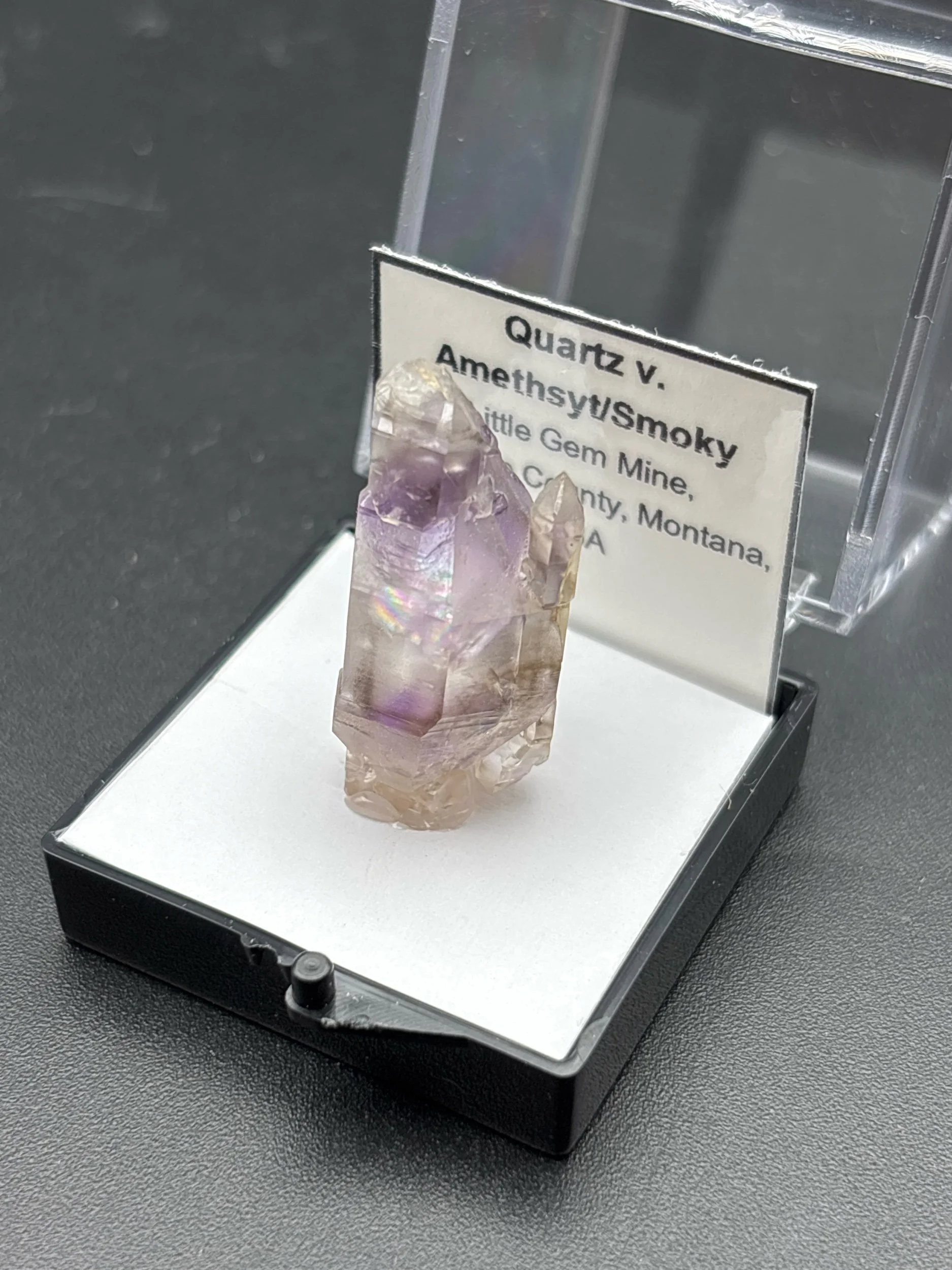
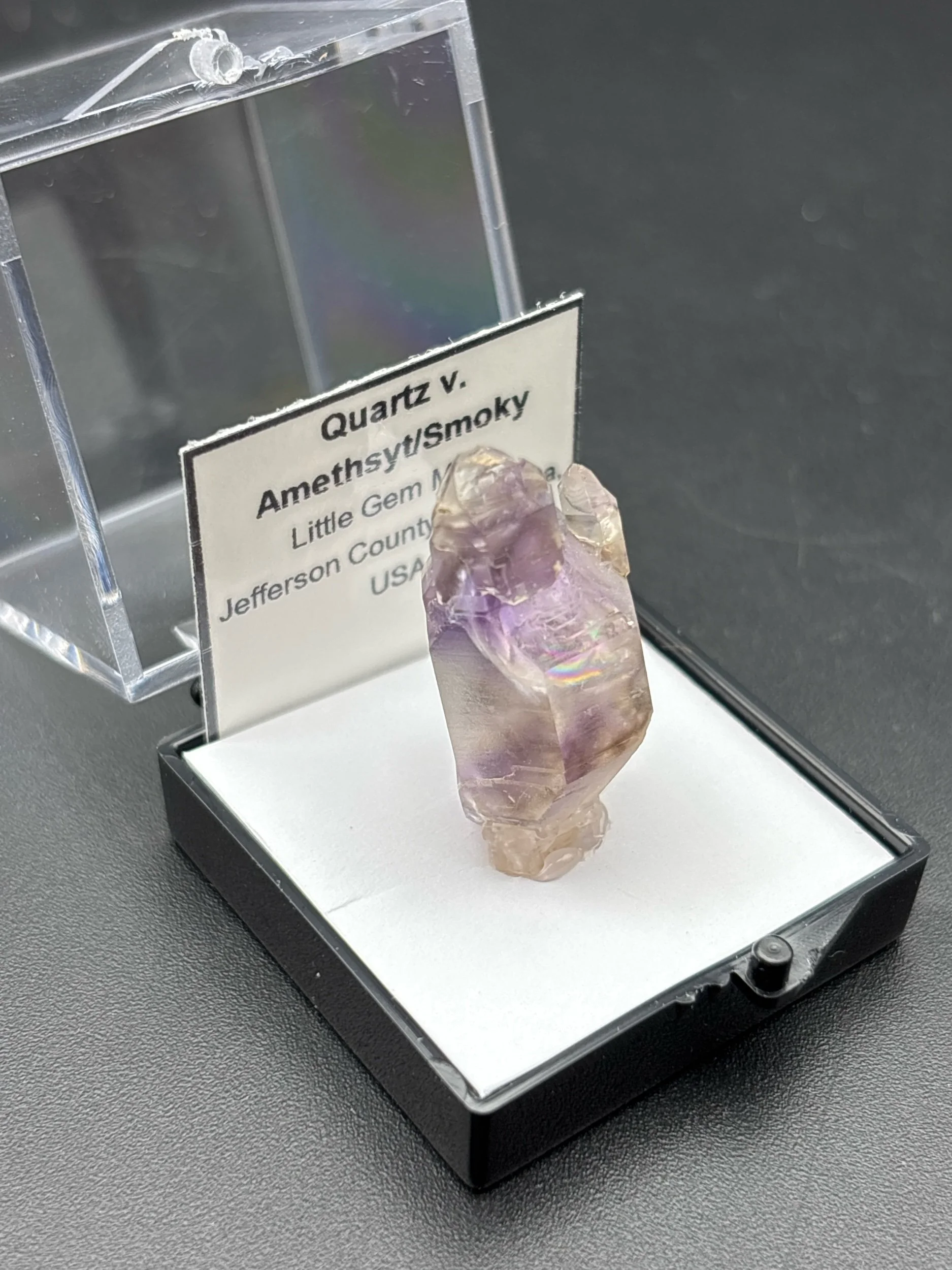
This specimen is a beautiful miniature example of smoky, and amethyst intergrown to a uniquely charactered single crystal. This material only comes from one zone in the mine and carries signature traits. The presence of Brazil law twinning is easily viewed by the alternating matte/lustrous faces, which are defined best by looking down the c axis of the crystal. Clay inclusions are present in some of the chambers of the crystal.
Thank you so much for viewing! Please message for any further information
(1.5 × 1.0 × 1.7 in - 3.8 × 2.5 × 4.3 cm) 1.7oz / 48g
ORDERS SHIP MONDAYS
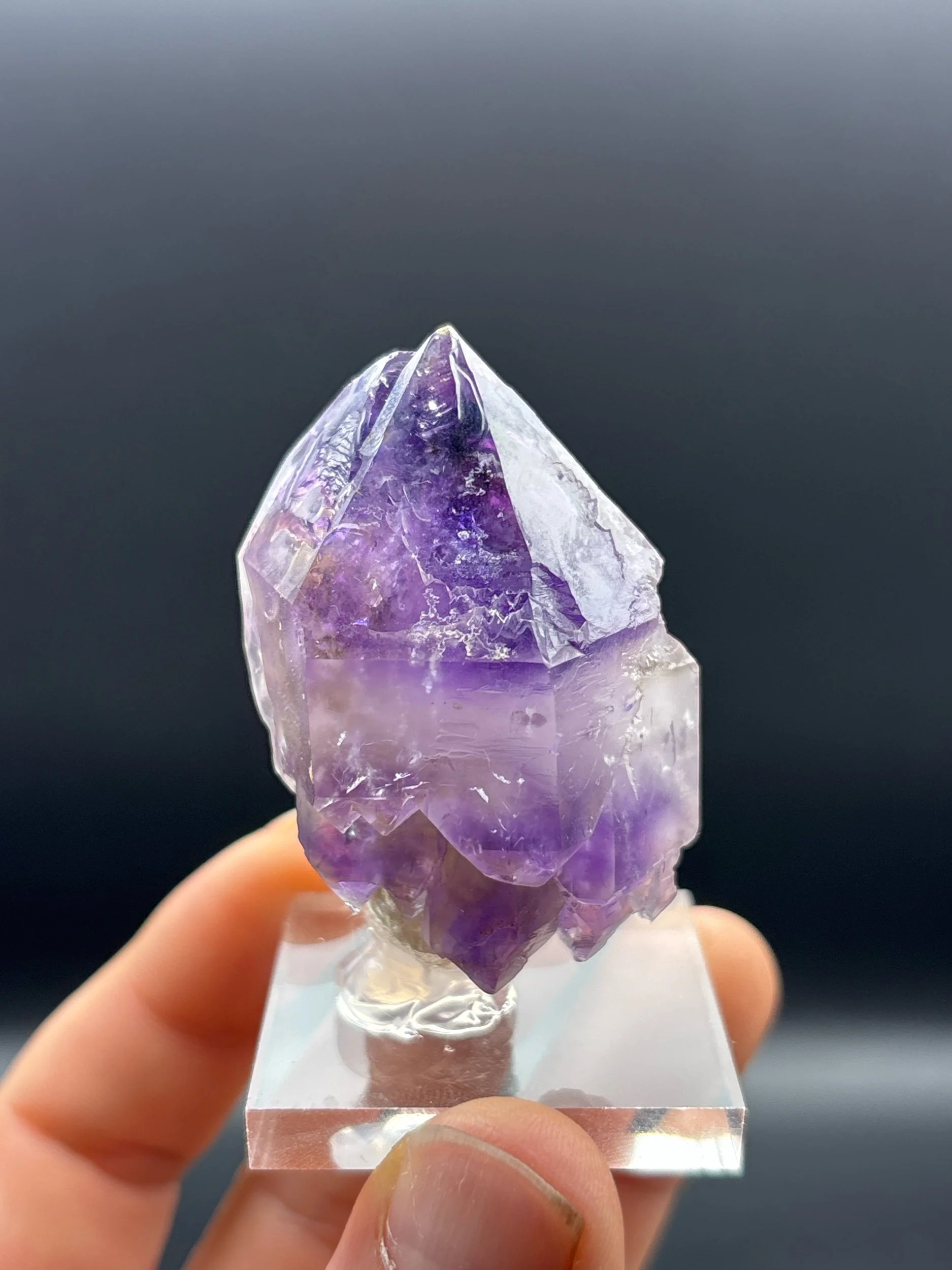
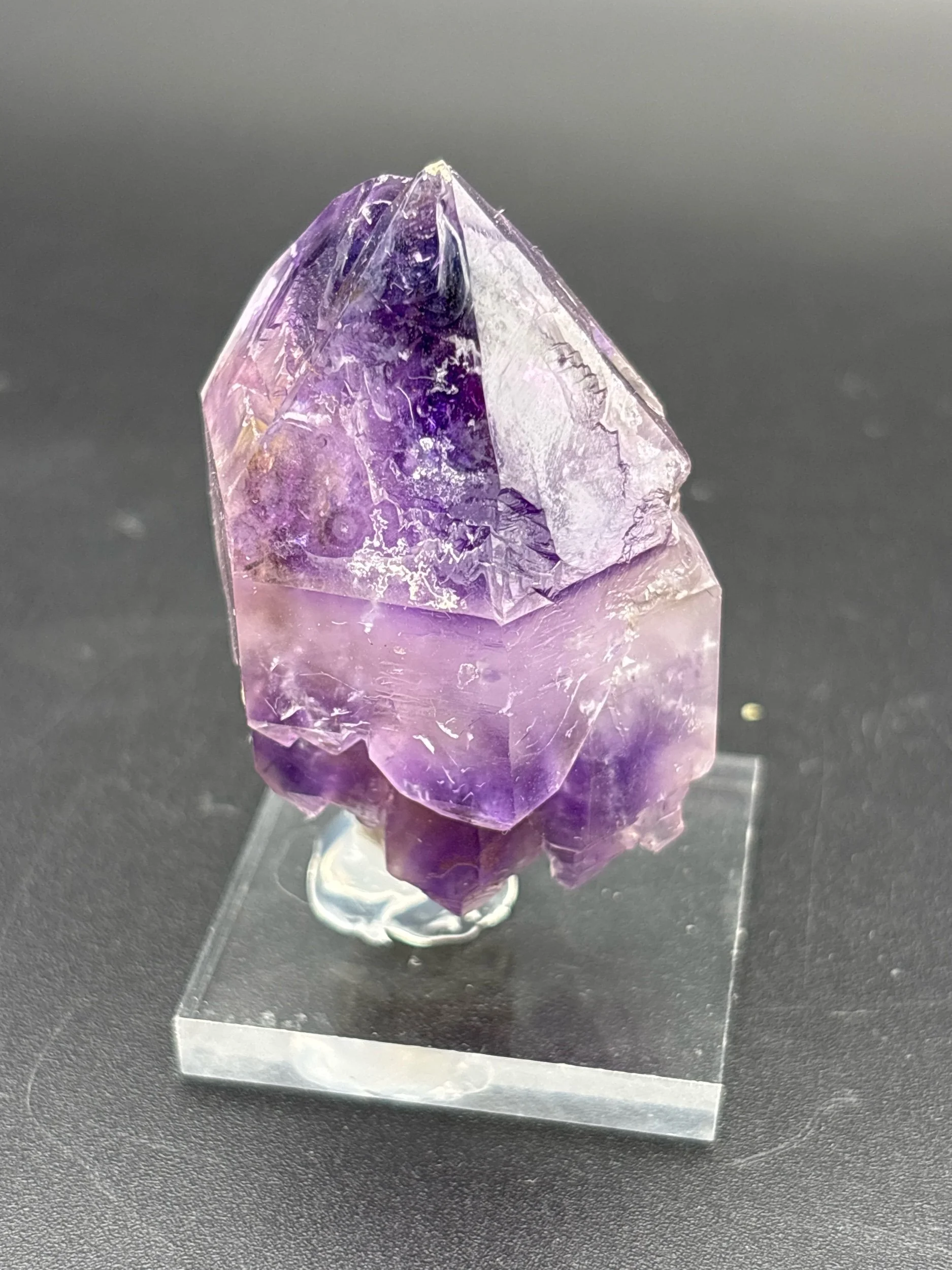
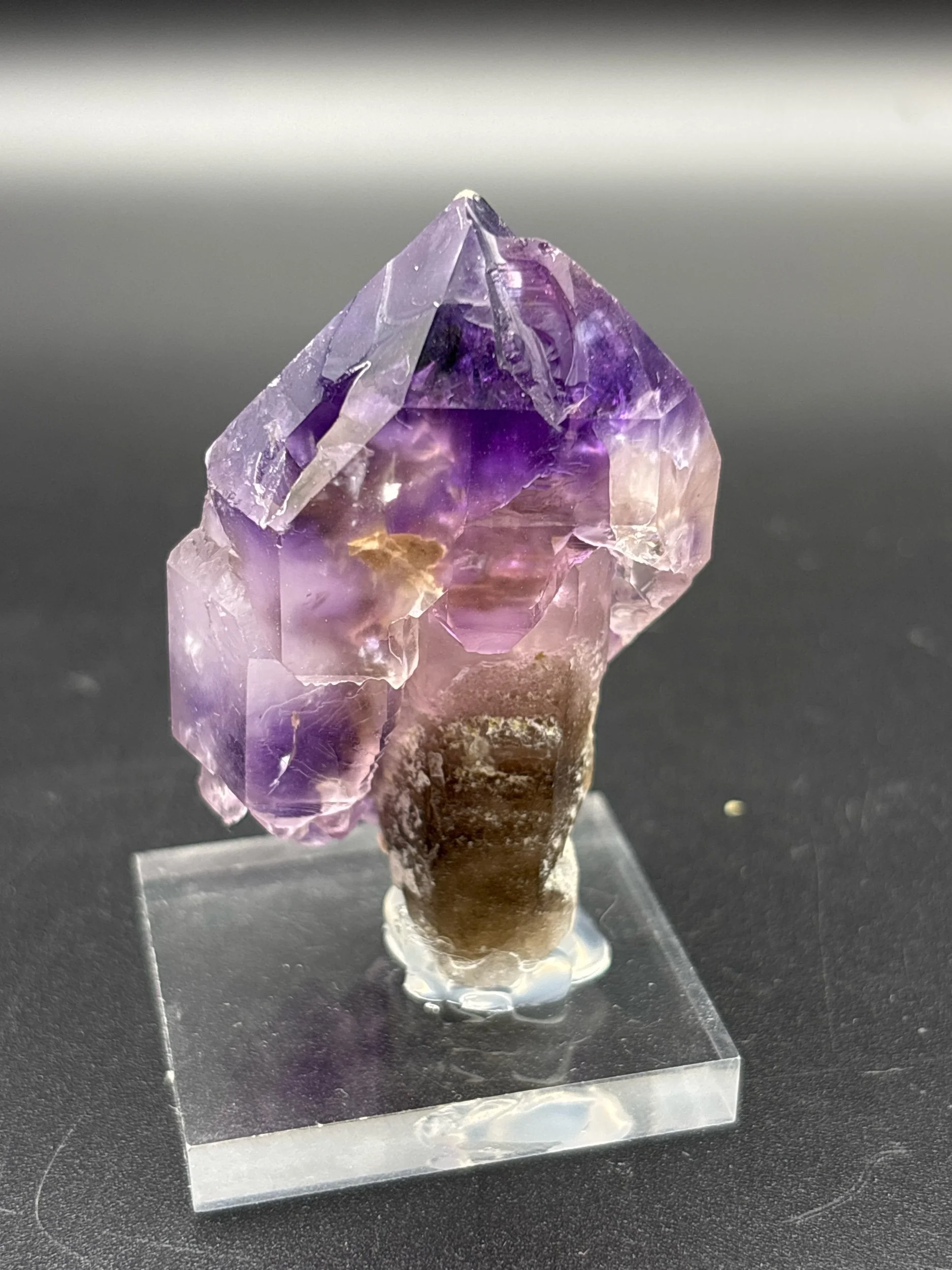
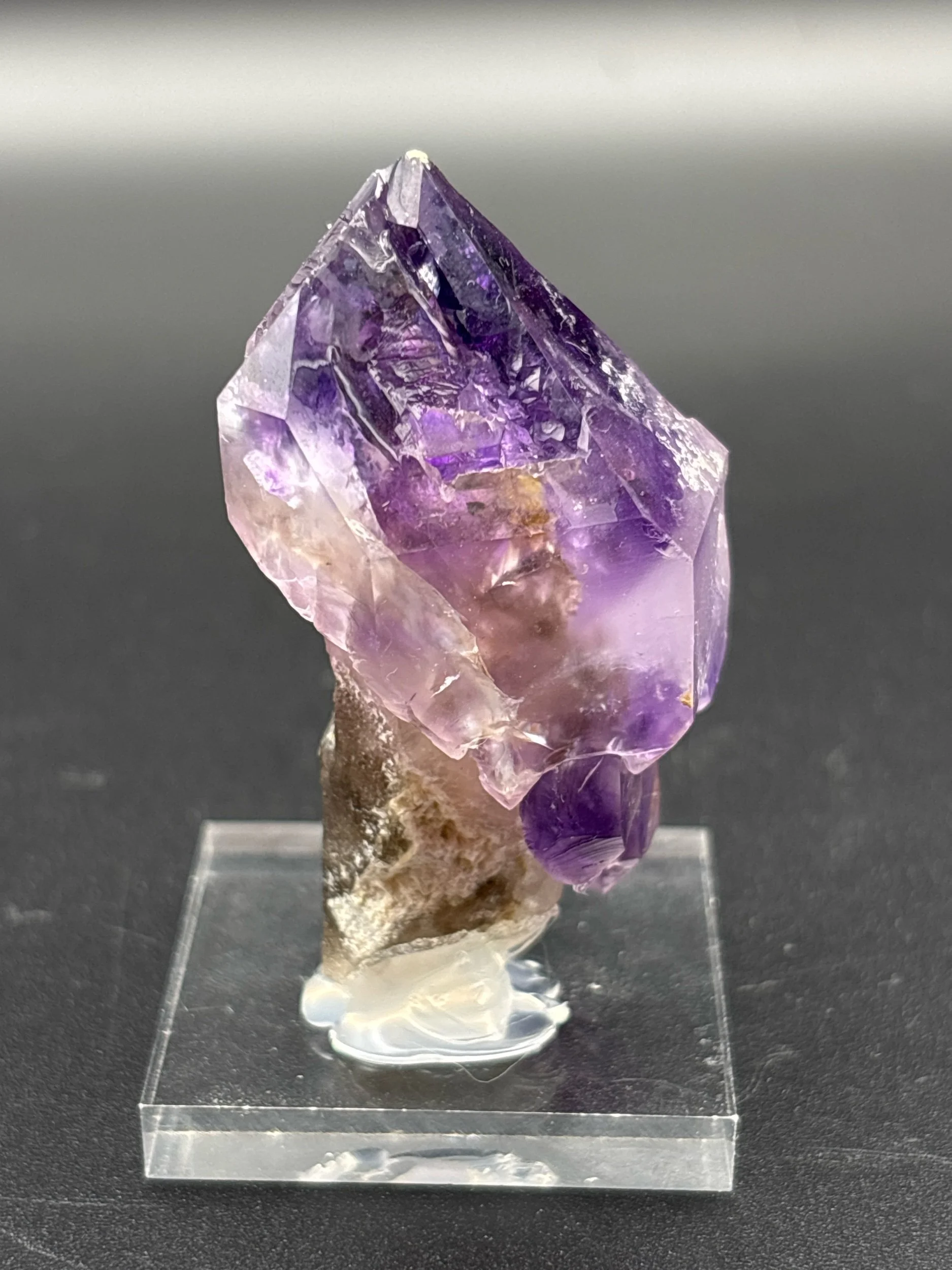
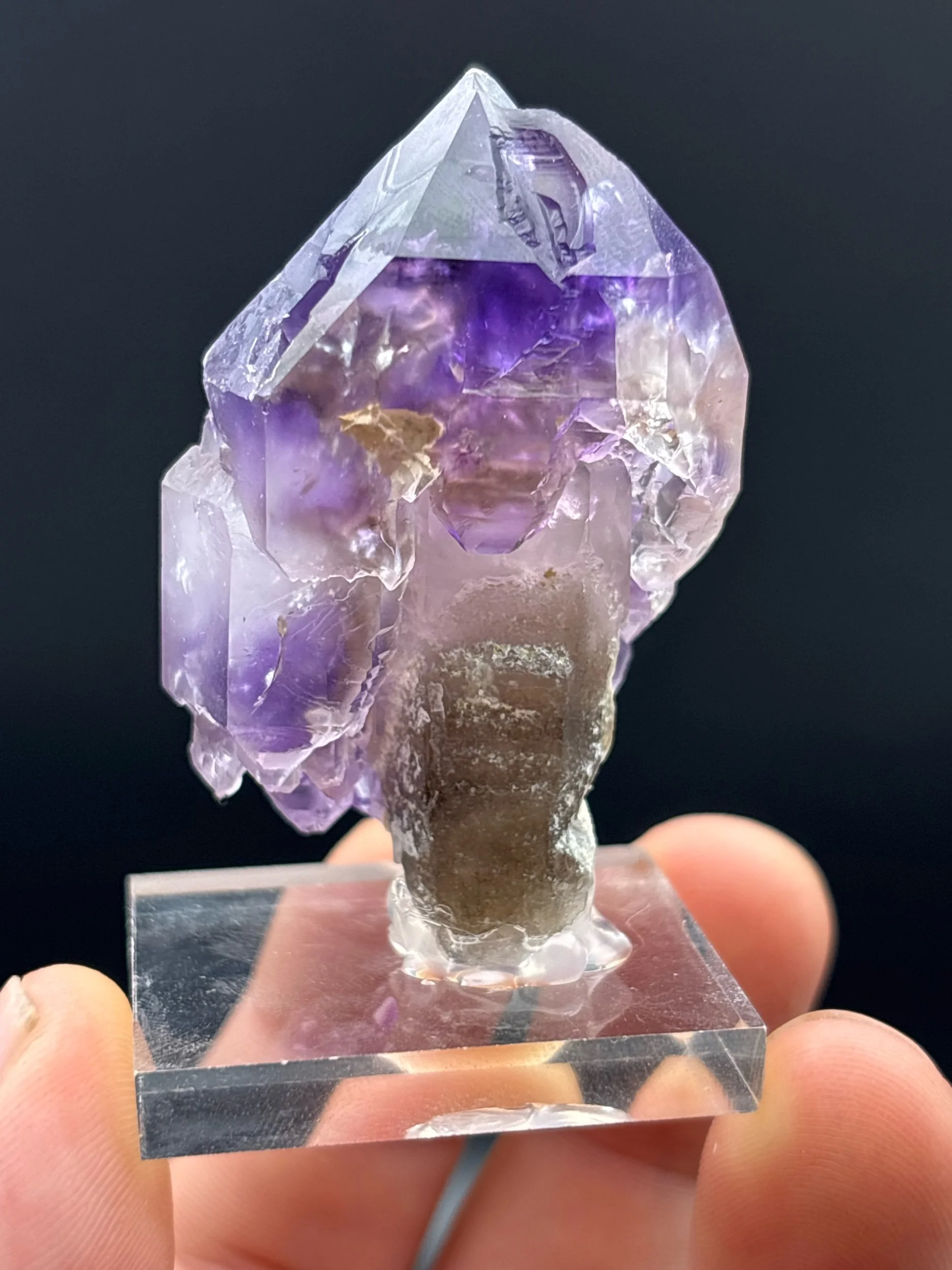
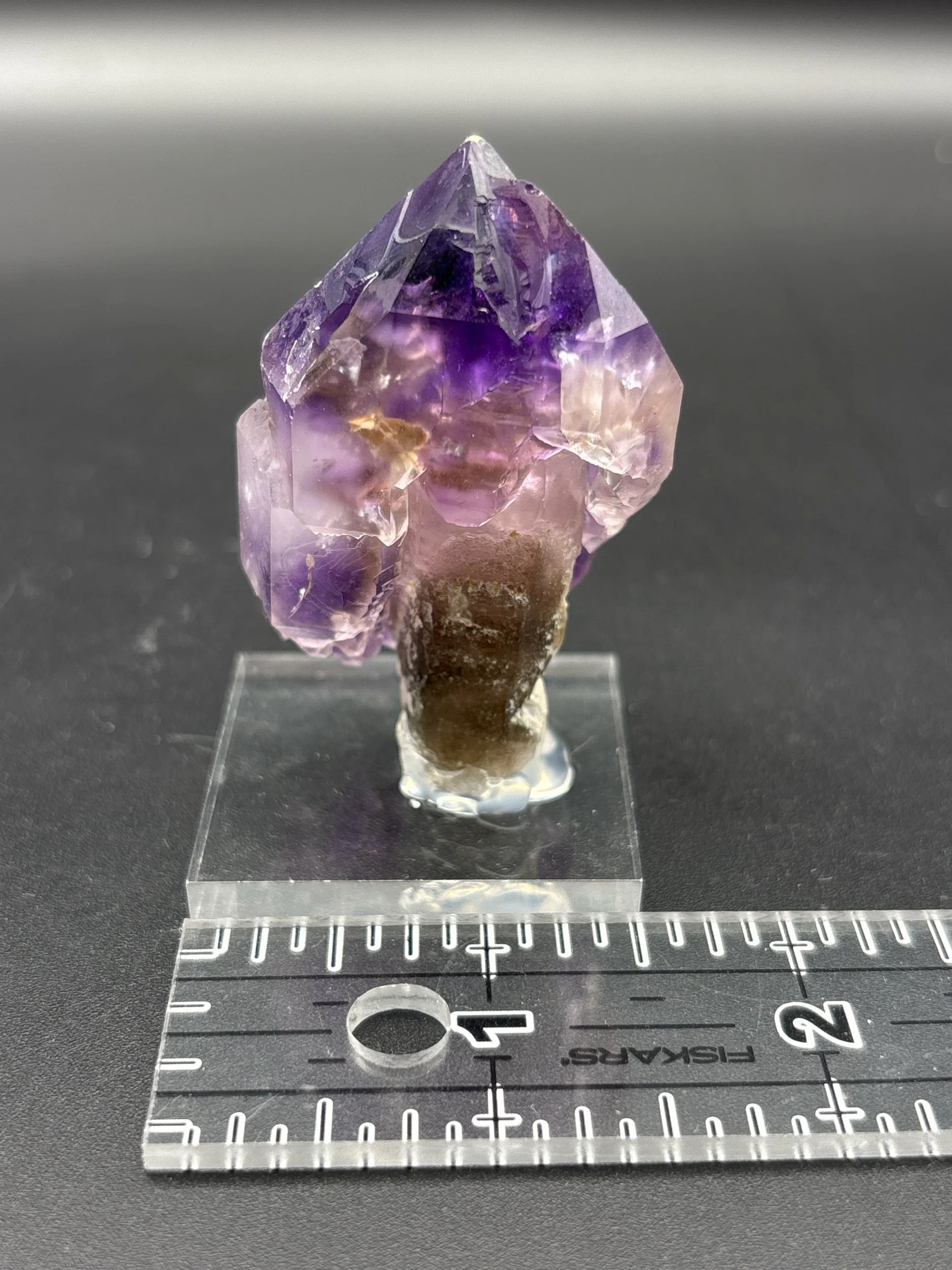
The Little Gem Mine was discovered by local gold prospectors in 1886. An article in "The Mineralogist" written in 1941 describes the travel from Butte by covered wagon, to the Nine Mile Inn, then subsequent travel to the deposit where collectors "filled their packs with amethyst" during the original find. In 1958 a Claim was filed by Oregon Geologist Jerry Gray. Gray worked the surface sporadically for 30+ years, brought in heavy equipment to build road access in the early 1990's. His goal was to create a secure working environment protected from trespassers. He tunneled about 100 feet through solid granite to reach the core, where he then put a raise. The narrow raise follows an aplite zone upwards and east; the raise opened a series of pockets that he extended into a drift, which ran parallel to the core. The present owner, Russ Hage, purchased the claim after Gray's death. Hage and working partner Mike Uphus together brought to light innumerable fine specimens. In 2013 the old drift in aplite was de-roofed and its access buried. In summer of 2022, local prospector Paul Senn took over mine management working side by side with owner Russ Hage. Since 2010 it has been worked from the surface, primarily by hand aided by small scale blasting and an excavator. Current work has exposed many pockets containing fine amethyst scepters and jacare' texture amethyst. Jacare' is a Portuguese term denoting alligator skin texture.
This specimen is a beautiful scepter displaying an intense colored cap over the smoky. The amethyst has a slight offset in growth symmetry and displays great lustrous facies. A classic Little Gem Mine piece that glows from within with color.
Thank you so much for viewing! Please message for any further information
(1.4 × 1.1 × 2.2 in - 3.5 × 2.7 × 5.5 cm) 2.5oz / 71g (With base)
ORDERS SHIP MONDAYS
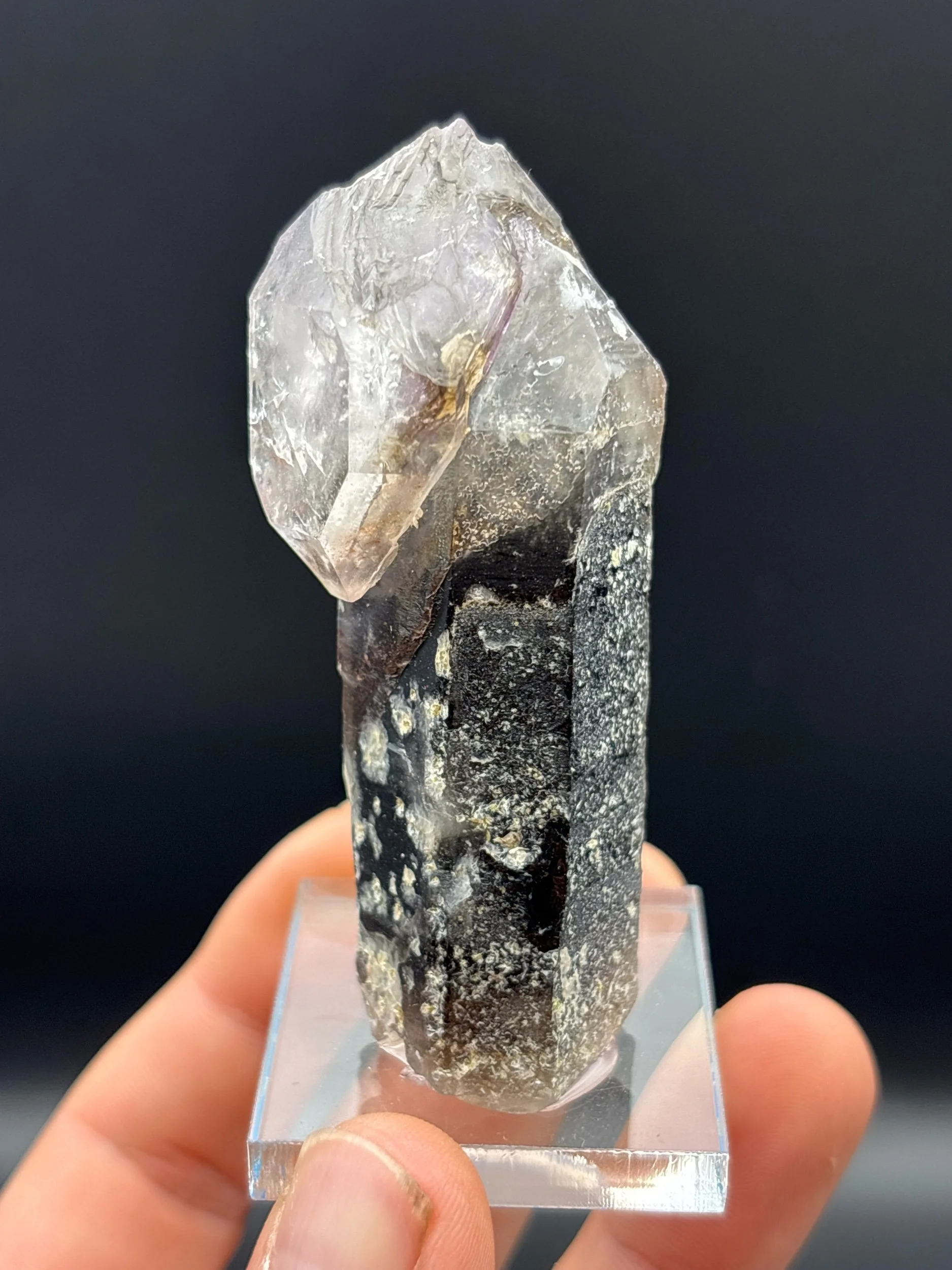
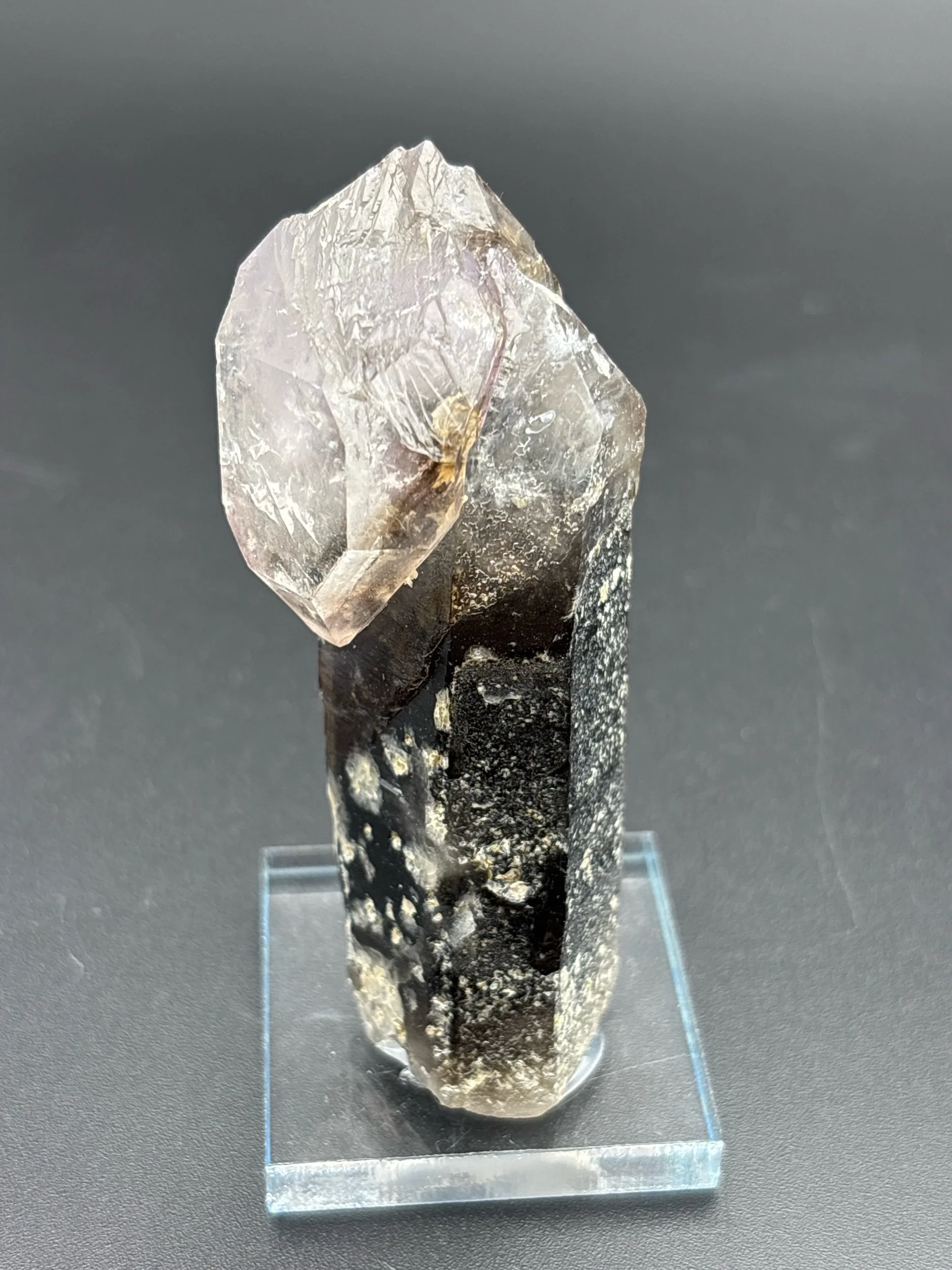
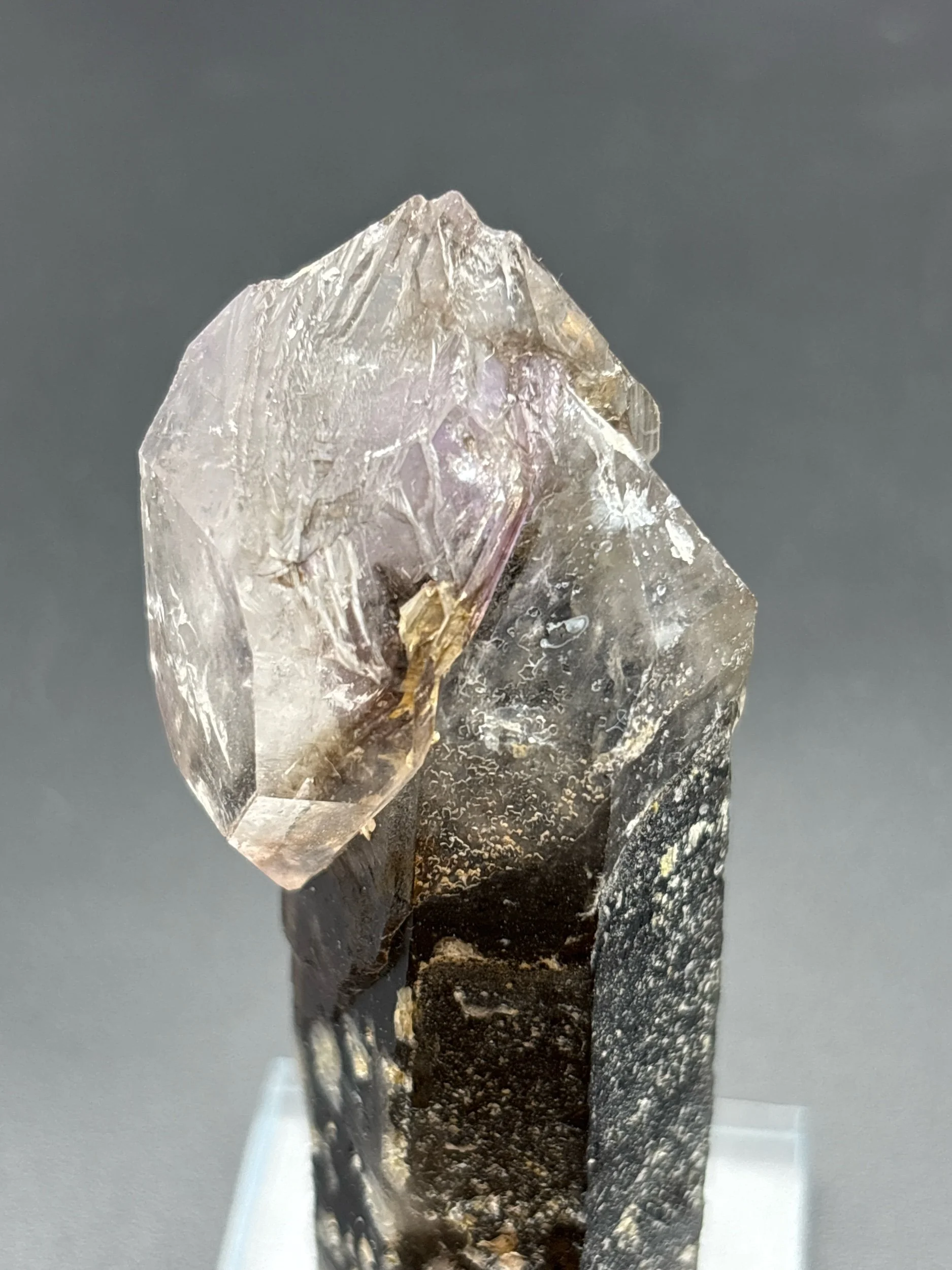
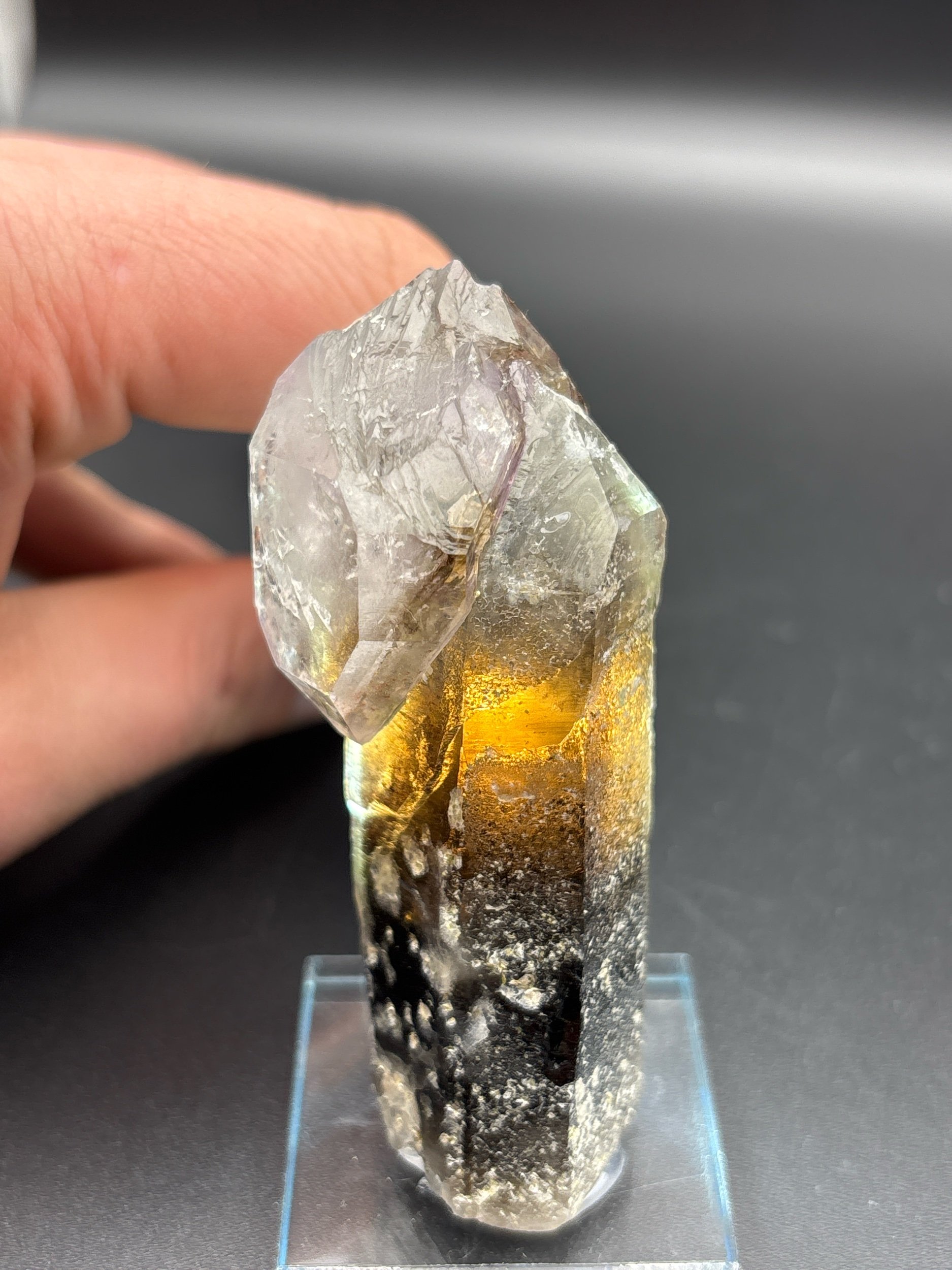
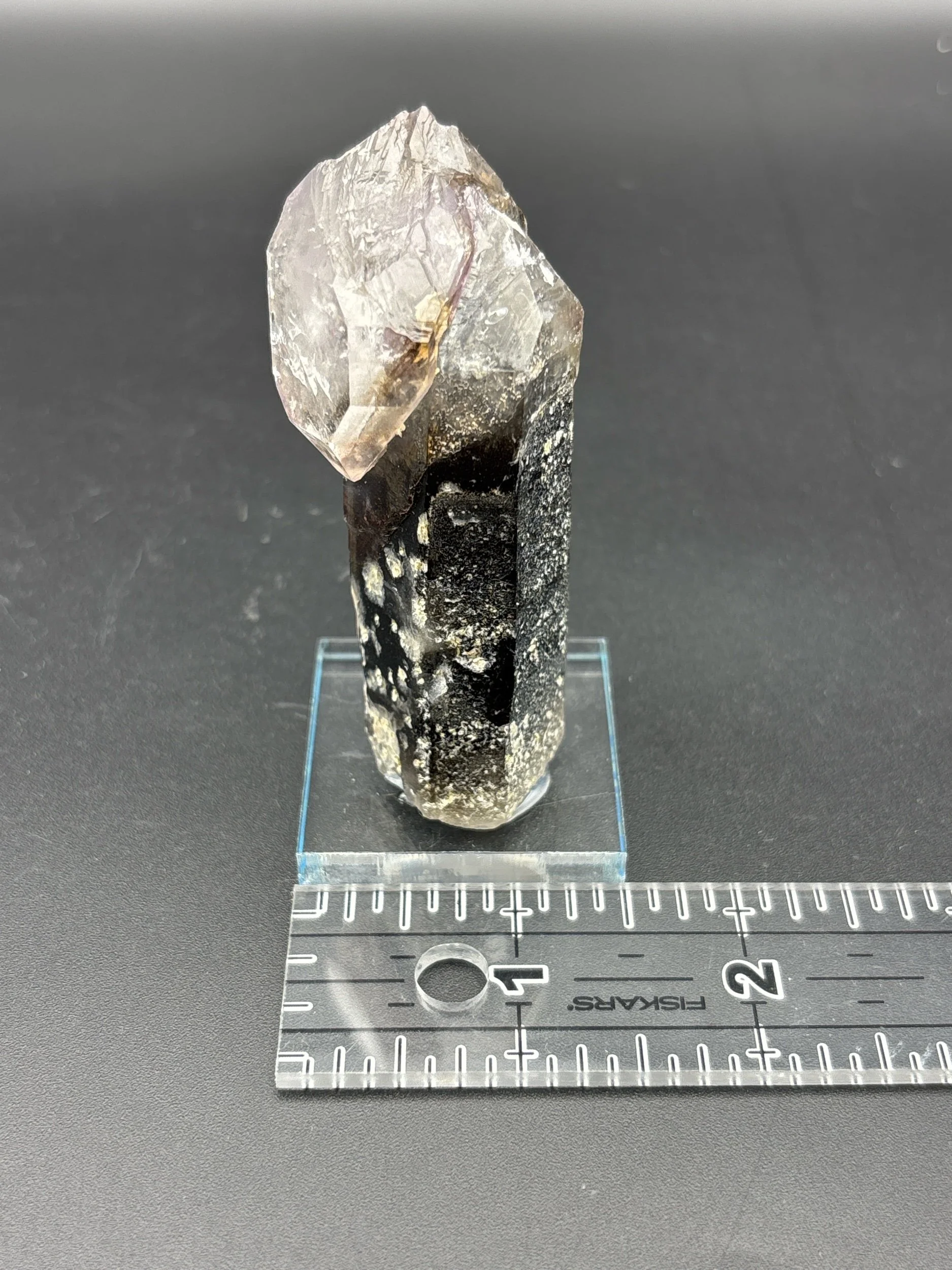
The Little Gem Mine was discovered by local gold prospectors in 1886. An article in "The Mineralogist" written in 1941 describes the travel from Butte by covered wagon, to the Nine Mile Inn, then subsequent travel to the deposit where collectors "filled their packs with amethyst" during the original find. In 1958 a Claim was filed by Oregon Geologist Jerry Gray. Gray worked the surface sporadically for 30+ years, brought in heavy equipment to build road access in the early 1990's. His goal was to create a secure working environment protected from trespassers. He tunneled about 100 feet through solid granite to reach the core, where he then put a raise. The narrow raise follows an aplite zone upwards and east; the raise opened a series of pockets that he extended into a drift, which ran parallel to the core. The present owner, Russ Hage, purchased the claim after Gray's death. Hage and working partner Mike Uphus together brought to light innumerable fine specimens. In 2013 the old drift in aplite was de-roofed and its access buried. In summer of 2022, local prospector Paul Senn took over mine management working side by side with owner Russ Hage. Since 2010 it has been worked from the surface, primarily by hand aided by small scale blasting and an excavator. Current work has exposed many pockets containing fine amethyst scepters and jacare' texture amethyst. Jacare' is a Portuguese term denoting alligator skin texture.
This specimen is a beautiful scepter displaying a unique offset and pale colored cap over the smoky. Styled much like the “scene hairdos” of the early 2000s, this scepter has a signature cap. Excellent luster is present as well as no damage to the cap. A classic Little Gem Mine piece
Thank you so much for viewing! Please message for any further information
(1.3 × 1.1 × 3.0 in - 3.3 × 2.7 × 7.6 cm) 3.4oz / 98g (With base)
ORDERS SHIP MONDAYS
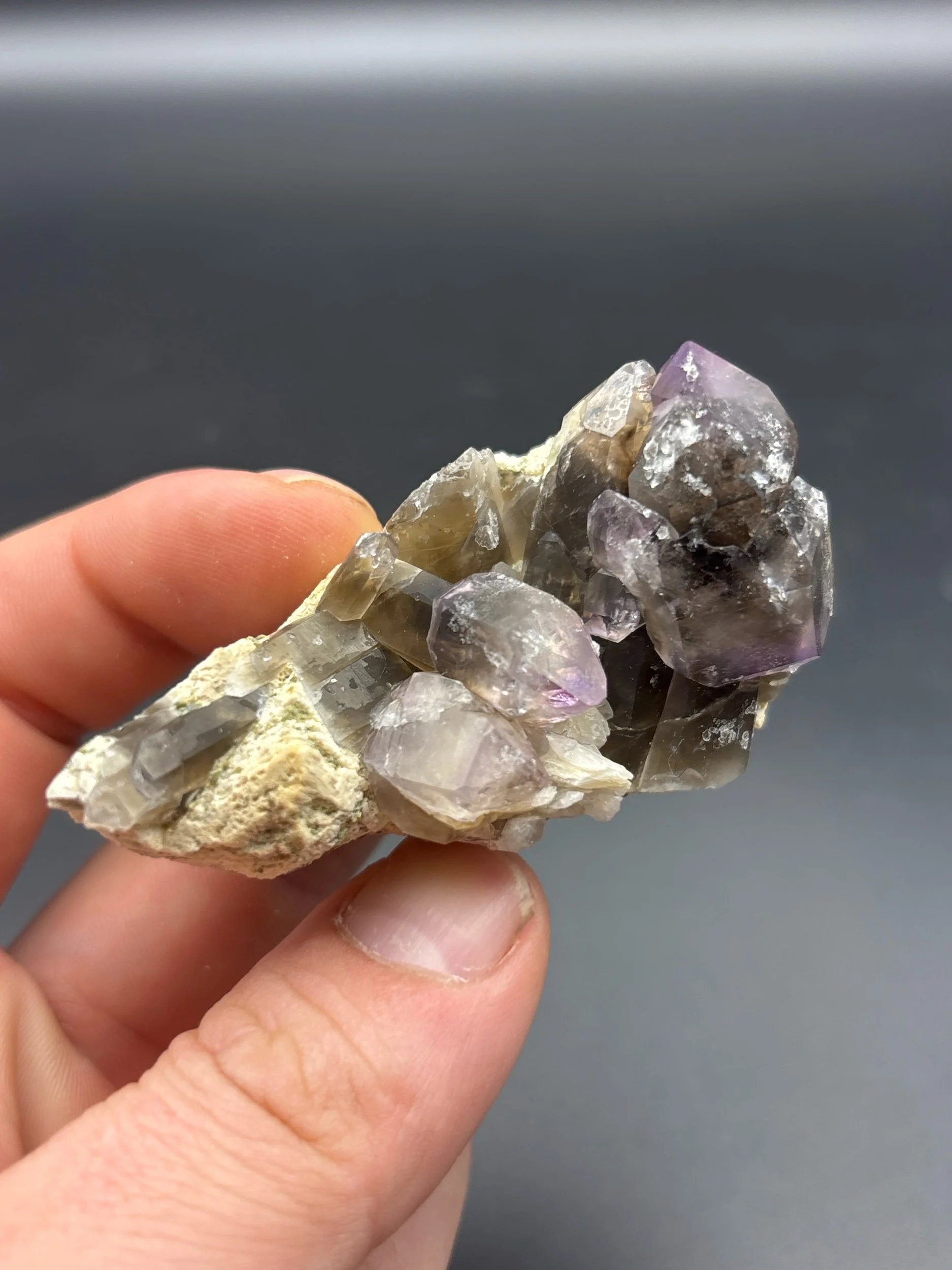
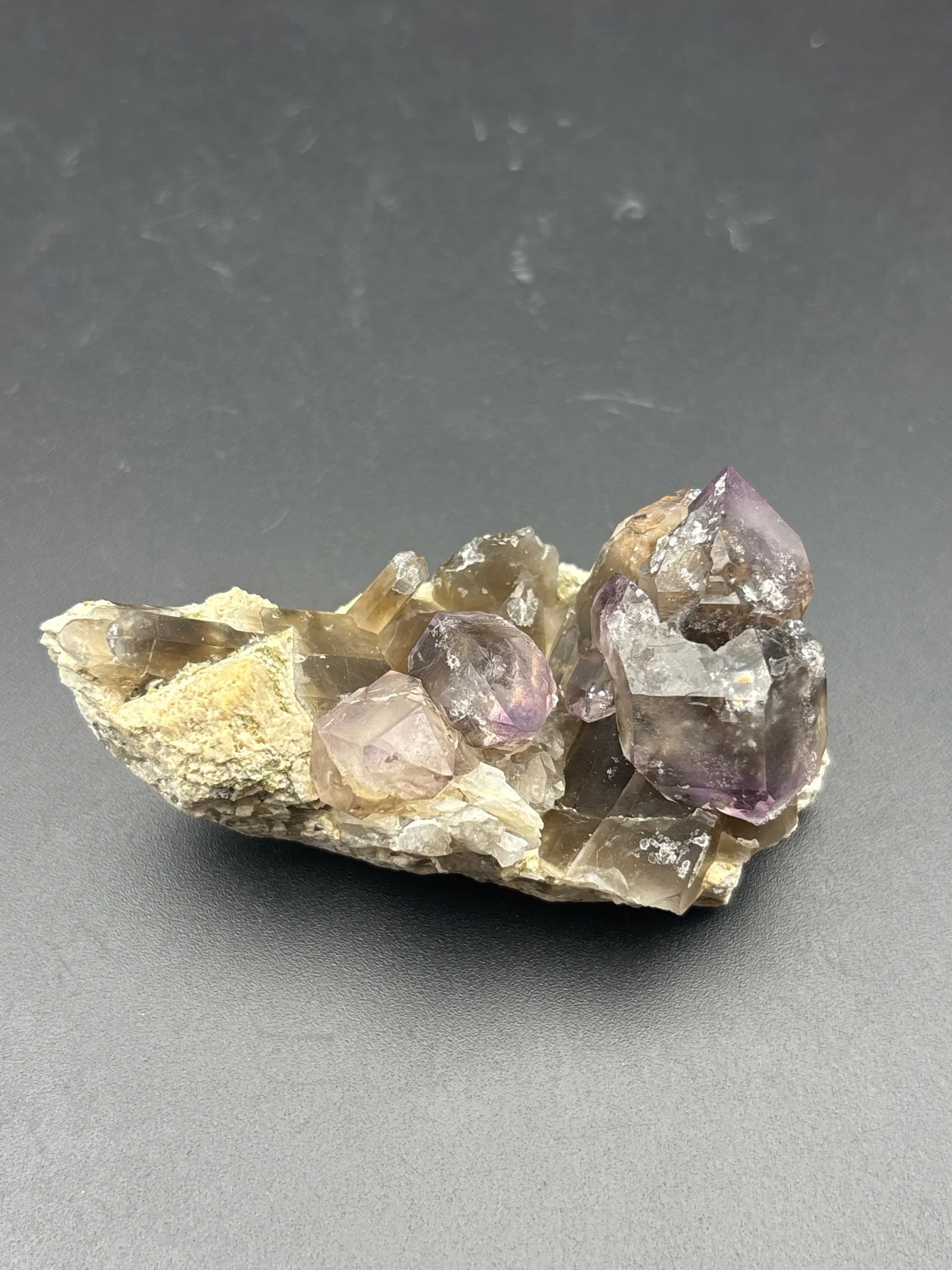
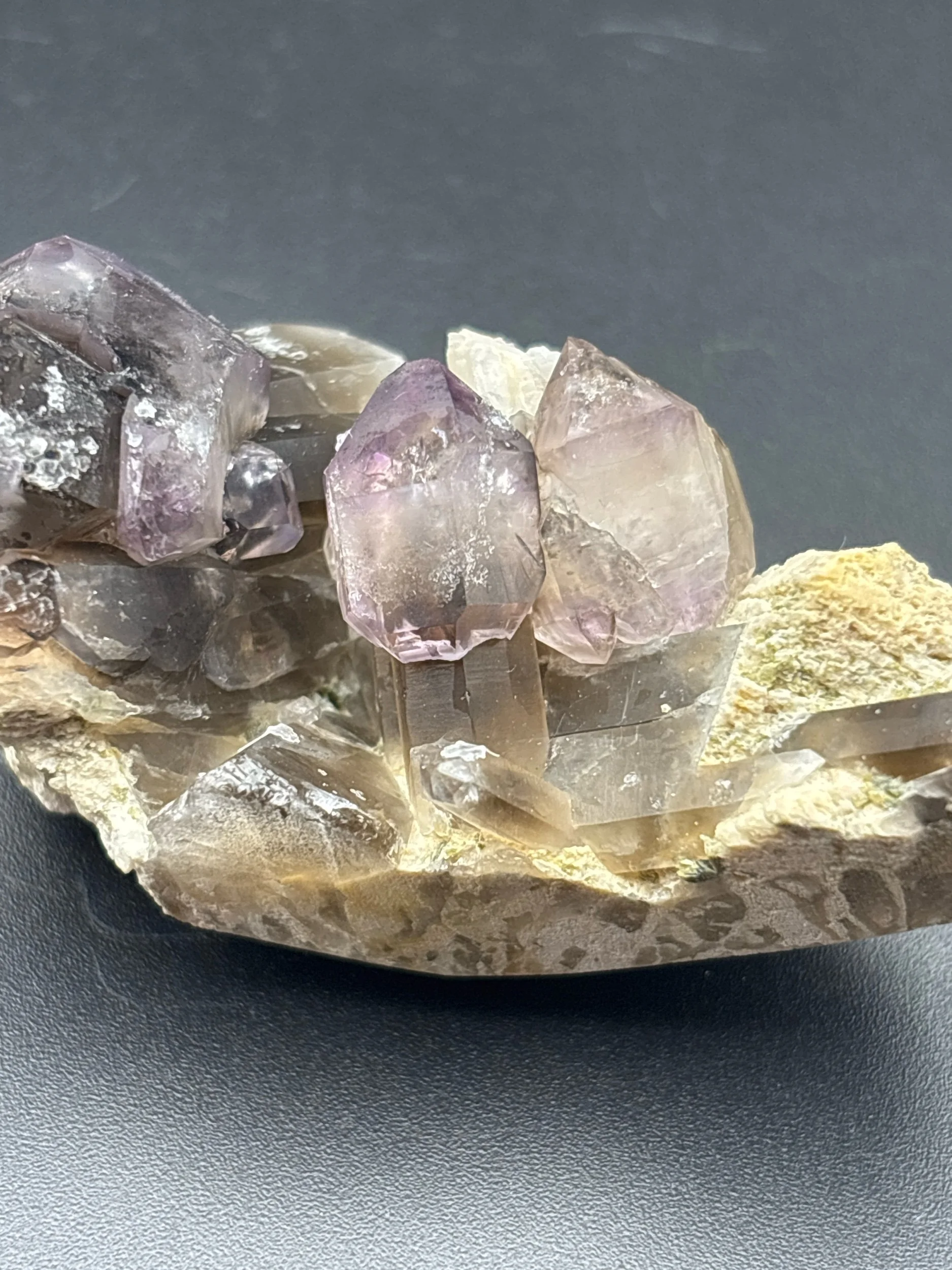
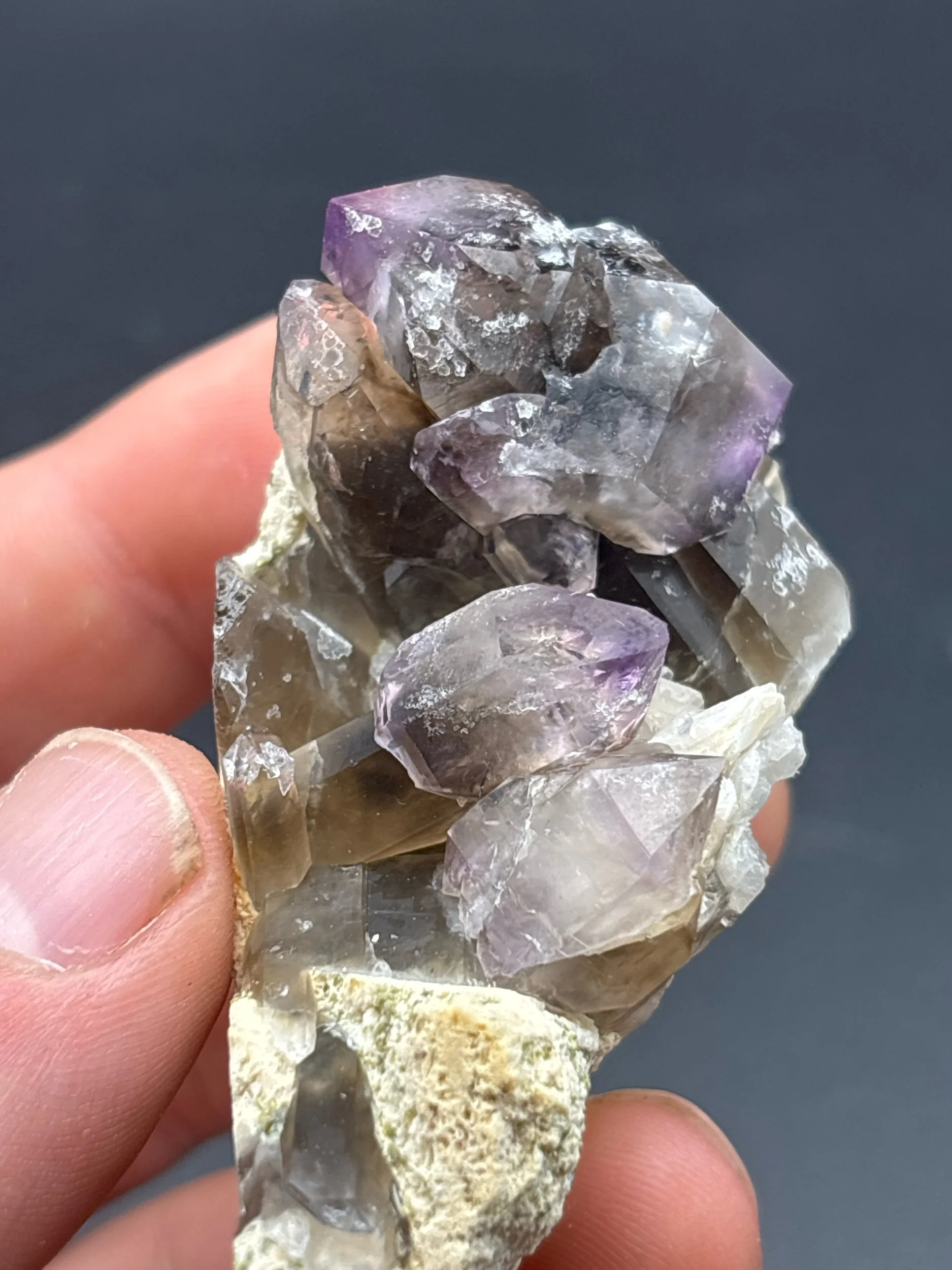
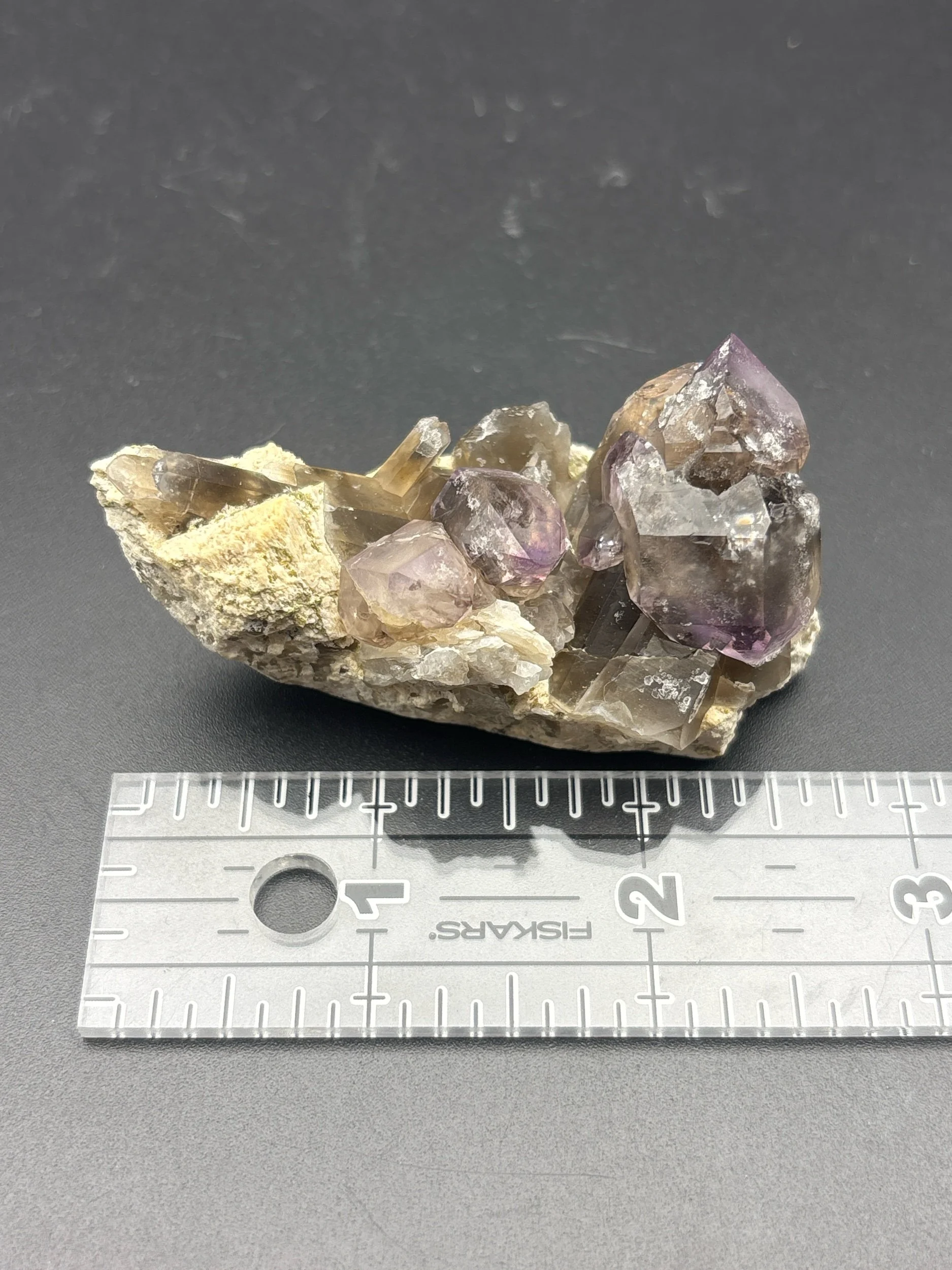
The Little Gem Mine was discovered by local gold prospectors in 1886. An article in "The Mineralogist" written in 1941 describes the travel from Butte by covered wagon, to the Nine Mile Inn, then subsequent travel to the deposit where collectors "filled their packs with amethyst" during the original find. In 1958 a Claim was filed by Oregon Geologist Jerry Gray. Gray worked the surface sporadically for 30+ years, brought in heavy equipment to build road access in the early 1990's. His goal was to create a secure working environment protected from trespassers. He tunneled about 100 feet through solid granite to reach the core, where he then put a raise. The narrow raise follows an aplite zone upwards and east; the raise opened a series of pockets that he extended into a drift, which ran parallel to the core. The present owner, Russ Hage, purchased the claim after Gray's death. Hage and working partner Mike Uphus together brought to light innumerable fine specimens. In 2013 the old drift in aplite was de-roofed and its access buried. In summer of 2022, local prospector Paul Senn took over mine management working side by side with owner Russ Hage. Since 2010 it has been worked from the surface, primarily by hand aided by small scale blasting and an excavator. Current work has exposed many pockets containing fine amethyst scepters and jacare' texture amethyst. Jacare' is a Portuguese term denoting alligator skin texture.
This specimen is a beautiful miniature example of microcline with a protruding quartz capped by amethyst, harvested in the 2023 season. It exhibits excellent luster and good color. “Scepter” style habit is displayed quite well by the amethyst. The etched microcline is accented by pale green sericite mica, an alteration mineral present throughout the mine. There is even small splotches of hyalite opal present which fluoresce under 365nm UV, which is relatively uncommon for the mine!
Thank you so much for viewing! Please message for any further information
(2.7 × 1.4 × 1.2 in - 6.8 × 3.5 × 3.0 cm) 2.4oz / 69g
ORDERS SHIP MONDAYS
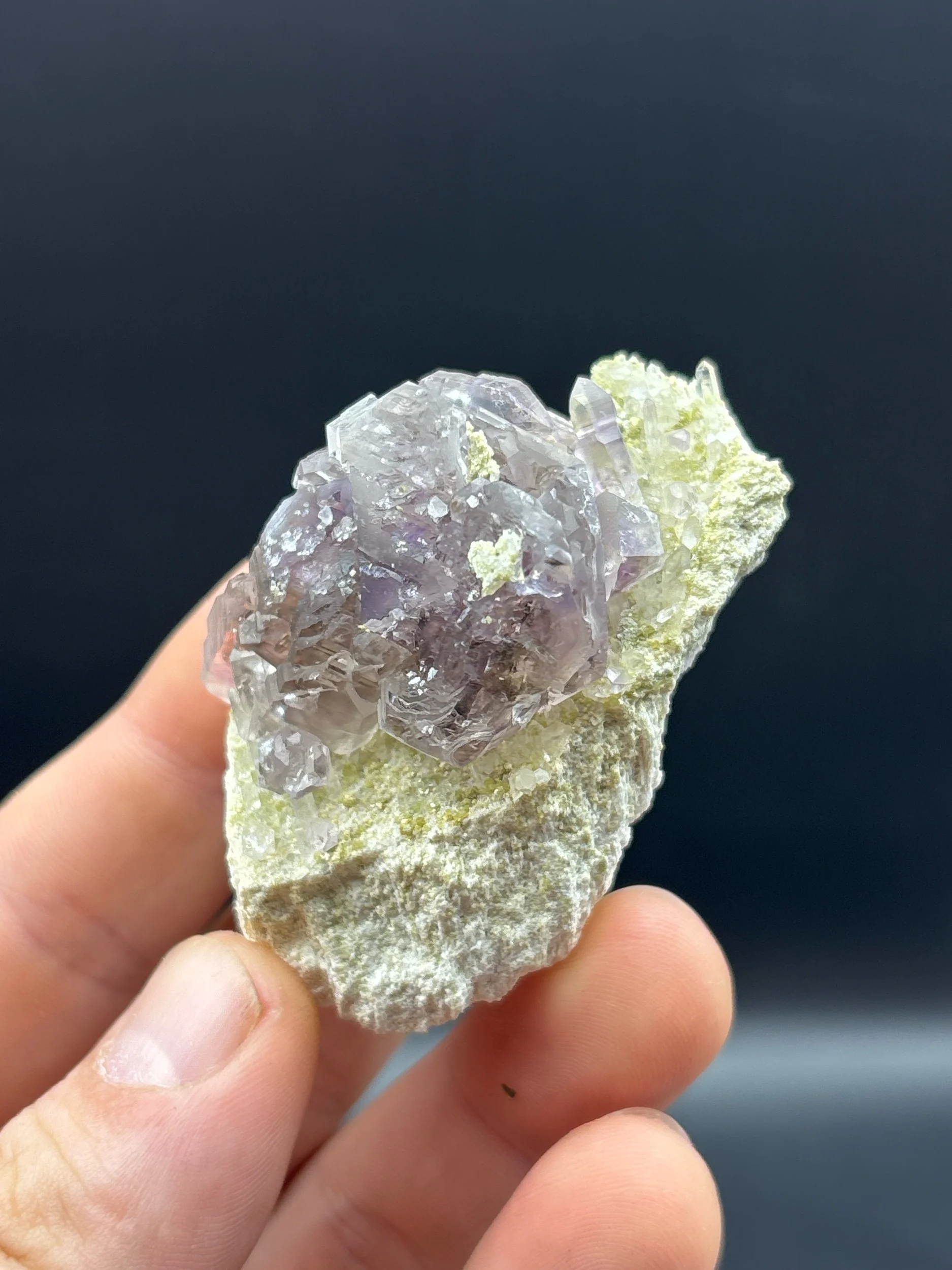
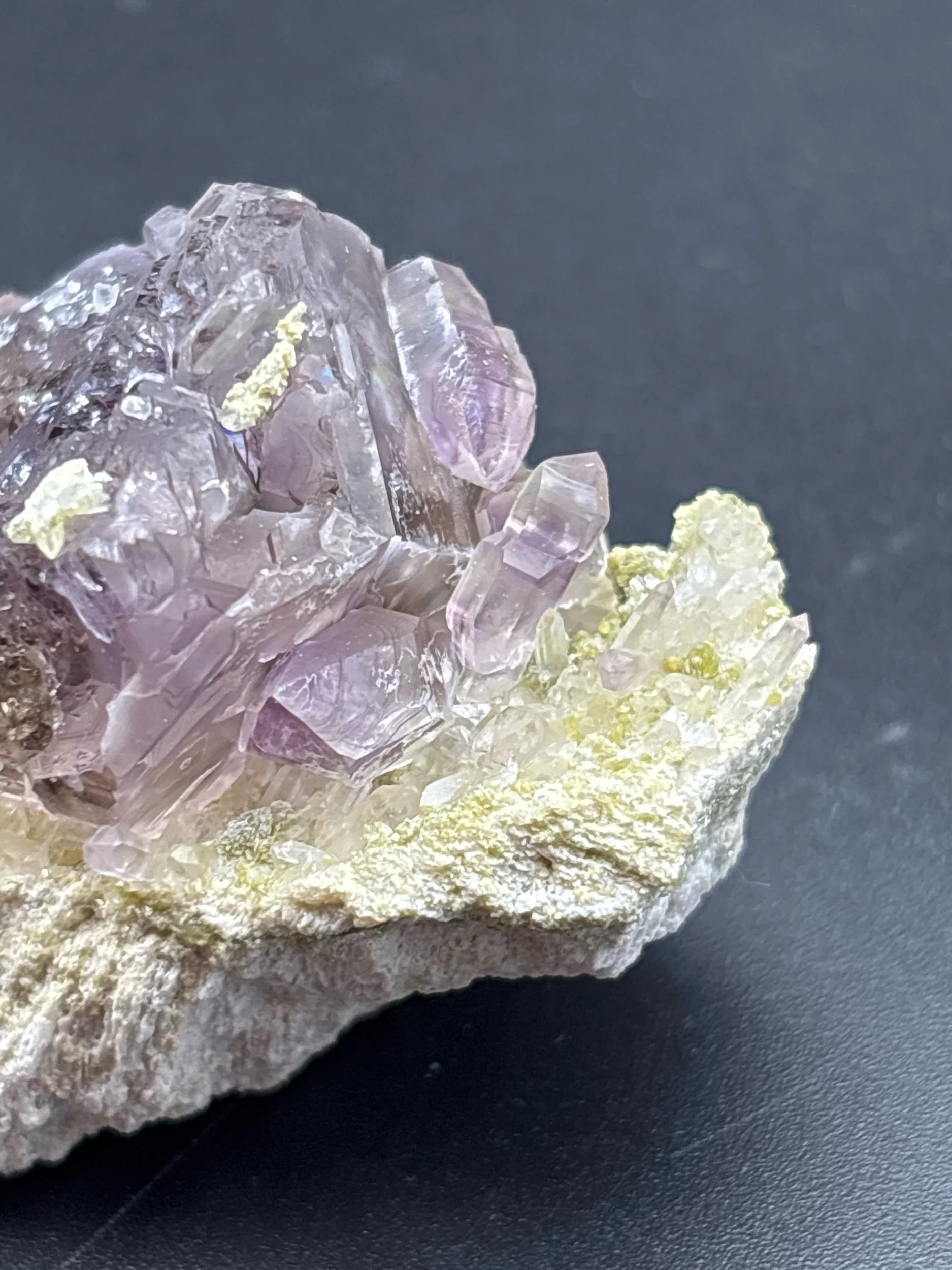
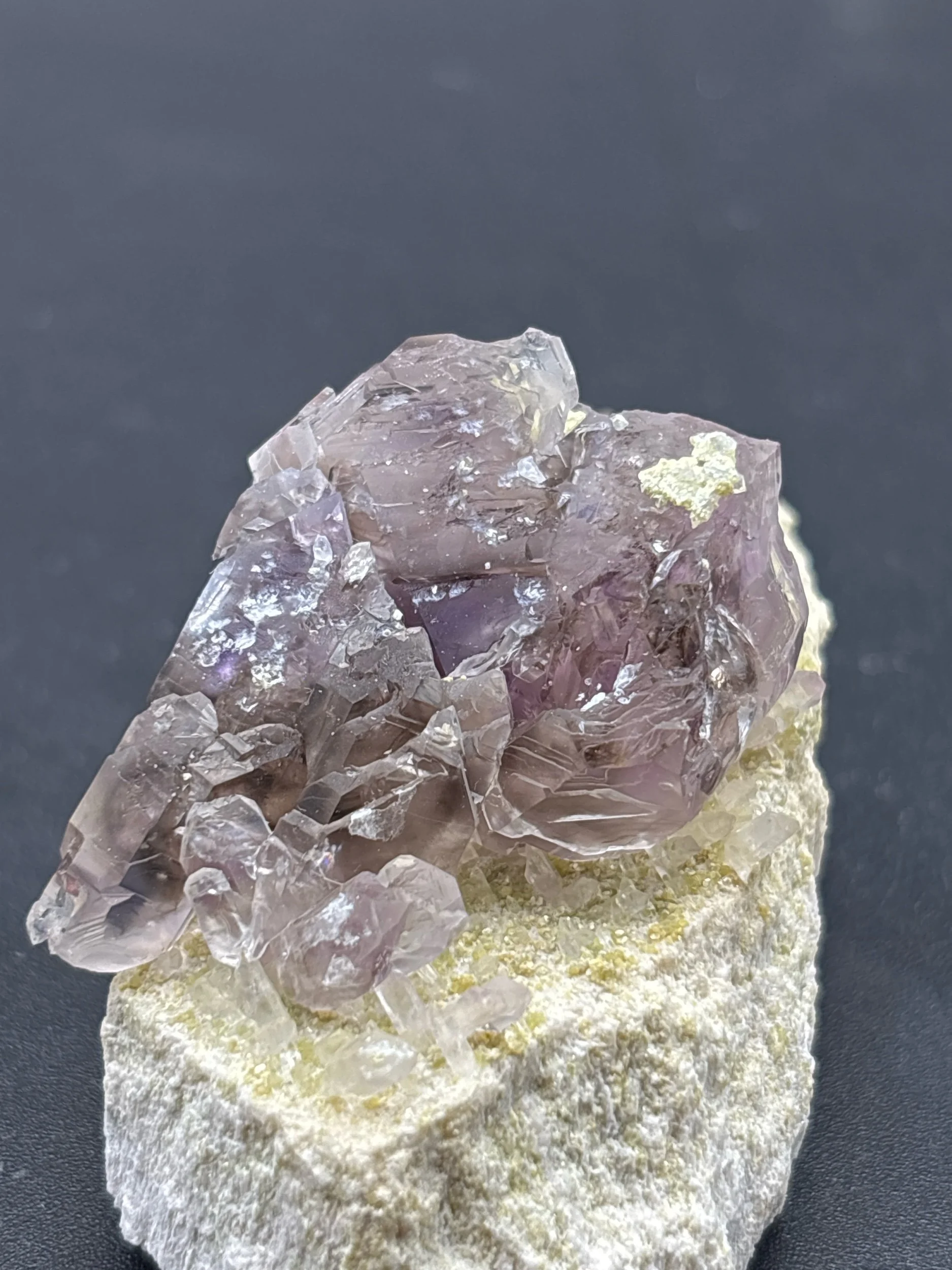
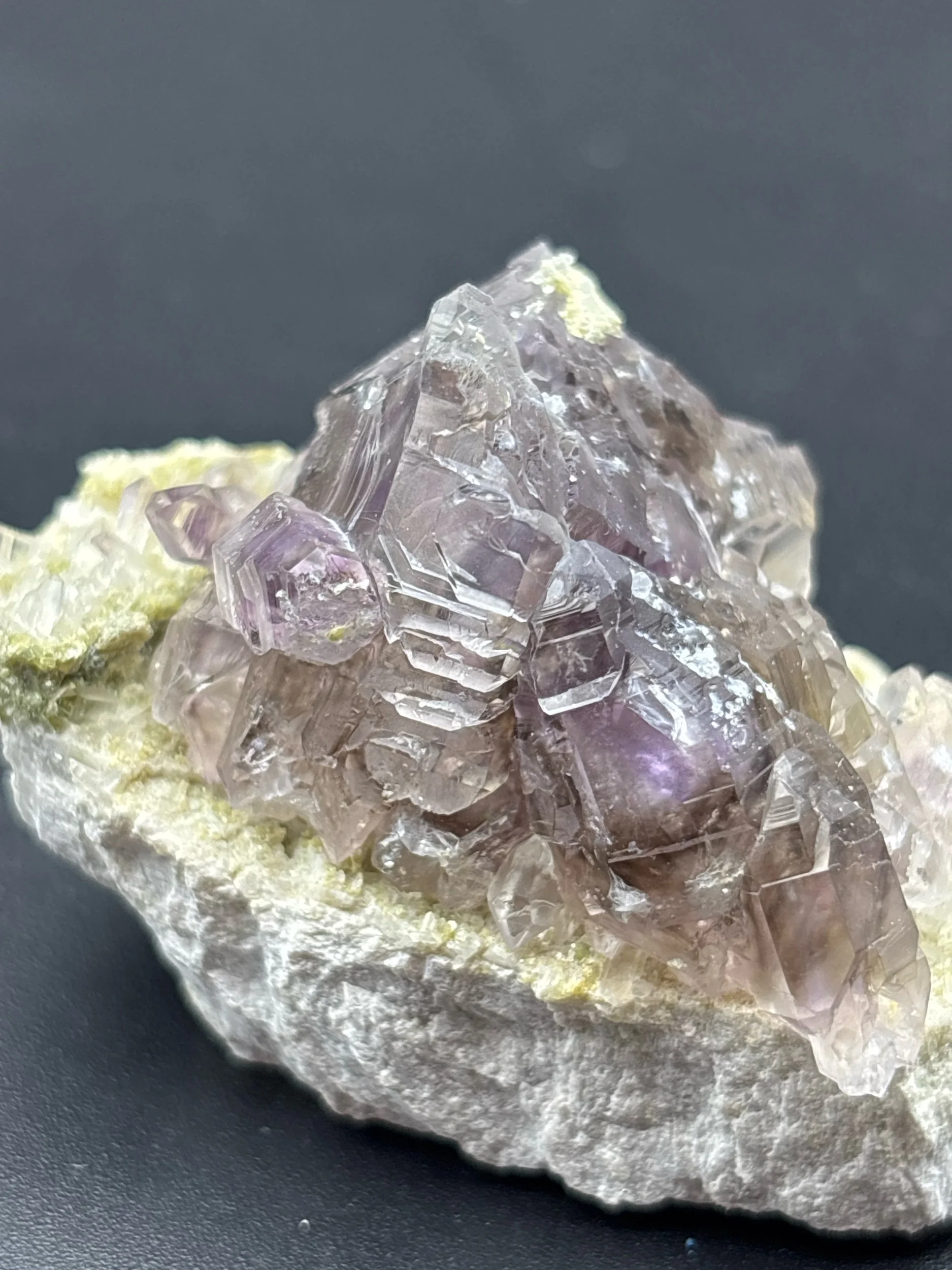
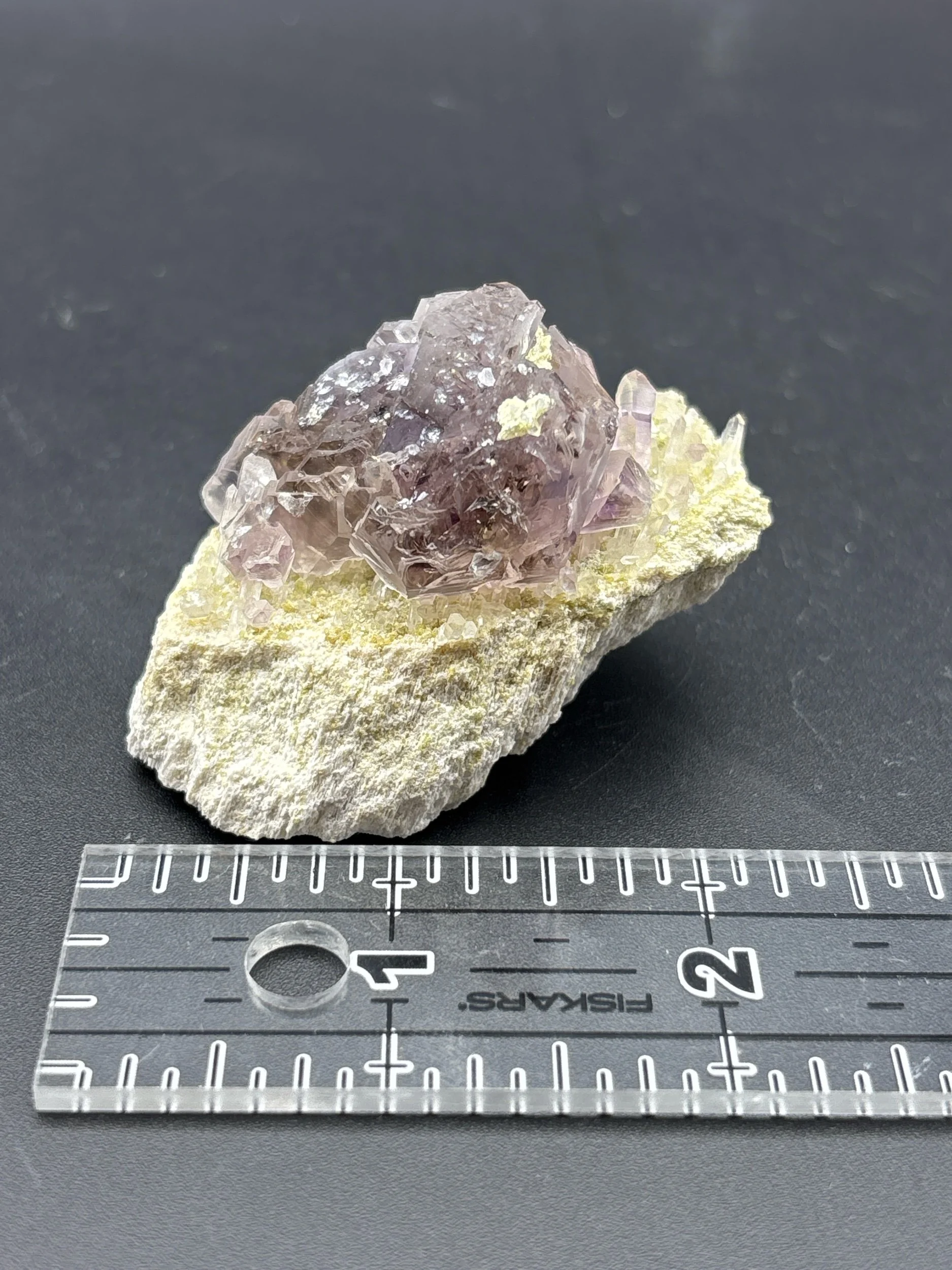
The Little Gem Mine was discovered by local gold prospectors in 1886. An article in "The Mineralogist" written in 1941 describes the travel from Butte by covered wagon, to the Nine Mile Inn, then subsequent travel to the deposit where collectors "filled their packs with amethyst" during the original find. In 1958 a Claim was filed by Oregon Geologist Jerry Gray. Gray worked the surface sporadically for 30+ years, brought in heavy equipment to build road access in the early 1990's. His goal was to create a secure working environment protected from trespassers. He tunneled about 100 feet through solid granite to reach the core, where he then put a raise. The narrow raise follows an aplite zone upwards and east; the raise opened a series of pockets that he extended into a drift, which ran parallel to the core. The present owner, Russ Hage, purchased the claim after Gray's death. Hage and working partner Mike Uphus together brought to light innumerable fine specimens. In 2013 the old drift in aplite was de-roofed and its access buried. In summer of 2022, local prospector Paul Senn took over mine management working side by side with owner Russ Hage. Since 2010 it has been worked from the surface, primarily by hand aided by small scale blasting and an excavator. Current work has exposed many pockets containing fine amethyst scepters and jacare' texture amethyst. Jacare' is a Portuguese term denoting alligator skin texture.
This specimen is a beautiful miniature example of etched microcline with a protruding epitaxial quartz capped by amethyst, harvested in the 2025 season. It exhibits excellent luster and good color in the main crystal. “Fingerprint” style habit is displayed quite well by the amethyst. The etched microcline is accented by pale green sericite mica, an alteration mineral present throughout the mine.
Thank you so much for viewing! Please message for any further information
(2.2 × 1.5 × 1.5 in - 5.5 × 3.8 × 3.8 cm) 2.4oz / 69g
ORDERS SHIP MONDAYS
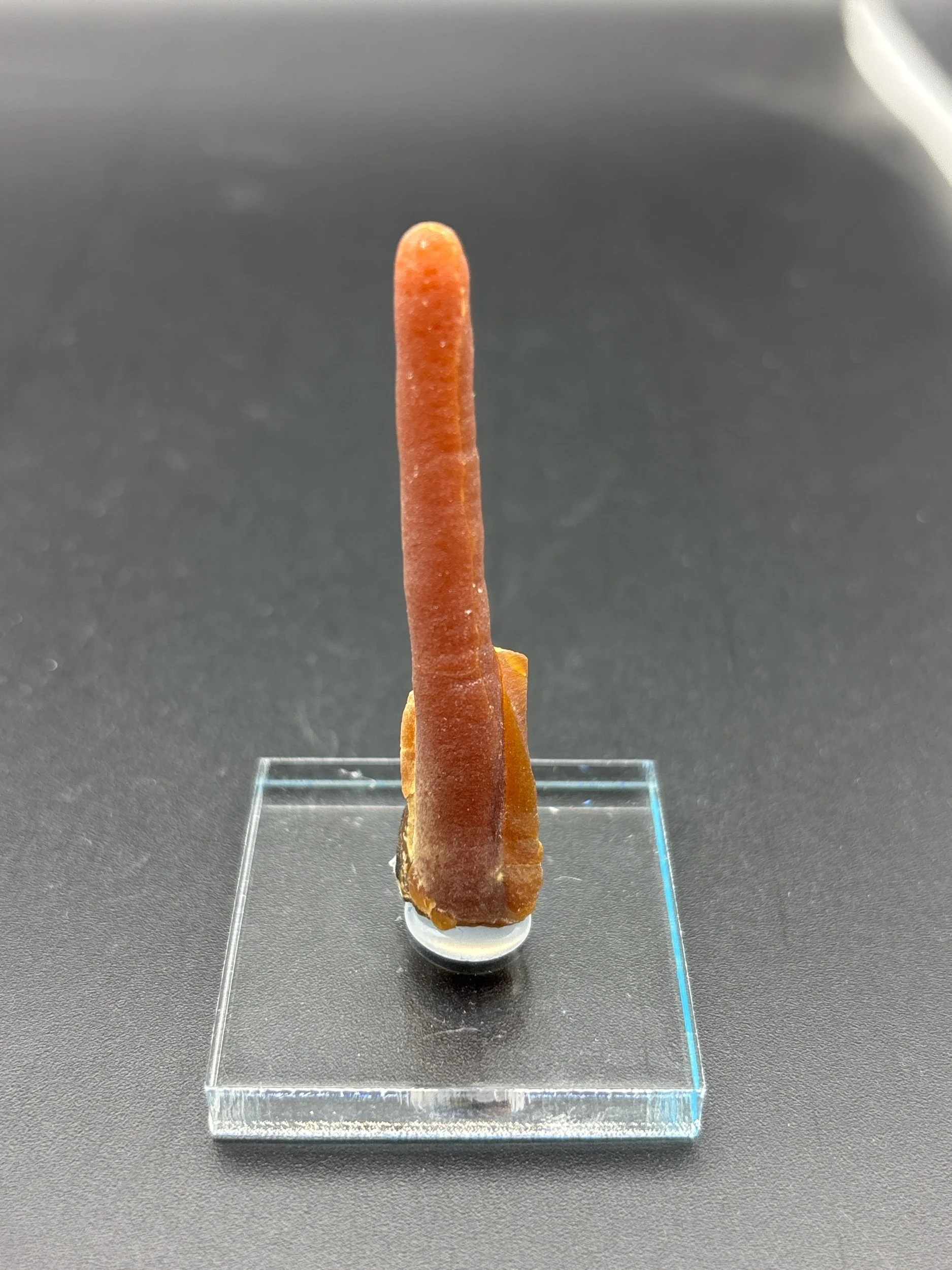
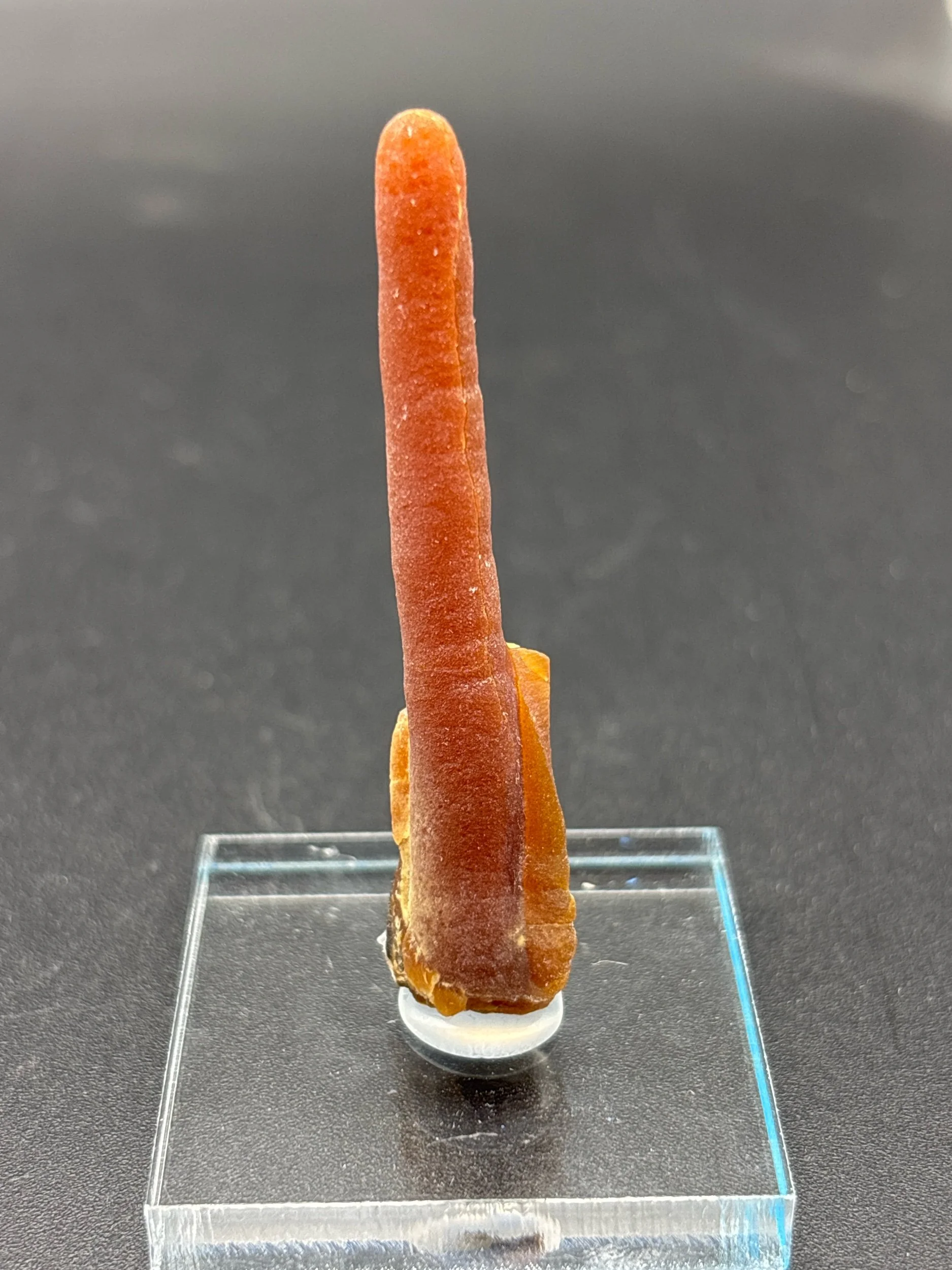
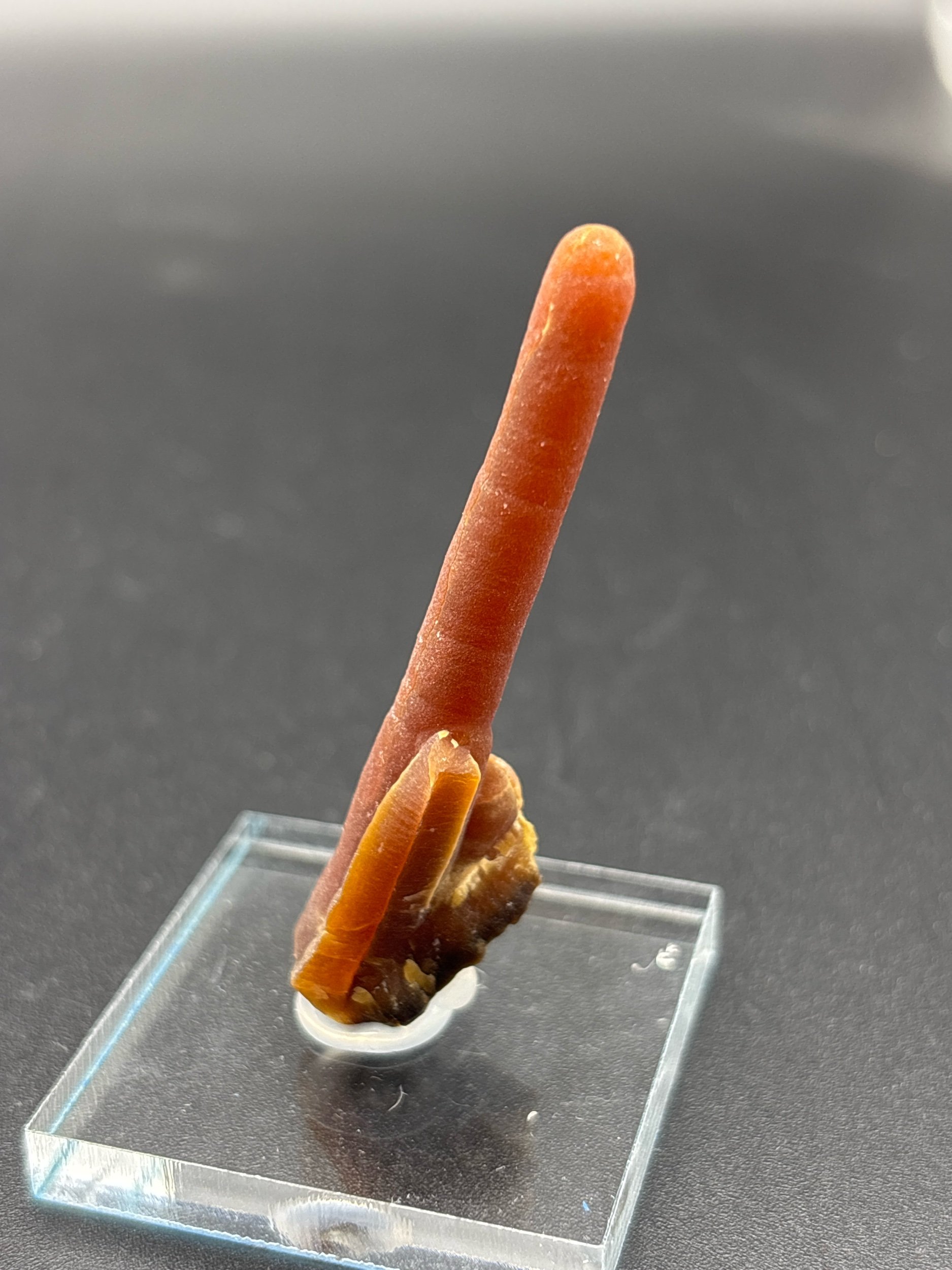
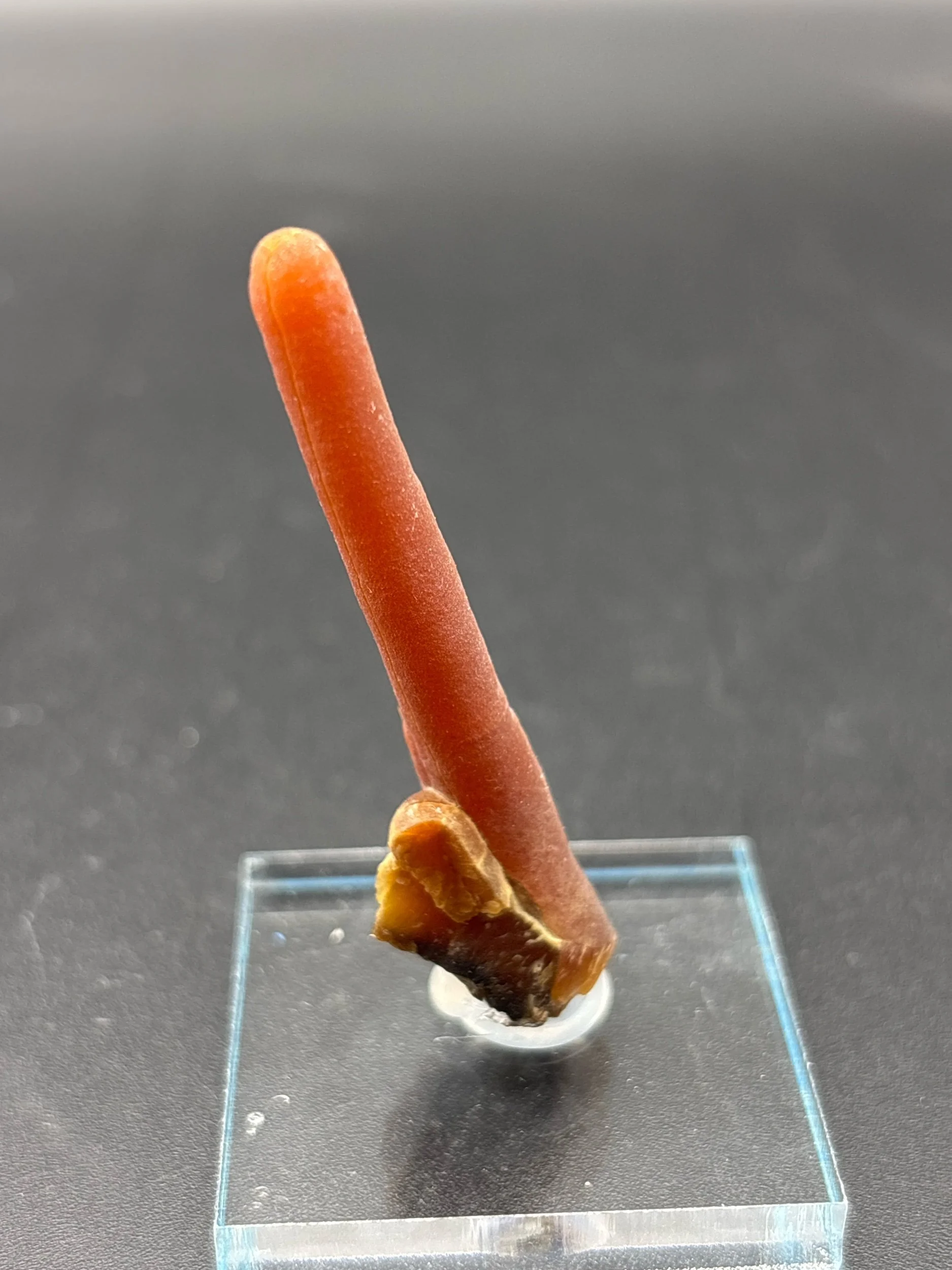
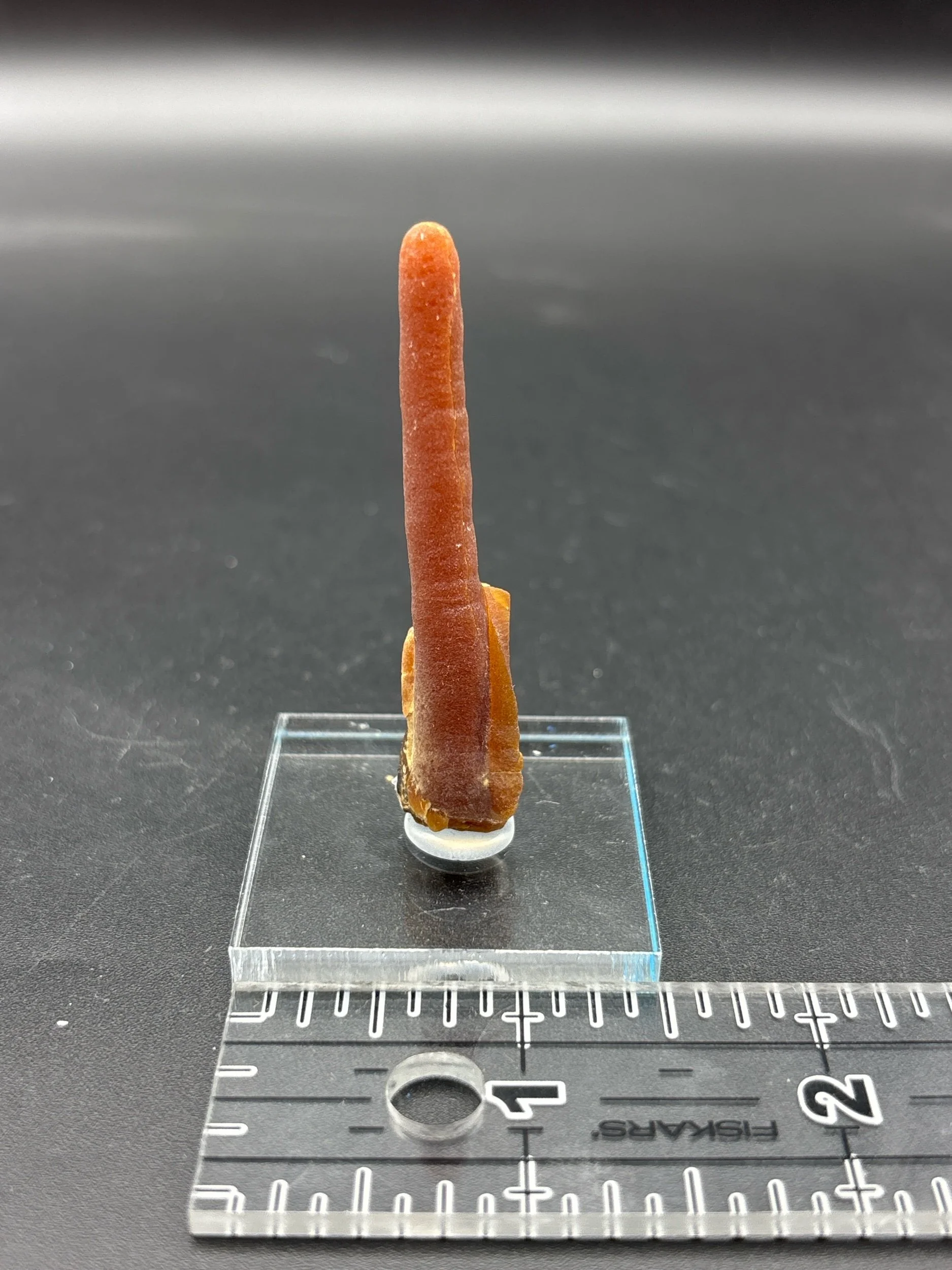
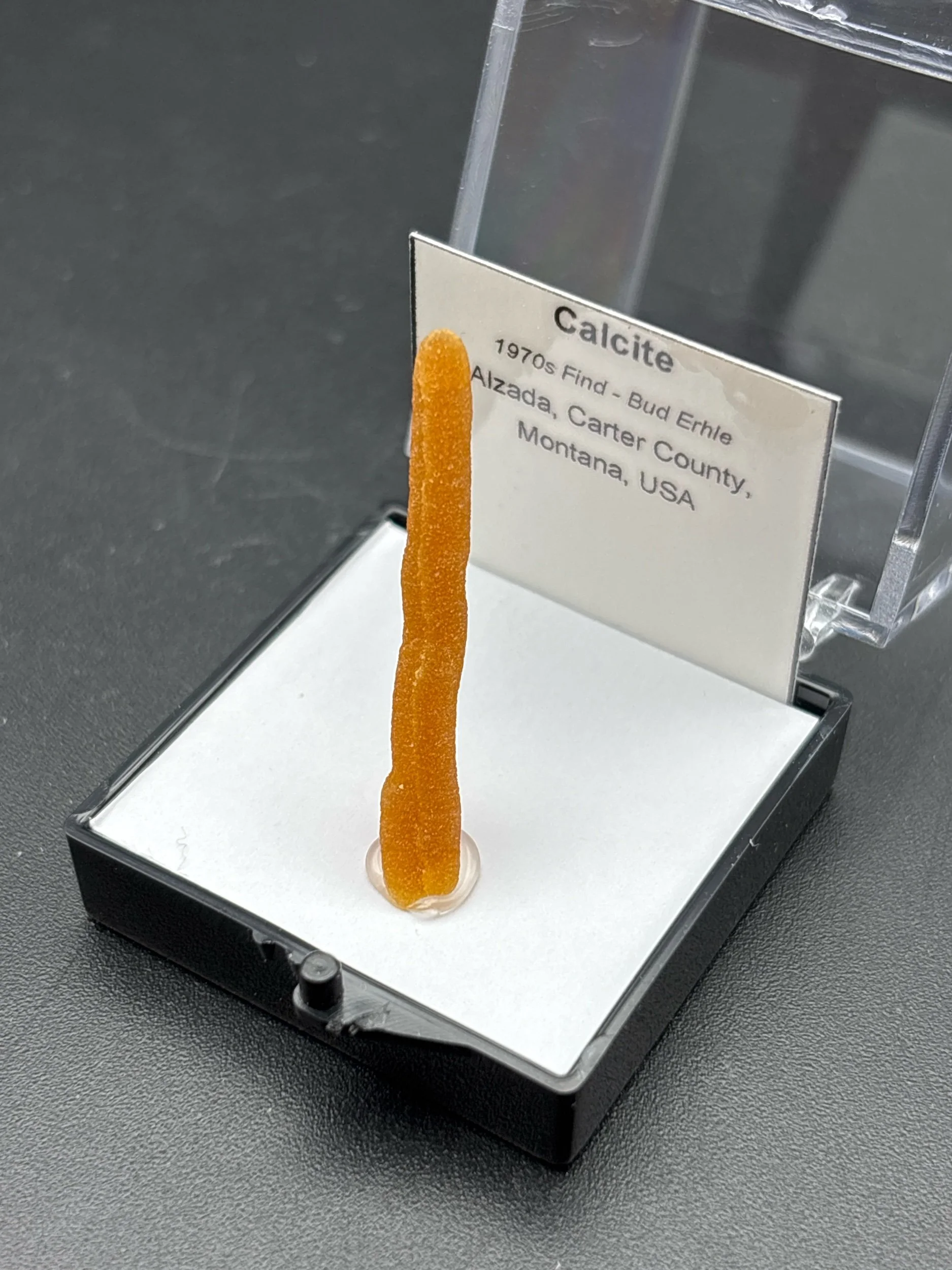
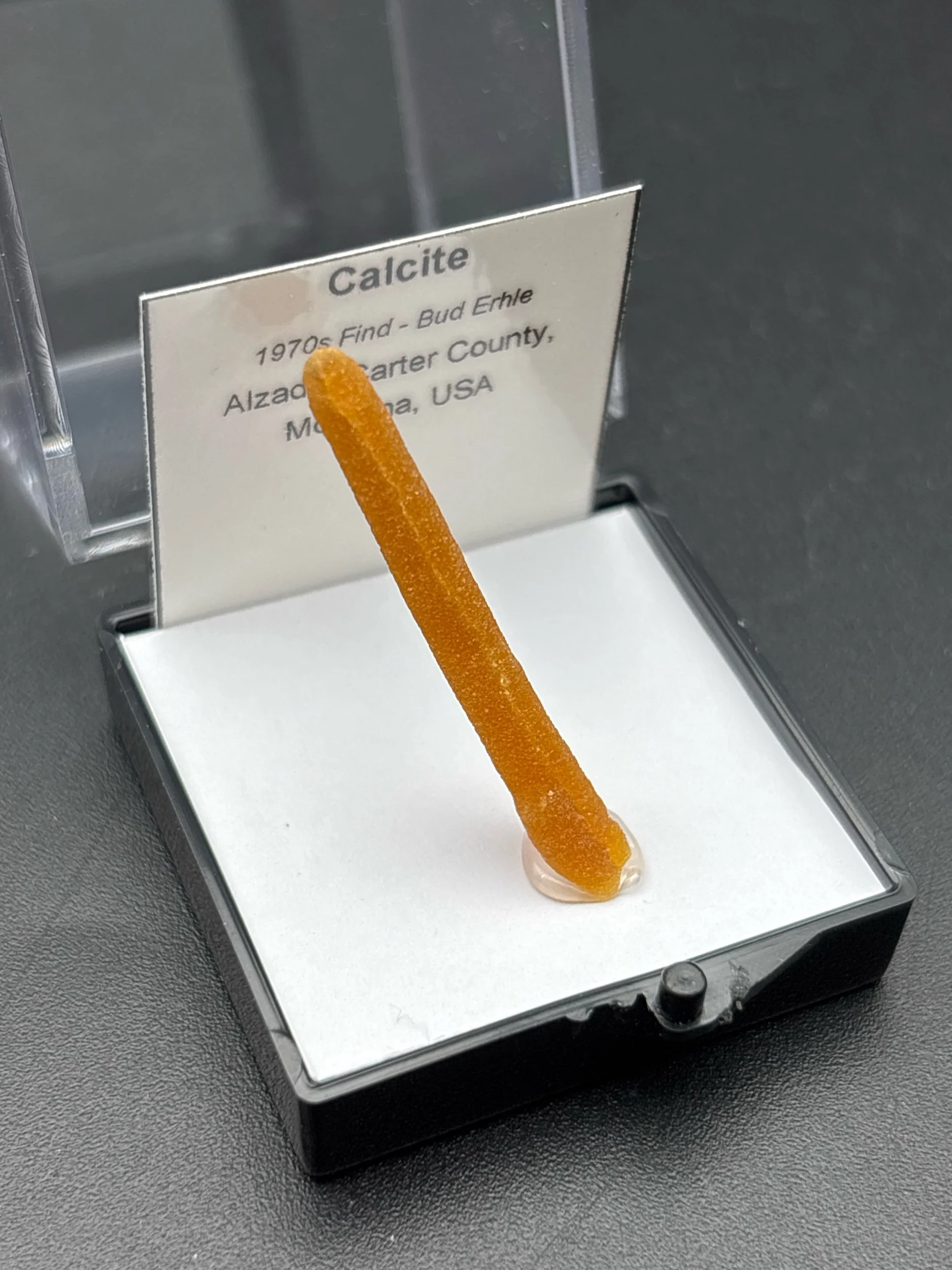
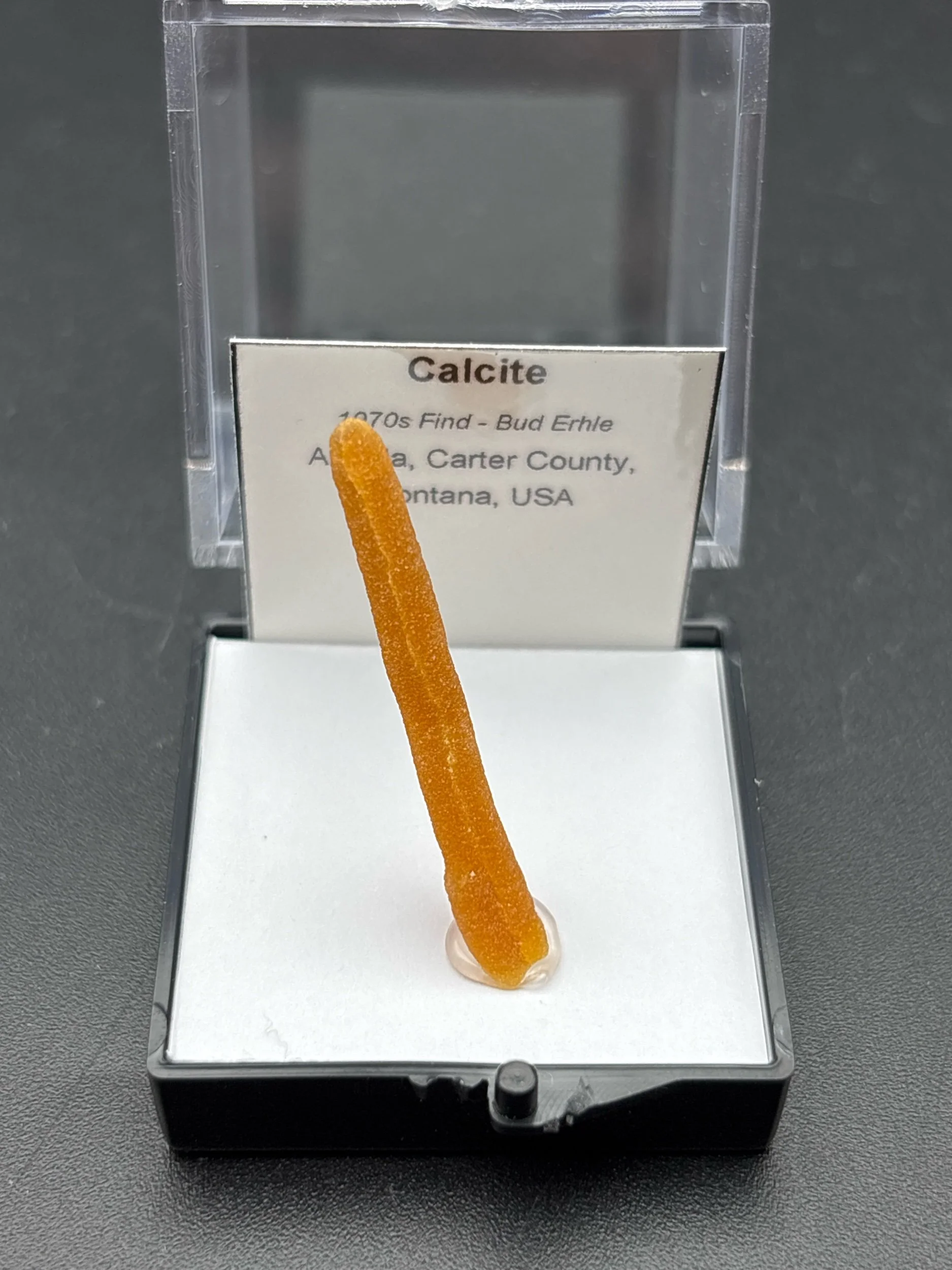
A famous find in the 1970s by the late Bud Erhle, the signature calcite “fingers" of Carter County have long been a sought-after classic for collectors. Formed in concretion in the Pierre and bear paw shale, there are actually apparently several locales for the material. The crystal forms are often coated in a thick late-stage crust that is only removed by vinegar etching. Baryte, and selenite are known to form as well in the same concretions, which on occasion have fossils.
This is a classic miniature example of the historic and classic calcite “fingers” from Carter County. No damage is present to the crystal. This piece has been treated at some point with vinegar to remove the crusts. Non permanently mounted to acrylic.
Thank you so much for viewing! Please message for any further information
(2.2 × 0.5 × 0.3 in - 5.6 × 1.2 × 0.7 cm) 0.6oz / 17g (with base)
ORDERS SHIP MONDAYS
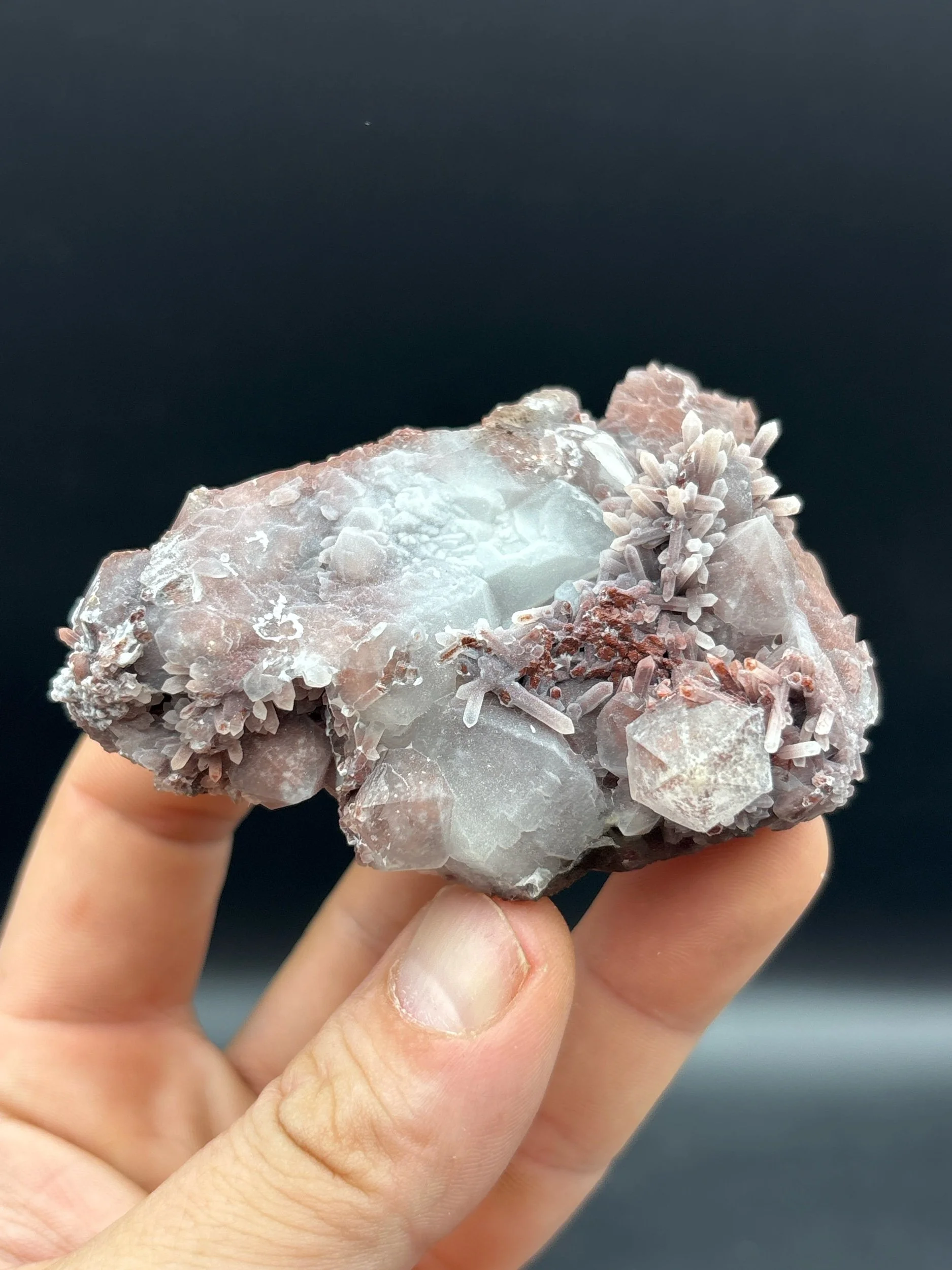
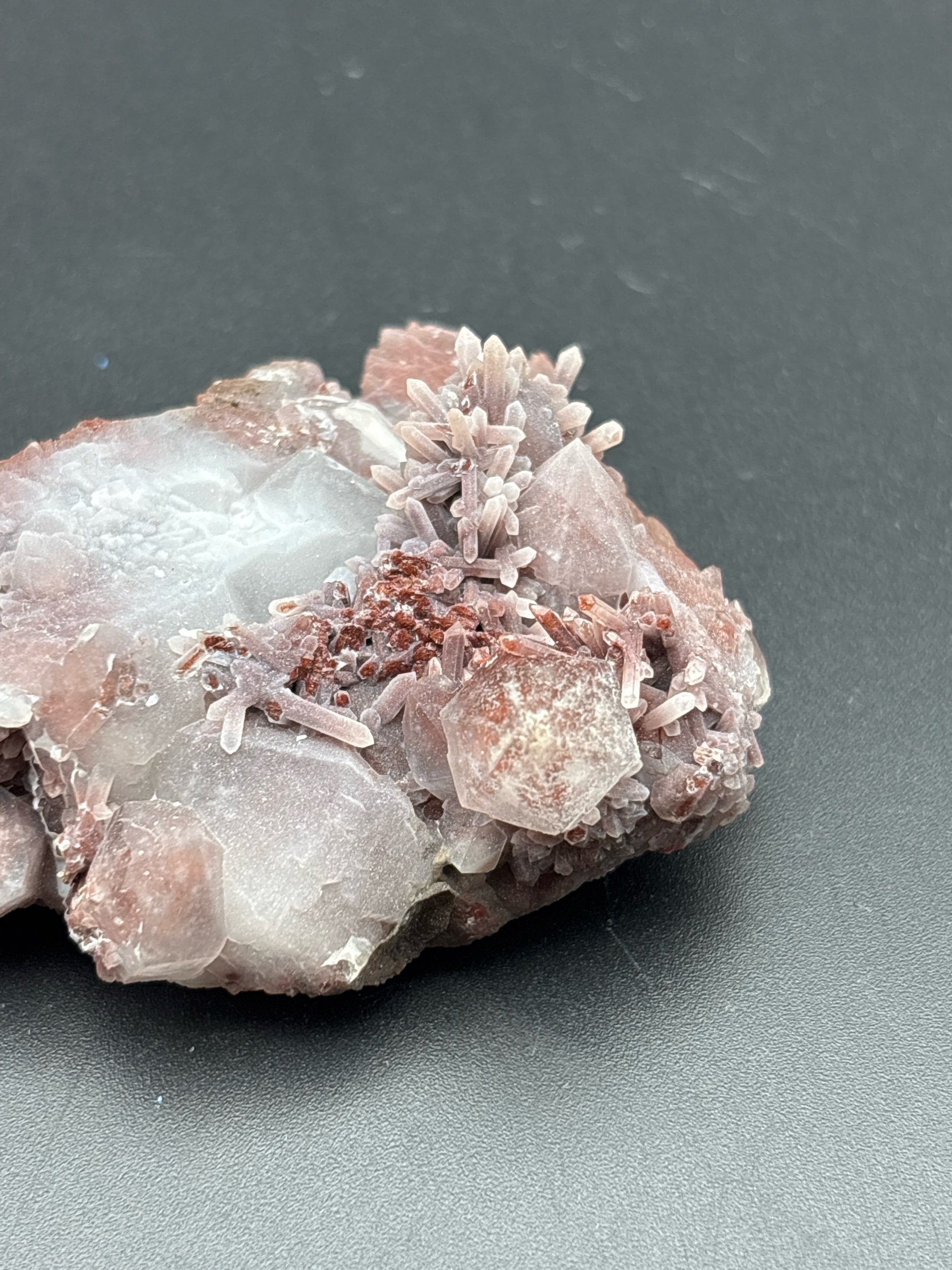
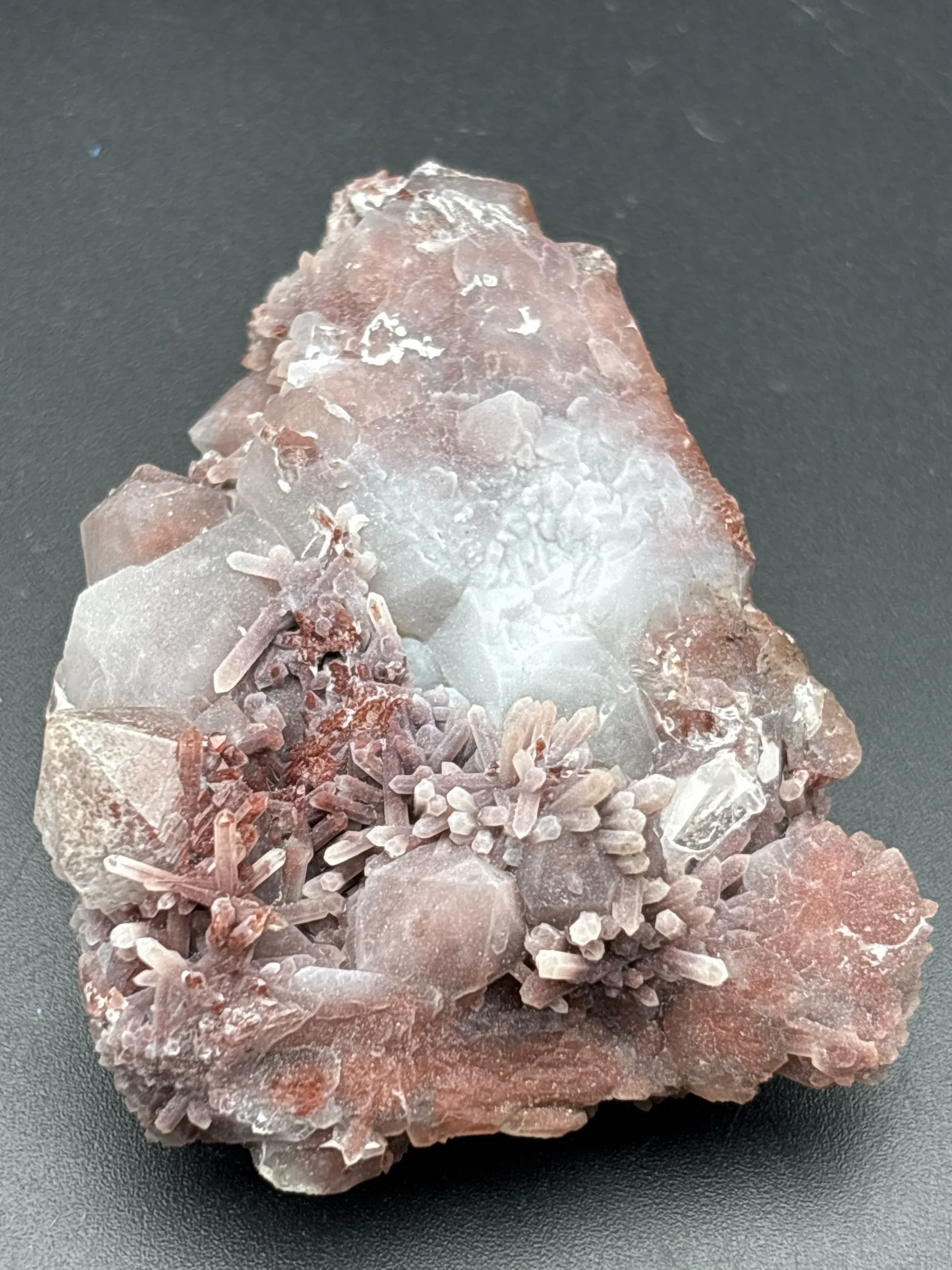
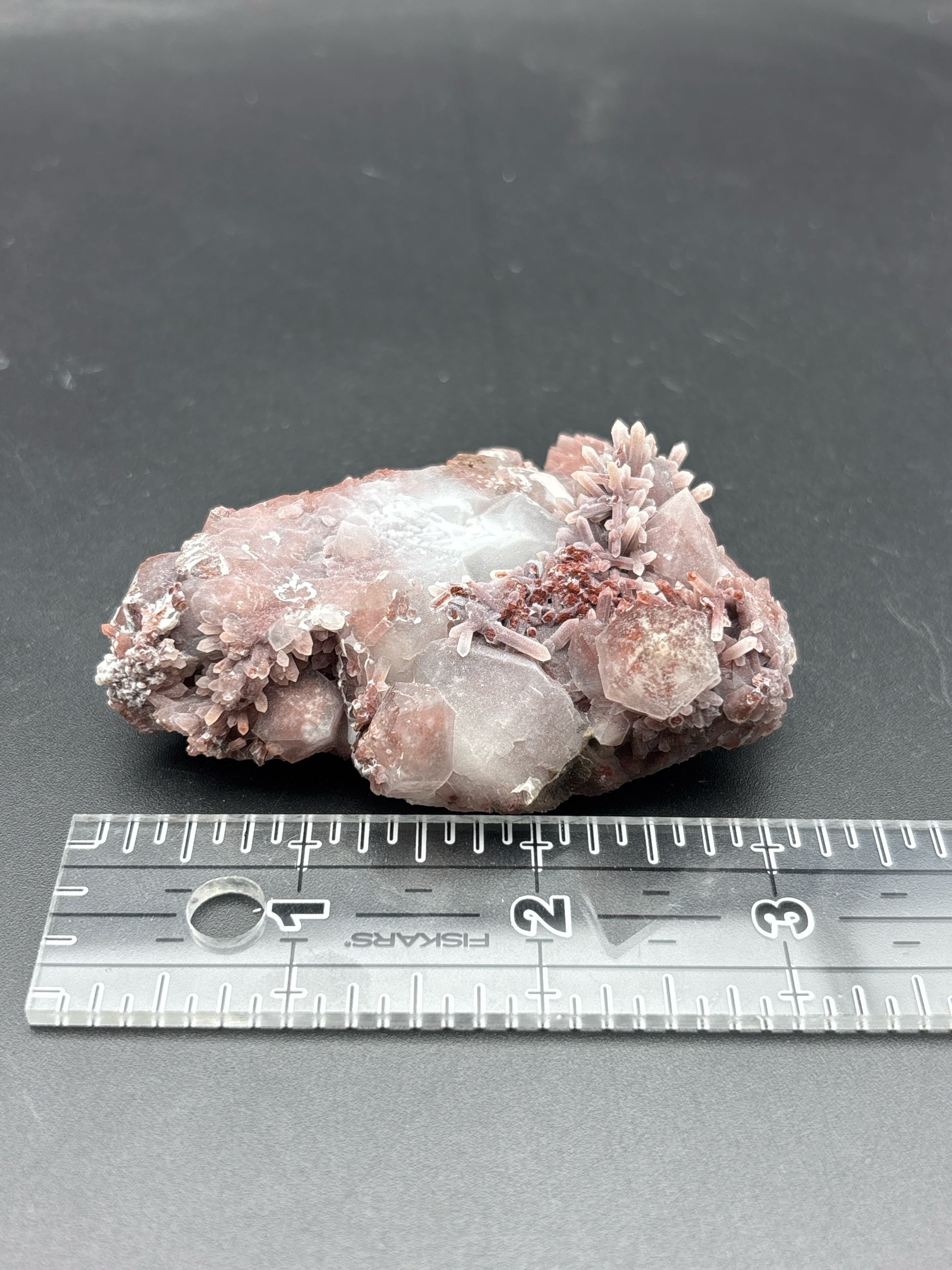
Located just 18 miles south of Ennis, Montana sits the largest talc mine in the world; the Yellowstone Talc Mine. Currently operated by Margis Talc, the mine produces in excess of 250,000 tons of high purity talc annually. The deposit sits in the ultra mafic rock of the Madison range, and is not accessible to the general public.
This specimen is a simple, yet elegant example of a quartz cluster with light hematite coating. Collected on the high wall with permission by Bud Erhle years ago, this piece represents a rare sighting of crystals from a mine that otherwise is not well known for specimen production.
Thank you so much for viewing! Please message for any further information
(3.0 × 2.0 × 1.2 in - 7.6 × 5.0 × 3.0 cm) 4.2oz / 121g
ORDERS SHIP MONDAYS
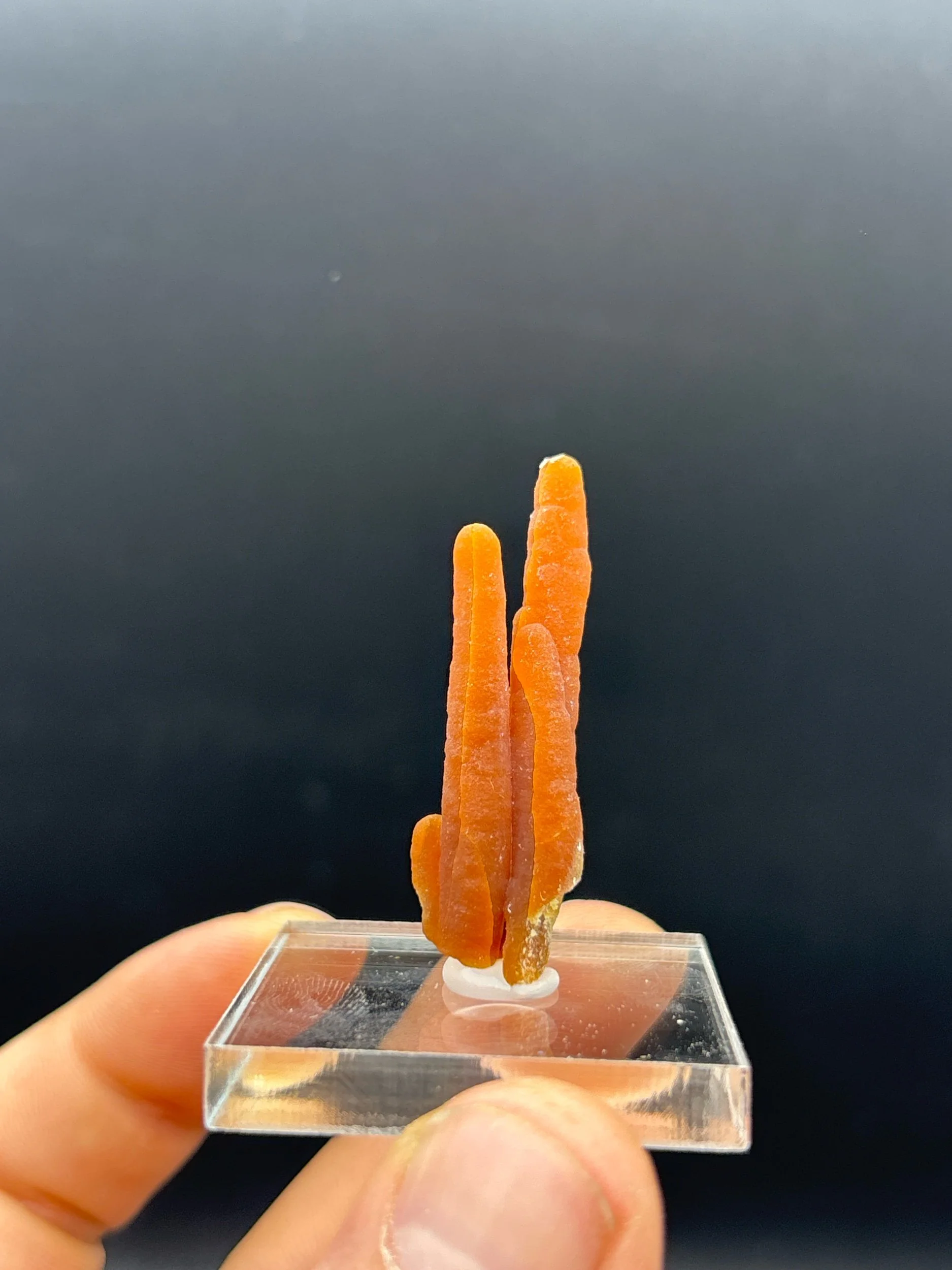
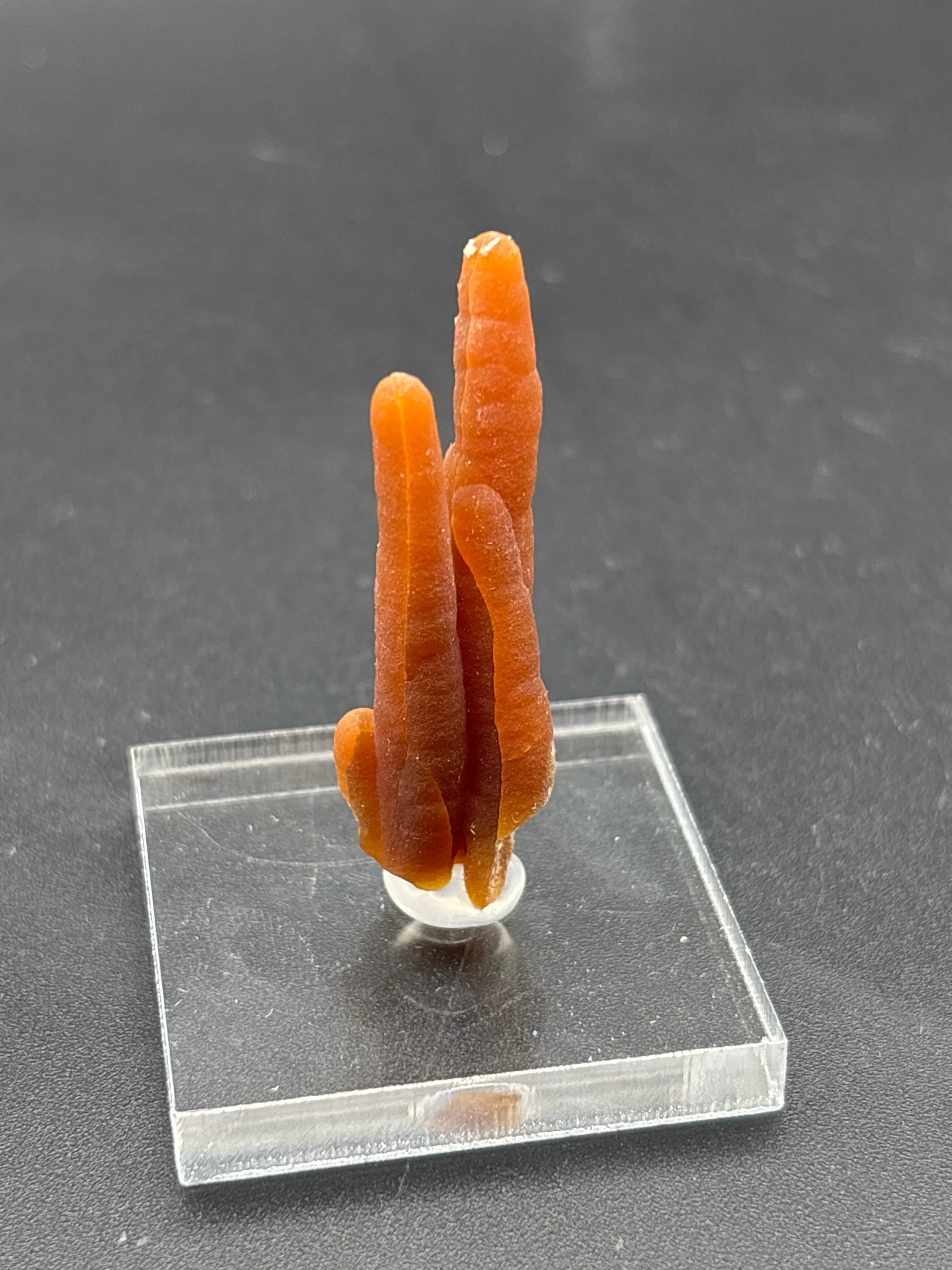
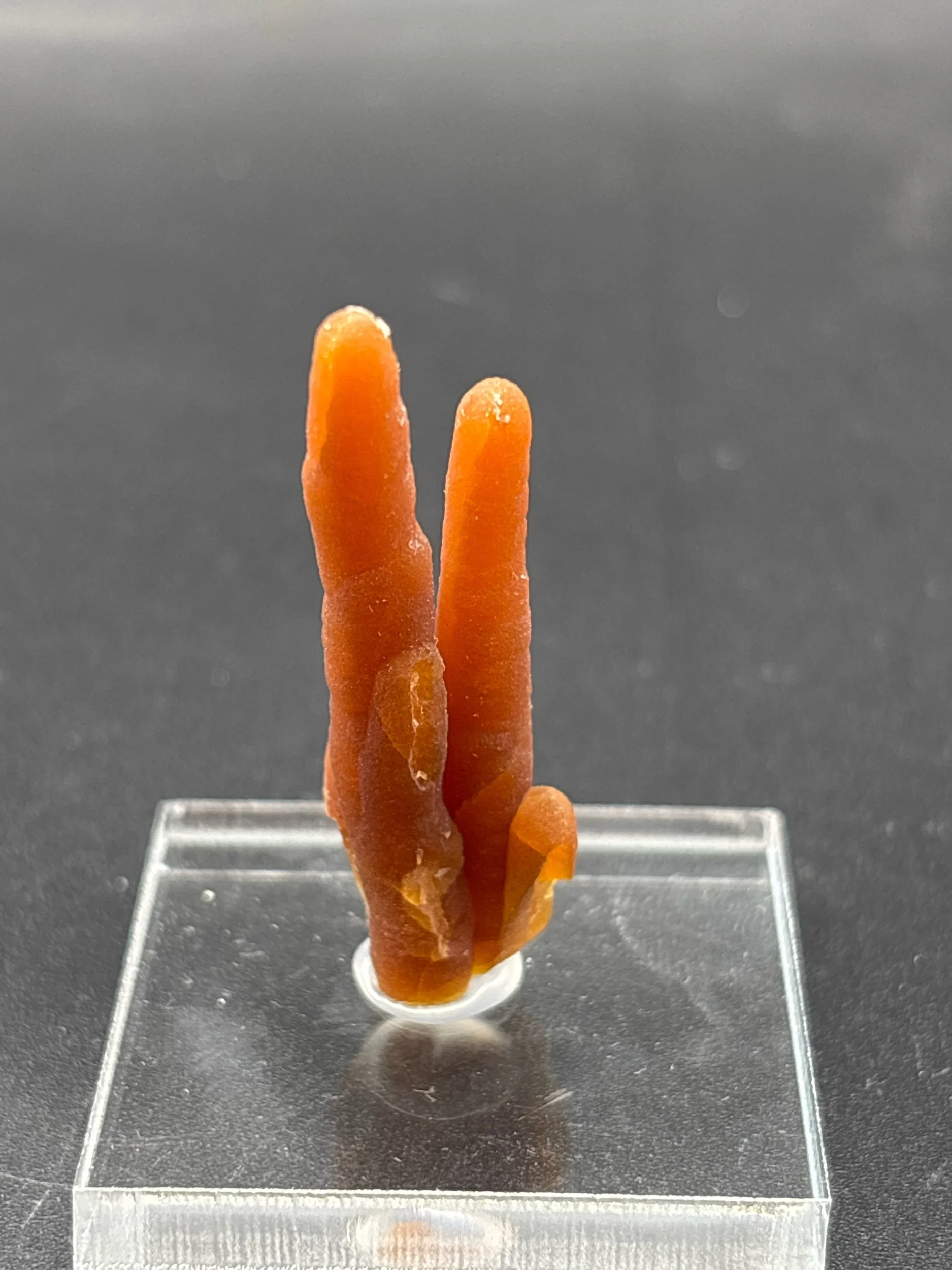
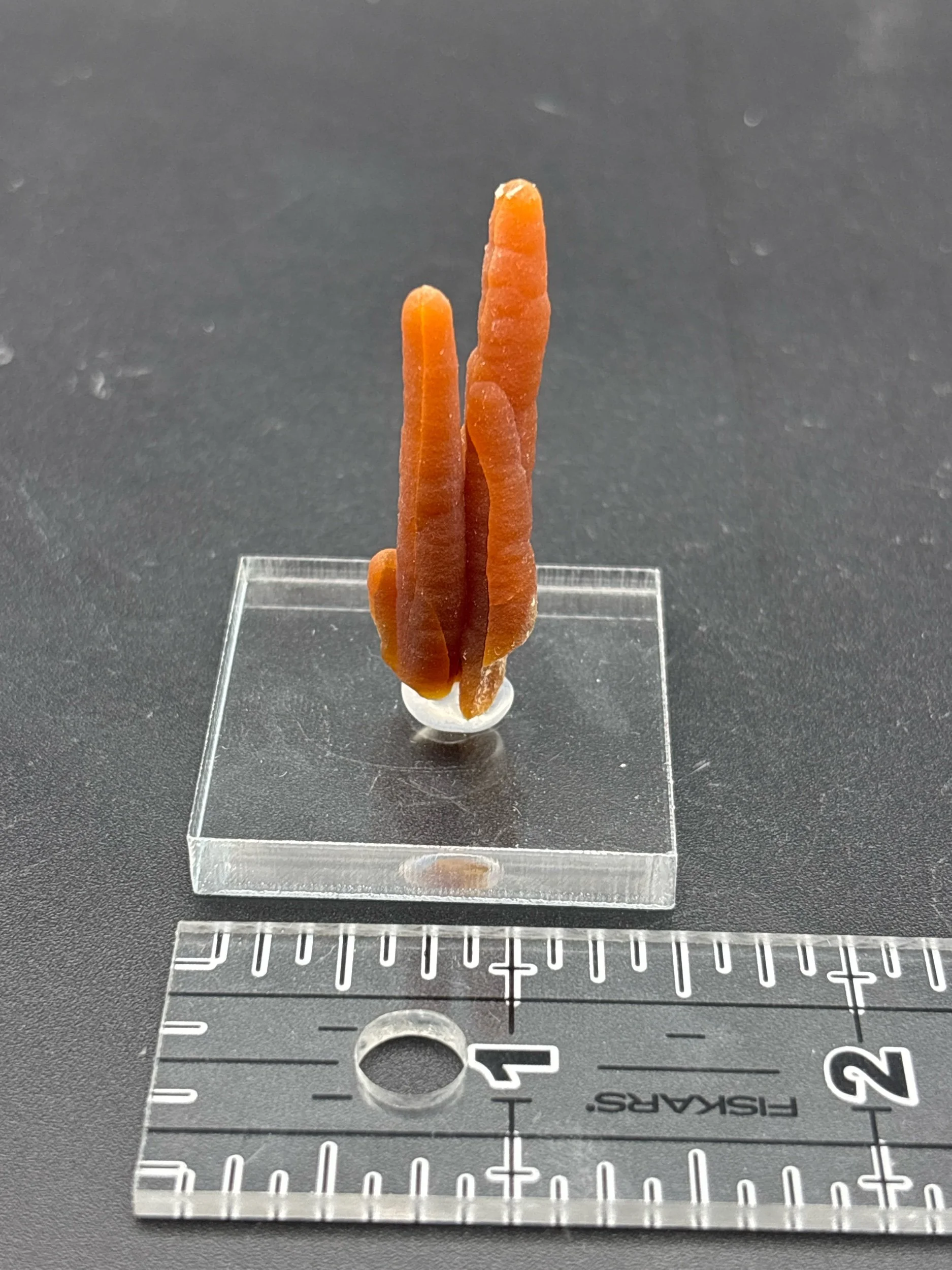
A famous find in the 1970s by the late Bud Erhle, the signature calcite “fingers" of Carter County have long been a sought-after classic for collectors. Formed in concretion in the Pierre and bear paw shale, there are actually apparently several locales for the material. The crystal forms are often coated in a thick late-stage crust that is only removed by vinegar etching. Baryte, and selenite are known to form as well in the same concretions, which on occasion have fossils.
This is a classic miniature example of the historic and classic calcite “fingers” from Carter County. No damage is present to the crystal. This piece has been treated at some point with vinegar to remove the crusts. Non permanently mounted to acrylic.
Thank you so much for viewing! Please message for any further information
(1.7 × 0.5 × 0.3 in - 4.3 × 1.2 × 0.7 cm) 0.5oz / 15g (with base)
ORDERS SHIP MONDAYS
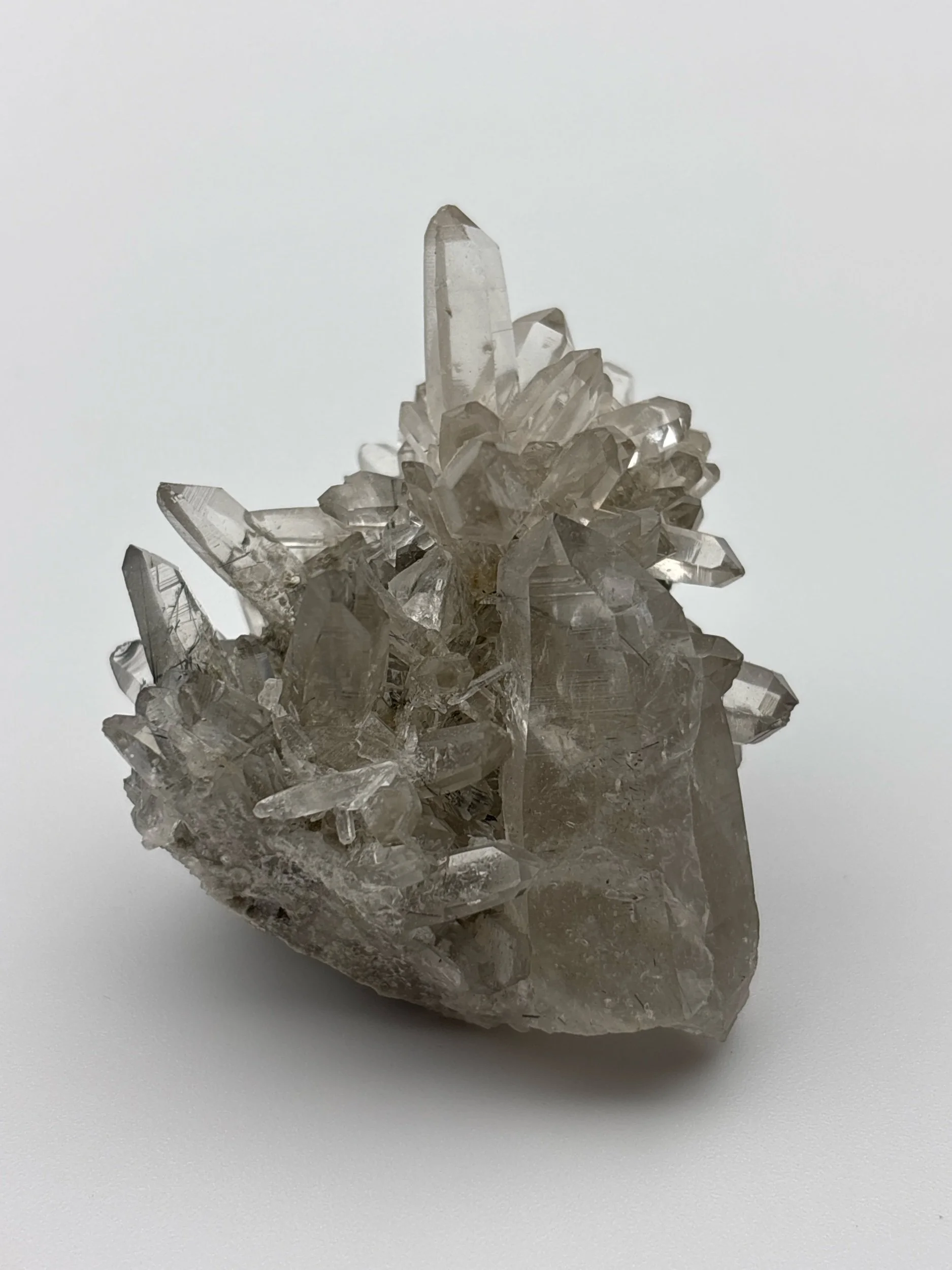
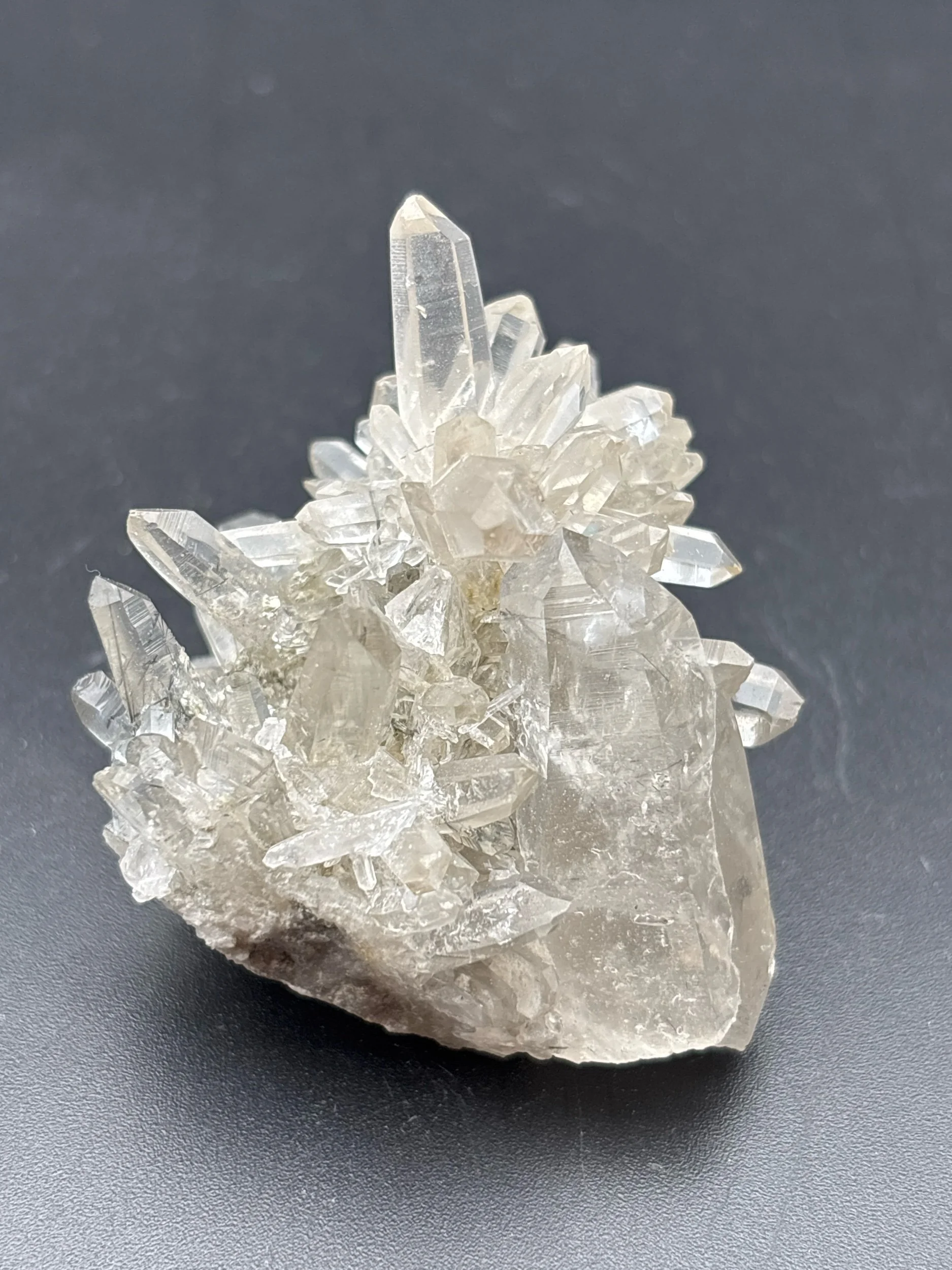
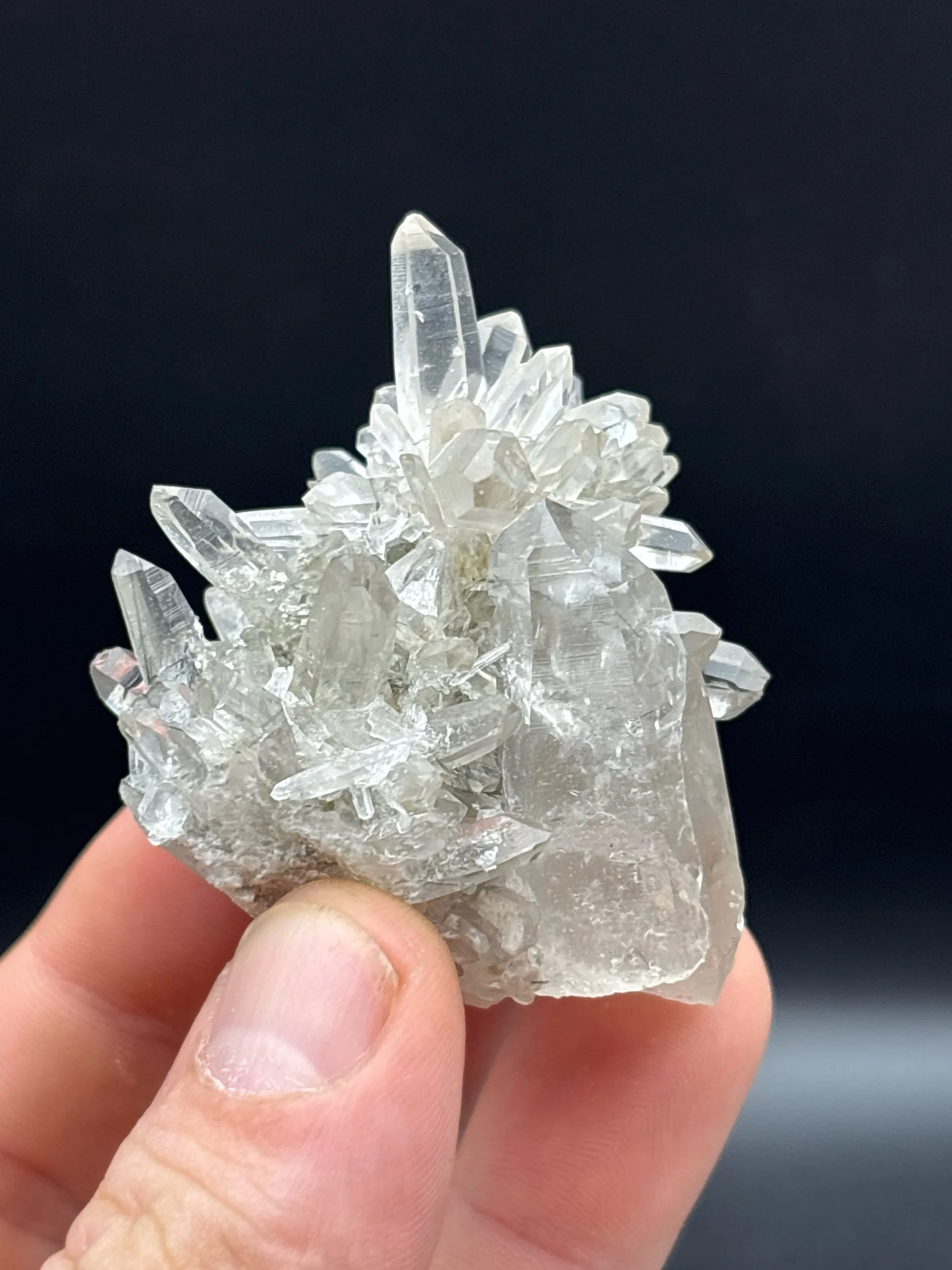
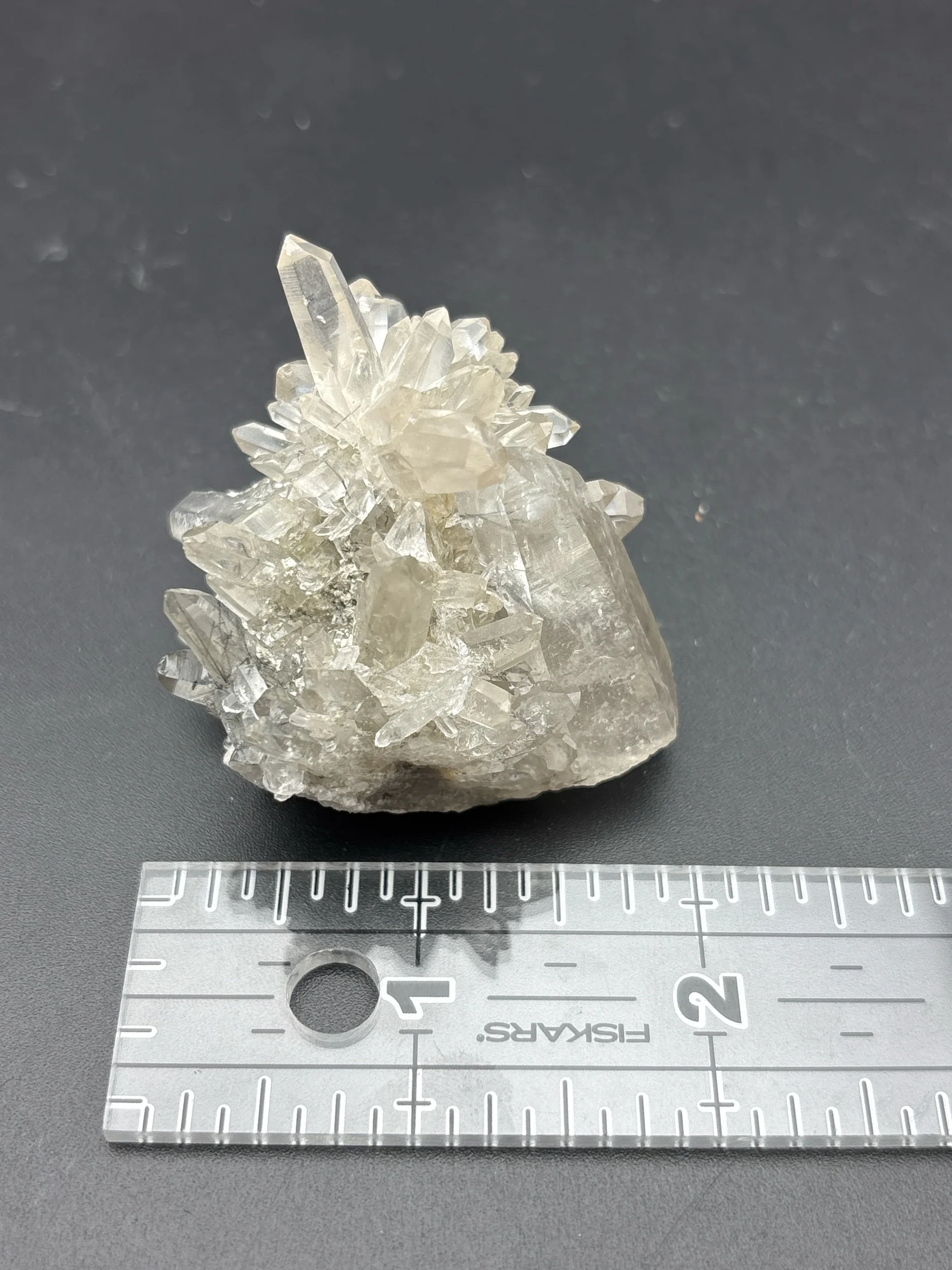
The PC Mine has minimal history beyond is specimen production, which first dates to 1983. At that time, the privately owned land was partly lease from Forest Klies by W. C. Van Laer, until 1987. In 1988, Pete Knudsen, Bryant Harris, and Elvis “Buzz” Gray acquired the mining lease and Knudsen would later assume full ownership in 1990. By 2005 any workable breccia was considered mined out. The deposit sits at river level on a private land cabin site. The mine was most well known for its production of Japan Law twin crystals, and tourmaline included quartz crystals. In addition, excellent gem quality sphalerite was also present, with galena, anhydrite and pyrite as well.
This specimen classic quartz “starburst” with just the right amount of tourmaline! The aesthetics speak for itself. Excellent crystal, this is a great representative piece of a now closed, and classic Montana locale!
Thank you so much for viewing! Please message for any further information
(2.1 × 1.8 × 1.1 in - 5.3 × 4.5 × 2.7 cm) 2.4oz / 68g
ORDERS SHIP MONDAYS
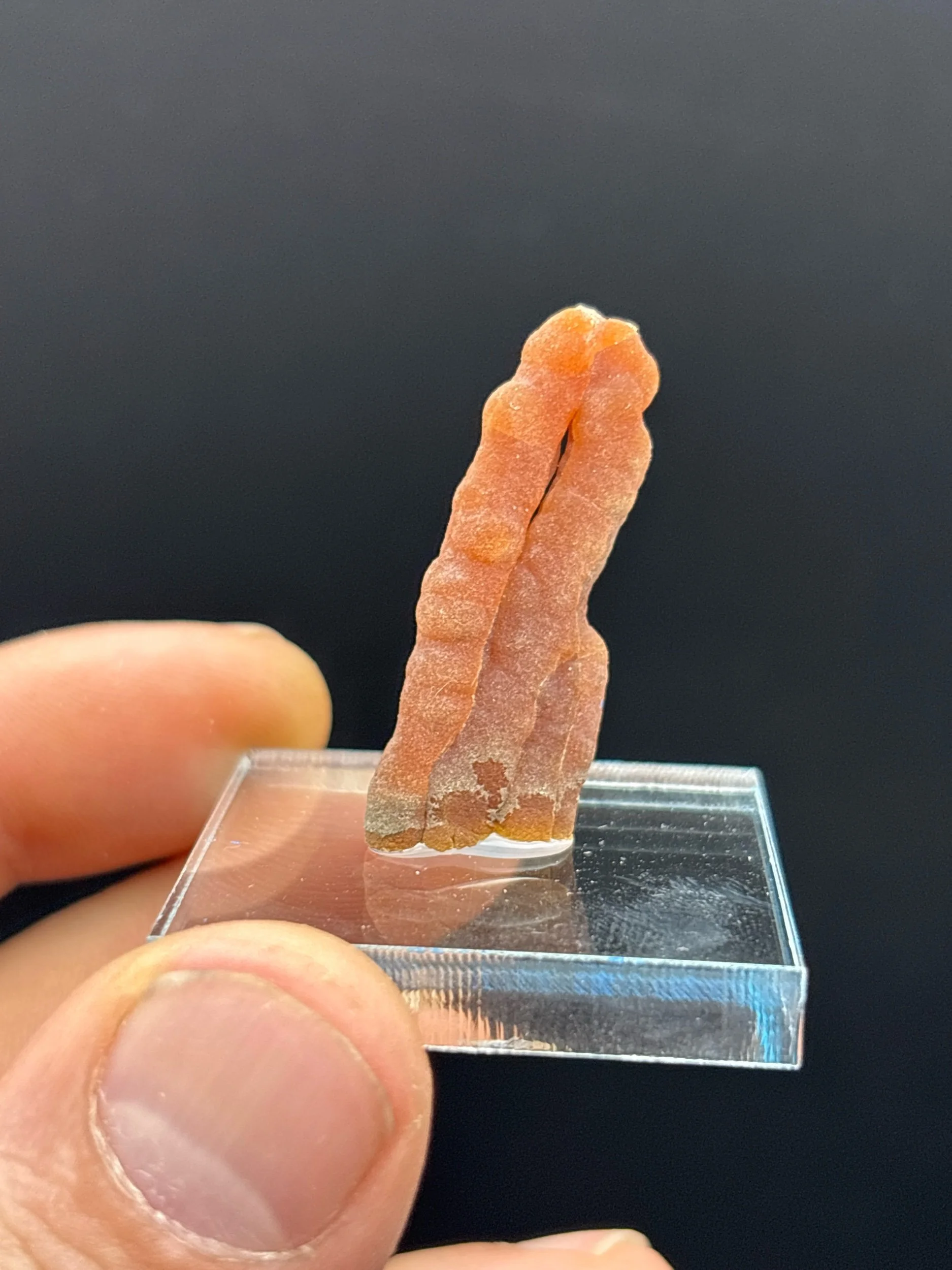
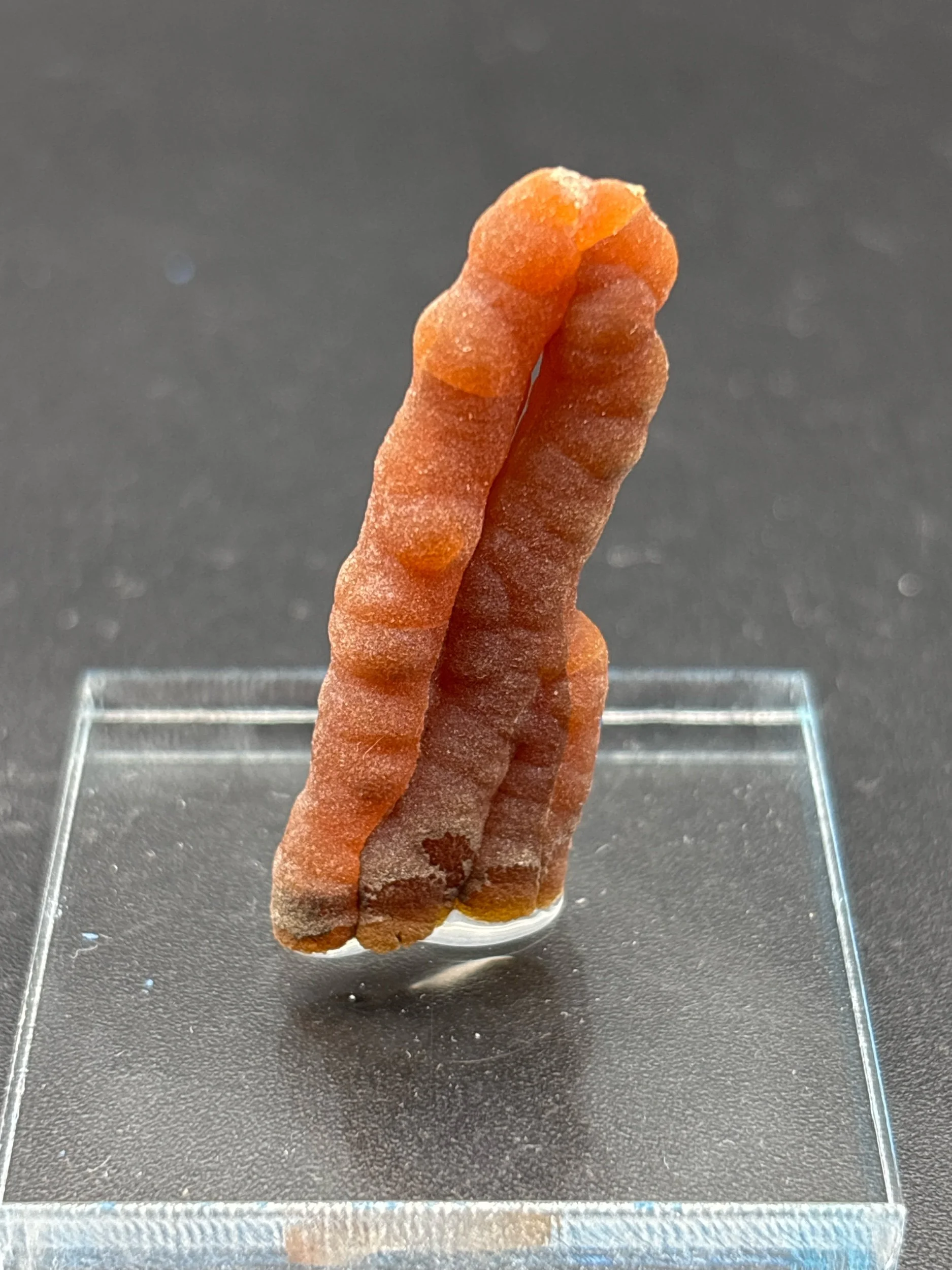
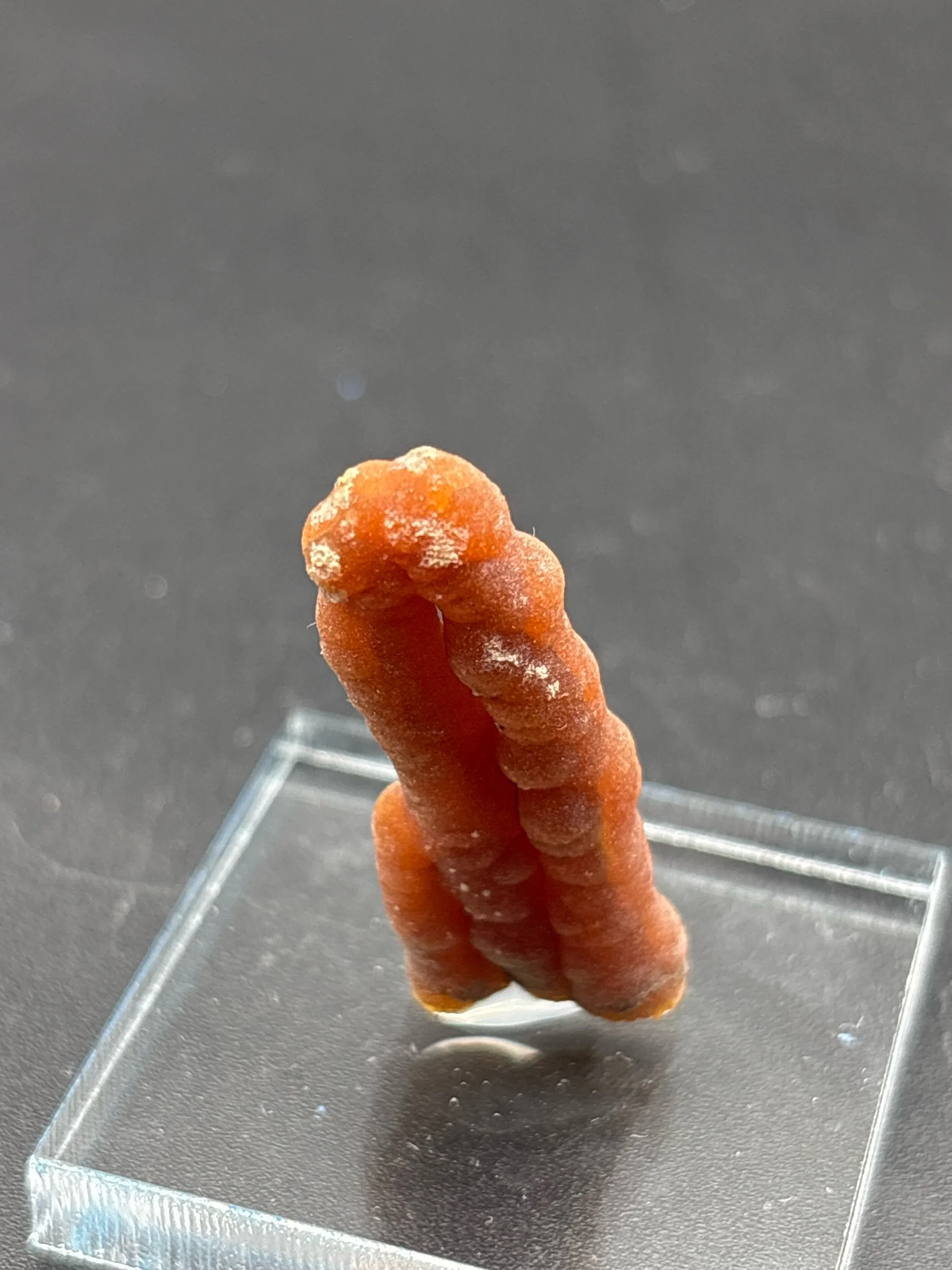
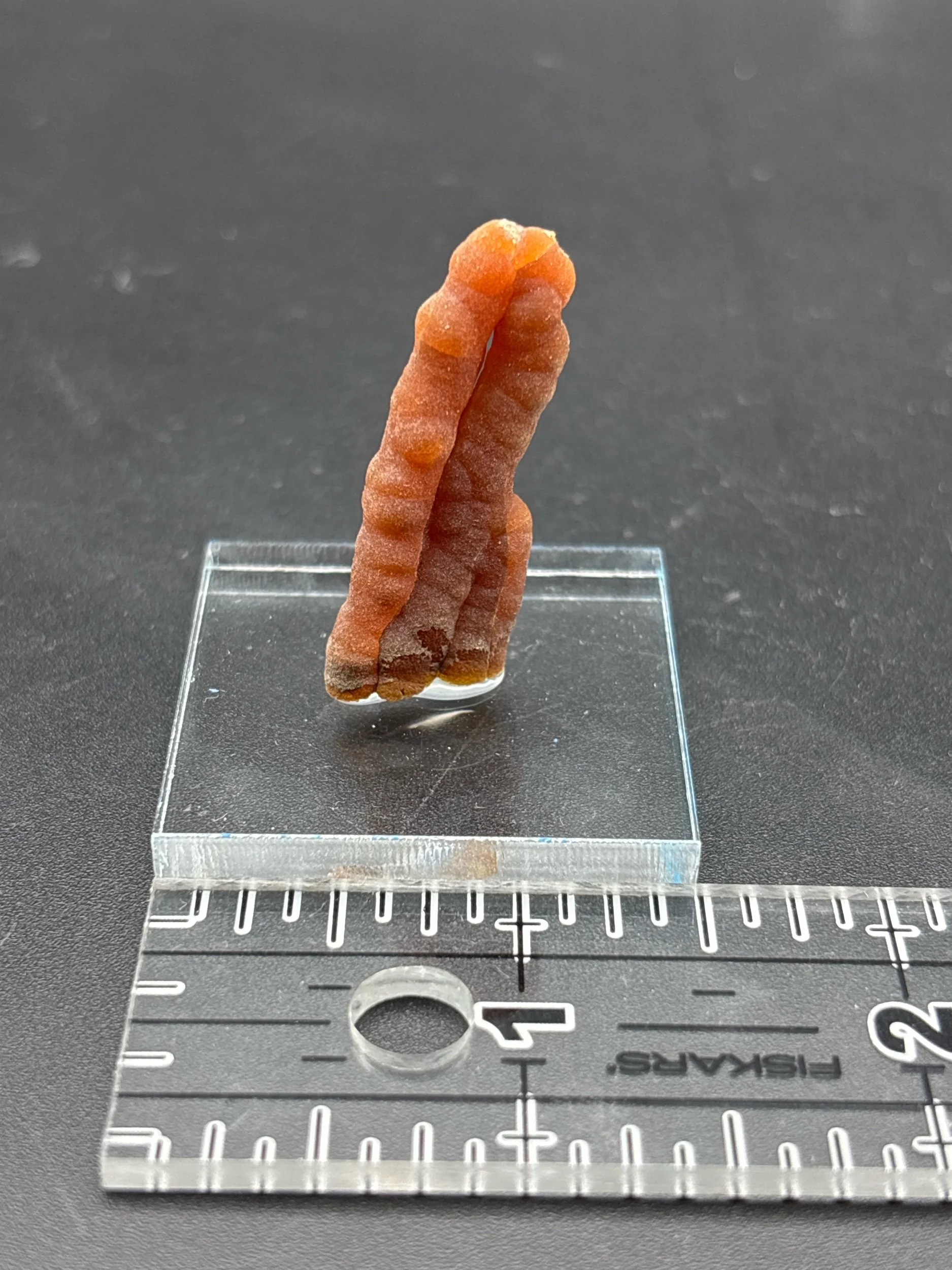
A famous find in the 1970s by the late Bud Erhle, the signature calcite “fingers" of Carter County have long been a sought-after classic for collectors. Formed in concretion in the Pierre and bear paw shale, there are actually apparently several locales for the material. The crystal forms are often coated in a thick late-stage crust that is only removed by vinegar etching. Baryte, and selenite are known to form as well in the same concretions, which on occasion have fossils.
This is a classic miniature example of the historic and classic calcite “fingers” from Carter County. No damage is present to the crystal. This piece has been treated at some point with vinegar to remove the crusts. Non permanently mounted to acrylic.
Thank you so much for viewing! Please message for any further information
(1.4 × 0.5 × 0.3 in - 3.5 × 1.2 × 0.7 cm) 0.5oz / 15g (with base)
ORDERS SHIP MONDAYS
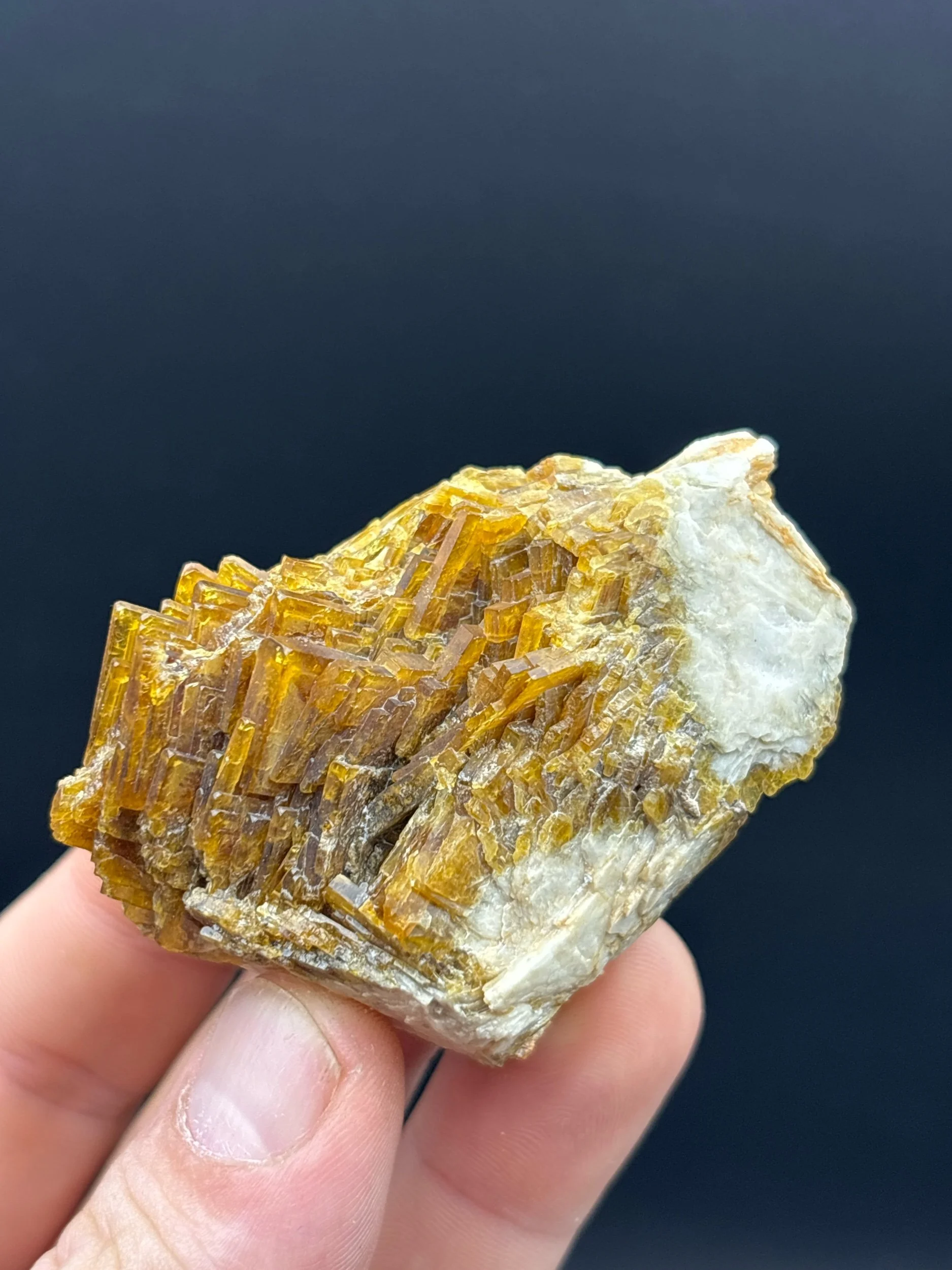
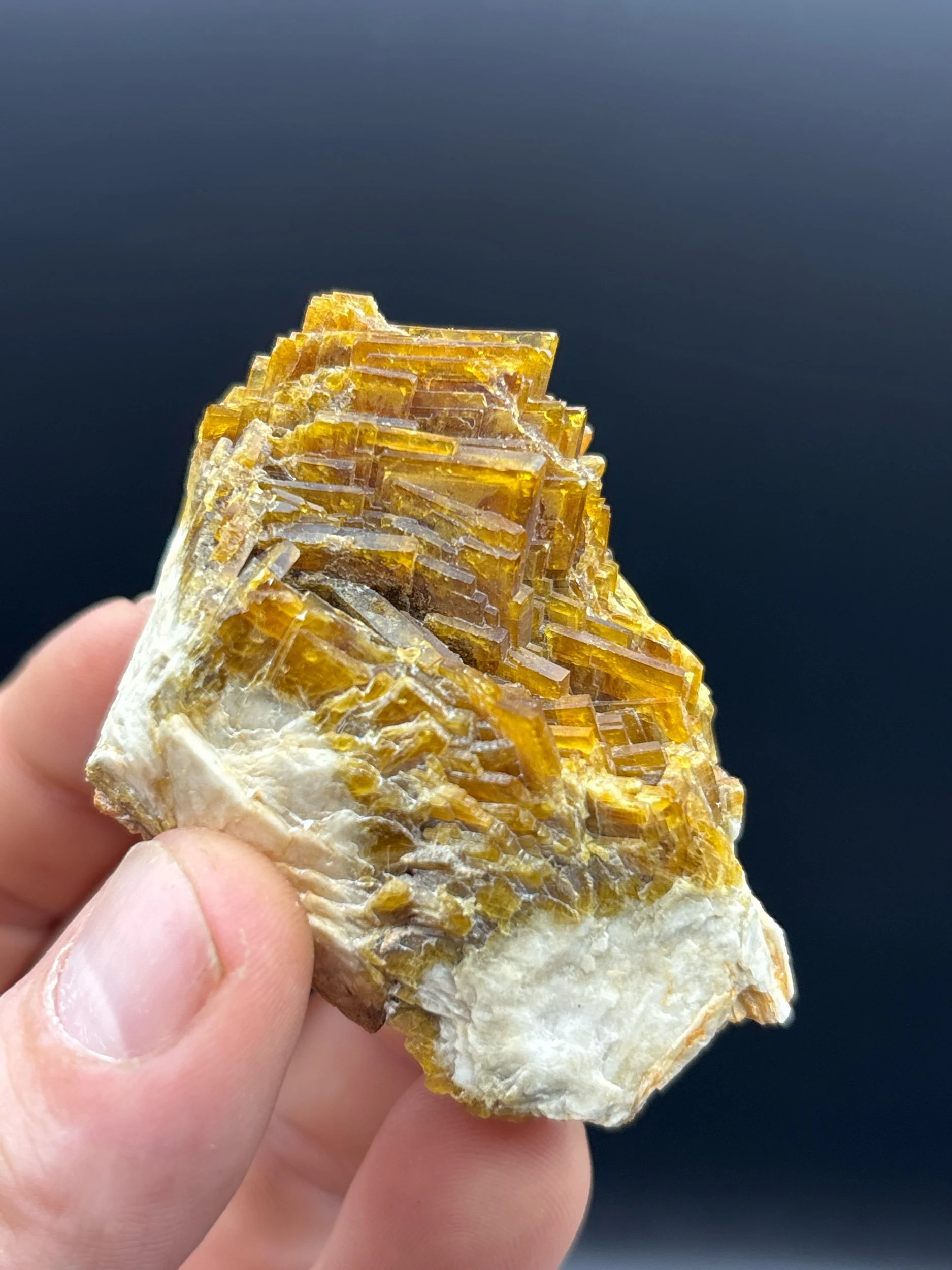
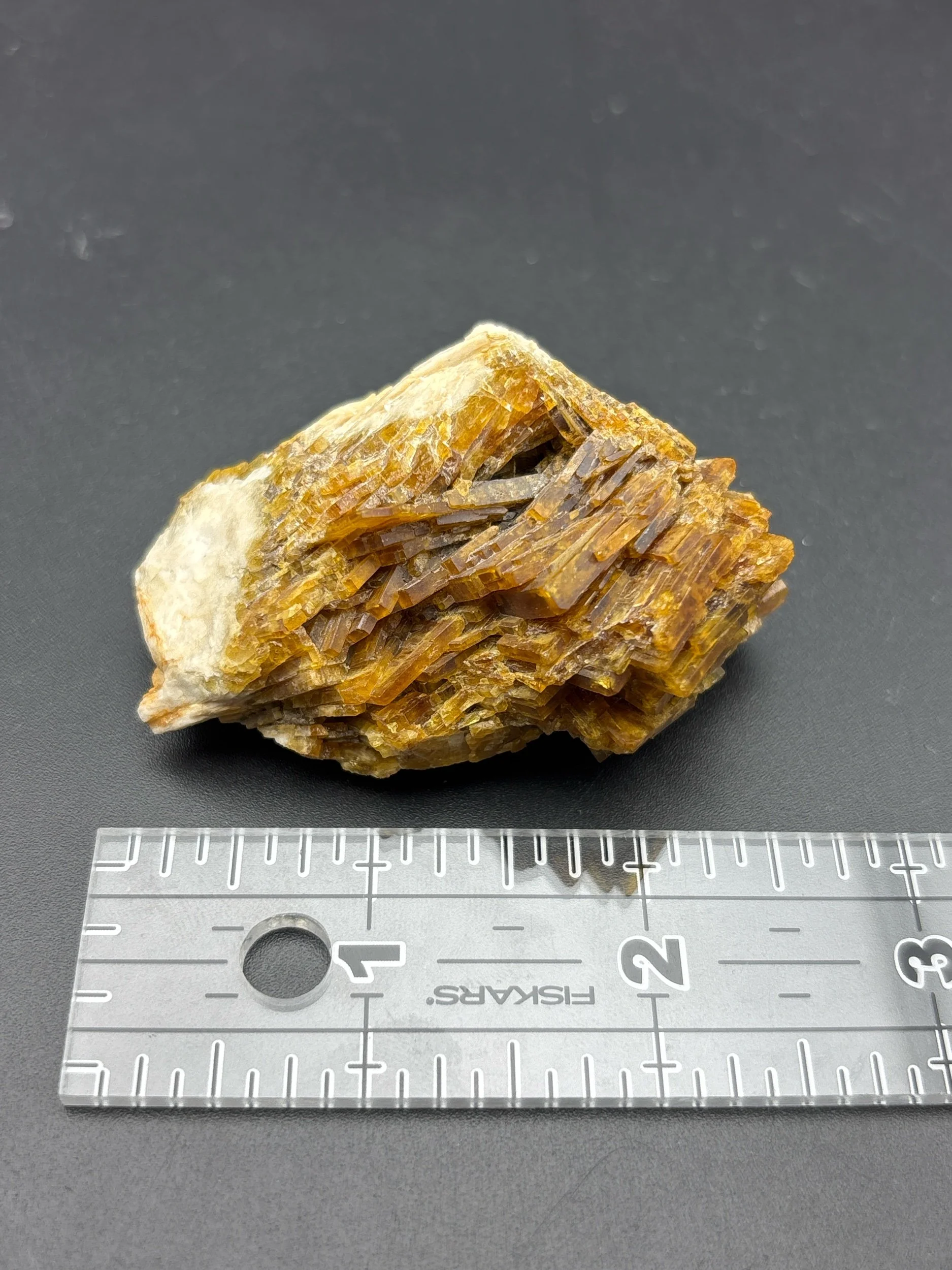
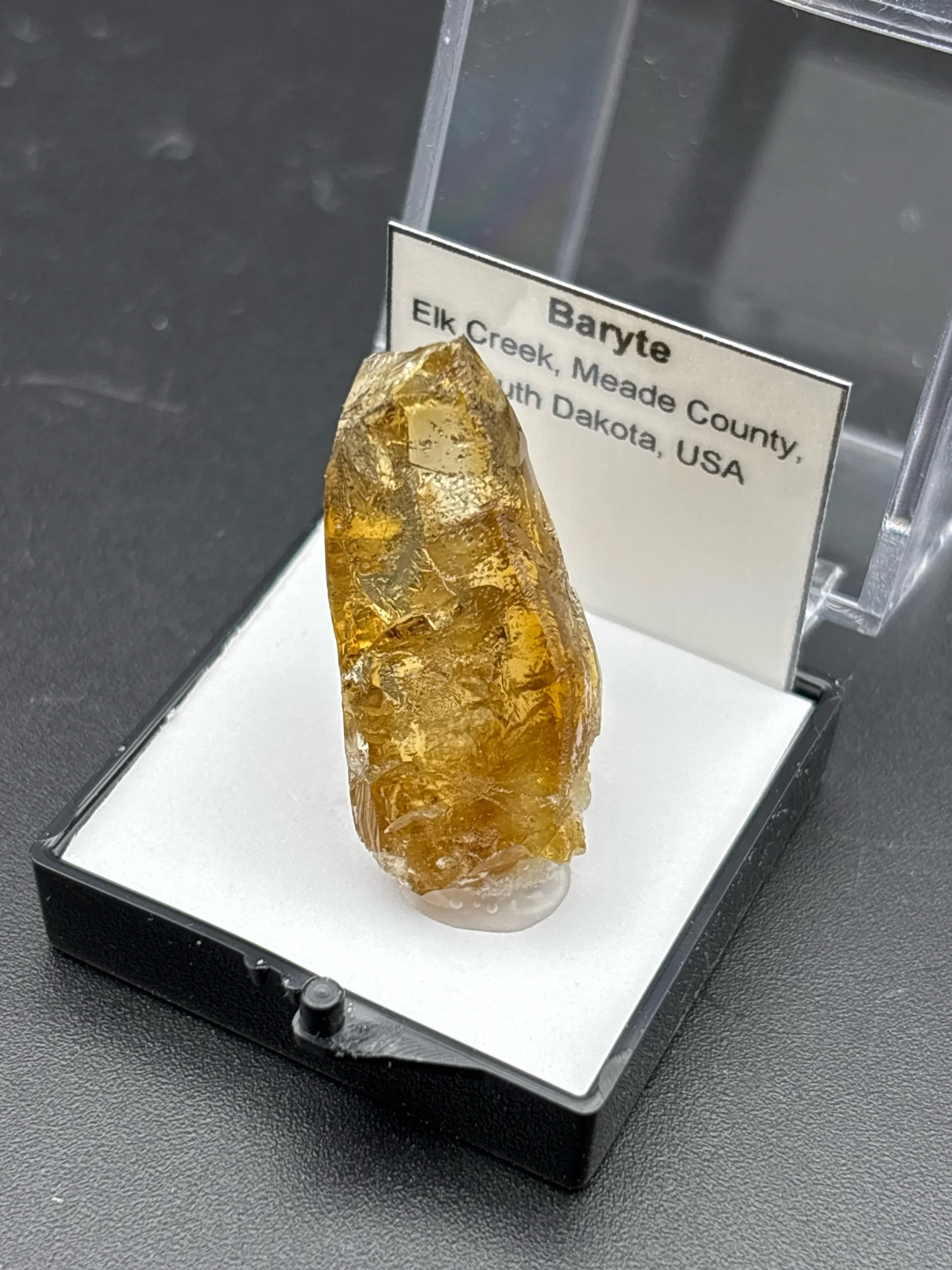
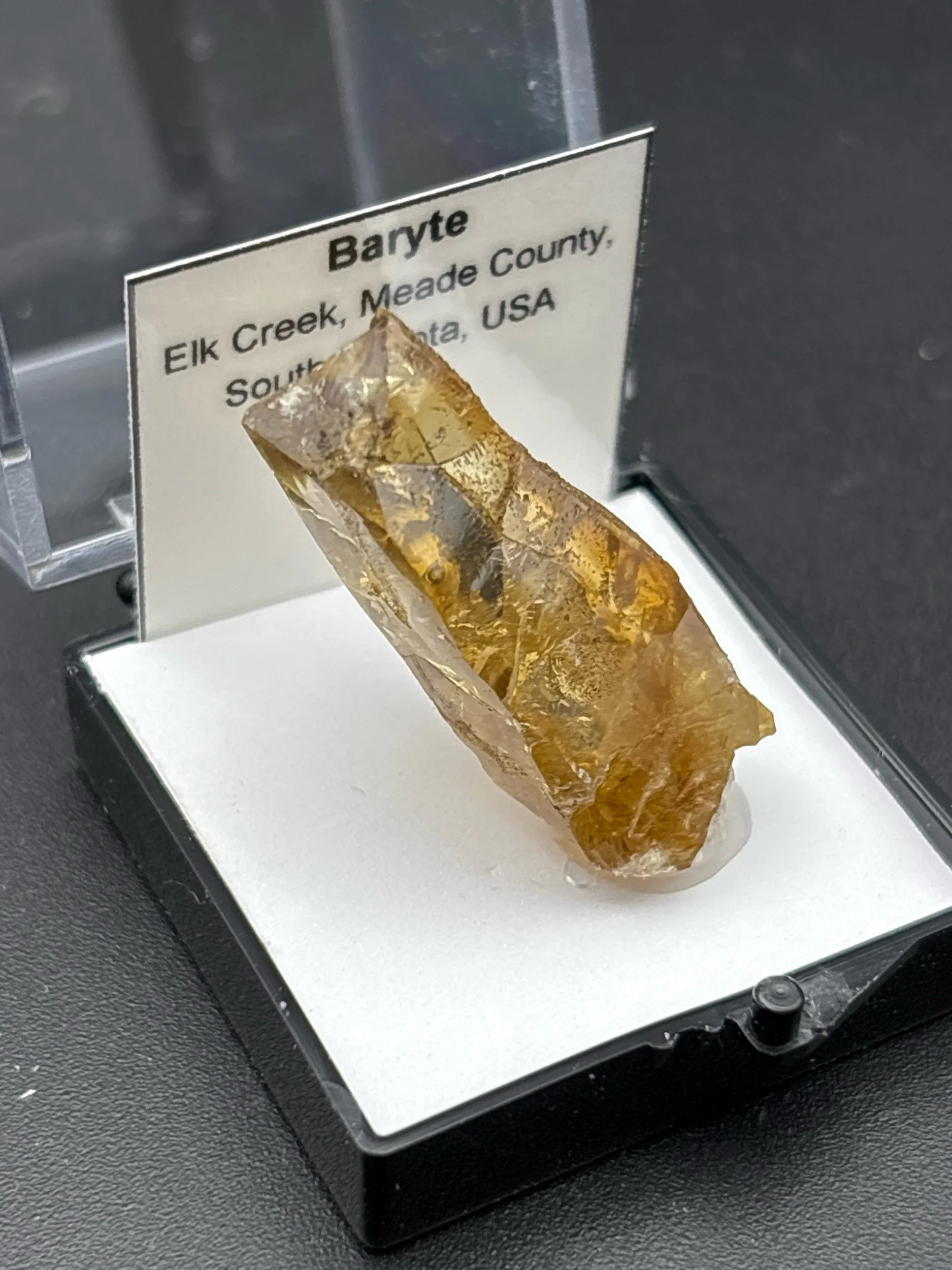
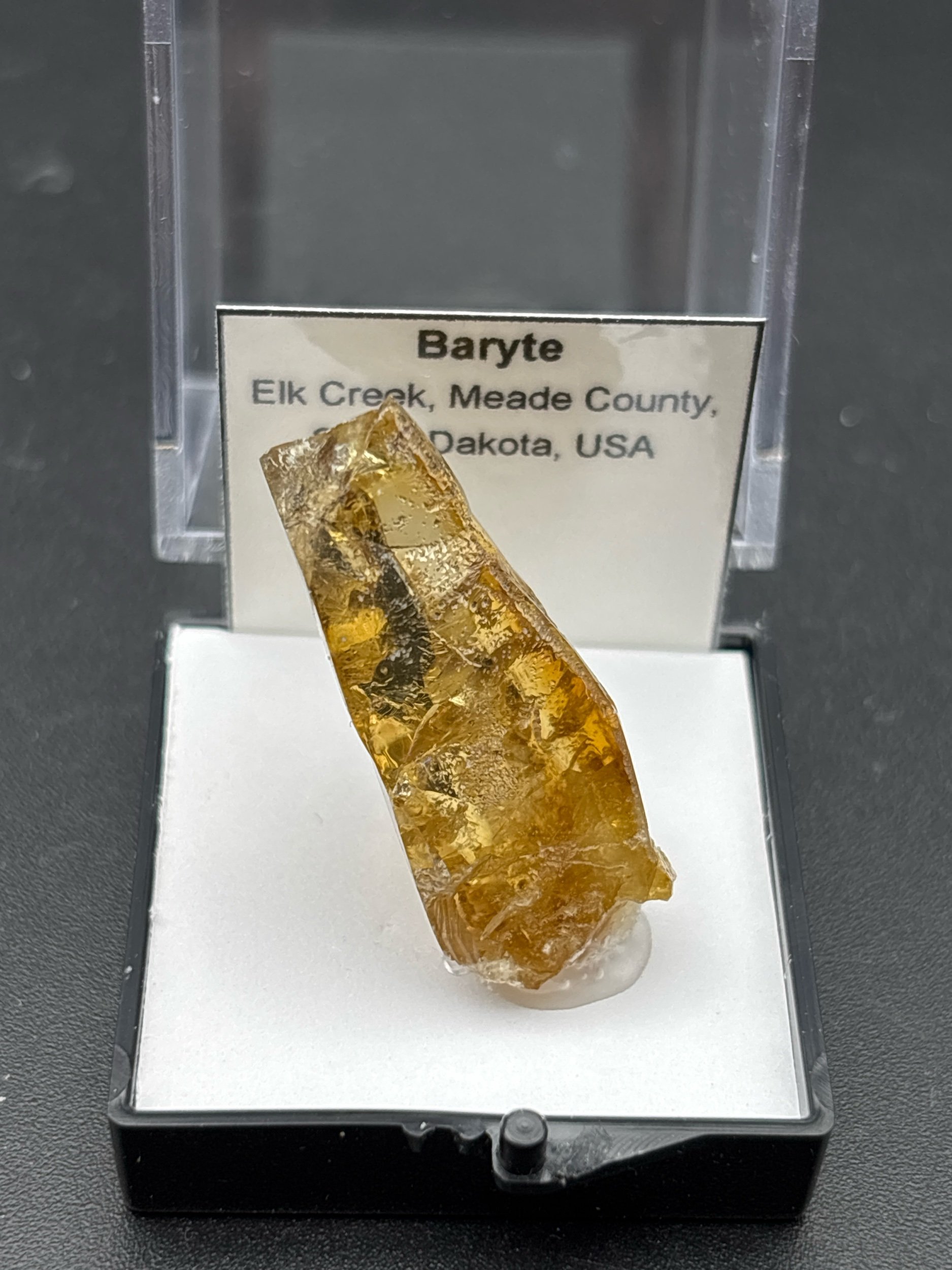
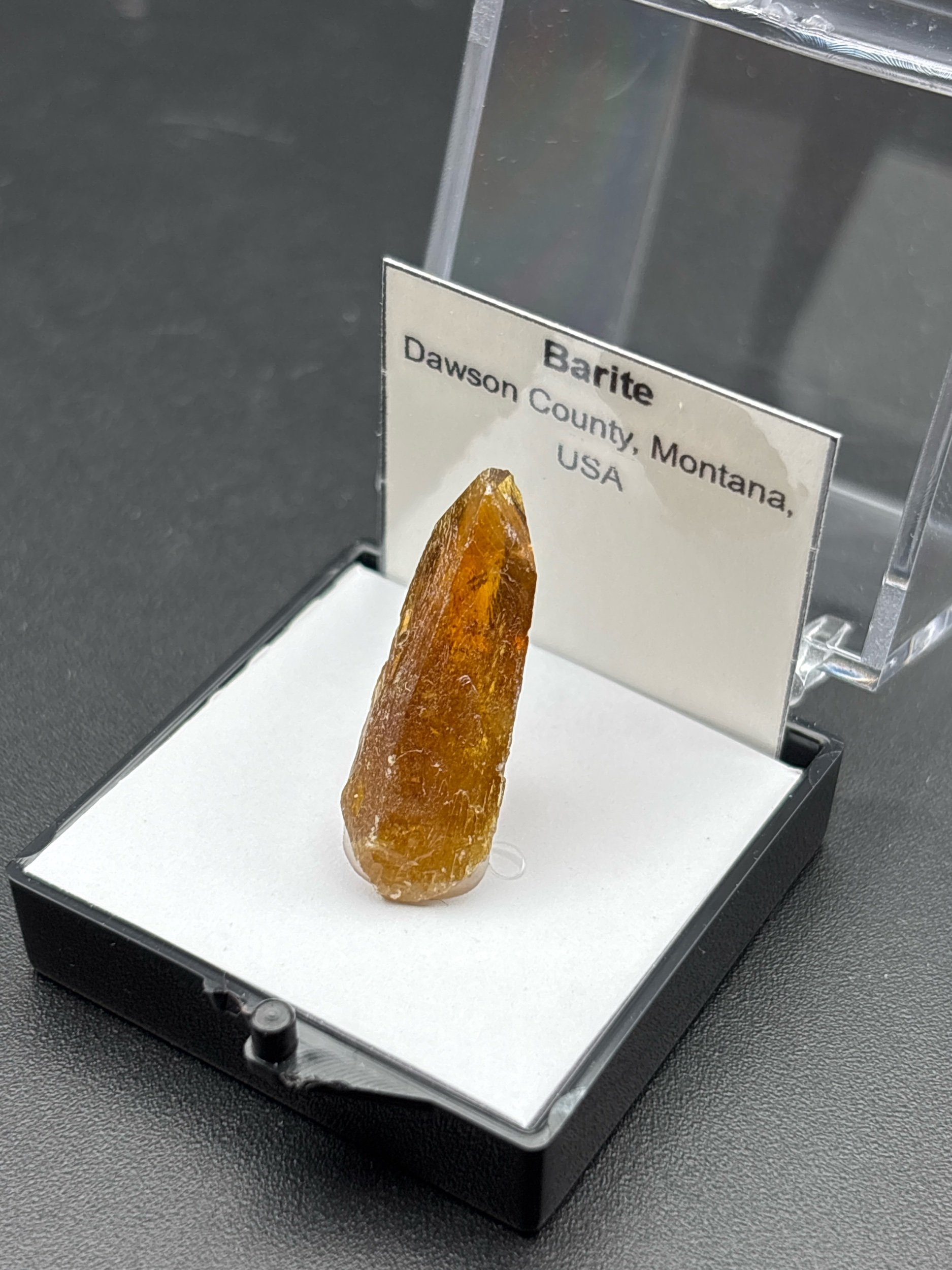
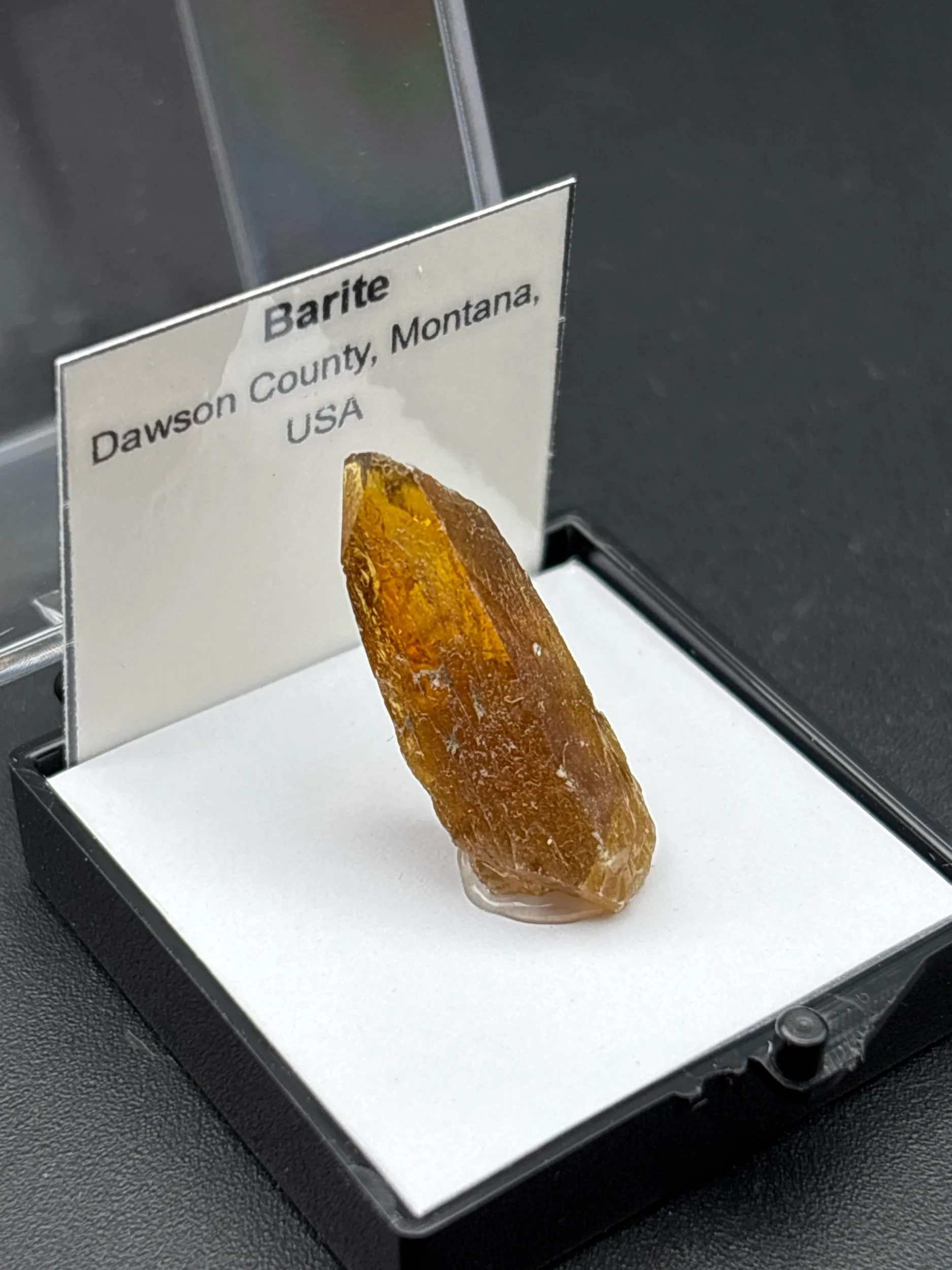
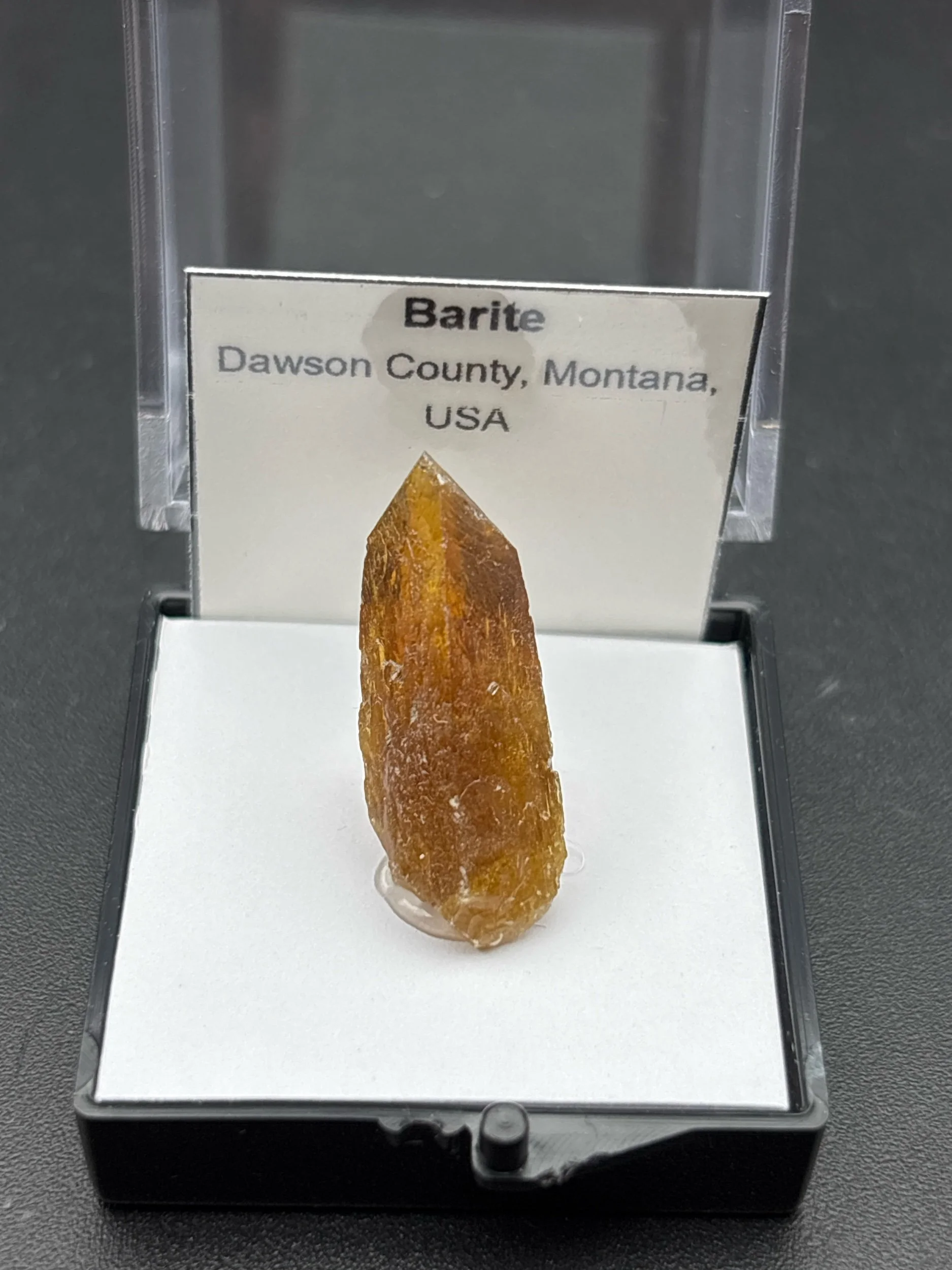
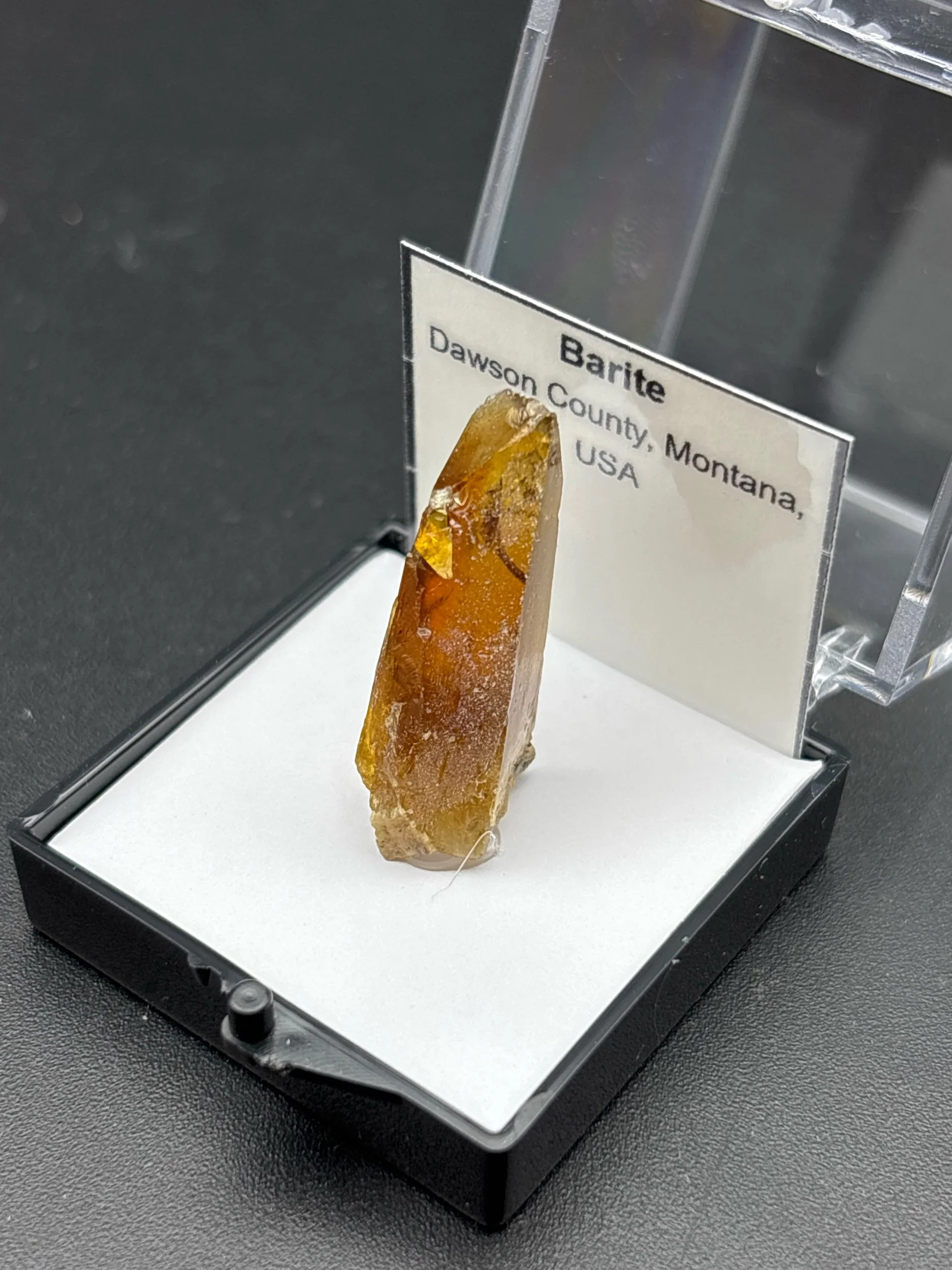
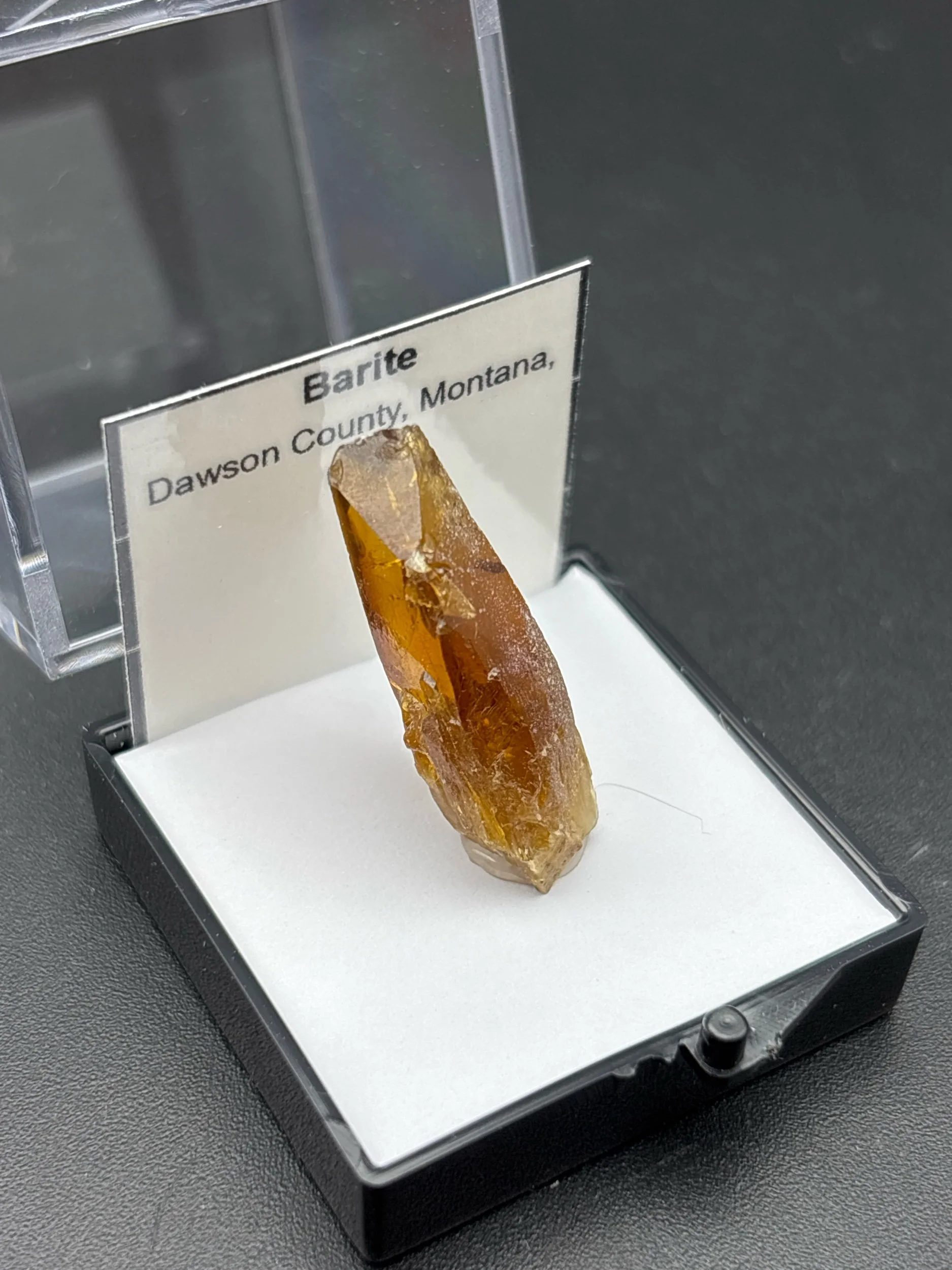
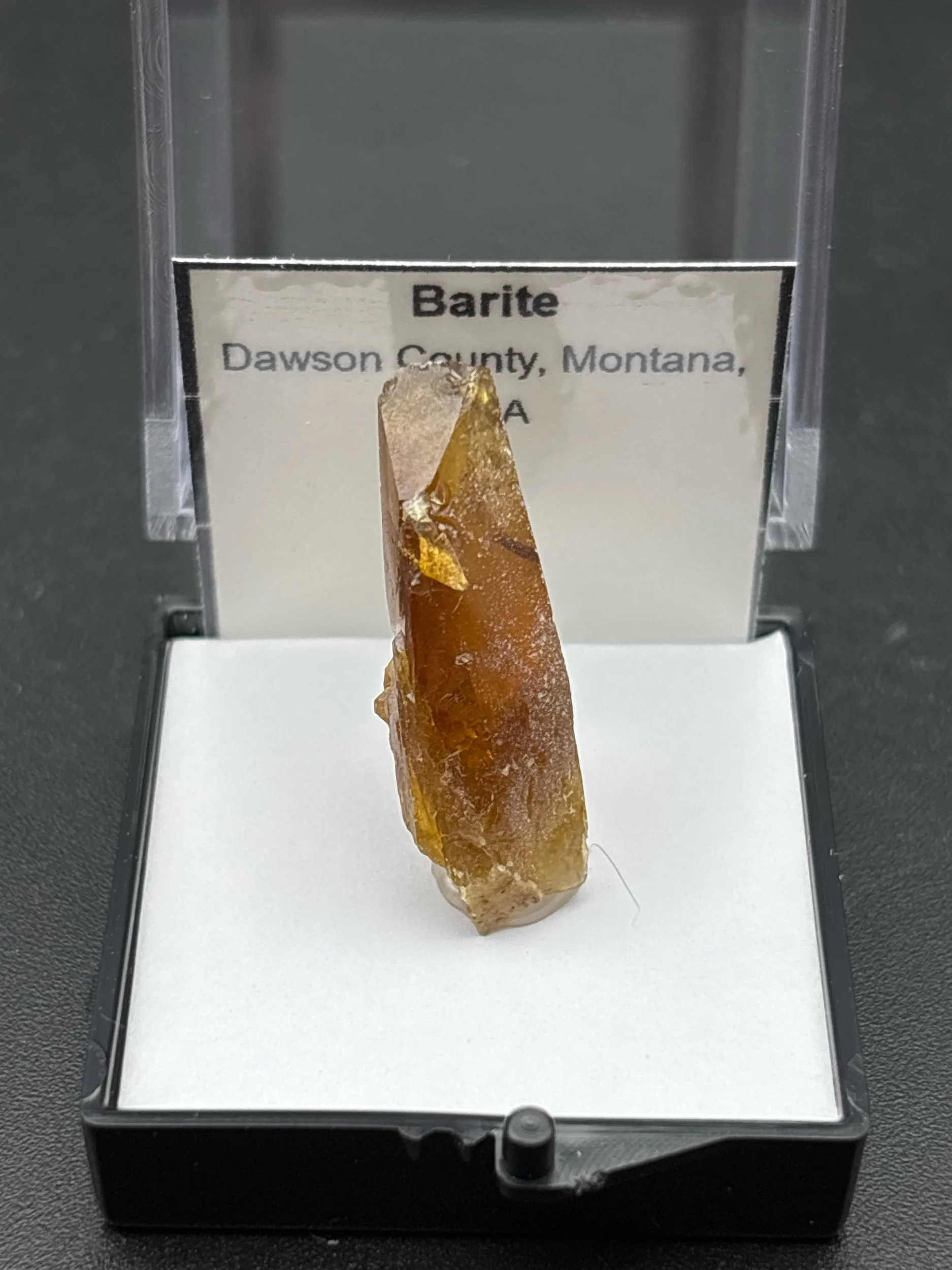
Mineral specimens from the Pack Rat Mine in Montana became known primarily through small-scale collecting rather than large commercial production. Early miners occasionally saved attractive pieces of crystallized minerals encountered while following the ore veins, and some of these specimens later entered private collections. Interest from mineral collectors increased during the mid-twentieth century as reports of well-formed crystals and unusual mineral associations circulated among hobbyists and dealers. Because the workings were relatively small, most specimens recovered from the mine were limited in number and often obtained directly from underground pockets or from material on nearby dumps. A portion of the better examples gradually found their way into mineral shows, museum collections, and the hands of regional collectors. Today, specimens attributed to the Pack Rat Mine are considered relatively uncommon and are usually associated with material recovered during earlier periods of mining and collecting. While the mine is actively held as claim, no known current specimen production exists.
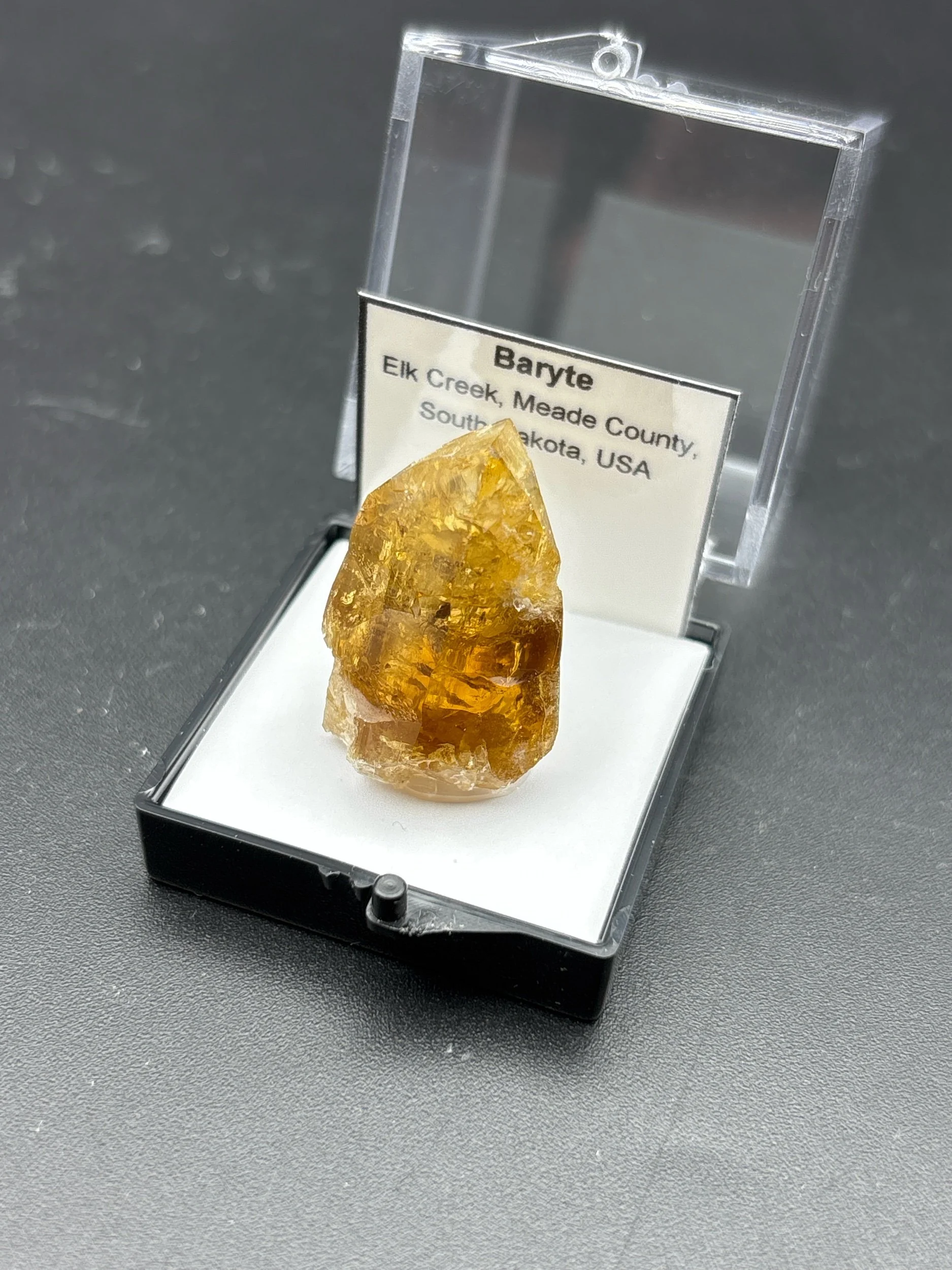
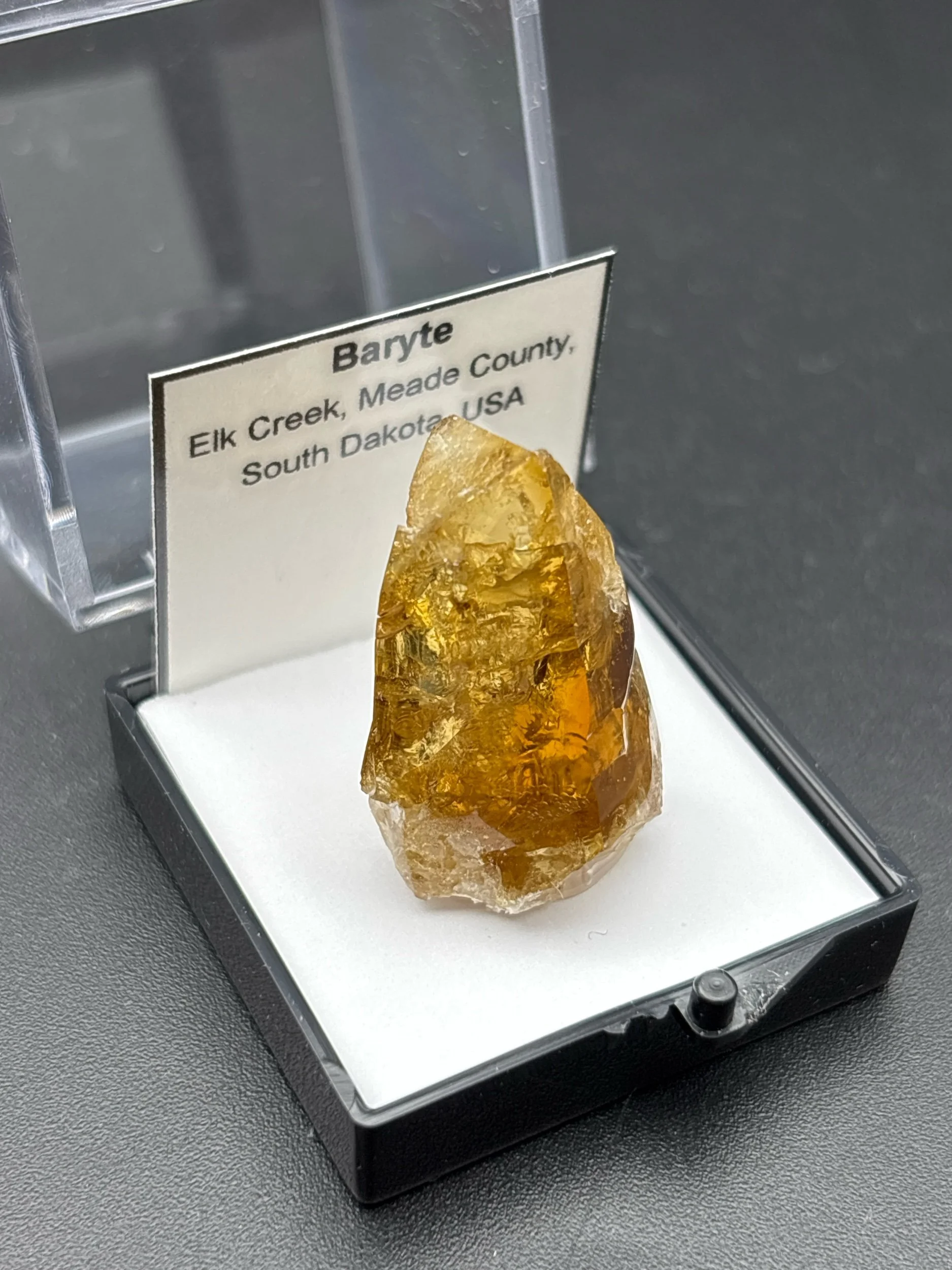
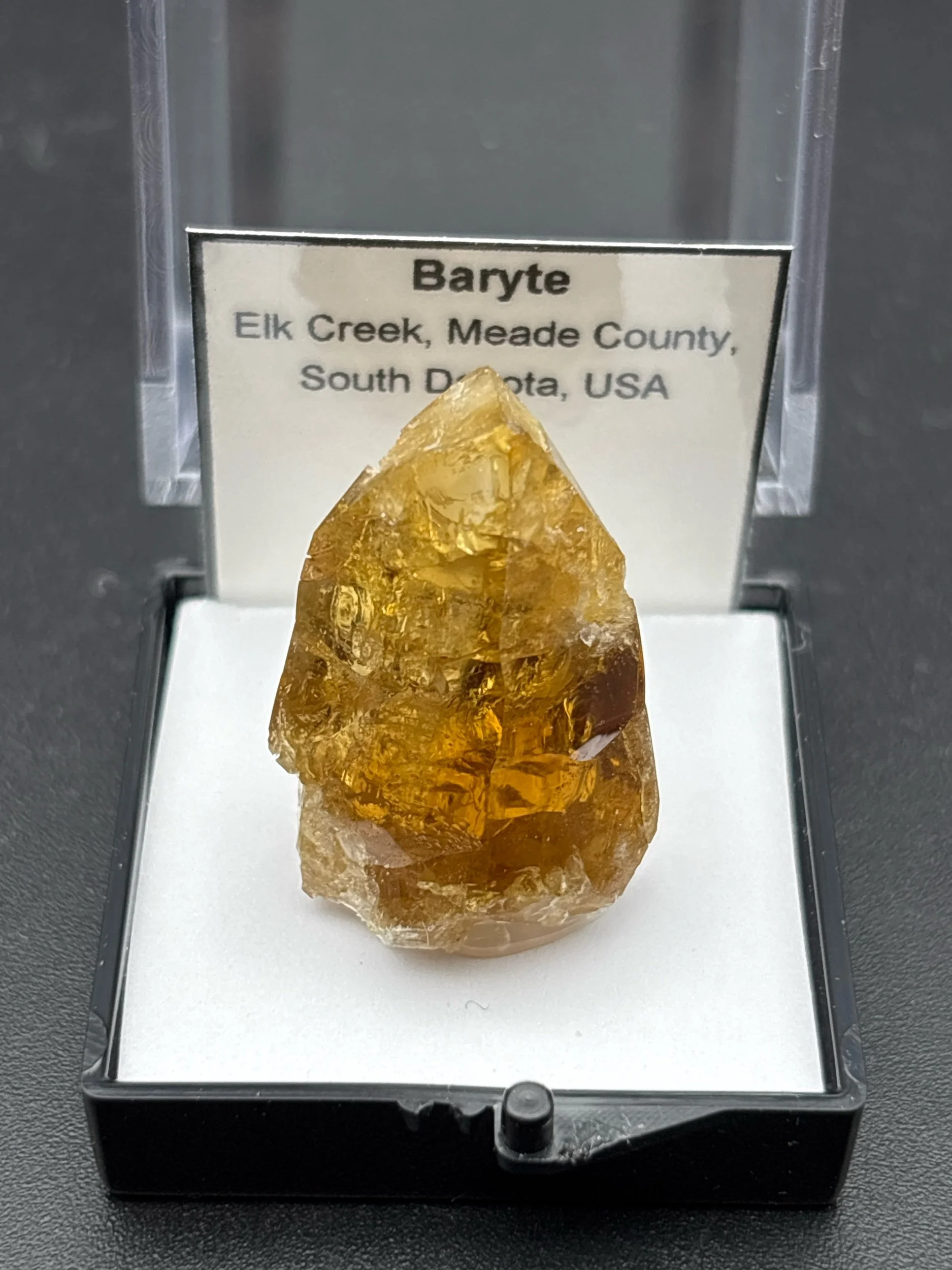
This specimen is a classic cluster of baryte crystals. Rich honey brown color.
Thank you so much for viewing! Please message for any further information
(2.5 × 1.5 × 1.7 in - 6.3 × 3.8 × 4.3 cm) 4.7oz / 134g
Orders ship Mondays
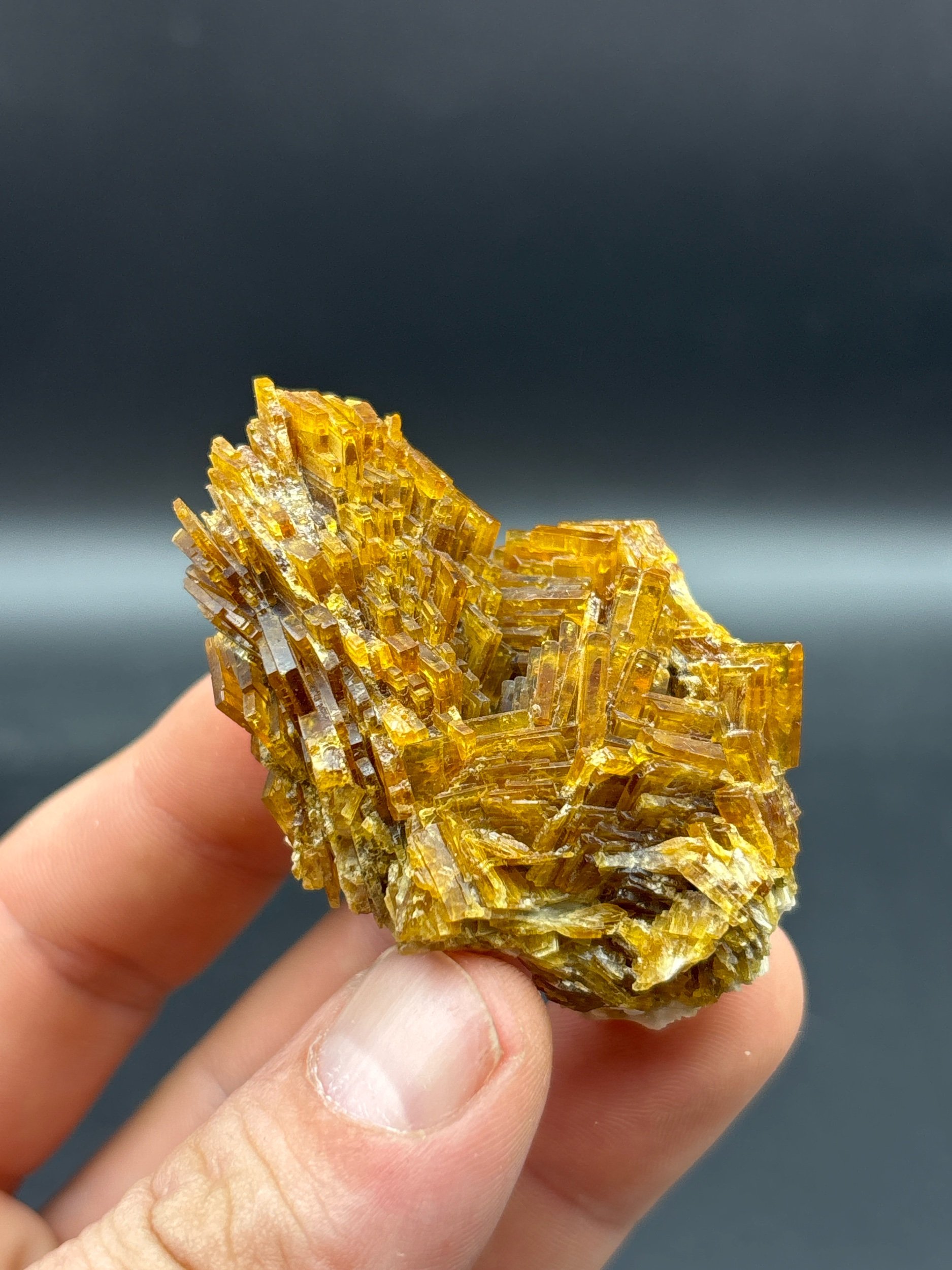
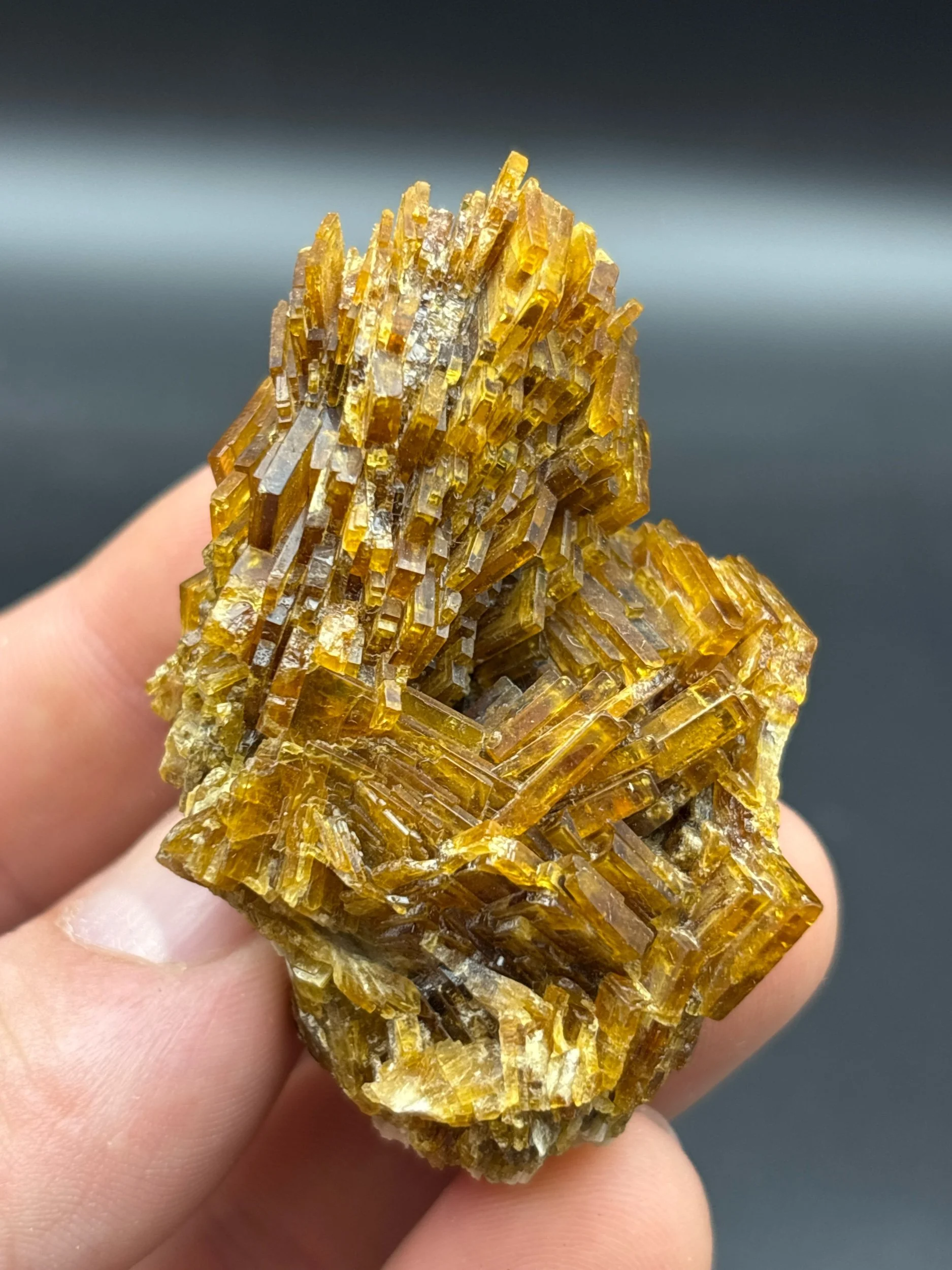
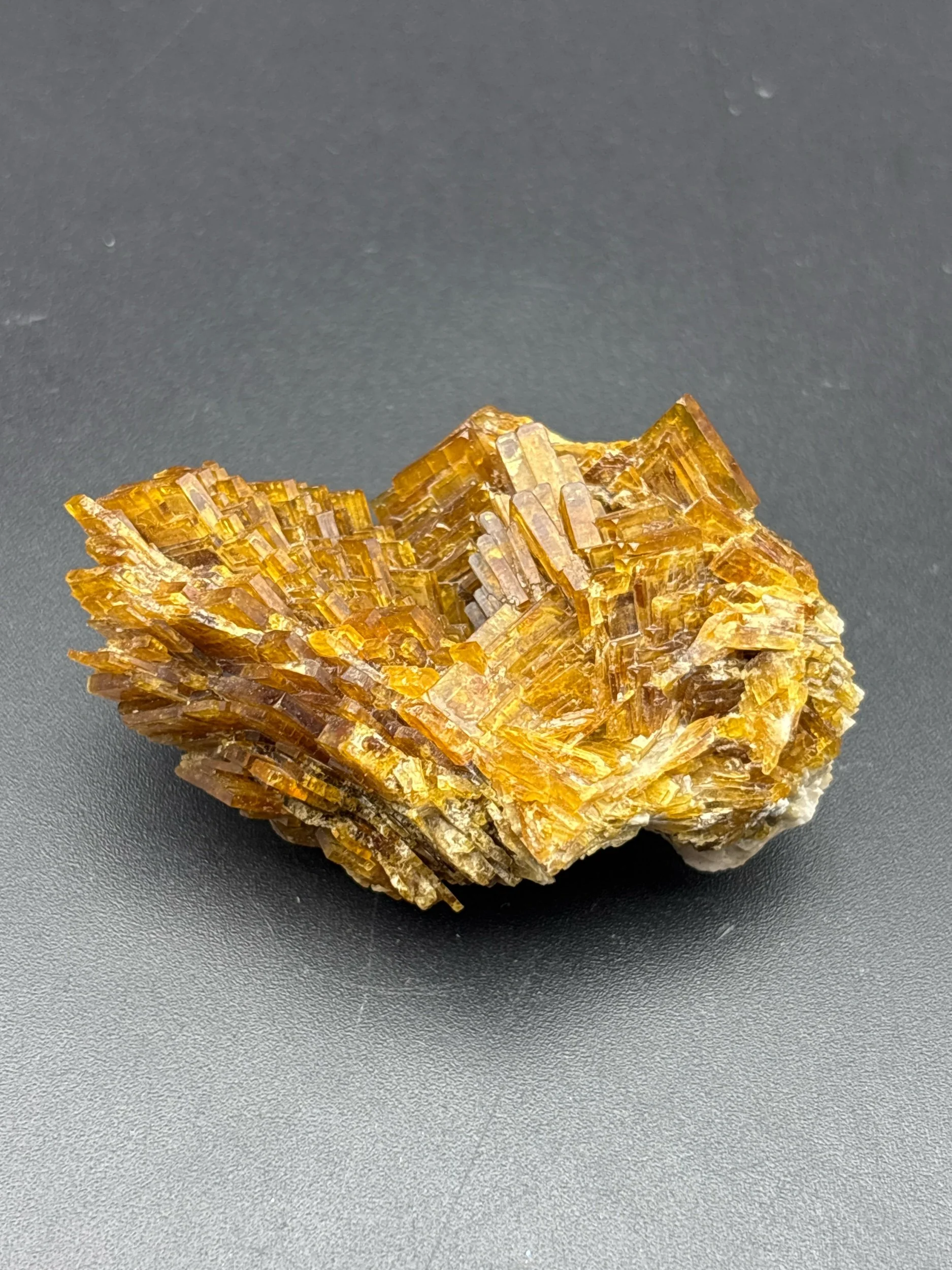
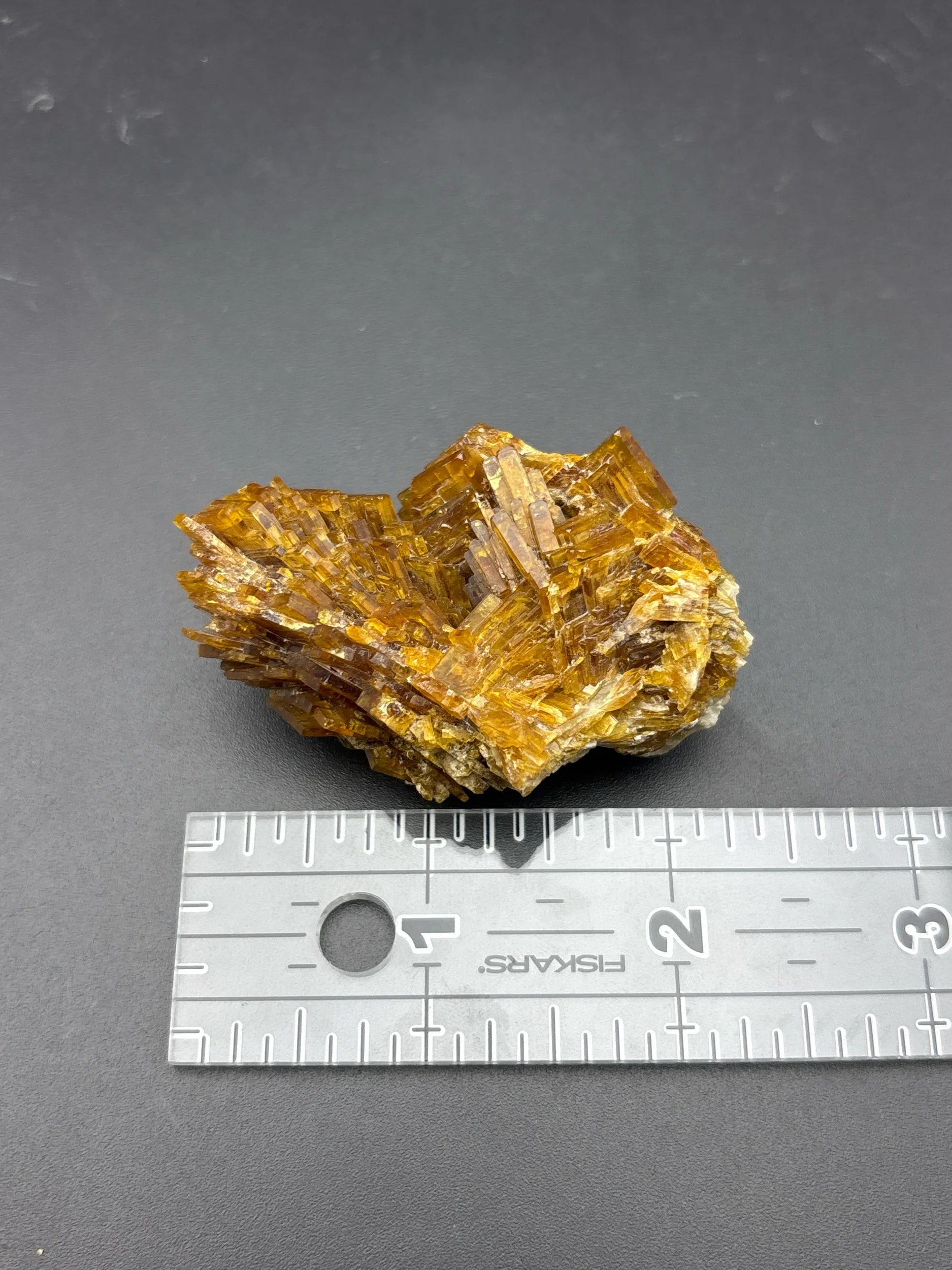
Mineral specimens from the Pack Rat Mine in Montana became known primarily through small-scale collecting rather than large commercial production. Early miners occasionally saved attractive pieces of crystallized minerals encountered while following the ore veins, and some of these specimens later entered private collections. Interest from mineral collectors increased during the mid-twentieth century as reports of well-formed crystals and unusual mineral associations circulated among hobbyists and dealers. Because the workings were relatively small, most specimens recovered from the mine were limited in number and often obtained directly from underground pockets or from material on nearby dumps. A portion of the better examples gradually found their way into mineral shows, museum collections, and the hands of regional collectors. Today, specimens attributed to the Pack Rat Mine are considered relatively uncommon and are usually associated with material recovered during earlier periods of mining and collecting. While the mine is actively held as claim, no known current specimen production exists.
This specimen is a classic cluster of baryte crystals. Overall visual appeal is great. Rich honey brown color.
Thank you so much for viewing! Please message for any further information
(2.3 × 1.5 × 1.2 in - 5.8 × 3.8 × 3.0 cm) 2.8oz / 79g
Orders ship Mondays
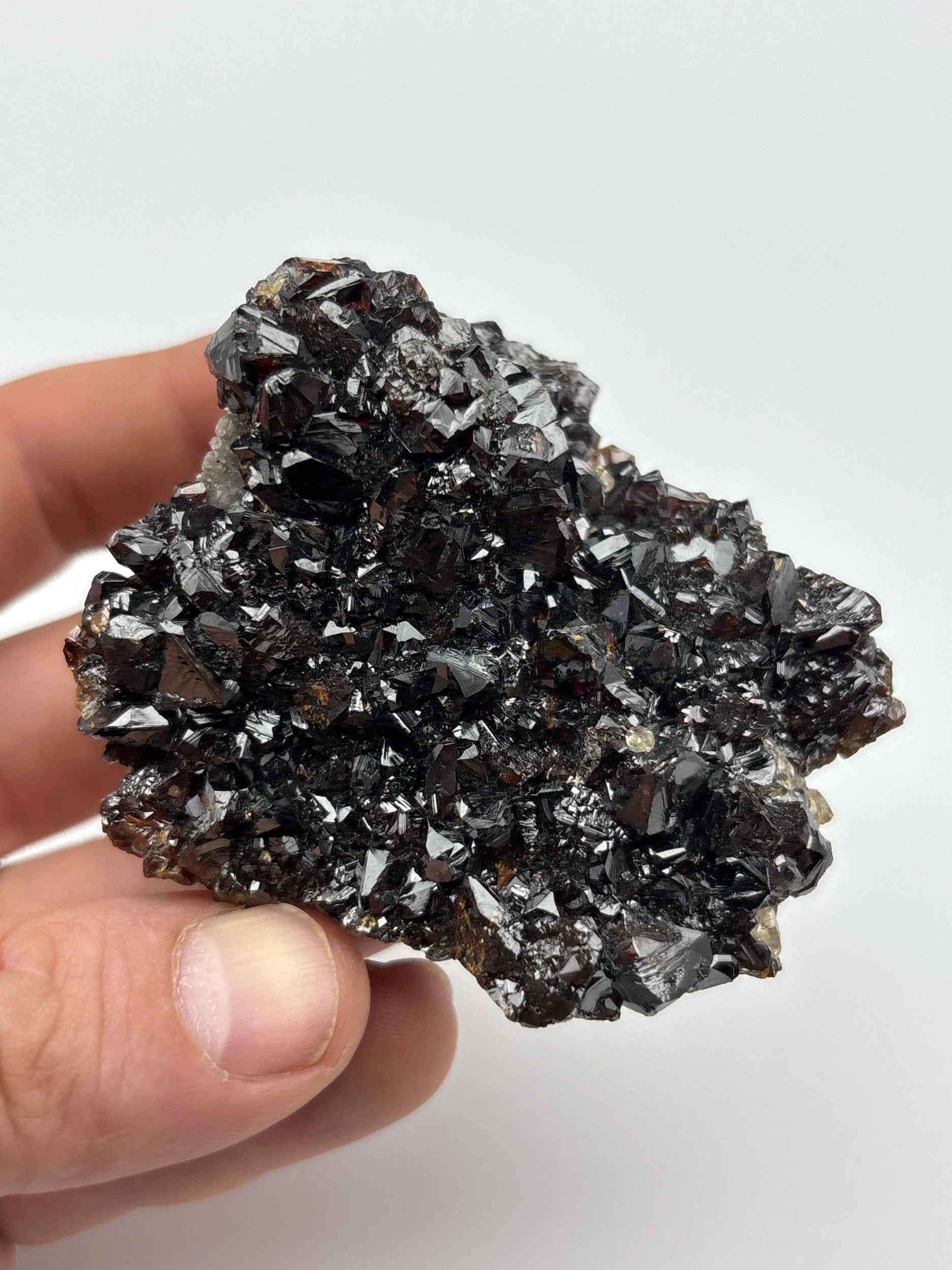
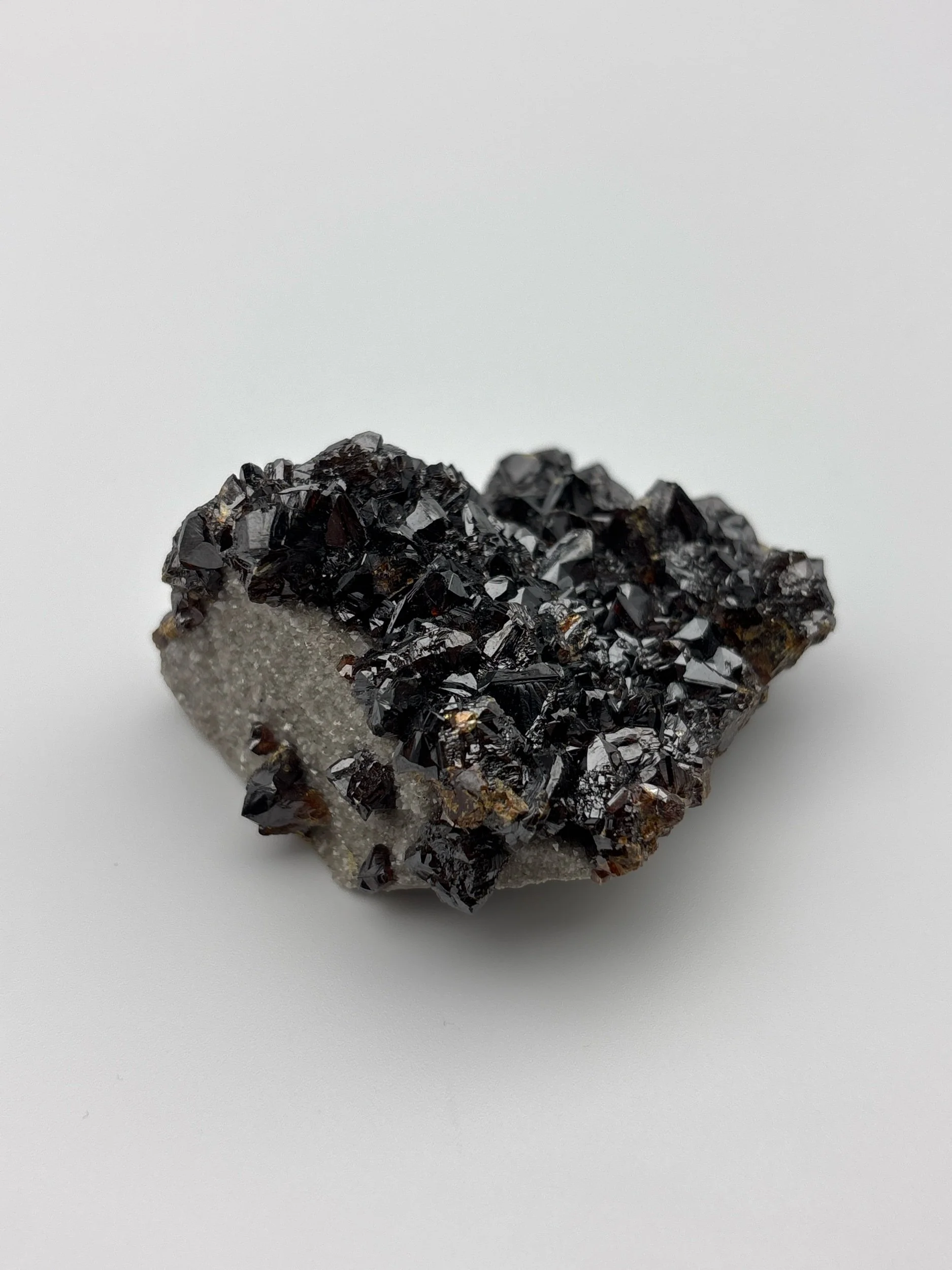
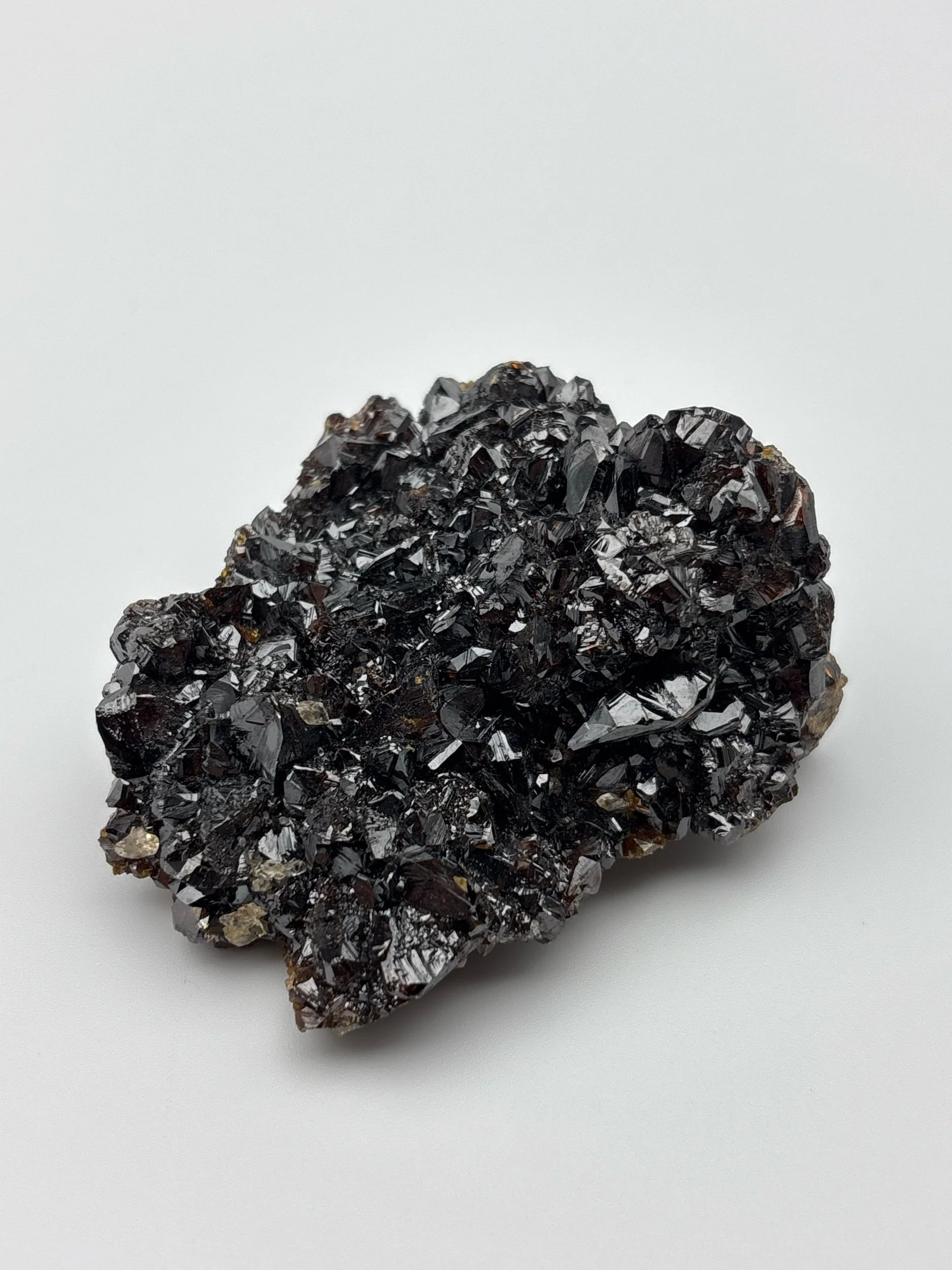
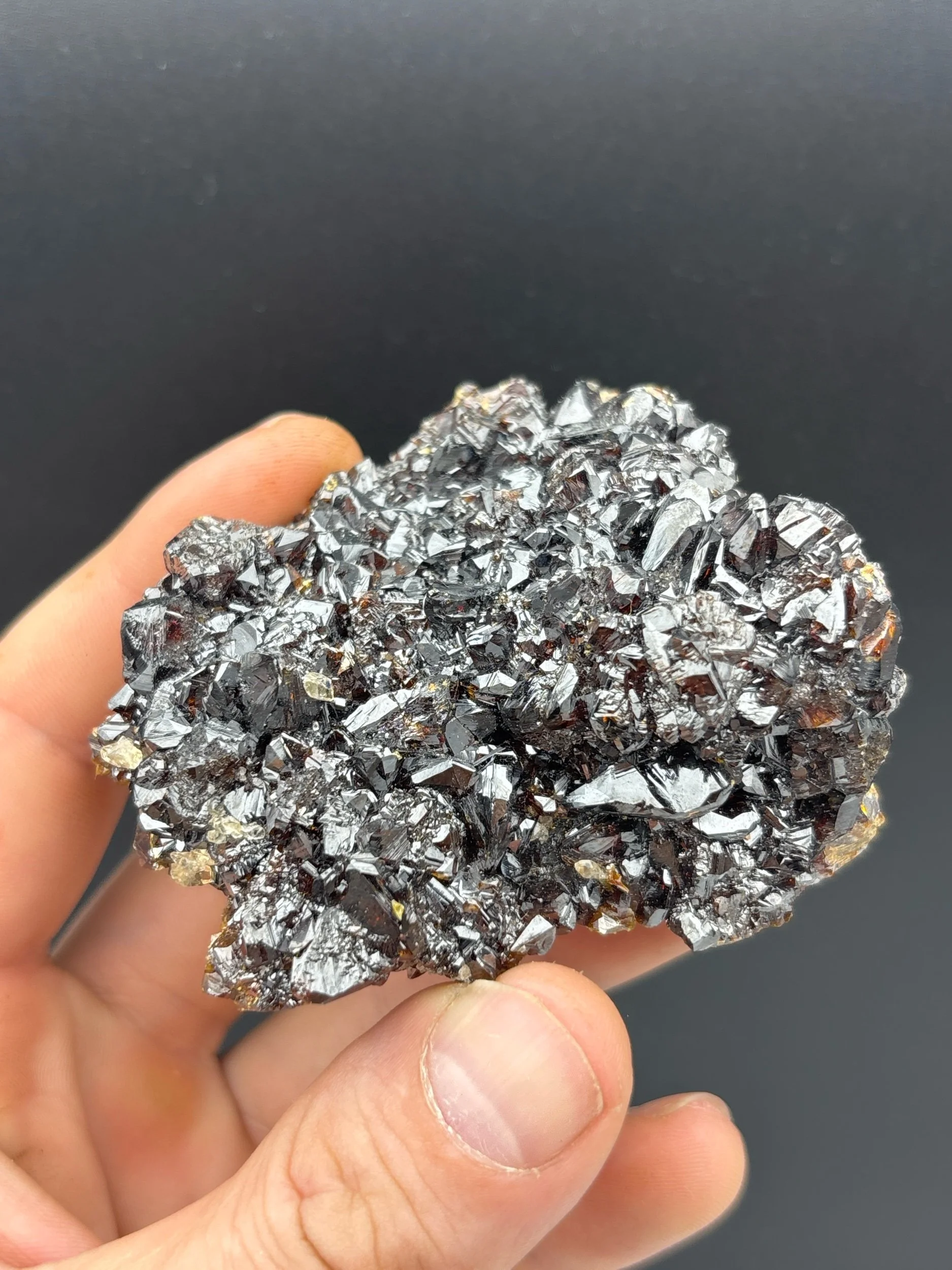
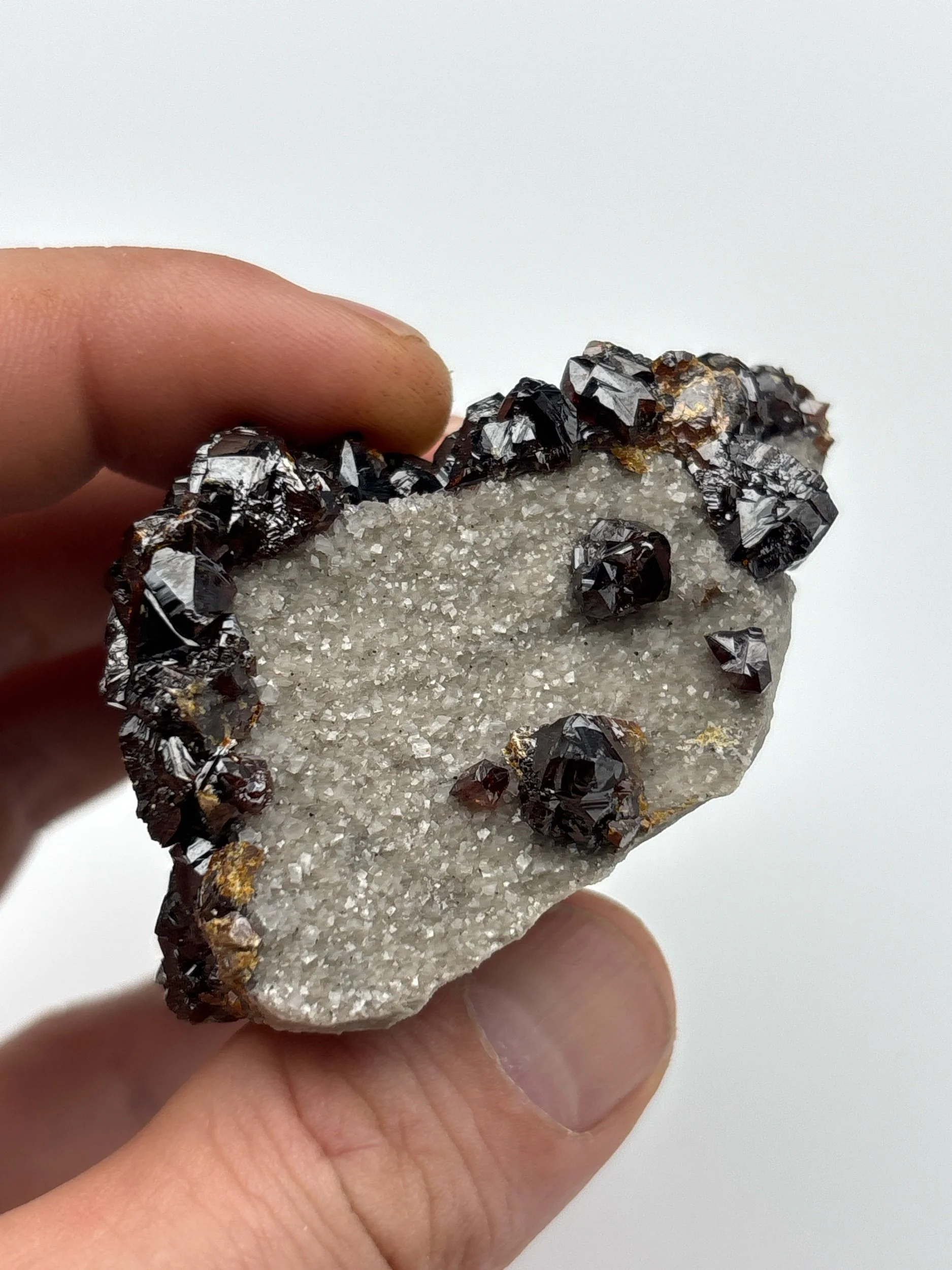
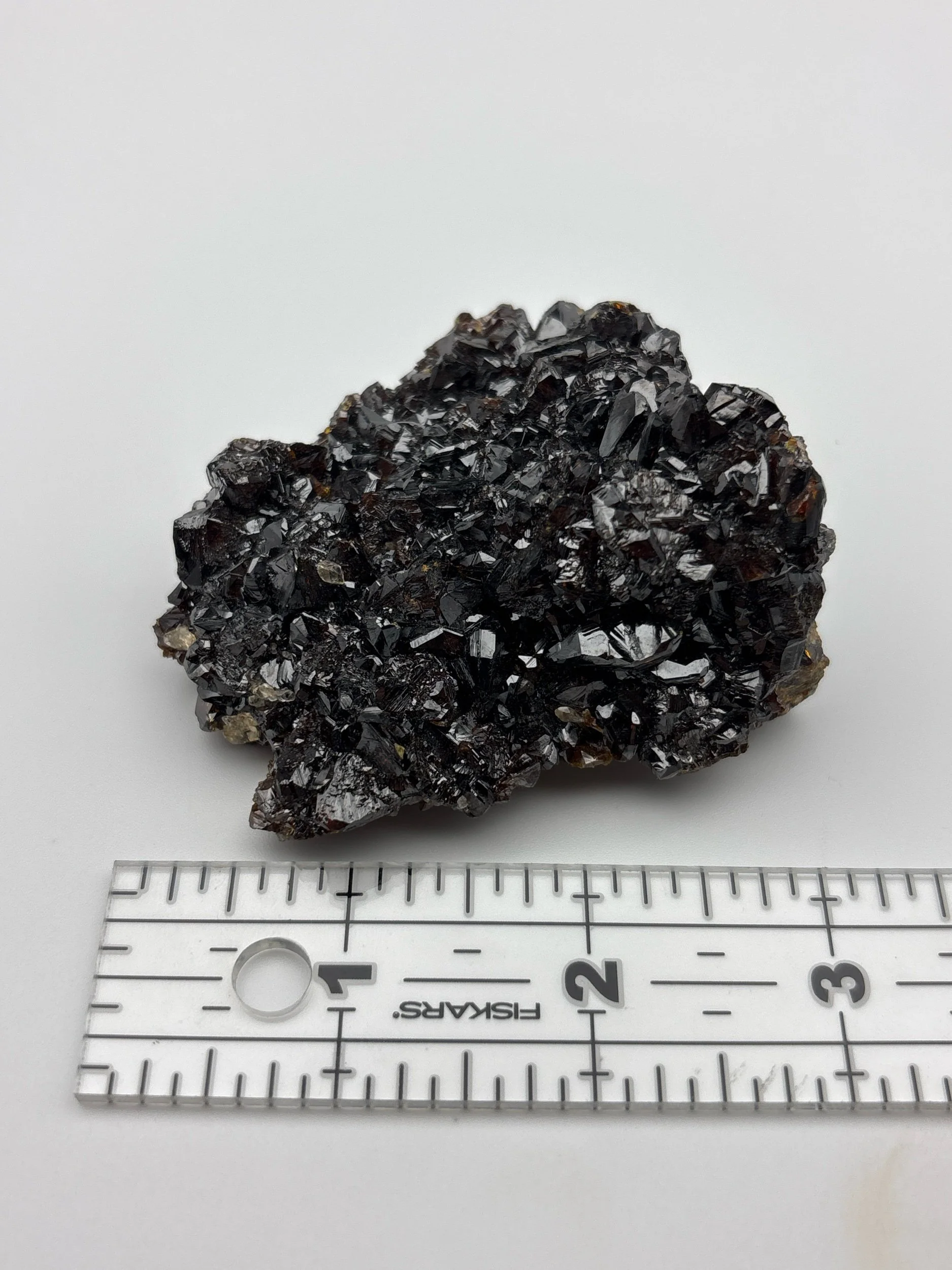
Crystal mining at the Elmwood Mine near Carthage, Smith County, Tennessee, developed as a by-product of large-scale underground zinc mining rather than as a dedicated gemstone operation. Discovered in the late 1960s and brought into production in the 1970s, the mine’s Mississippi Valley-Type ore bodies contained open cavities and breccia zones lined with exceptionally well-formed crystals of calcite, fluorite, sphalerite, barite, and galena.
This specimen is a bed of lustrous sphalerite adorned with small calcites. A glittering example, harvested by the late Bud Erhle during his visit to the mine. Overall a classic piece of USA!
Thank you so much for viewing! Please message for any further information
(2.8 × 2.5 × 1.5 in - 7.1 × 6.3 × 3.8 cm) 6.7oz / 191g
ORDERS SHIP MONDAYS
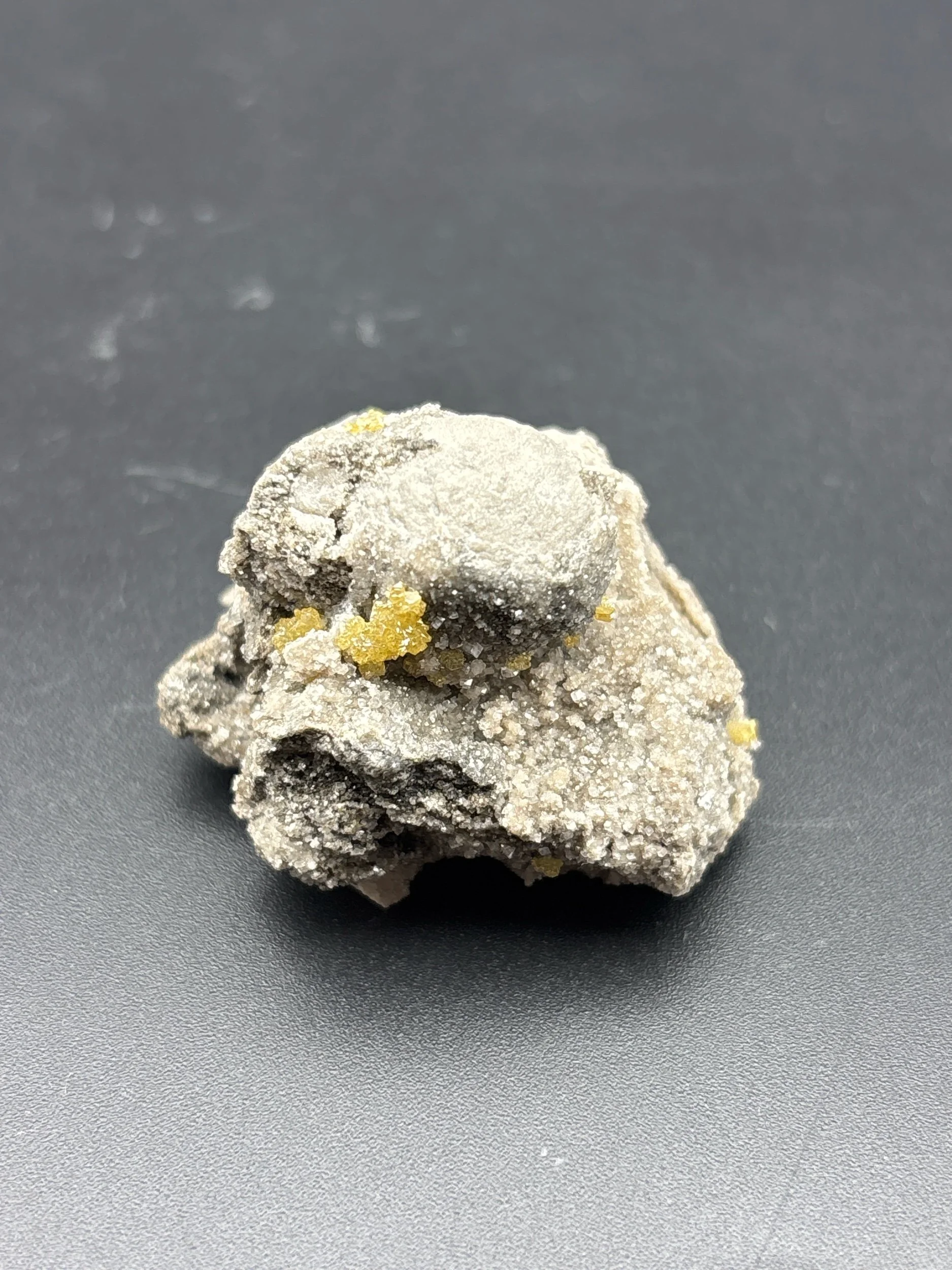
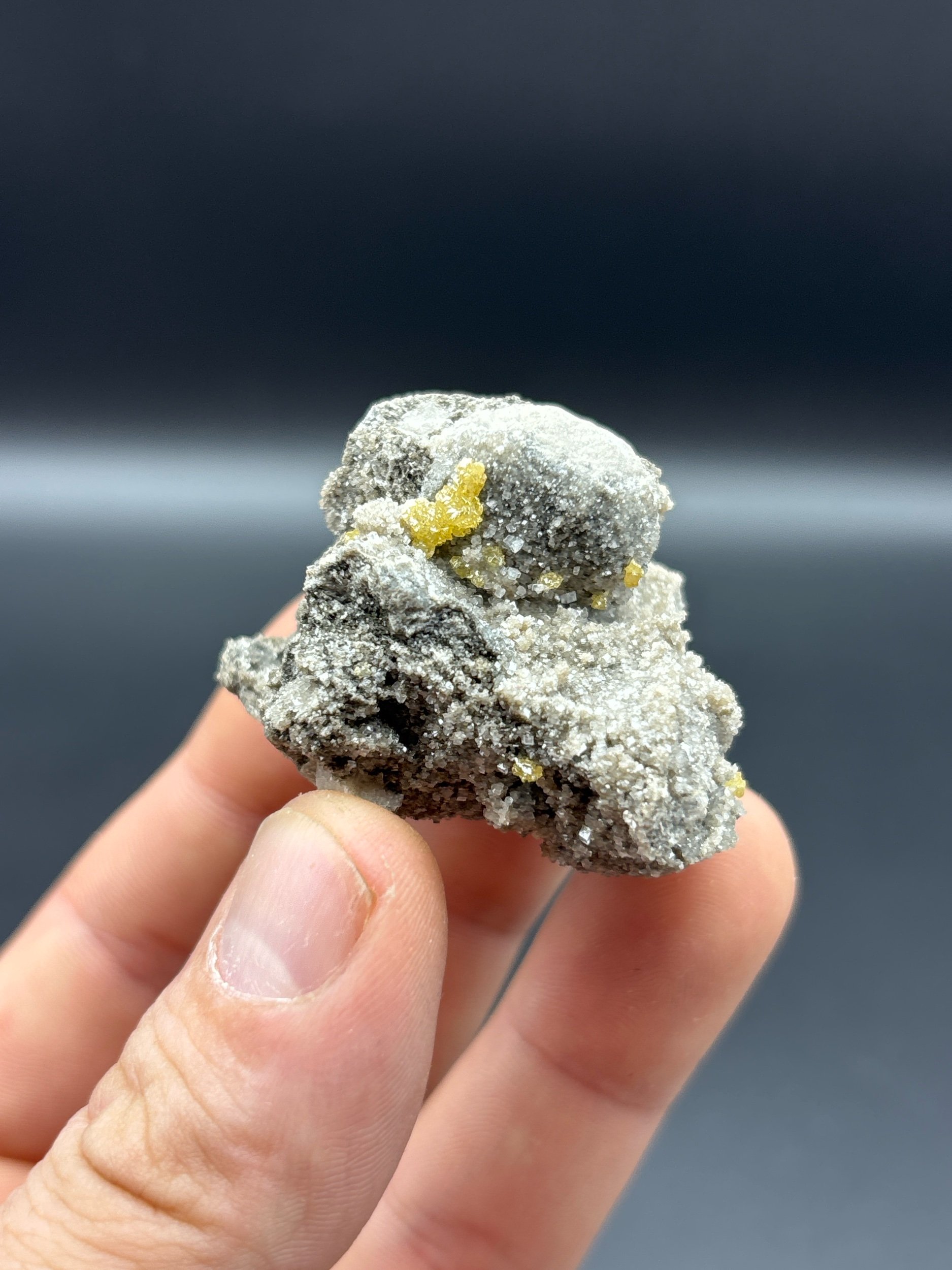
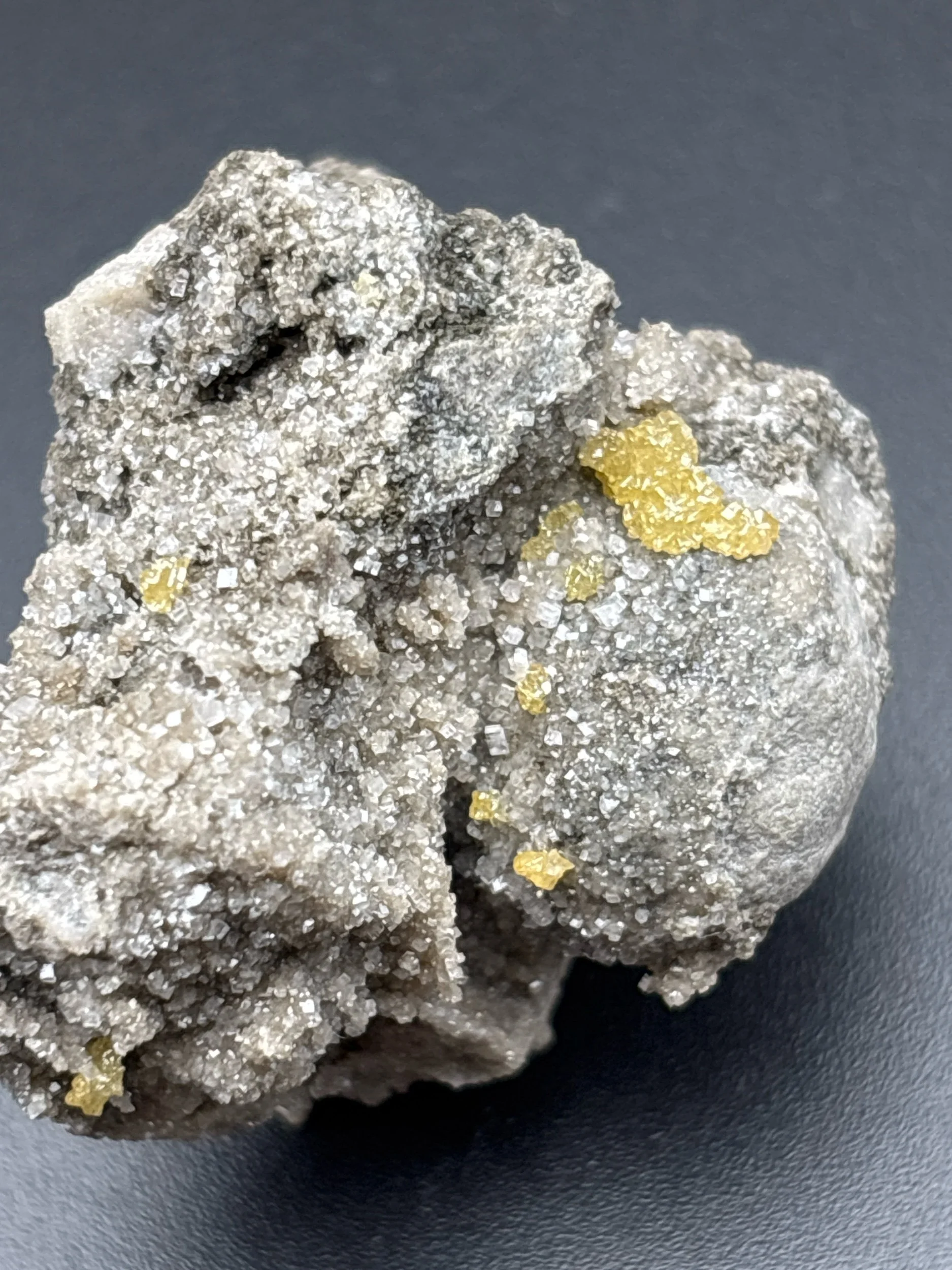
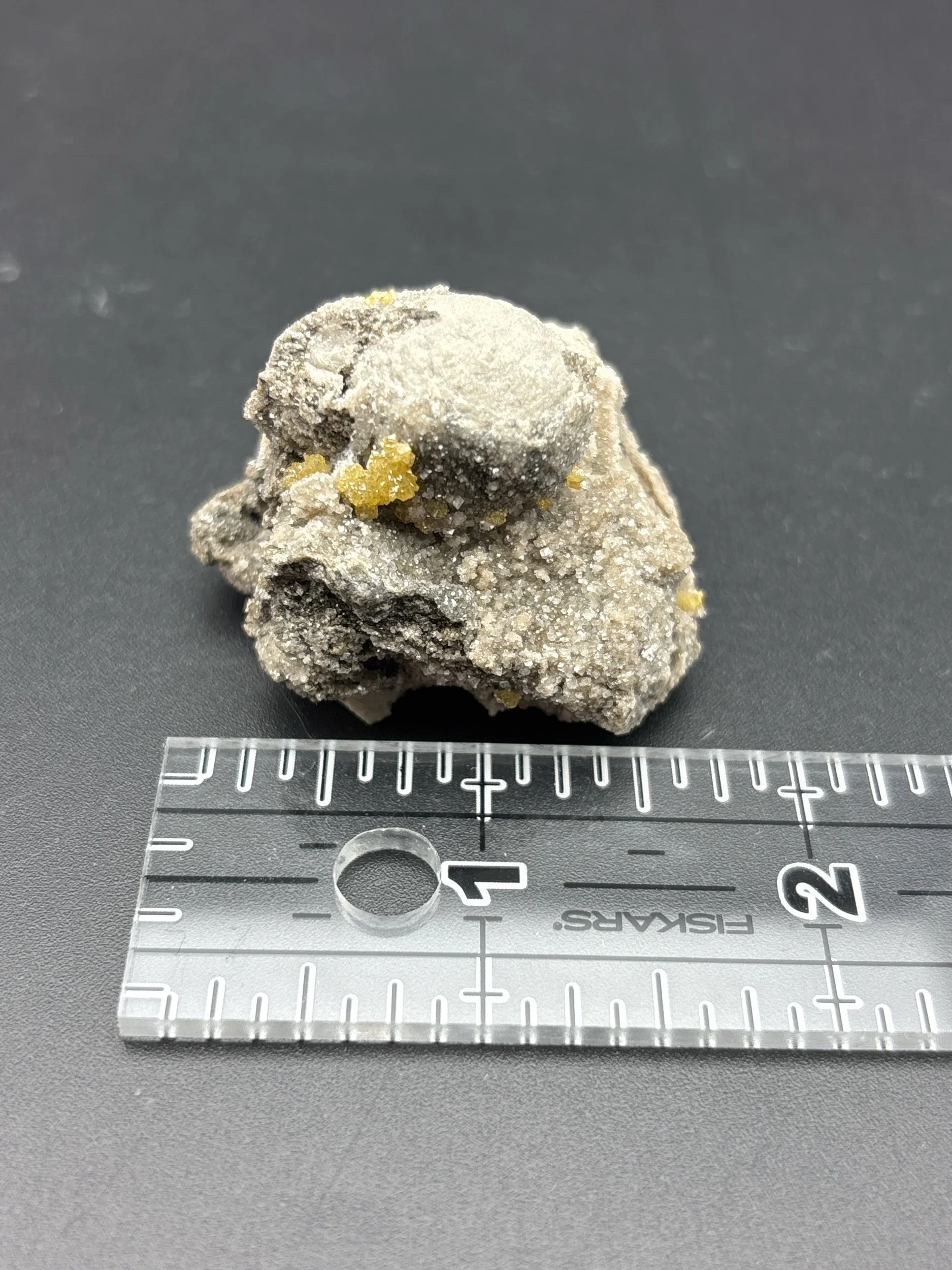
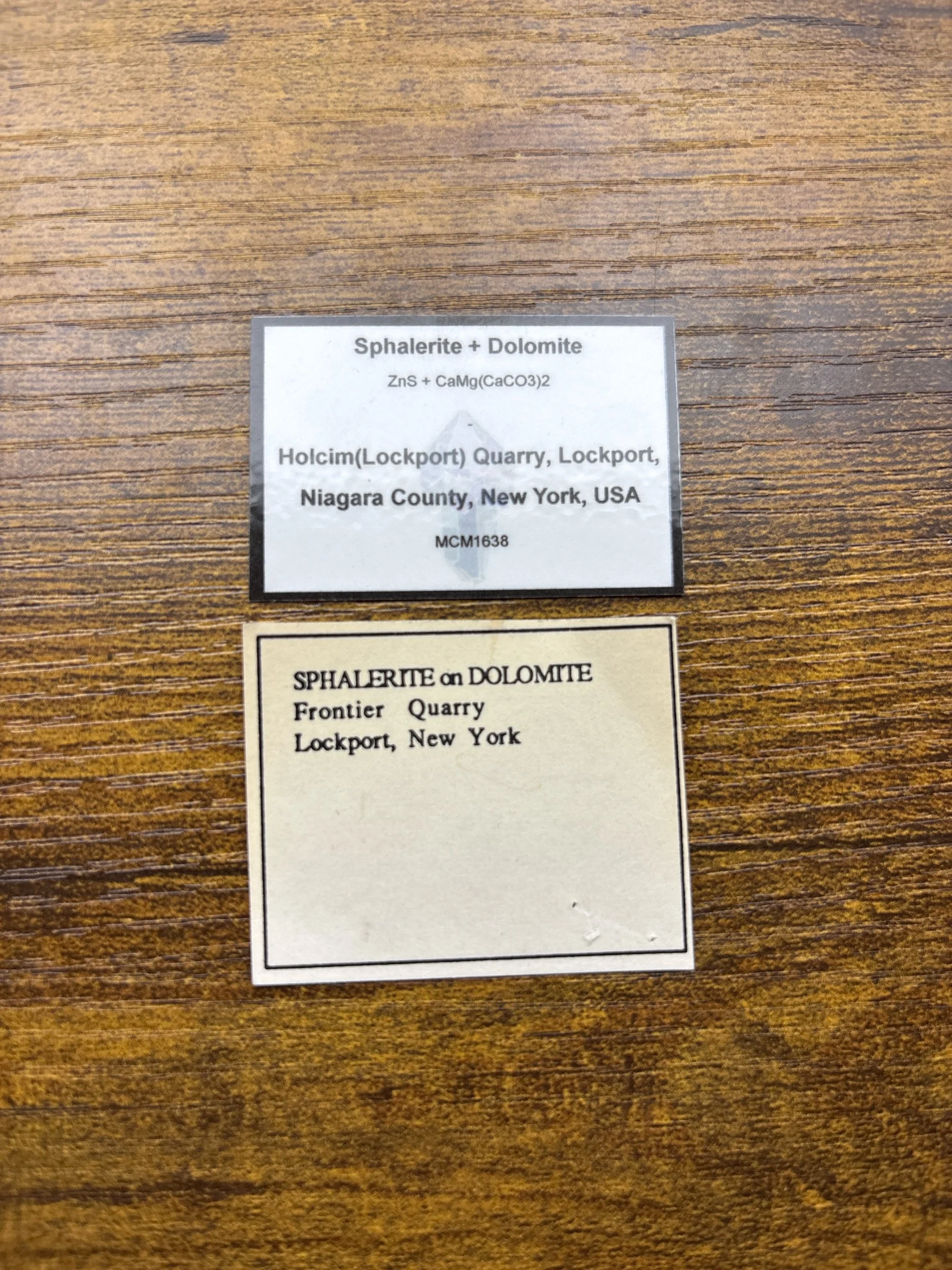
The Holcim Quarry in Lockport, New York, is a well-known collecting site developed in Silurian-aged dolostone of the Niagara Escarpment. It has produced a wide range of mineral specimens, most notably well-formed dolomite crystals along with calcite, fluorite, sphalerite, and occasional galena. Many of these minerals occur lining vugs and fractures, often showing sharp crystal form and attractive color contrasts. Access has been limited in recent years, but material from the quarry remains widely represented in both private and museum collections.
This specimen is a classic miniature example of dolostone matrix hosting small yellow sphalerite crystals. the crystals are extremely fluorescent orange under long wave(365nm) light. This attractive specimen displays naturally quite well and is a wonderful example of historic New York locales. Accompanied by an older generic label.
Thank you so much for viewing! Please message for any further information
(1.7 × 1.6 × 1.4 in - 4.3 × 4.0 × 3.5 cm) 1.7oz / 50g
ORDERS SHIP MONDAYS


Located just 18 miles south of Ennis, Montana sits the largest talc mine in the world; the Yellowstone Talc Mine. Currently operated by Margis Talc, the mine produces in excess of 250,000 tons of high purity talc annually. The deposit sits in the ultra mafic rock of the Madison range, and is not accessible to the general public.
This specimen is a complex, yet elegant example of a quartz cluster with hematite and chalcedony coating. The chalcedony fluoresces wonderfully! Collected on the high wall with permission by Bud Erhle years ago, this piece represents a rare sighting of crystals from a mine that otherwise is not well known for specimen production.
Thank you so much for viewing! Please message for any further information
(3.1 × 1.6 × 1.6 in - 7.6 × 4.0 × 4.0 cm) 4.5oz / 128g
ORDERS SHIP MONDAYS

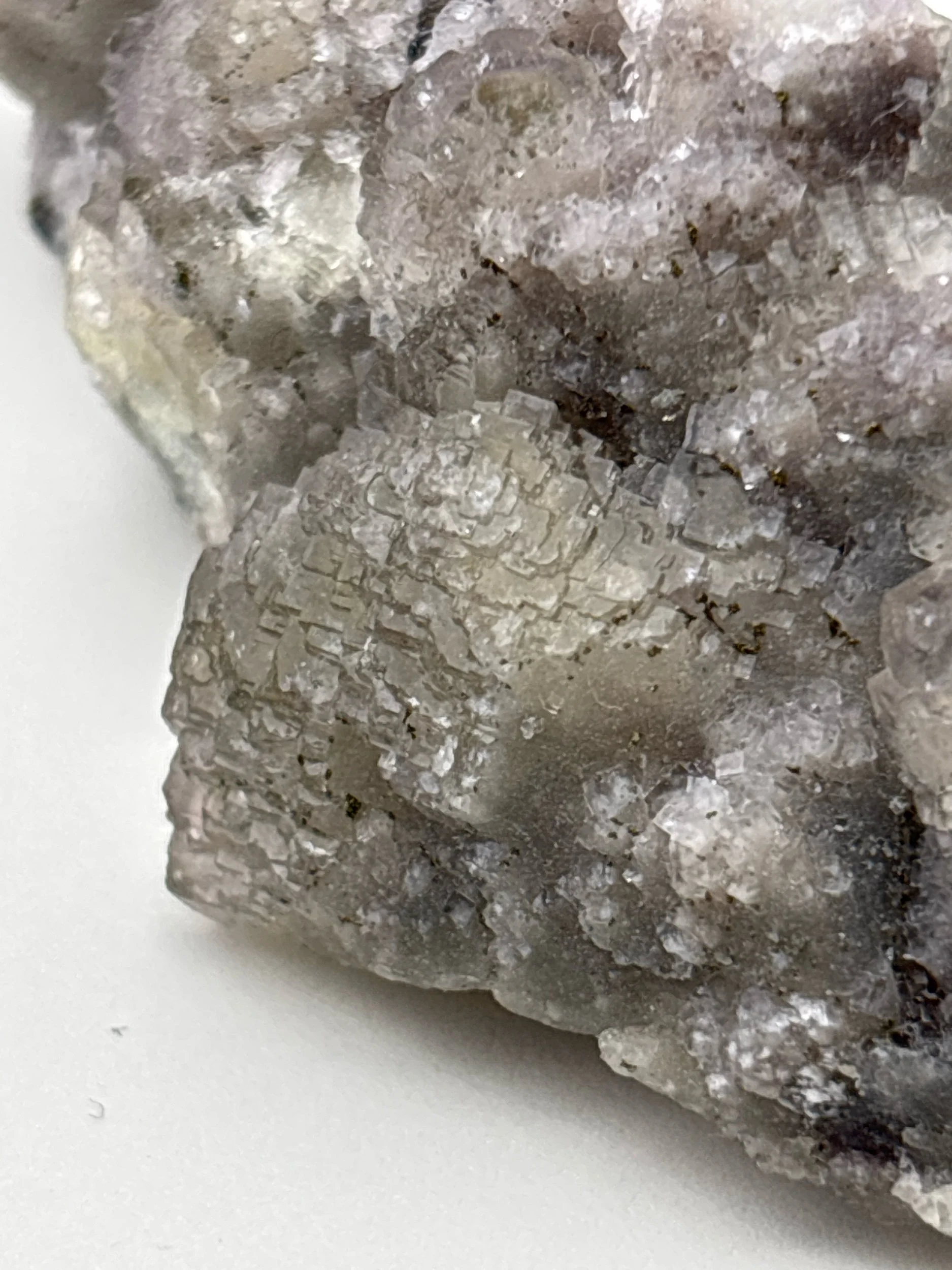
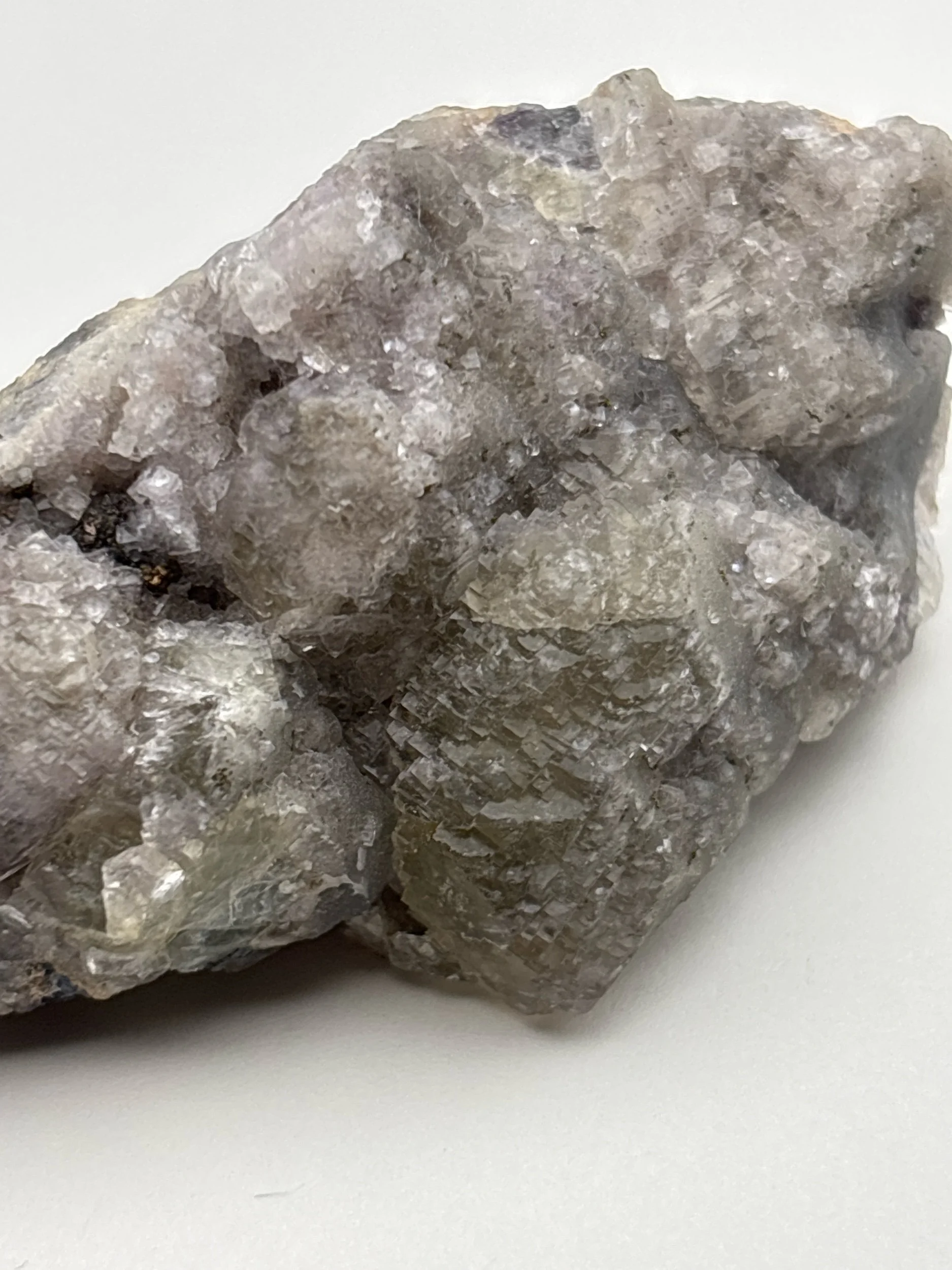


The many mines of Butte amount to over 11,000 miles of workings below the city. Without specific provenance, it’s nearly impossible to associate specimens with specific mines. The “richest hill on earth” first originated as a mining camp for gold but would later rapidly develop into one of the world’s most historic sulfide deposits. Rich veins of covellite, chalcocite, enargite, and other minerals as thick as 100 feet were stoped out, supplying the world with a large portion of its industrial copper.
This is a fairly simple, yet exceedingly rare example of fluorite from Butte. Seldom found available to collectors, Butte fluorite is one of the elusive species from the supergene polymetallic deposit that was observed in very minute quantities at best. Complex stepping is present across most faces, with strong fluorescence in ultraviolet light. I note 5 distinct crystal nucleation sites, intergrown together to almost entirely coat the matrix, of which small quartz and chalcopyrite can be seen.
Thank you so much for viewing! Please message for any further information
(2.4 × 1.2 × 1.3 in - 6.0 × 3.0 × 3.3 cm) 1.9oz / 55g
ORDERS SHIP MONDAYS
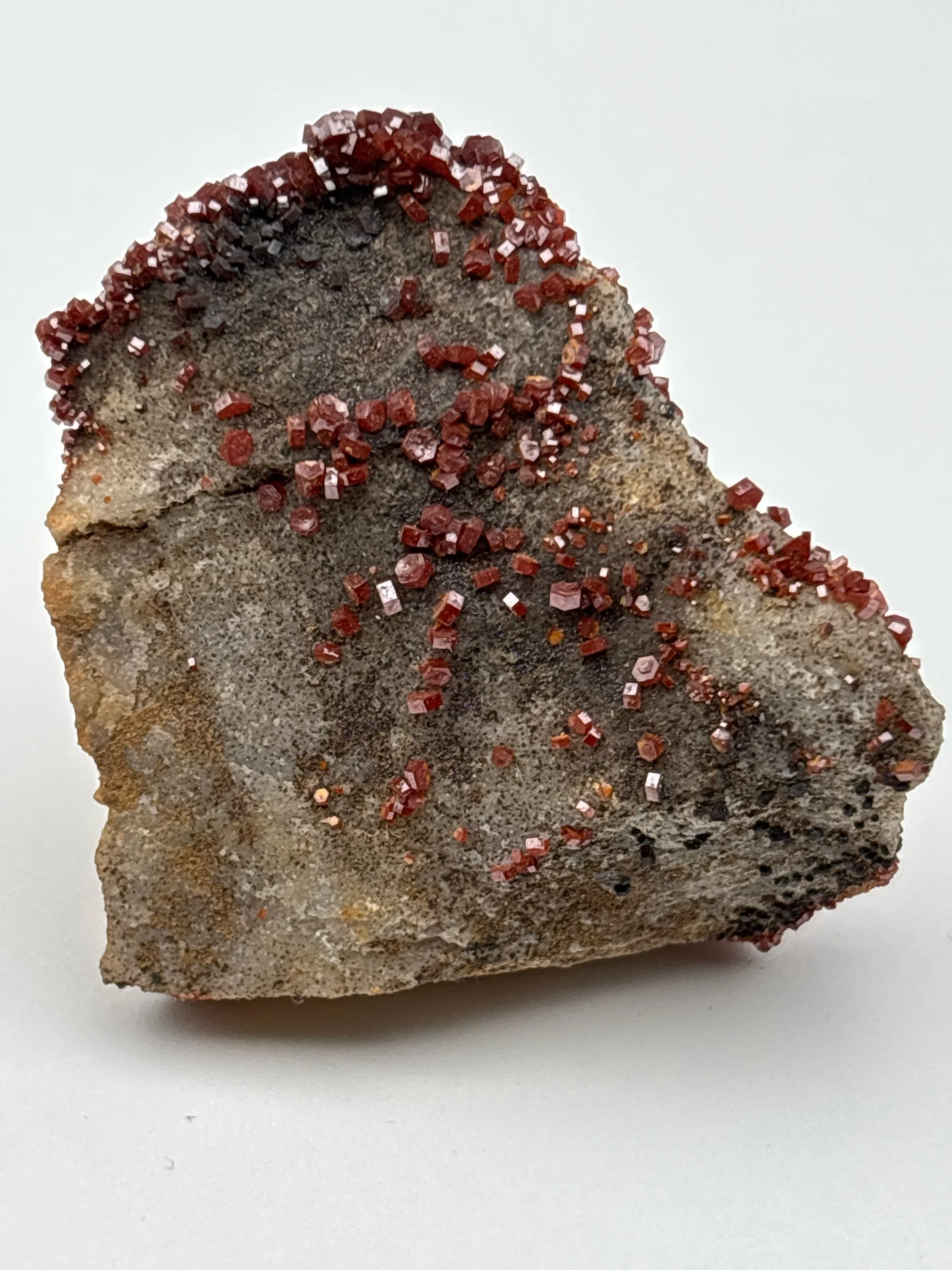
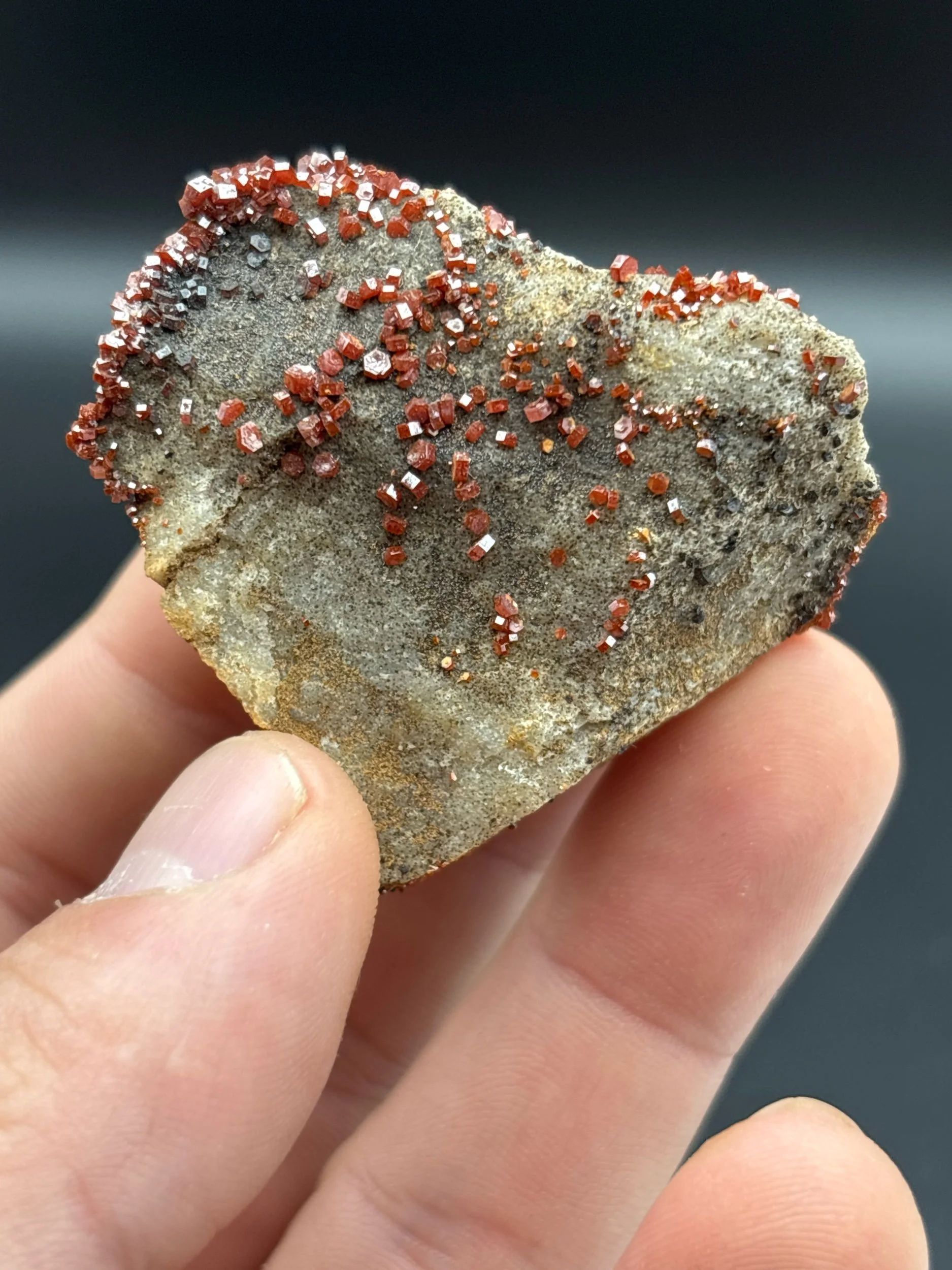


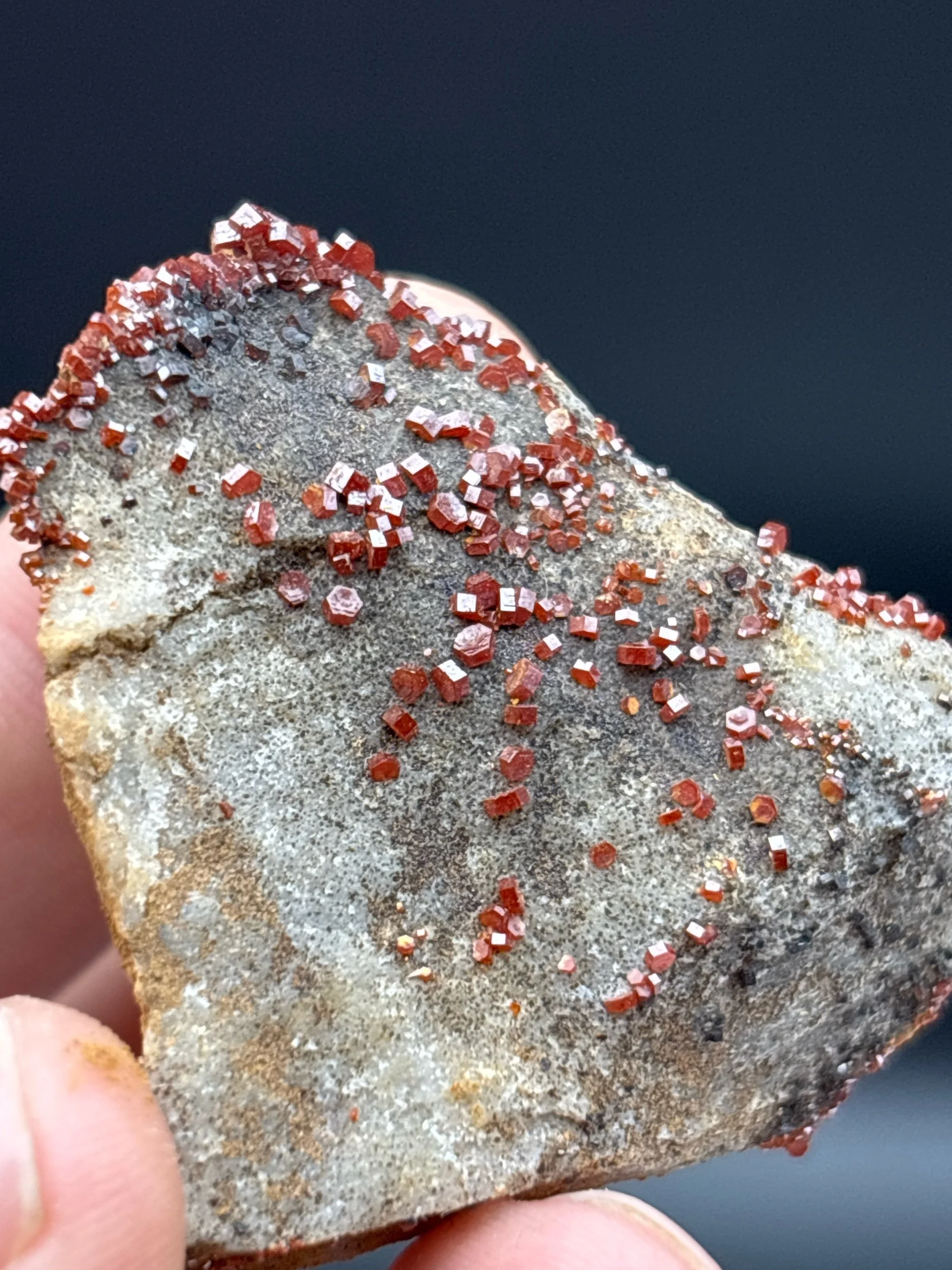

Situated in the Radersburg District of Montana, the underground workings explored a narrow orebody along a fault planecutting Paleozoic Quadrant Quartzite. The mine produced ores valued for their silver and lead content, but only a roughly 200 meter long adit was ever worked.
This is a classic miniature example of vanadinite from the Jo Jo mine. Small, red, hexagonal crystal scatter across a matrix of altered Madison quartzite. Every angle of the specimen displays some level of crystallization
Thank you so much for viewing! Please message for any further information
(1.9 × 1.3 × 1.4 in - 4.8 × 3.3 × 3.5 cm) 1.4oz / 40g
ORDERS SHIP MONDAYS
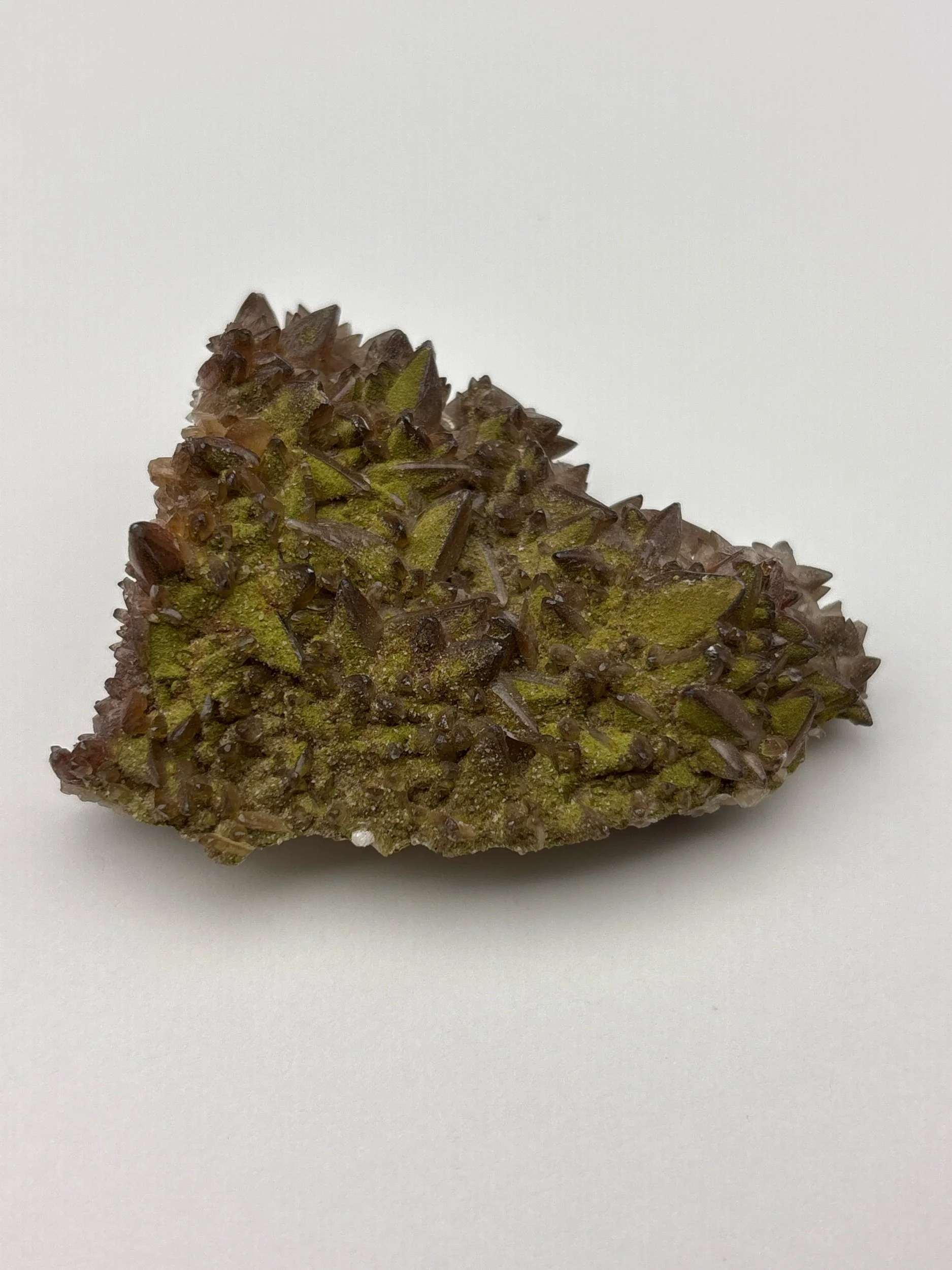


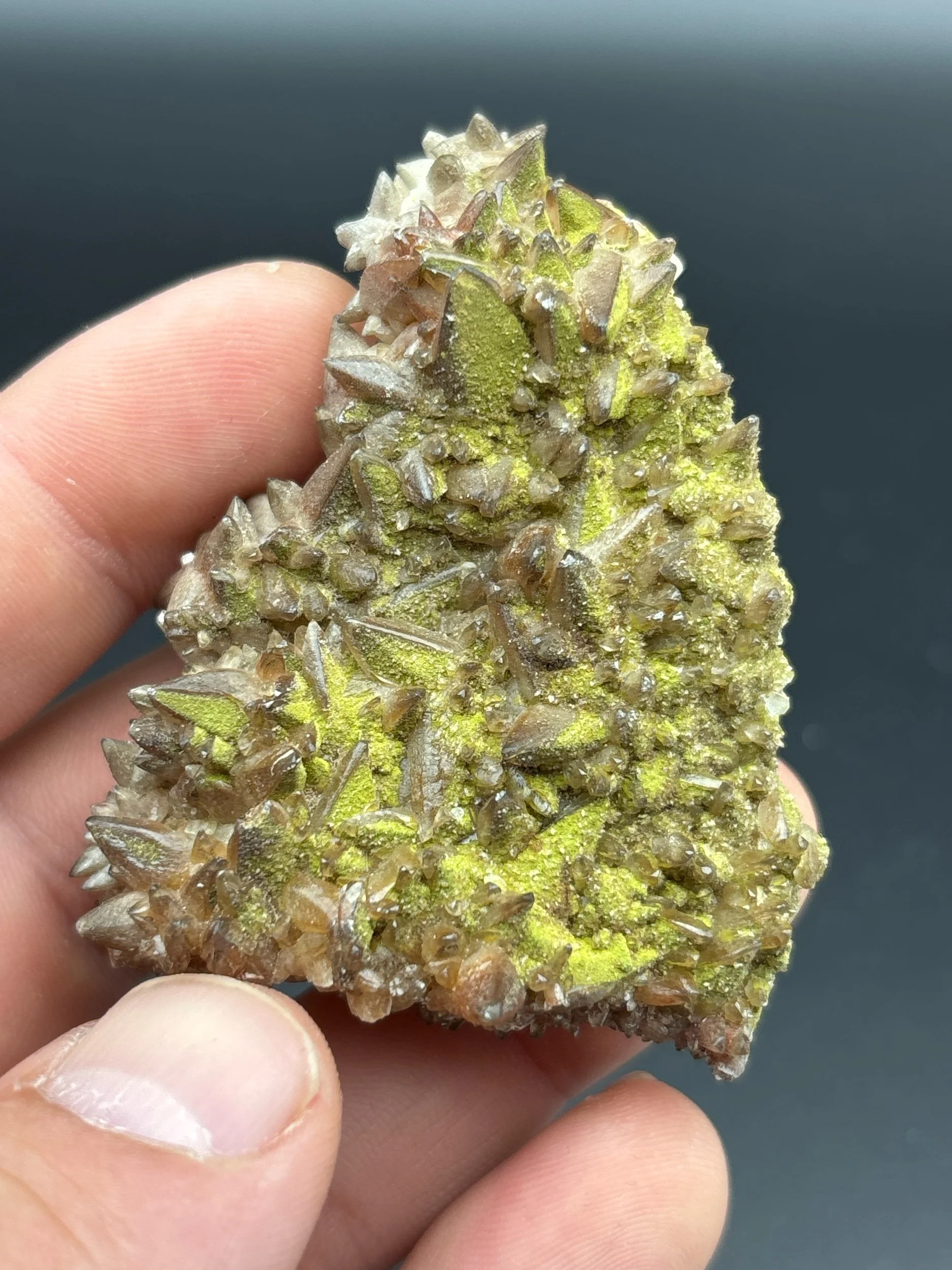
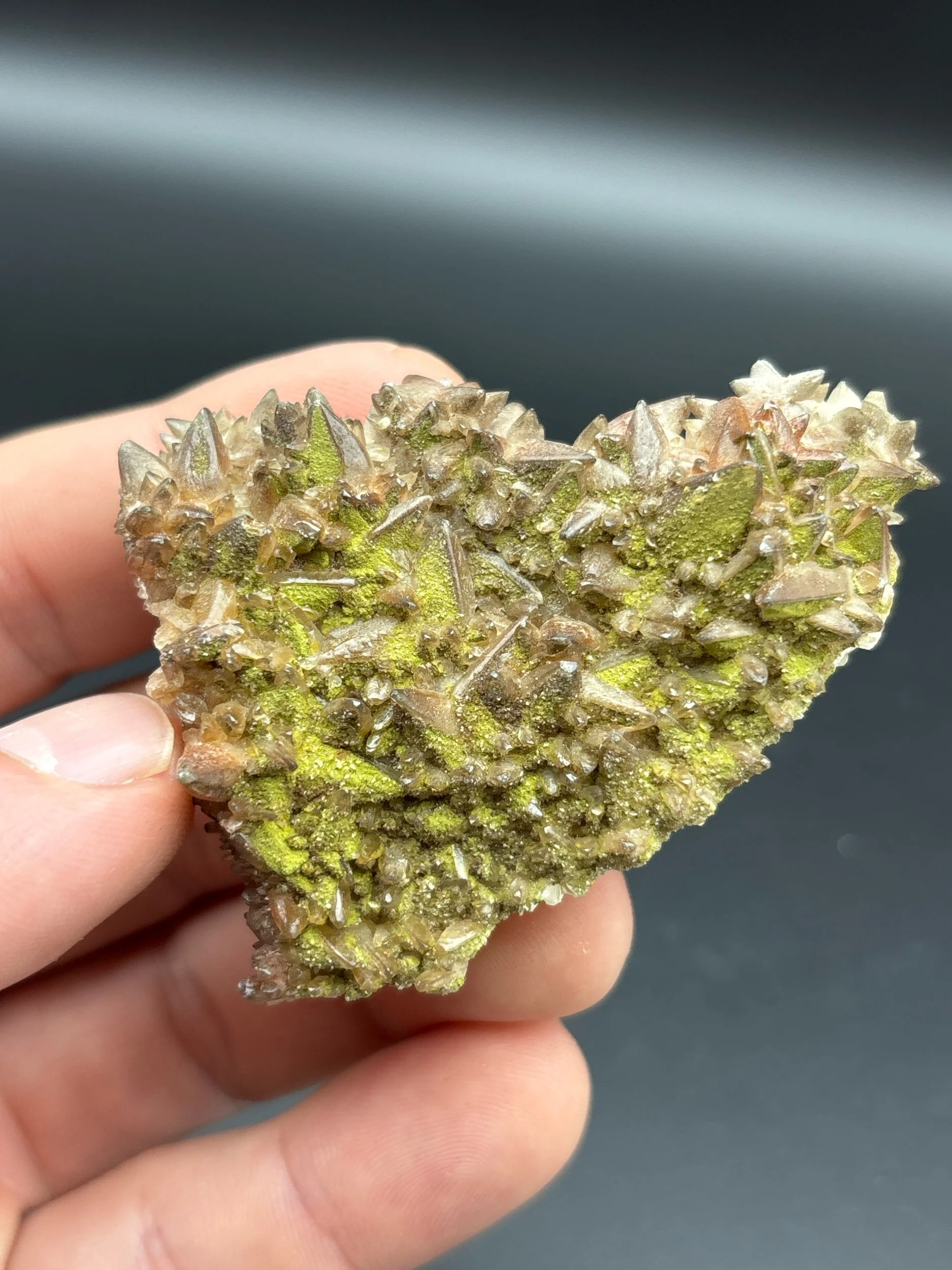
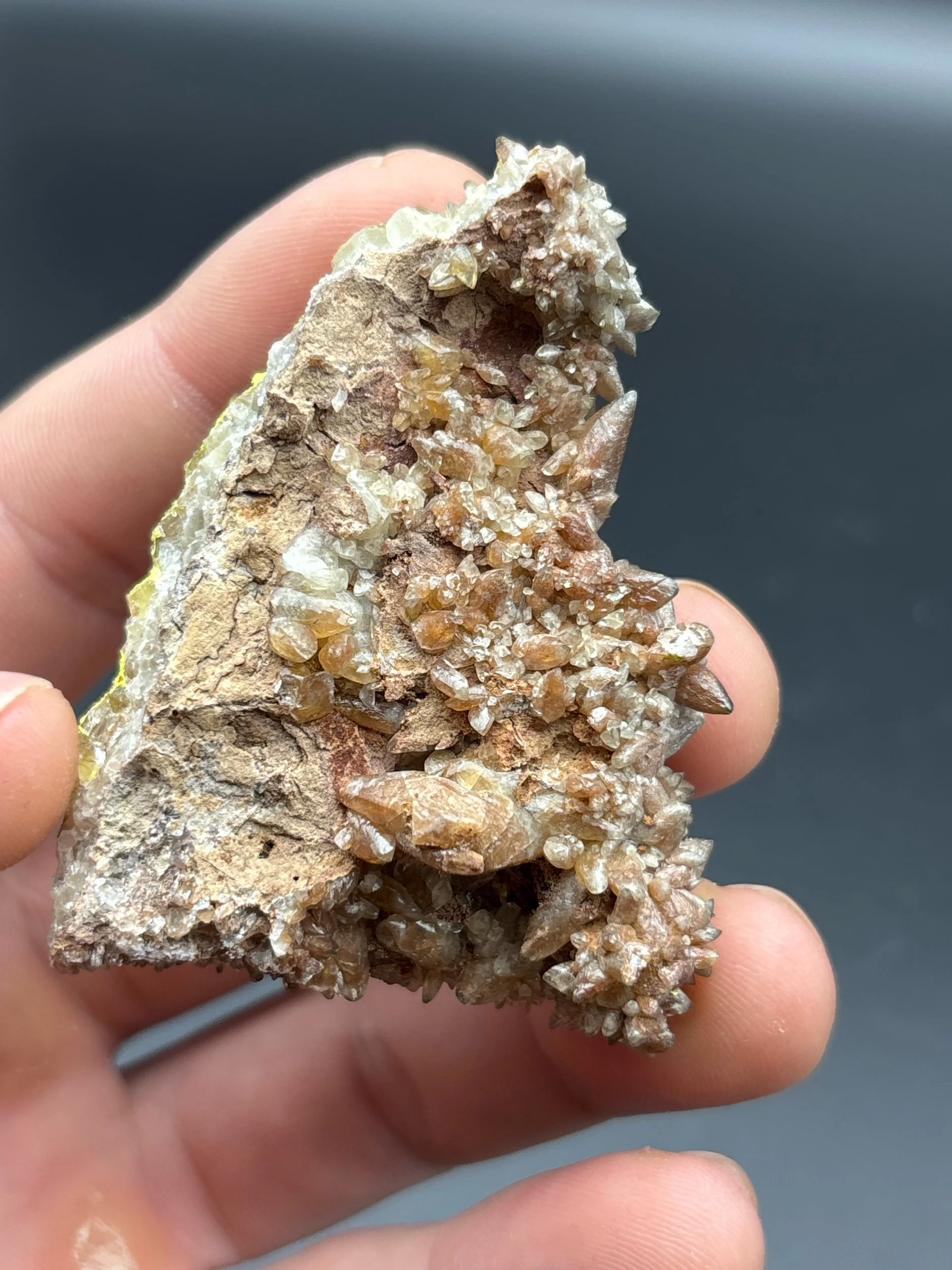
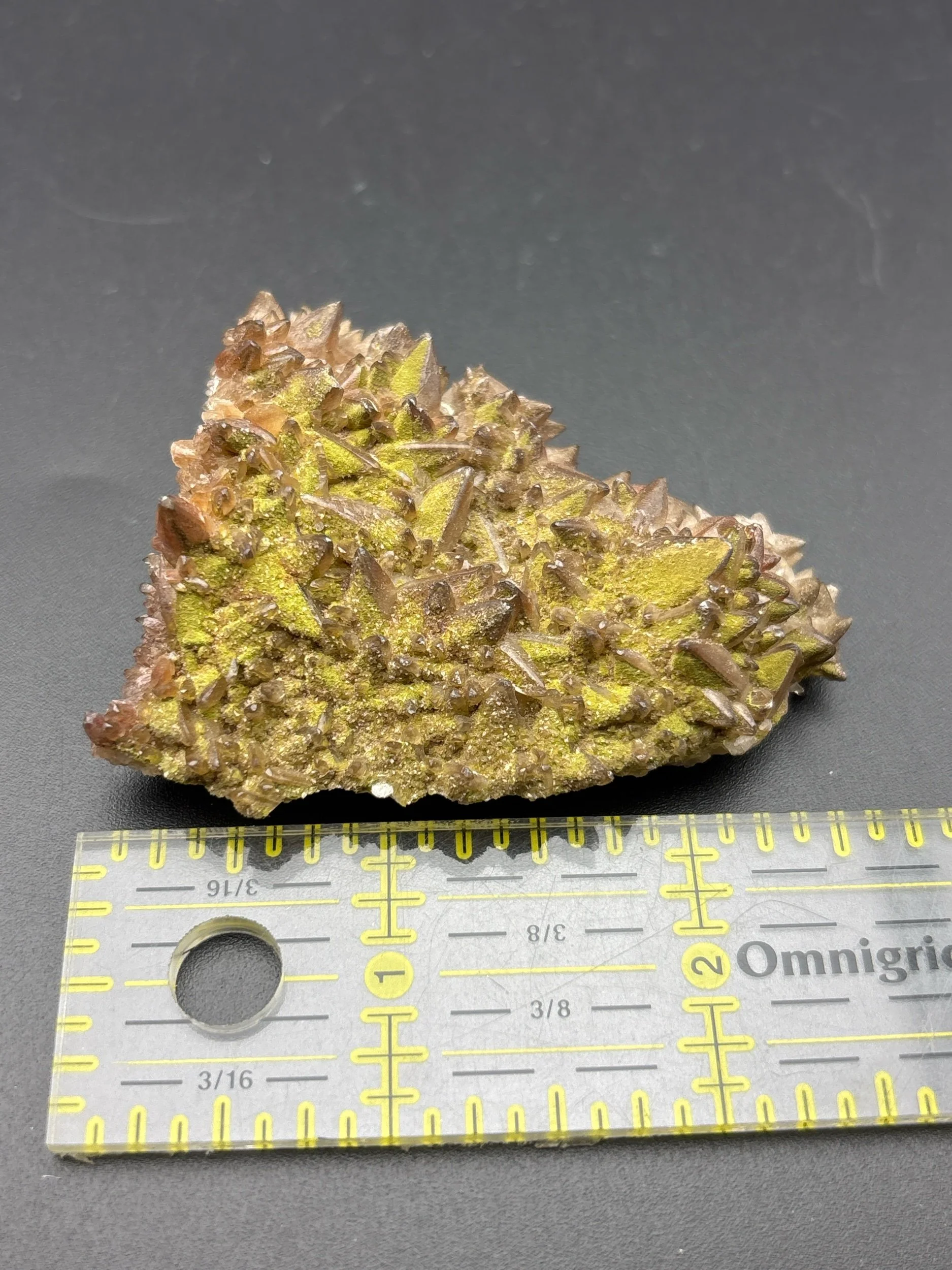
A famous find in the 1960s by the late Bud Erhle, the tyuyamunite from the Dandy and Marie mines is considered some of, if not the best in the world for species. Very few quality examples exist! NOTE: THIS SPECIMEN IS RADIOACTIVE
This is a fine quality example of the legendary tyuyamunite and calcite from the Dandy Mine. Collected in the late 1960s, this material is not only scarce, but few examples even exist! This plate displays wonderfully and has excellent overall aesthetic.
Thank you so much for viewing! Please message for any further information
(2.4 × 1.9 × 0.9 in - 6.0 × 4.8 × 2.2 cm) 1.5oz / 43g
ORDERS SHIP MONDAYS
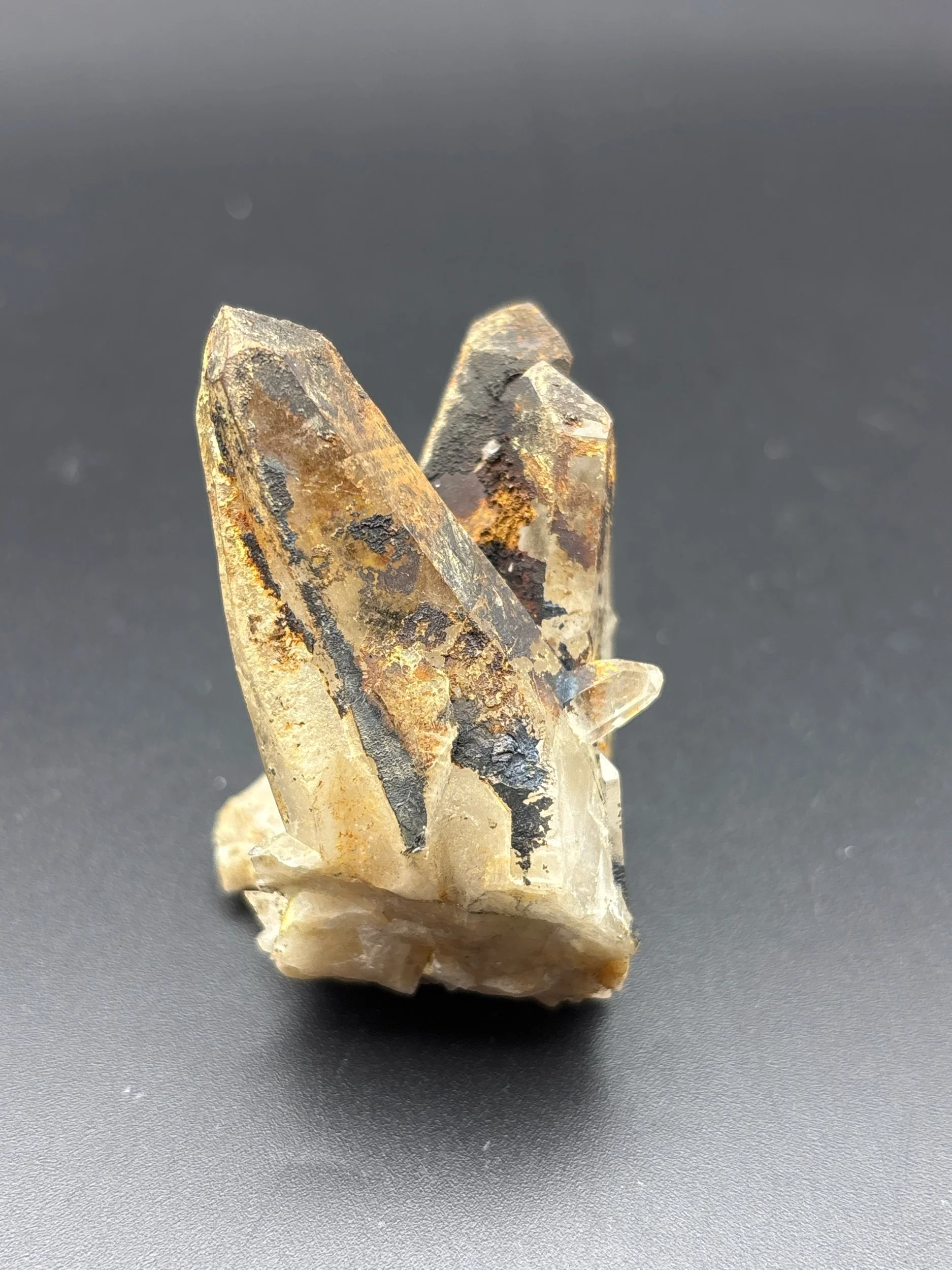
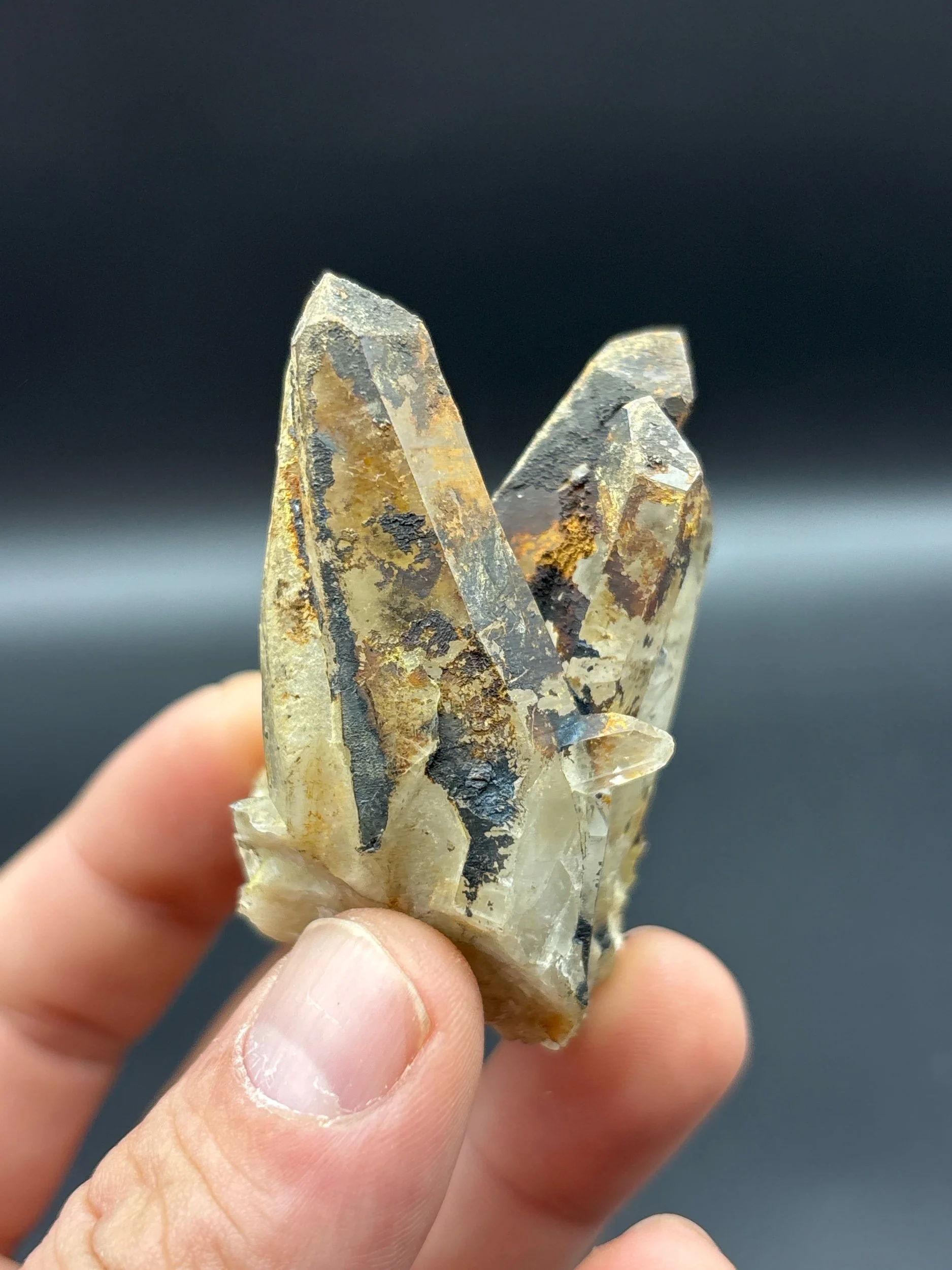


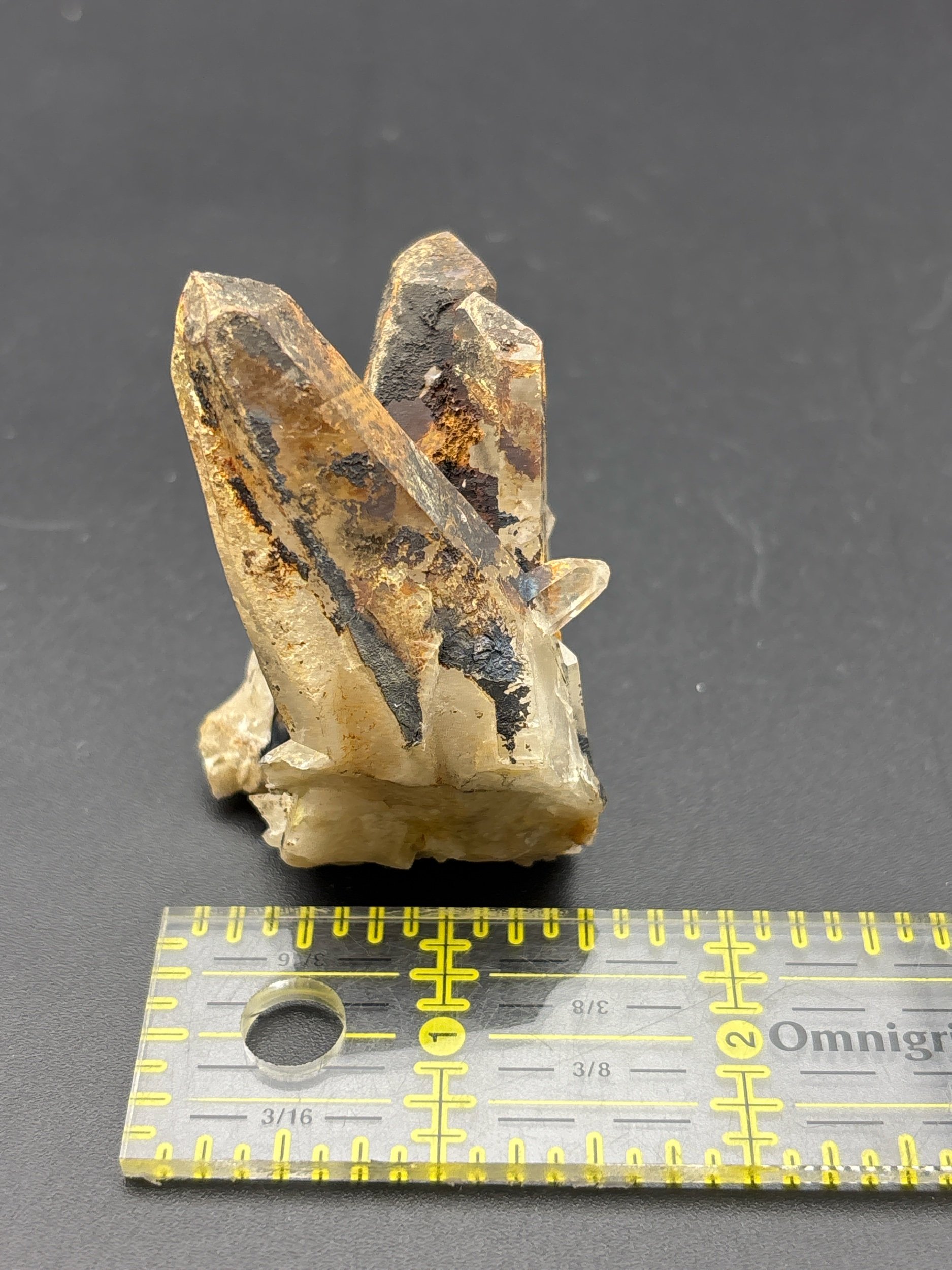
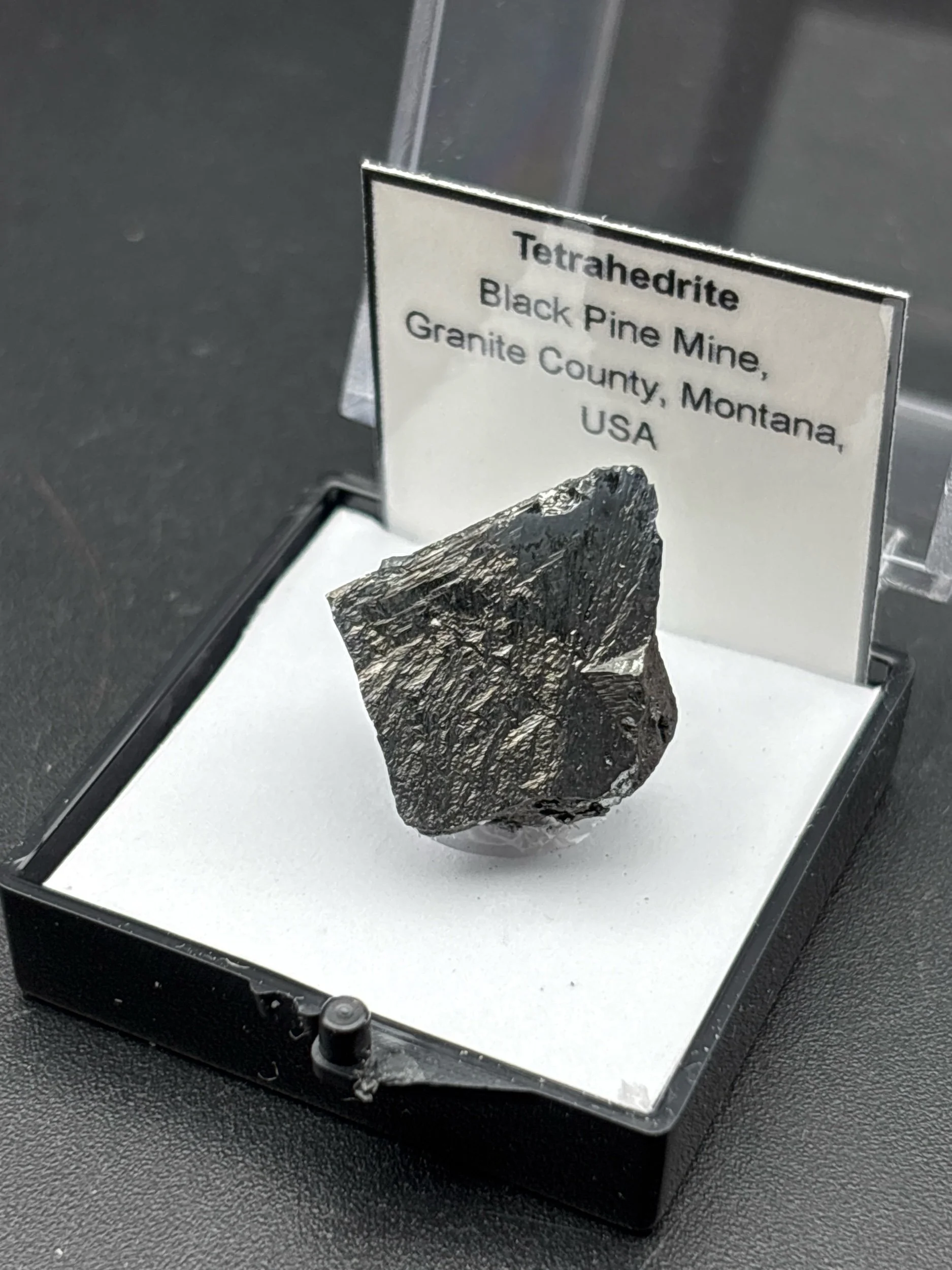
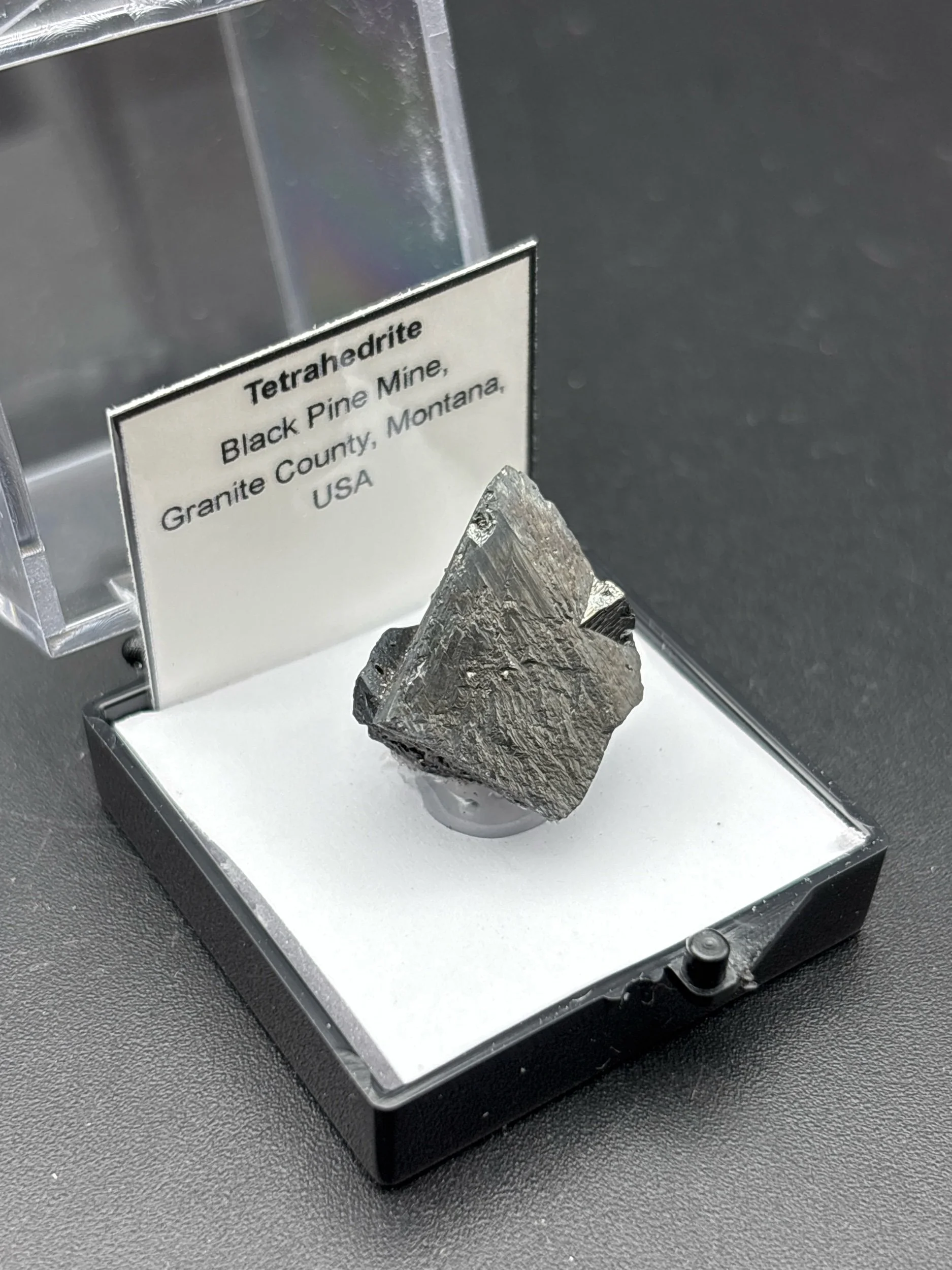
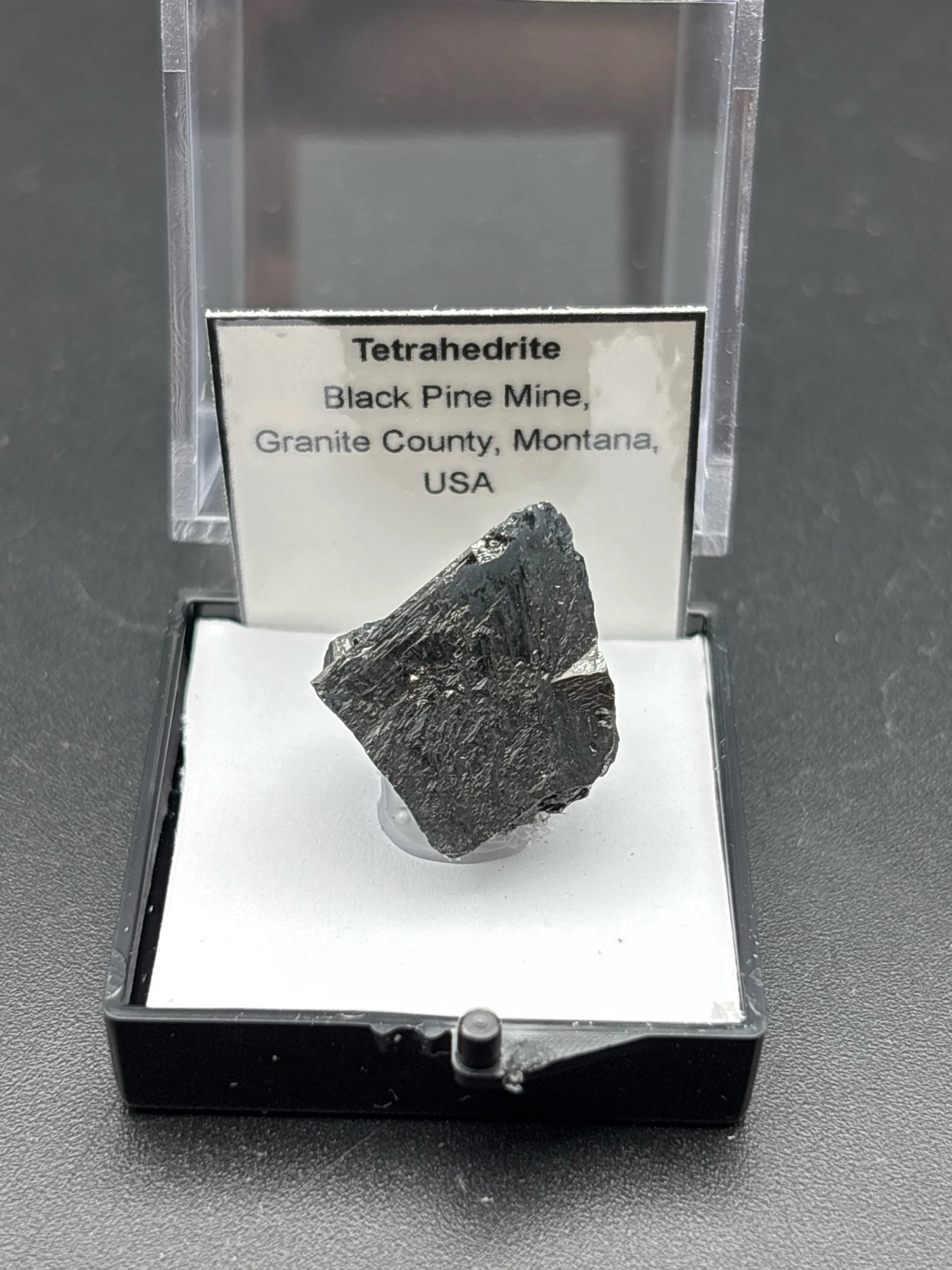
The Black Pine Mine was an industrial polymetallic deposit hosted in Missoula quartzite and spokane shale. The mine had an operational history older than Montana’s statehood, first discovered in 1882, with a rocky ownership to follow. It changed hands and operations several times before its final shutdown in 2018. Professional specimen collecting only occurred during a short window in the 80s, under contract agreement with Inspiration Copper and Duane Johnson. The site now lies on private state land and is an active DEQ cleanup site.
Complex mineral assemblages were present in the Black Pine. Heavily oxidized veins hosted a vast array of copper, zinc, and iron minerals, among others. Primary metallics were tetrahedrite, pyrite, hubnerite, sphalerite, and galena. Through oxidation, some of the most unique combinations and examples in the world were produced, including 3 type locality species and the largest examples of veszelyite in the world.
This is a small but superb example of iron dominant oxides partially coating a cluster of quartz crystals, one of which displays offset japan-law twinning. The specimen sets and displays quite well naturally, creating a focal view of the law twin. Offset law twins are among the most common in the Black Pine. This is a classic example
Thank you so much for viewing! Please message for any further information
(2.3 × 1.6 × 1.4 in - 5.8 × 4.0 × 3.5 cm) 2.6oz / 73g
ORDERS SHIP MONDAYS
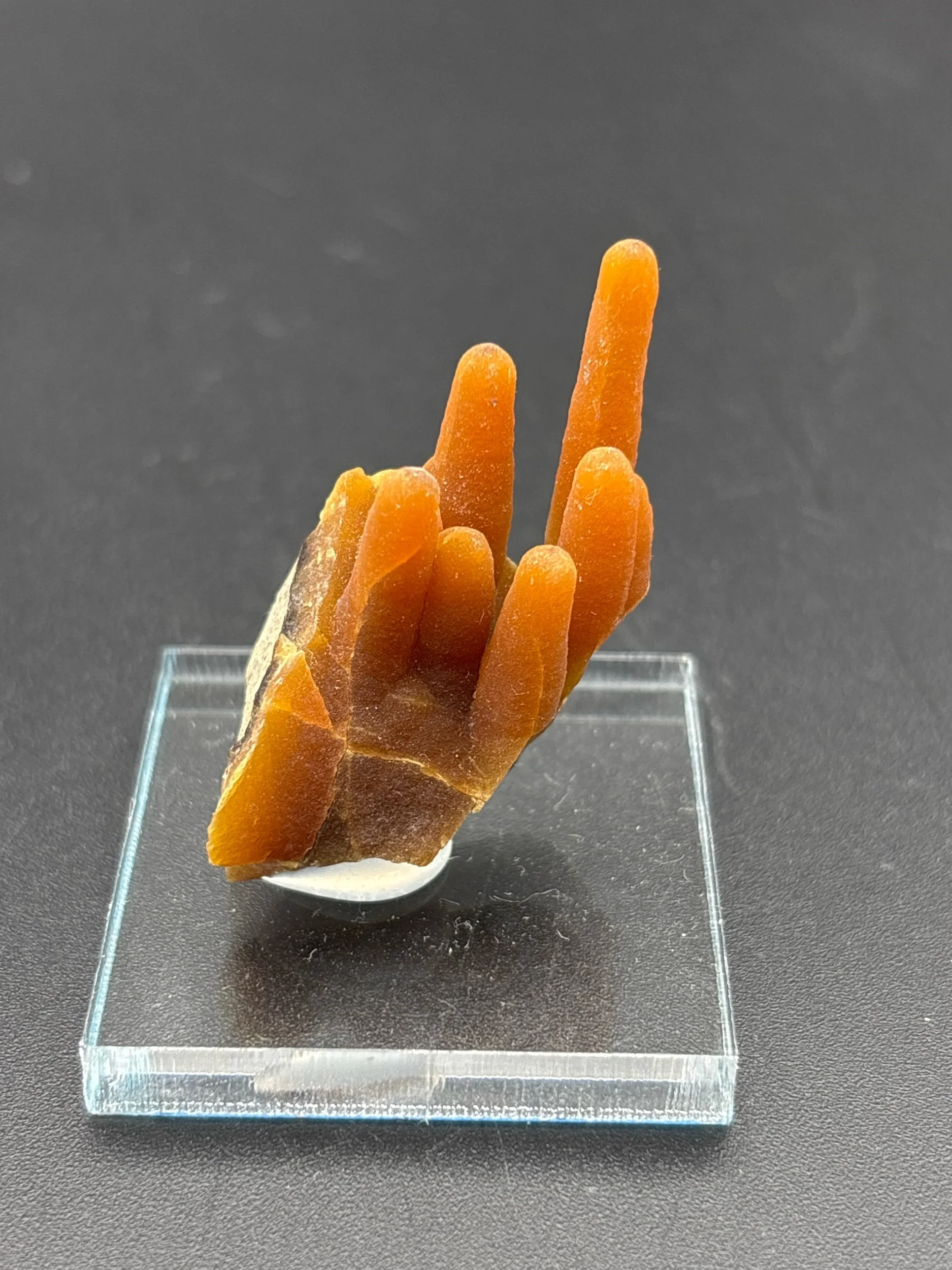
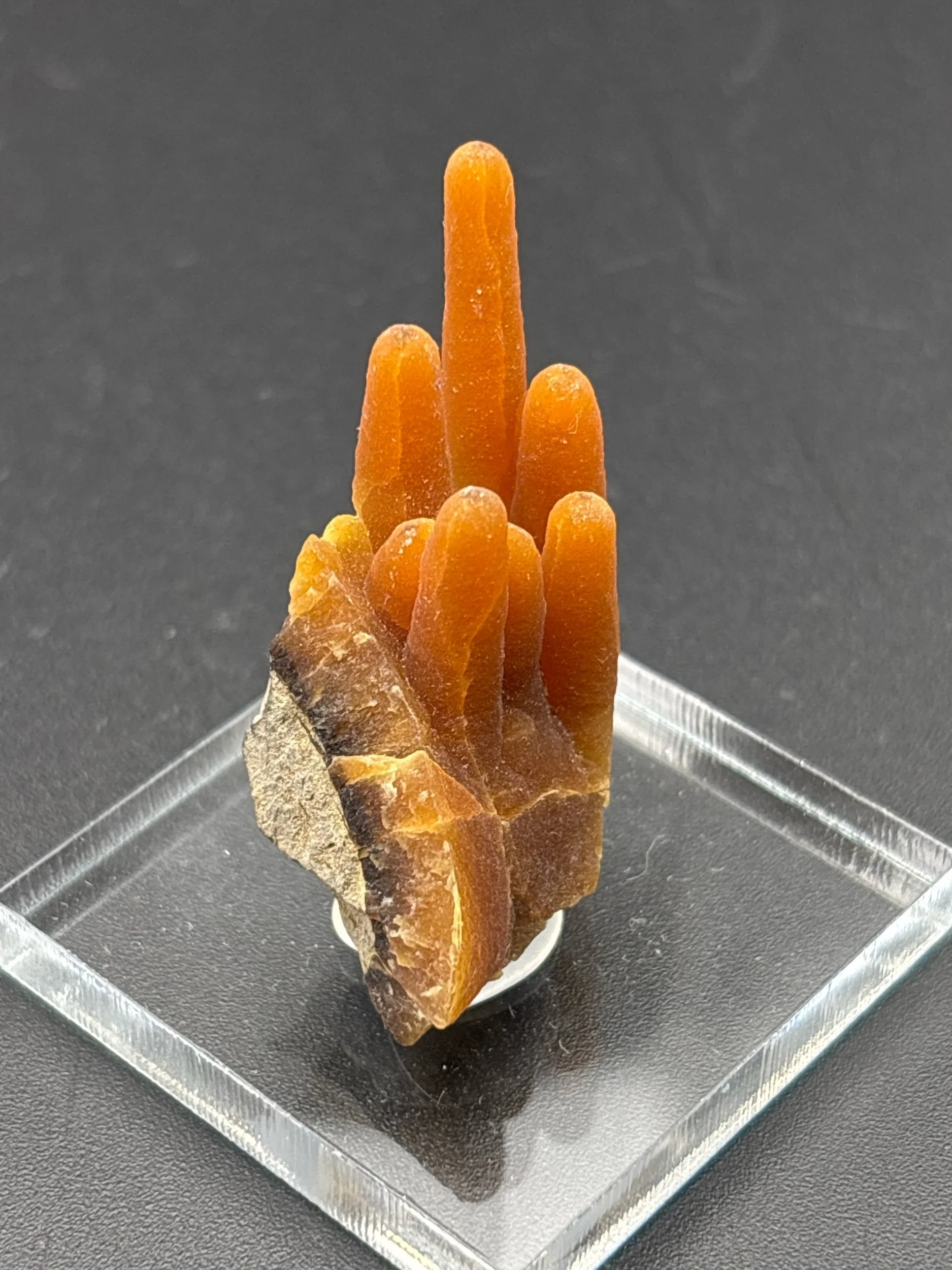


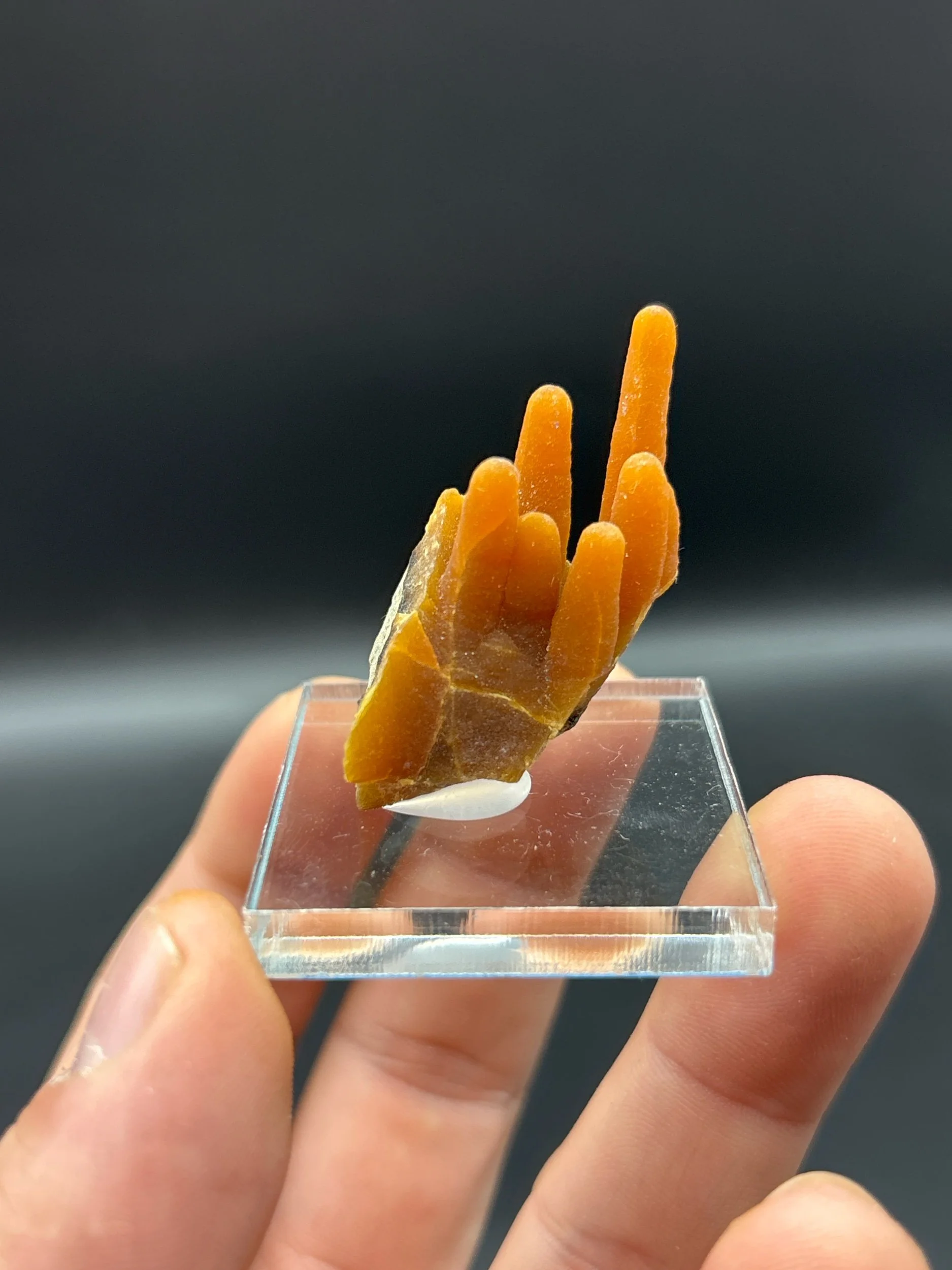
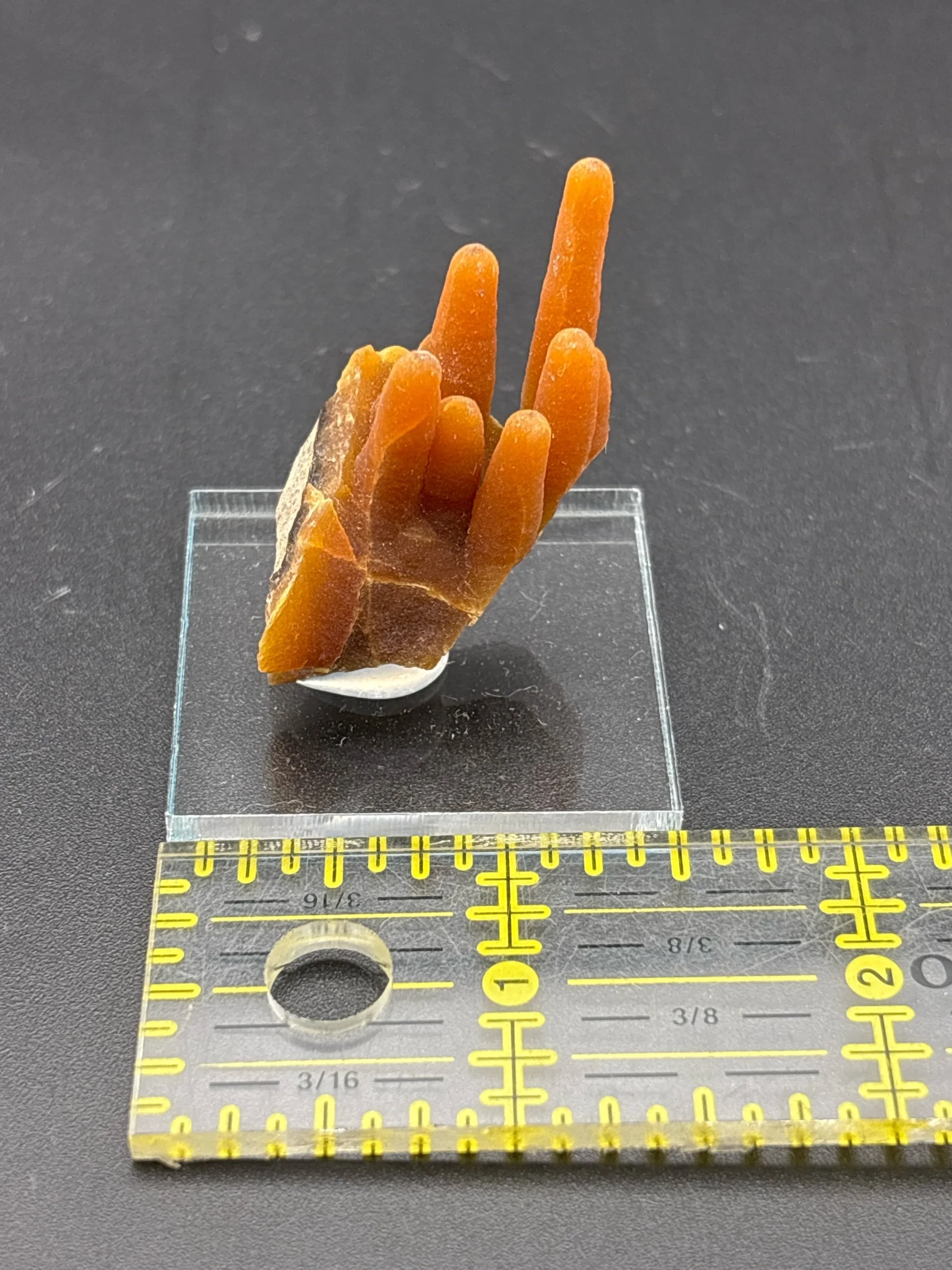
A famous find in the 1970s by the late Bud Erhle, the signature calcite “fingers" of Carter County have long been a sought-after classic for collectors. Formed in concretion in the Pierre and bear paw shale, there are actually apparently several locales for the material. The crystal forms are often coated in a thick late-stage crust that is only removed by vinegar etching. Baryte, and selenite are known to form as well in the same concretions, which on occasion have fossils.
This is a classic miniature example of the historic and classic calcite “fingers” from Carter County. No damage is present to the crystal. This piece has been treated at some point with vinegar to remove the crusts. Non permanently mounted to acrylic.
Thank you so much for viewing! Please message for any further information
(1.0 × 1.4 × 0.6 in - 2.5 × 3.5 × 1.5 cm) 0.7oz / 21g (with base)
ORDERS SHIP MONDAYS


A famous find in the 1970s by the late Bud Erhle, the signature calcite “fingers" of Carter County have long been a sought-after classic for collectors. Formed in concretion in the Pierre and bear paw shale, there are actually apparently several locales for the material. The crystal forms are often coated in a thick late-stage crust that is only removed by vinegar etching. Baryte, and selenite are known to form as well in the same concretions, which on occasion have fossils.
This is a classic miniature example of the historic and classic calcite “fingers” from Carter County. No damage is present to the crystal. This piece has been treated at some point with vinegar to remove the crusts. Non permanently mounted to acrylic.
Thank you so much for viewing! Please message for any further information
(2.5 × 0.4 × 0.3 in - 6.3 × 1.0 × 0.7 cm) 0.65oz / 18g (with base)
ORDERS SHIP MONDAYS


History of the Crazy Sphinx is spotty, but specimens have been dated back to the early 30s in some collections. The deposit is a very small, mineralized zone in a skarn zone related to the broader boulder batholith. The mine is still worked for specimens in the present day, the main prizes being cobalt blue colored spinel and white grossular garnets. Minor amounts of clinozoisite, schorl, and clintonite are also present. The deposit is extremely difficult to mine, and virtually all spinel occur encased entirely in garnet or vesuvianite. It is extremely rare to see otherwise. Only a handful of localities worldiwde produce blue spinel, with this being the best USA locale!
This specimen features a deep blue colored spinel group, which has been revealed through careful matrix prep. While the crystals are small, they have superb color and are nicely terminated for the locale. Quite a nice example of a Montana classic.
Thank you so much for viewing! Please message for any further information
(1.4 × 1.2 × 0.9 in - 3.5 × 3.0 × 2.2 cm) 1.7oz / 49g
ORDERS SHIP MONDAYS


Initially discovered in 1887, the Summit Mine lies in the Radersburg district in the southern part of Broadwater County. The finest hemimorphite in the USA come from this locality, as well as numerous other interesting and uncommon minerals. The mine has been inactive for some time and lies on private property.
This is a classic example of Mottramite on descloizite matrix. Only occuring at depth in one area of the mine, this material is quite rare indeed. Accompanied by the label of Chris Tucker. Chris is undoubtedly the collector of the specimen, as he wrote several articles on the mine as well as is known to have collected there.
Thank you so much for viewing! Please message for any further information
(2.7 × 1.6 × 1.0 in - 6.8 × 4.0 × 2.5 cm) 2.8oz / 78g
ORDERS SHIP MONDAYS


The many mines of Butte amount to over 11,000 miles of workings below the city. Without specific provenance, it’s nearly impossible to associate specimens with specific mines. The “richest hill on earth” first originated as a mining camp for gold but would later rapidly develop into one of the world’s most historic sulfide deposits. Rich veins of covellite, chalcocite, enargite, and other minerals as thick as 100 feet were stoped out, supplying the world with a large portion of its industrial copper.
This is a fairly simple, yet elegant example of pyrite with a light tarnish to the surface. The tarnish gives a blue color, which accents the gold of the pyrite quite uniquely. From the deep Butte mines, this piece represents rich history in the mining world.
Thank you so much for viewing! Please message for any further information
(2.0 × 1.2 × 1.0 in - 5.0 × 3.0 × 2.5 cm) 3.1oz / 87g
ORDERS SHIP MONDAYS


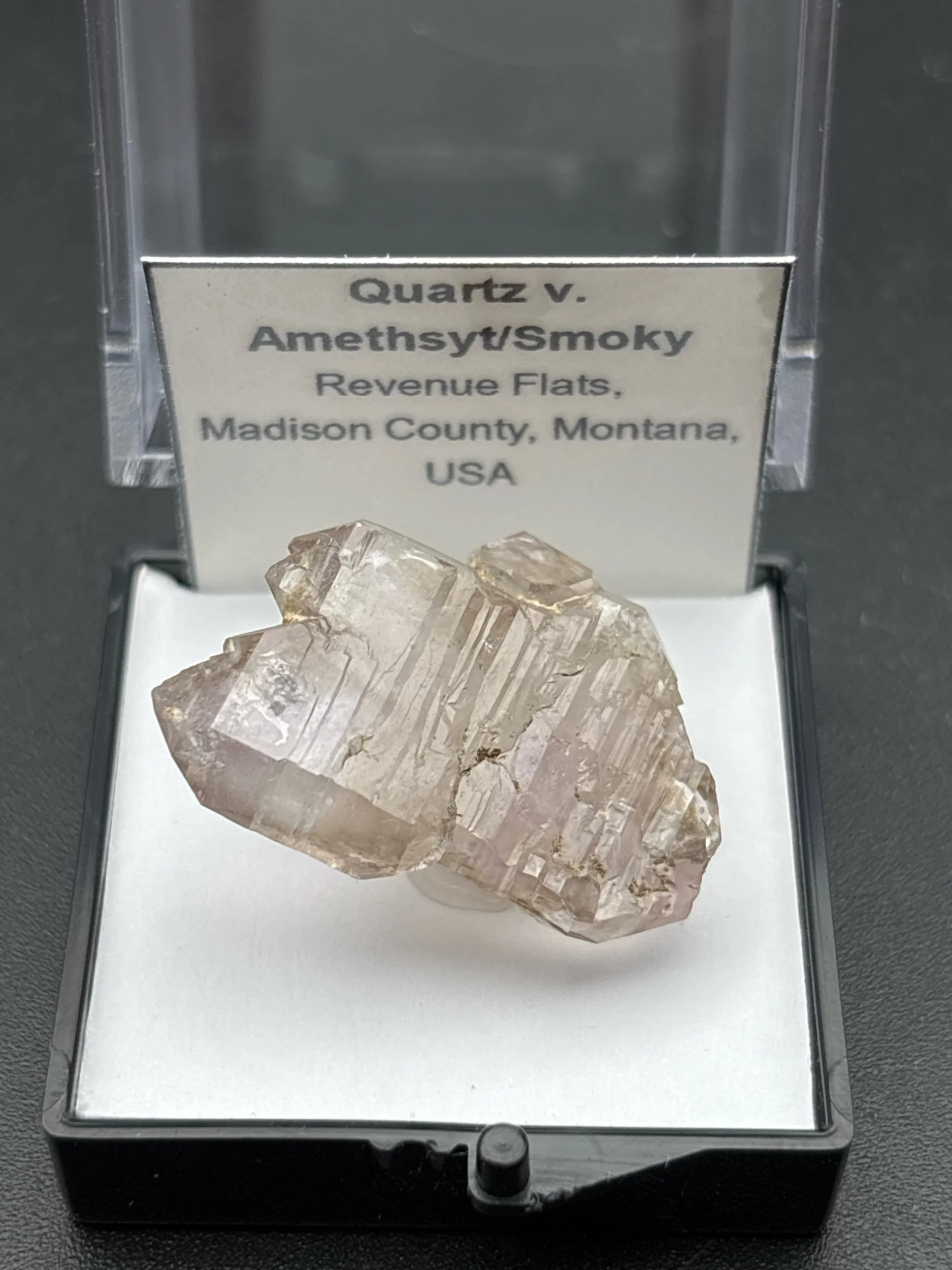
Revenue Flats is a plateau crosscut by numerous quartz veins and mining prospects. Early work focused on gold mining, and continues in the present day at a small scale. However, the area became known and popular to collectors in the early 1970s upon publication by Doug Toland. Largely, the crystals at this locality are clear, but some can be amethyst as well. Japan law twins are extremely rare and seldom seen.
This is an example of amethyst overgrowing micro quartz needles, which are visible at one face of the specimen. The color is pale, as is most of the amethyst from this locality. Accompanied by the label of the late Chuck Borland.
Thank you so much for viewing! Please message for any further information
(1.6 × 0.9 × 1.2 in - 4.0 × 2.2 × 9.6 cm) 1.2oz / 35g
ORDERS SHIP MONDAYS


First claimed in 1959 by Emil Chiline and George Richardson, Crystal Park has a long standing history of being one of Montana’s most known locations. In 1993, it would become a fee recreation site administered by the Forest Service. Smoky quartz, amethyst, scepters, and (rarely) Japan law twin quartz can be found. The site is a hydrothermal breccia in the granite of the Pioneer Mountain range, part of the Pioneer Batholith.
This crystal comes from the estate of Bud Erhle, in a flat labeled “1970s Crystal Park”. The crystal in question is a remarkably nice amethyst scepter form, with excellent color. Quality like this is uncommon from crystal park, especially in the modern era of collecting. There is a small ding on the tip, as most tend to have. The specimen is non permanently mounted to an acrylic base.
Thank you so much for viewing! Please message for any further information
(1.8 × 1.0 × 1.2 in - 4.5 × 2.5 × 9.6 cm) 2.0oz / 55g (with base)
ORDERS SHIP MONDAYS


The Black Pine Mine was an industrial polymetallic deposit hosted in Missoula quartzite and spokane shale. The mine had an operational history older than Montana’s statehood, first discovered in 1882, with a rocky ownership to follow. It changed hands and operations several times before its final shutdown in 2018. Professional specimen collecting only occurred during a short window in the 80s, under contract agreement with Inspiration Copper and Duane Johnson. The site now lies on private state land and is an active DEQ cleanup site.
Complex mineral assemblages were present in the Black Pine. Heavily oxidized veins hosted a vast array of copper, zinc, and iron minerals, among others. Primary metallics were tetrahedrite, pyrite, hubnerite, sphalerite, and galena. Through oxidation, some of the most unique combinations and examples in the world were produced, including 3 type locality species and the largest examples of veszelyite in the world.
This is a small but superb example of iron dominant oxides coating a plate of quartz crystals. Micro crystals of beudantite are present with jarosite, hematite, and heavy goethite. A lesser seen example, as the copper oxides tend to dominate the environment.
Thank you so much for viewing! Please message for any further information
(2.6 × 1.6 × 0.9 in - 6.6 × 4.0 × 2.2 cm) 2.0oz / 57g
ORDERS SHIP MONDAYS


The PC Mine has minimal history beyond is specimen production, which first dates to 1983. At that time, the privately owned land was partly lease from Forest Klies by W. C. Van Laer, until 1987. In 1988, Pete Knudsen, Bryant Harris, and Elvis “Buzz” Gray acquired the mining lease and Knudsen would later assume full ownership in 1990. By 2005 any workable breccia was considered mined out. The deposit sits at river level on a private land cabin site. The mine was most well known for its production of Japan Law twin crystals, and tourmaline included quartz crystals. In addition, excellent gem quality sphalerite was also present, with galena, anhydrite and pyrite as well.
This specimen classic doubly terminated quartz with just the right amount of tourmaline! The aesthetics speak for itself. Some abrasion is present, but is largely accepted from the locale due to the nature of the deposit. Excellent crystal, this is a great representative piece of a now closed, and classic Montana locale!
Thank you so much for viewing! Please message for any further information
(2.6 × 1.4 × 1.5 in - 6.6 × 3.5 × 3.8 cm) 3.3oz / 95g
ORDERS SHIP MONDAYS


The PC Mine has minimal history beyond is specimen production, which first dates to 1983. At that time, the privately owned land was partly lease from Forest Klies by W. C. Van Laer, until 1987. In 1988, Pete Knudsen, Bryant Harris, and Elvis “Buzz” Gray acquired the mining lease and Knudsen would later assume full ownership in 1990. By 2005 any workable breccia was considered mined out. The deposit sits at river level on a private land cabin site. The mine was most well known for its production of Japan Law twin crystals, and tourmaline included quartz crystals. In addition, excellent gem quality sphalerite was also present, with galena, anhydrite and pyrite as well.
This specimen classic doubly terminated quartz with just the right amount of tourmaline! The aesthetics speak for itself. Some abrasion is present, but is largely accepted from the locale due to the nature of the deposit. Excellent crystal, this is a great representative piece of a now closed, and classic Montana locale!
Thank you so much for viewing! Please message for any further information
(2.3 × 0.9 × 1.0 in - 5.8 × 2.2 × 2.5 cm) 1.6oz / 44g
ORDERS SHIP MONDAYS


Agate deposits in the Dryhead area of the Pryor Mountains in Big Horn County, Montana, became known to collectors in the mid-20th century when prospectors followed scattered agate nodules found on the surface back to their source layers. These nodules, later called Dryhead agates, formed within sedimentary rocks and often contain colorful banding, although only a small portion produce gem-quality material. Beginning in the 1950s, rockhounds and small claim holders conducted limited mining, typically removing nodules by hand or with light equipment. Interest from collectors grew through the 1960s and 1970s, and for a period the site operated as a fee-dig area where visitors could search for agates themselves. As the more accessible material became scarce and the location proved difficult to work economically, organized mining activity declined during the 1980s and 1990s. Today, most Dryhead agates circulating among collectors were recovered during those earlier decades of exploration and small-scale mining, however mining operations have been recently reopened at a small scale!
This specimen is a classic example of face-polished Dryhead agate with intense orange banding. Not automatically polished, the gently domed edges reveal this piece to be handwork, a show of more love and attention. This nodule has some excess matrix, which could be worked further to reveal more pattern! This specimen comes from 2025 production. UV is shortwave reaction (254nm)
Thank you so much for viewing! Please message for any further information
(2.7 × 1.4 × 1.7 in - 6.8 × 3.5 × 4.3 cm) 5.2oz / 146g
Orders ship Mondays


The Burlington Mine in Butte, Montana, developed during the late nineteenth and early twentieth centuries as part of the rapid expansion that followed the region’s early copper discoveries. It was one of many properties absorbed into the industrial network controlled by the Anaconda Copper Mining Company, which drove large-scale underground development across the district. Workings at the Burlington followed steep, mineralized veins at depth, contributing to Butte’s reputation as a major source of copper and associated metals. Over time, operations shifted and declined as richer ores were depleted and mining methods changed throughout the district. By the mid-twentieth century the mine had ceased activity, but it remains part of the broader historical framework of the Butte mining district.
This specimen features a bubblegum pink rhodochrosite crystals with a lesser amount of milky quartz points in the periphery. The specimen has been saw formatted, as many of the specimens from this site are just small vugs in otherwise large rock mass. The formatting does allow two excellent display angles however. Rhodochrosite from Butte is difficult to come by as good crystals, this is a great opportunity at an affordable piece!
Thank you so much for viewing! Please message for any further information
(3.3× 1.6 × 1.4 in - 8.3 × 4.0 × 3.5 cm) 4.9oz / 138g
ORDERS SHIP MONDAYS


A famous find in the 1970s by the late Bud Erhle, the signature calcite “fingers" of Carter County have long been a sought-after classic for collectors. Formed in concretion in the Pierre and bear paw shale, there are actually apparently several locales for the material. The crystal forms are often coated in a thick late-stage crust that is only removed by vinegar etching. Baryte, and selenite are known to form as well in the same concretions, which on occasion have fossils.
This is a classic miniature example of the historic and classic calcite “fingers” from Carter County. No damage is present to the crystal. This piece has been treated at some point with vinegar to remove the crusts. Non permanently mounted to acrylic.
Thank you so much for viewing! Please message for any further information
(2.0 × 0.2 × 0.2 in - 5.0 × 0.5 × 0.5 cm) 0.5oz / 15g (with base)
ORDERS SHIP MONDAYS


A famous find in the 1970s by the late Bud Erhle, the signature calcite “fingers" of Carter County have long been a sought-after classic for collectors. Formed in concretion in the Pierre and bear paw shale, there are actually apparently several locales for the material. The crystal forms are often coated in a thick late-stage crust that is only removed by vinegar etching. Baryte, and selenite are known to form as well in the same concretions, which on occasion have fossils.
This is a classic miniature example of the historic and classic calcite “fingers” from Carter County. No damage is present to the crystal. the crusts are still present, indicating this piece to be natural entirely and not vinegar treated, truly a rarity. Non permanently mounted to acrylic.
Thank you so much for viewing! Please message for any further information
(1.7 × 0.9 × 0.8 in - 4.3 × 2.2 × 2.0 cm) 0.8oz / 22g (with base)
ORDERS SHIP MONDAYS


The Little Gem Mine was discovered by local gold prospectors in 1886. An article in "The Mineralogist" written in 1941 describes the travel from Butte by covered wagon, to the Nine Mile Inn, then subsequent travel to the deposit where collectors "filled their packs with amethyst" during the original find. In 1958 a Claim was filed by Oregon Geologist Jerry Gray. Gray worked the surface sporadically for 30+ years, brought in heavy equipment to build road access in the early 1990's. His goal was to create a secure working environment protected from trespassers. He tunneled about 100 feet through solid granite to reach the core, where he then put a raise. The narrow raise follows an aplite zone upwards and east; the raise opened a series of pockets that he extended into a drift, which ran parallel to the core. The present owner, Russ Hage, purchased the claim after Gray's death. Hage and working partner Mike Uphus together brought to light innumerable fine specimens. In 2013 the old drift in aplite was de-roofed and its access buried. In summer of 2022, local prospector Paul Senn took over mine management working side by side with owner Russ Hage. Since 2010 it has been worked from the surface, primarily by hand aided by small scale blasting and an excavator. Current work has exposed many pockets containing fine amethyst scepters and jacare' texture amethyst. Jacare' is a Portuguese term denoting alligator skin texture.
This specimen is a beautiful miniature example of etched microcline with amorphous amethyst, harvested in the 2025 season. The amethyst is capping parent smoky quartz which is synonymous with the matrix. late-stage iron oxide include a final stage of silica creating a unique calico appearance to the quartz. This trait is only present in one area of the mine. The etched micocline is accented by pale green glittery sericite mica, an alteration mineral present throughout the mine.
Thank you so much for viewing! Please message for any further information
(2.1 × 2.2 × 1.6 in - 5.3 × 5.5 × 4.0 cm) 4.2oz / 120g
ORDERS SHIP MONDAYS


The Little Gem Mine was discovered by local gold prospectors in 1886. An article in "The Mineralogist" written in 1941 describes the travel from Butte by covered wagon, to the Nine Mile Inn, then subsequent travel to the deposit where collectors "filled their packs with amethyst" during the original find. In 1958 a Claim was filed by Oregon Geologist Jerry Gray. Gray worked the surface sporadically for 30+ years, brought in heavy equipment to build road access in the early 1990's. His goal was to create a secure working environment protected from trespassers. He tunneled about 100 feet through solid granite to reach the core, where he then put a raise. The narrow raise follows an aplite zone upwards and east; the raise opened a series of pockets that he extended into a drift, which ran parallel to the core. The present owner, Russ Hage, purchased the claim after Gray's death. Hage and working partner Mike Uphus together brought to light innumerable fine specimens. In 2013 the old drift in aplite was de-roofed and its access buried. In summer of 2022, local prospector Paul Senn took over mine management working side by side with owner Russ Hage. Since 2010 it has been worked from the surface, primarily by hand aided by small scale blasting and an excavator. Current work has exposed many pockets containing fine amethyst scepters and jacare' texture amethyst. Jacare' is a Portuguese term denoting alligator skin texture.
This specimen is a beautiful miniature example of etched microcline with a protruding smoky quartz capped by amethyst, harvested in the 2025 season. It exhibits decent luster and color overall, but a fracture in the main crystal creates a distortion. The etched micocline is accented by pale green sericite mica, an alteration mineral present throughout the mine.
Thank you so much for viewing! Please message for any further information
(2.7 × 2.7 × 1.4 in - 6.8 × 6.8 × 3.5 cm) 3.0oz / 84g
ORDERS SHIP MONDAYS


The Little Gem Mine was discovered by local gold prospectors in 1886. An article in "The Mineralogist" written in 1941 describes the travel from Butte by covered wagon, to the Nine Mile Inn, then subsequent travel to the deposit where collectors "filled their packs with amethyst" during the original find. In 1958 a Claim was filed by Oregon Geologist Jerry Gray. Gray worked the surface sporadically for 30+ years, brought in heavy equipment to build road access in the early 1990's. His goal was to create a secure working environment protected from trespassers. He tunneled about 100 feet through solid granite to reach the core, where he then put a raise. The narrow raise follows an aplite zone upwards and east; the raise opened a series of pockets that he extended into a drift, which ran parallel to the core. The present owner, Russ Hage, purchased the claim after Gray's death. Hage and working partner Mike Uphus together brought to light innumerable fine specimens. In 2013 the old drift in aplite was de-roofed and its access buried. In summer of 2022, local prospector Paul Senn took over mine management working side by side with owner Russ Hage. Since 2010 it has been worked from the surface, primarily by hand aided by small scale blasting and an excavator. Current work has exposed many pockets containing fine amethyst scepters and jacare' texture amethyst. Jacare' is a Portuguese term denoting alligator skin texture.
This specimen is a classic miniature example of Jacare’, harvested in the 2025 season. It exhibits great luster and color with no major abrasions present. Goethite is saturating a late-stage layer of silica in some area creating a unique calico effect present in one specific zone of the mine.
Thank you so much for viewing! Please message for any further information
(3.1 × 2.2 × 1.6 in - 7.8 × 5.5 × 4.0 cm) 6.3oz / 179g
ORDERS SHIP MONDAYS


The pegmatites of the greater boulder batholith region have long been known by mineral collectors for their unique and diverse quartz forms. Considered by some to have more quartz varieties than any other in the world, the region has been heavily prospected by field collectors since the 1800s and still to this day new discoveries are made.
Coming from the collection of W. C. Van Laer (no labels included) is a quartz crystal coated in late stage goethite saturated quartz, also referred to as onegite. First observed in the Lake Onega region of Russia, onegite localities worldwide are few. Chris Van Laer found 2 deposits of note, one in the Delmoe lake area that produced unique specimens such as this. Obtained from and estate which contained a portion of Chris’s collection. This piece is non permanantly glued to a small acrylic base
Thank you so much for viewing! Please message for any further information
(2.1 × 1.4 × 1.1 in - 5.3 × 3.5 × 2.7 cm) 1.8oz / 51g
ORDERS SHIP MONDAYS


The Jackson Crossroads Amethyst Mine in Wilkes County, Georgia, is widely regarded as one of the premier amethyst-producing localities in the United States, known for its distinctive and highly collectible quartz crystals. The deposit formed through hydrothermal processes within altered granitic or volcanic host rock, where mineral-rich fluids created pockets lined with crystals in clay-filled cavities. Amethyst specimens from the site are especially noted for their sharp crystal form, glassy luster, and striking color zoning, often showing deep purple tips over lighter or colorless interiors. Material from the early 2000s brought the locality international attention, with many pieces displaying gem-quality transparency and complex growth features. Today, although access has varied over time, specimens from Jackson Crossroads remain highly sought after by collectors for their combination of color, clarity, and aesthetic appeal.
This is a richly colored single crystal of amethyst displaying zoning in both terminations. Detatched from matrix, this crystal stands alone proudly. Non-permanently affixed to white 3D printed base. Ex Persson Rare Minerals.
Thank you so much for viewing! Please message for any further information
(1.5 × 1.0 × 1.1 in - 3.8 × 2.5 × 2.7 cm) 1.3oz / 37g
ORDERS SHIP MONDAYS


The Holcim Quarry in Lockport, New York, is a well-known collecting site developed in Silurian-aged dolostone of the Niagara Escarpment. It has produced a wide range of mineral specimens, most notably well-formed dolomite crystals along with calcite, fluorite, sphalerite, and occasional galena. Many of these minerals occur lining vugs and fractures, often showing sharp crystal form and attractive color contrasts. Access has been limited in recent years, but material from the quarry remains widely represented in both private and museum collections.
This specimen is a classic miniature example of dolostone matrix hosting small yellow sphalerite crystals. the crystals are extremely fluorescent orange under long wave(365nm) light. This attractive specimen displays naturally quite well and is a wonderful example of historic New York locales. Accompanied by an older generic label.
Thank you so much for viewing! Please message for any further information
(2.3 × 2.1 × 1.5 in - 5.8 × 5.3 × 3.8 cm) 3.2oz / 88g
ORDERS SHIP MONDAYS


The Black Pine Mine was an industrial polymetallic deposit hosted in Missoula quartzite and spokane shale. The mine had an operational history older than Montana’s statehood, first discovered in 1882, with a rocky ownership to follow. It changed hands and operations several times before its final shutdown in 2018. Professional specimen collecting only occurred during a short window in the 80s, under contract agreement with Inspiration Copper and Duane Johnson. The site now lies on private state land and is an active DEQ cleanup site.
Complex mineral assemblages were present in the Black Pine. Heavily oxidized veins hosted a vast array of copper, zinc, and iron minerals, among others. Primary metallics were tetrahedrite, pyrite, hubnerite, sphalerite, and galena. Through oxidation, some of the most unique combinations and examples in the world were produced, including 3 type locality species and the largest examples of veszelyite in the world.
This is a small but superb example of copper dominant oxides coating a plate of brecciated quartz. Hailing from the Tim Smith Vein, specifically, “Pocket C” in 8/16/1986 by Duane Johnson under contract. This specimen is a rich assemblage, and depicts the complex minerology classic to the locale. Expect small fragments to shed from the matrix periphery if improperly handled. This is a rare opportunity at a Montana classic.
Thank you so much for viewing! Please message for any further information
(2.7 × 2.2 × 1.1 in - 6.8 × 5.8 × 2.8 cm) 3.5oz / 99g
ORDERS SHIP MONDAYS


The Black Pine Mine was an industrial polymetallic deposit hosted in Missoula quartzite and spokane shale. The mine had an operational history older than Montana’s statehood, first discovered in 1882, with a rocky ownership to follow. It changed hands and operations several times before its final shutdown in 2018. Professional specimen collecting only occurred during a short window in the 80s, under contract agreement with Inspiration Copper and Duane Johnson. The site now lies on private state land and is an active DEQ cleanup site.
Complex mineral assemblages were present in the Black Pine. Heavily oxidized veins hosted a vast array of copper, zinc, and iron minerals, among others. Primary metallics were tetrahedrite, pyrite, hubnerite, sphalerite, and galena. Through oxidation, some of the most unique combinations and examples in the world were produced, including 3 type locality species and the largest examples of veszelyite in the world.
This is a small but superb example of iron dominant oxides coating a plate of quartz. Micro crystals of beudantite are present with jarosite, hematite, and heavy goethite. A lesser seen example, as the copper oxides tend to dominate the environment.
Thank you so much for viewing! Please message for any further information
(2.8 × 1.9 × 1.1 in - 7.1 × 4.8 × 2.8 cm) 3.3oz / 93g
ORDERS SHIP MONDAYS


Mineral specimens from the Pack Rat Mine in Montana became known primarily through small-scale collecting rather than large commercial production. Early miners occasionally saved attractive pieces of crystallized minerals encountered while following the ore veins, and some of these specimens later entered private collections. Interest from mineral collectors increased during the mid-twentieth century as reports of well-formed crystals and unusual mineral associations circulated among hobbyists and dealers. Because the workings were relatively small, most specimens recovered from the mine were limited in number and often obtained directly from underground pockets or from material on nearby dumps. A portion of the better examples gradually found their way into mineral shows, museum collections, and the hands of regional collectors. Today, specimens attributed to the Pack Rat Mine are considered relatively uncommon and are usually associated with material recovered during earlier periods of mining and collecting. While the mine is actively held as claim, no known current specimen production exists.
This specimen is a classic plate of baryte, crystals showing on all sides of the specimen. A late-stage crust encases some of the crystals but overall, visual appeal is great. Rich honey brown color. Accompanied by a handwritten label by Chuck Borland, and the label of Tom and Judy Tucker.
Thank you so much for viewing! Please message for any further information
(3.1 × 1.9 × 1.0 in - 7.8 × 4.8 × 2.2 cm) 3.9oz / 110g
Orders ship Mondays


Agate deposits in the Dryhead area of the Pryor Mountains in Big Horn County, Montana, became known to collectors in the mid-20th century when prospectors followed scattered agate nodules found on the surface back to their source layers. These nodules, later called Dryhead agates, formed within sedimentary rocks and often contain colorful banding, although only a small portion produce gem-quality material. Beginning in the 1950s, rockhounds and small claim holders conducted limited mining, typically removing nodules by hand or with light equipment. Interest from collectors grew through the 1960s and 1970s, and for a period the site operated as a fee-dig area where visitors could search for agates themselves. As the more accessible material became scarce and the location proved difficult to work economically, organized mining activity declined during the 1980s and 1990s. Today, most Dryhead agates circulating among collectors were recovered during those earlier decades of exploration and small-scale mining, however mining operations have been recently reopened at a small scale!
This specimen is a classic example of face-polished Dryhead agate with intense orange banding. Not automatically polished, the gently domed edges reveal this piece to be handwork, a show of more love and attention. This nodule has almost no excess matrix, despite a natural back, which is of utmost desirability! This specimen comes from 2025 production. UV is shortwave reaction (254nm)
Thank you so much for viewing! Please message for any further information
(2.6 × 2.2 × 0.8 in - 6.6 × 5.5 × 2.0 cm) 3.2oz / 90g
Orders ship Mondays


The Zapot Mine, also known as the Zapot pegmatite, is located in the Gillis Range of Mineral County, Nevada, about 25 km northeast of Hawthorne. Geologically, the deposit occurs within Jurassic–Cretaceous plutonic rocks, where pegmatite bodies intruded into reddish-gray quartz monzonite and formed cavities containing minerals such as amazonite, smoky quartz, and topaz. The original discovery of minerals in the area is uncertain, but modern exploration began when prospector D. J. Gray rediscovered the site in the early 1980s and staked the Sun No. 5 claim. In 1986 the claim was purchased by Harvey Gordon, who renamed it the Zapot Pegmatite and developed it primarily for mineral specimens and gemstones, making it the only known amazonite-topaz mining operation in Nevada. The pegmatite is still mined to this day!
This specimen is a textbook example of granite druse material. Smoky quartz erupts from a formatted matrix of albite. minor inclusions of schorl are also present. The formatting allows for great display without aid.
Thank you so much for viewing! Please message for any further information
(3.7 × 2.5 × 1.8 in - 9.4 × 6.3 × 4.5 cm) 8.1oz / 230g
Orders ship Mondays


The Morenci Mine in Arizona is one of the largest copper mines in North America, known not only for its immense copper output but also for producing exceptional mineral specimens. Over the decades, it has yielded fine examples of azurite, malachite, chrysocolla, and rarely dioptase or turquoise, often noted for their vivid colors and intricate crystal formations. Collectors particularly prize its well-formed azurite crystals and striking pseudomorphs of malachite after azurite. Although large-scale commercial mining dominates the site today, Morenci remains an important locality in mineralogy for its diverse and historically significant specimen production.
This specimen features a matrix coated in pale blue chrysocolla, accented by electric green micro crystals of dioptase! An excellent locale example, this comes from the N.A. Wintringham Collection, via Excalibur Mineral Company. An American classic!
Thank you so much for viewing! Please message for any further information
(3.6 × 1.8 × 1.0 in - 9.3 × 4.5 × 2.5 cm) 4.0oz / 114g
Orders ship Mondays
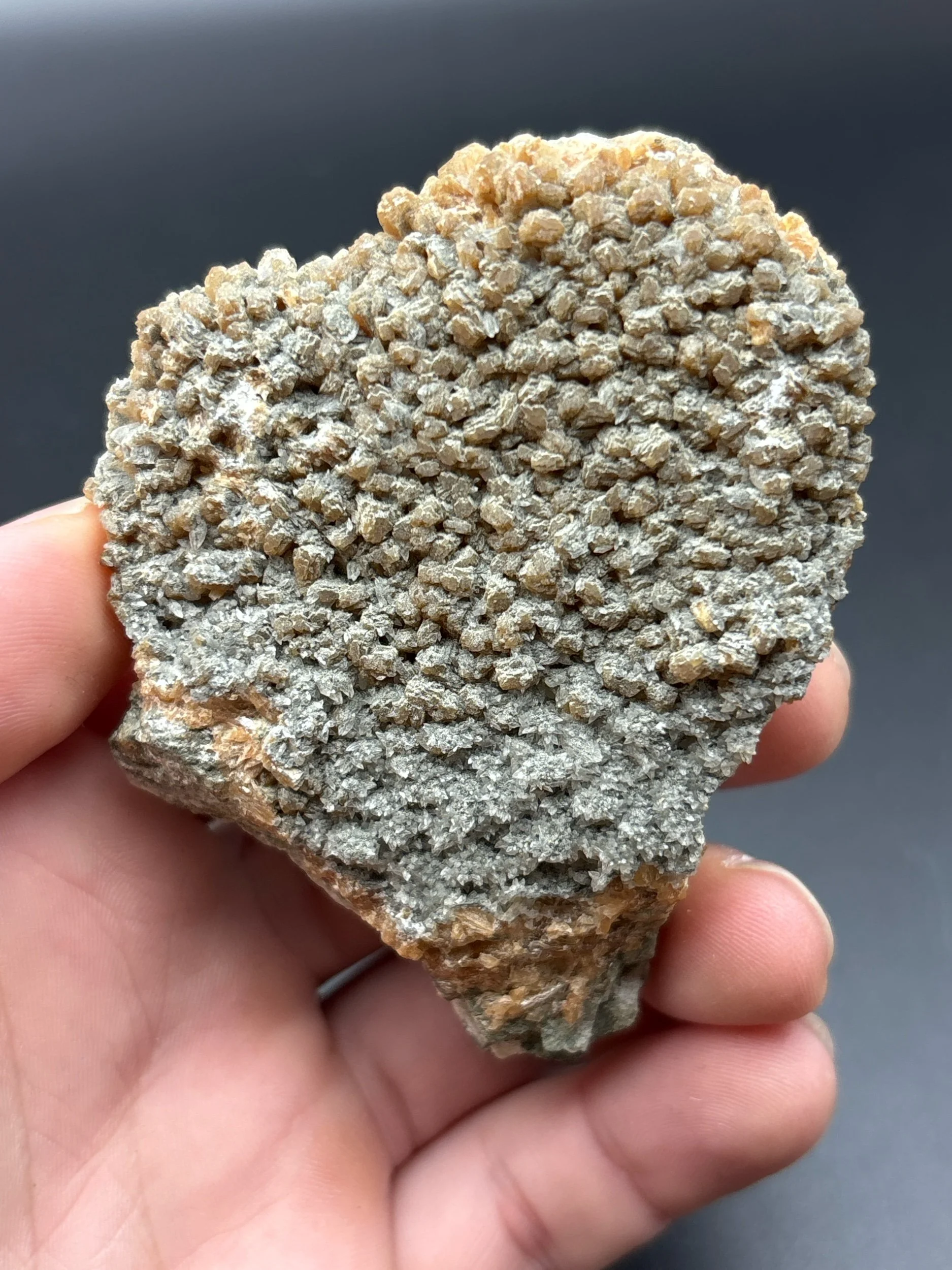
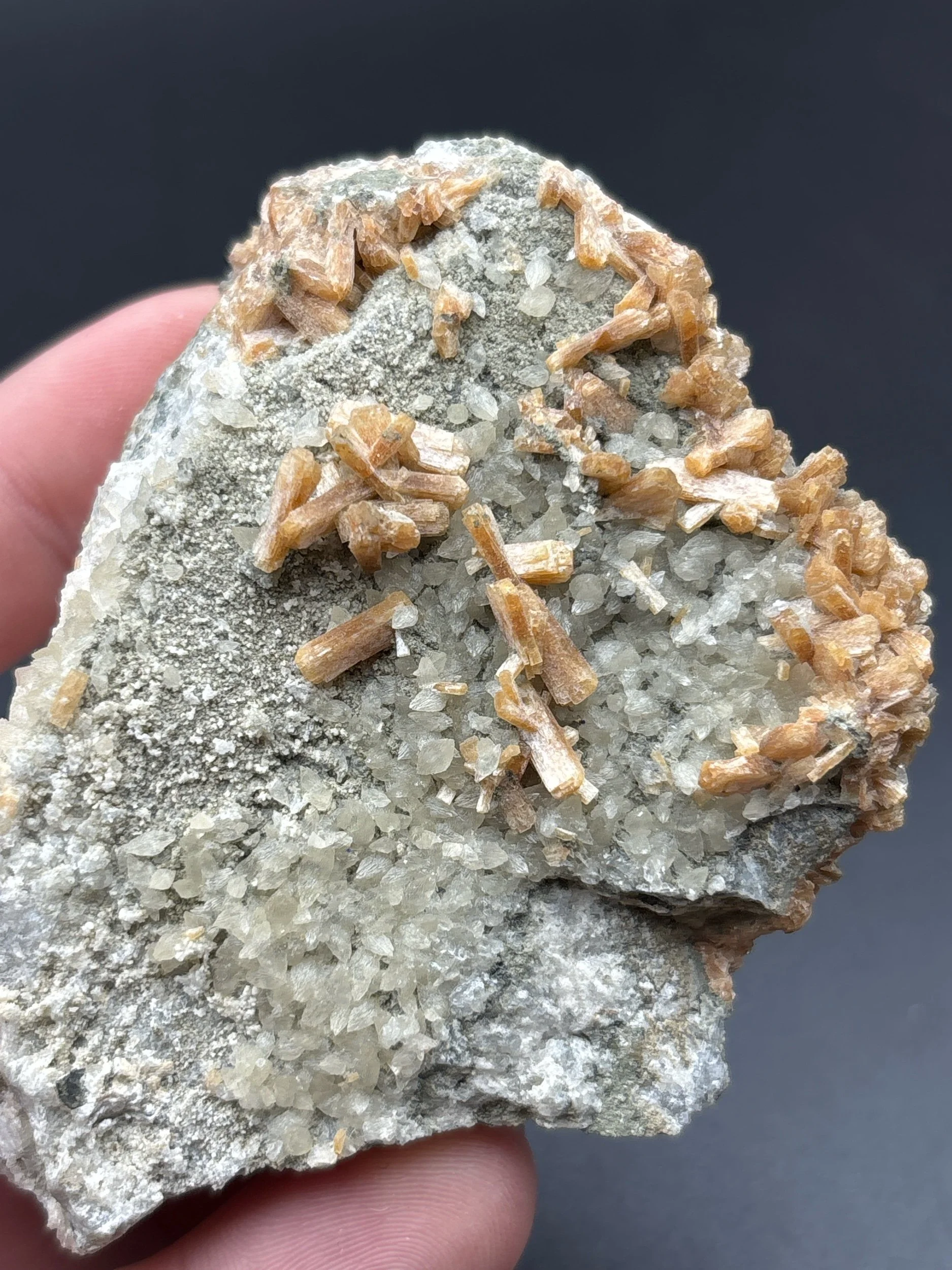
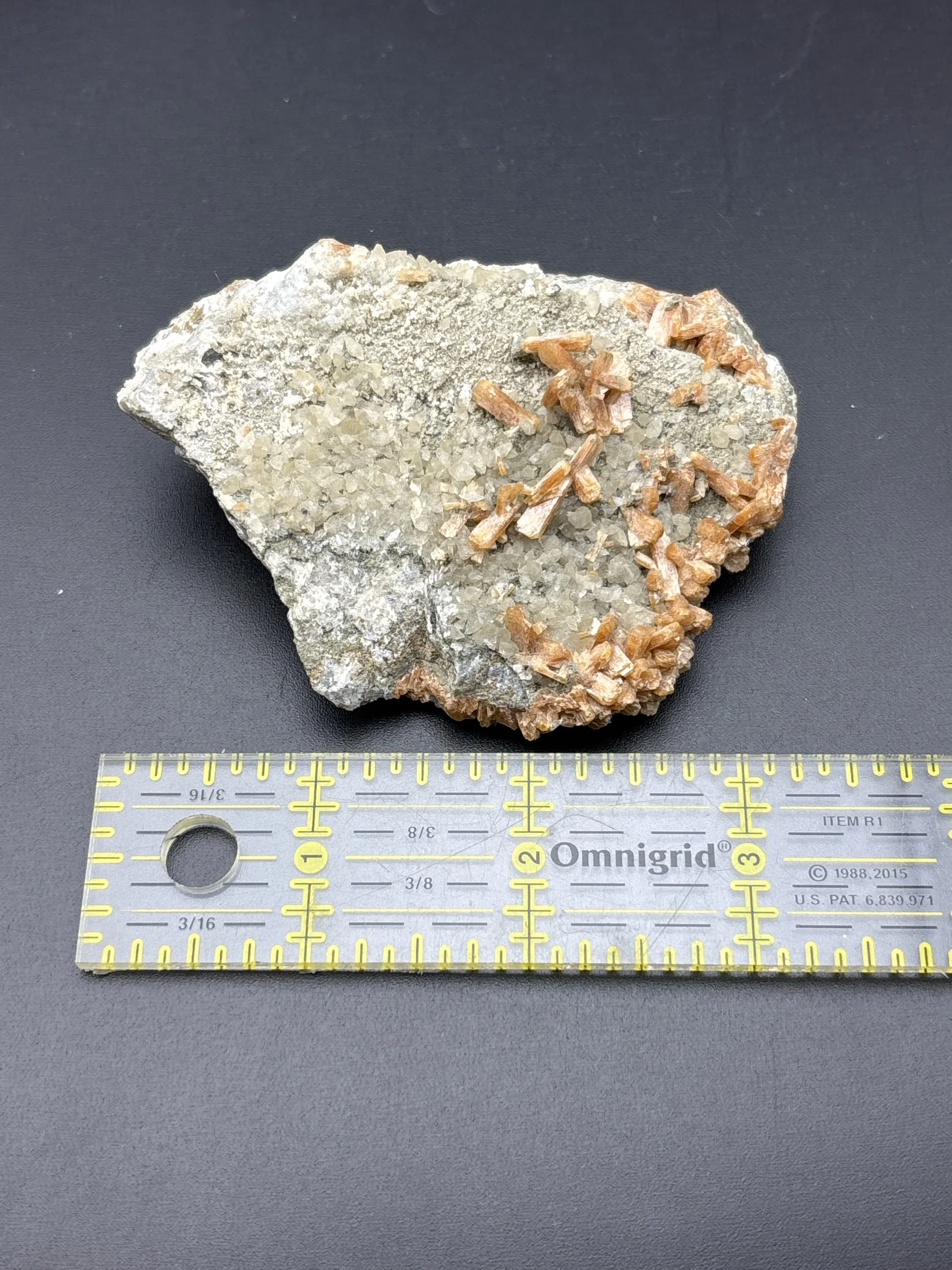
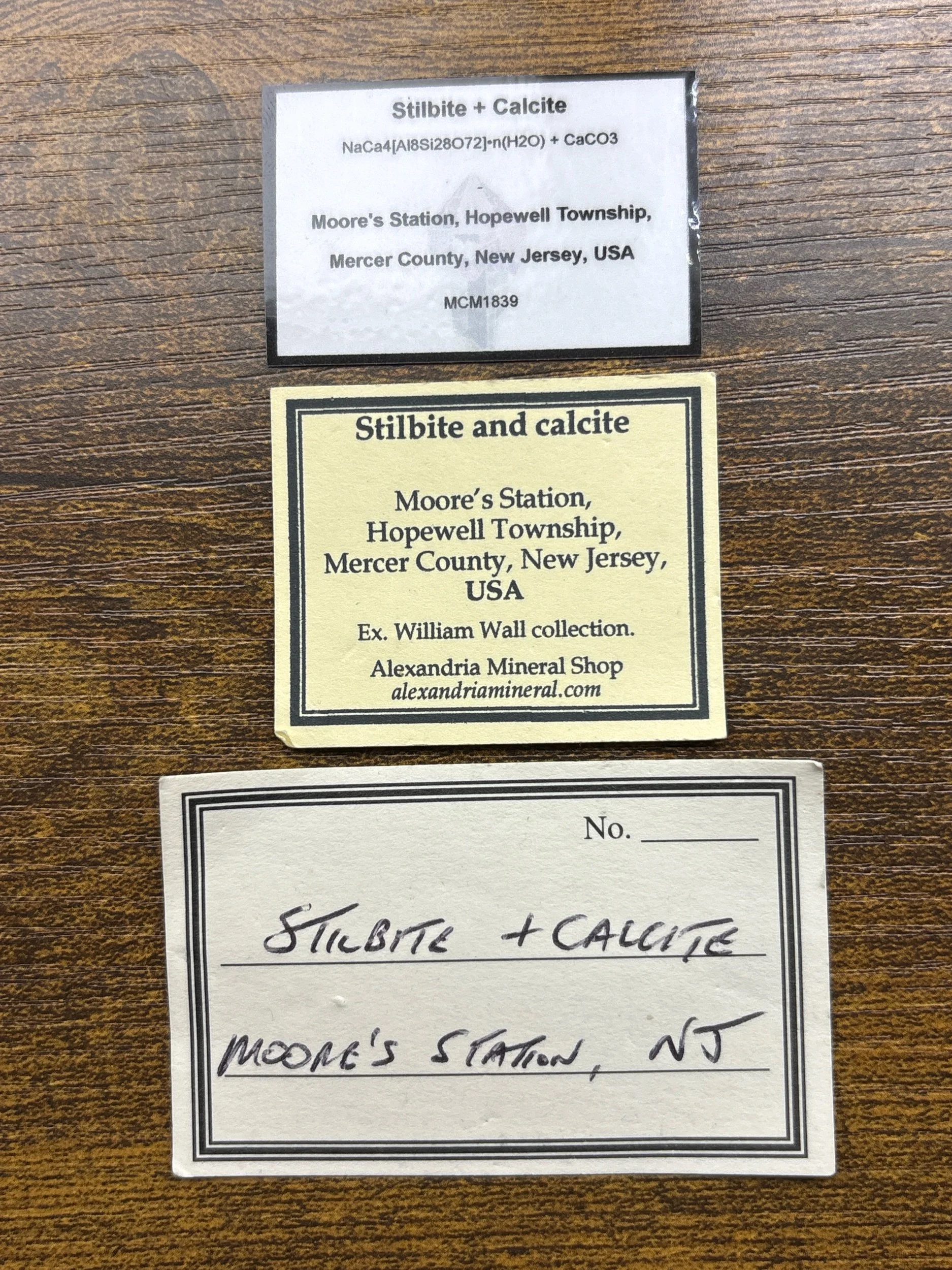
Via Mindat:
“This is a very old locality (circa 1897) at the Moore's Station (no longer exists) of the Reading RR. Specimens are found only in old collections.
The mineral listed for Moore’s Station indicate that the locality is in trap rock. The site of the former Moore’s Station, on the Reading (Conrail) Railroad is in an area underlain by the sediments of the Passaic formation. The quarry that is the probable locality is located approximately 1 mile north along the railroad from the former station site and ½ mile north of the Hopewell barite mine. It is also approximately 1 mile west of the intersection of Rt. 518 and Rt. 518 spur near the western end of Hopewell boro. The coordinates given are for the quarry, not the former station.
Here, just off the railroad tracks to the east is a small, shallow quarry that was opened in the 19th century and has been abandoned for many years. It is marked on a topographic map of the “Vicinity of Flemington”, dated 1887. The quarry is located in the diabase dike that extends from the western end of the Rocky Hill Sill, cuts upward through the Passaic Formation and is cut off by the Hopewell Fault, a major intrabasin fracture. Proximity of the quarry to this fault may explain why a significant number of mineral specimens were preserved from such a small excavation.
There is longstanding confusion between this locality and “Moore” a site along Rt. 29, very near the Delaware River and the northwestern end of Baldpate Mountain, approximately 3.7 airline miles west – southwest of the Moore’s Station on the Reading (Conrail) Railroad. The 1887 map, cited above, calls the place near the river “Moores”. The USGS topographic map calls it “Moore” but the road map published by Hagstrom calls it Moore’s Station. Trap Rock Industries refers to their large adjacent quarry in the northwest end of Baldpate Mountain as the Moore’s Station Quarry. The TRI quarry, reactivated it in 1982 after 50 years of dormancy, is also cut by splays from the Hopewell Fault and has produced mineral specimens. It was apparently not yet active at the time the 1887 map was published. Because of antiquity of the specimens and the confusion over the name the actual source of any specimen labeled “Moore’s Station” needs to be given some additional scrutiny.” (Moore's Station, Hopewell Township, Mercer County, New Jersey, USA)
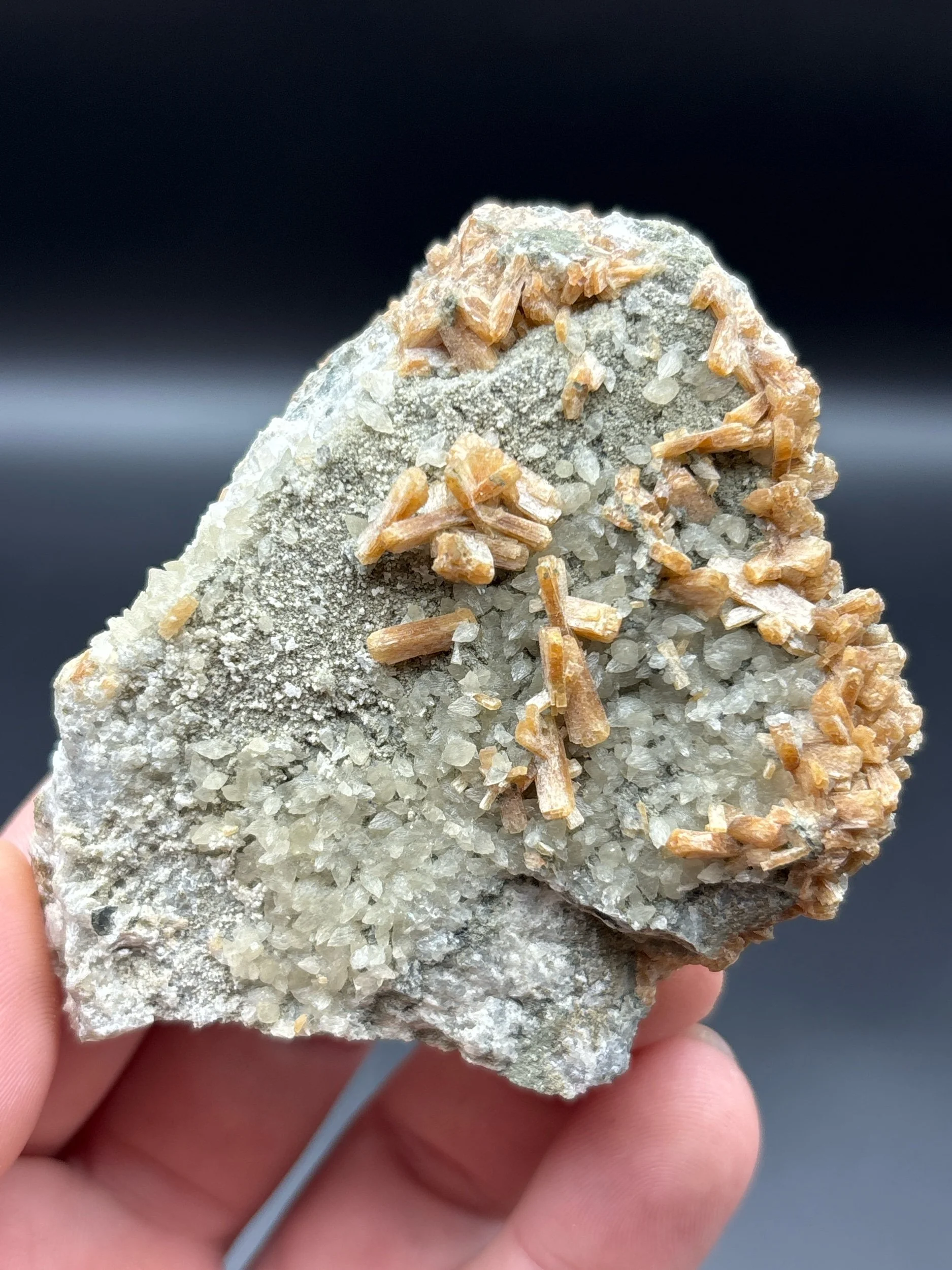
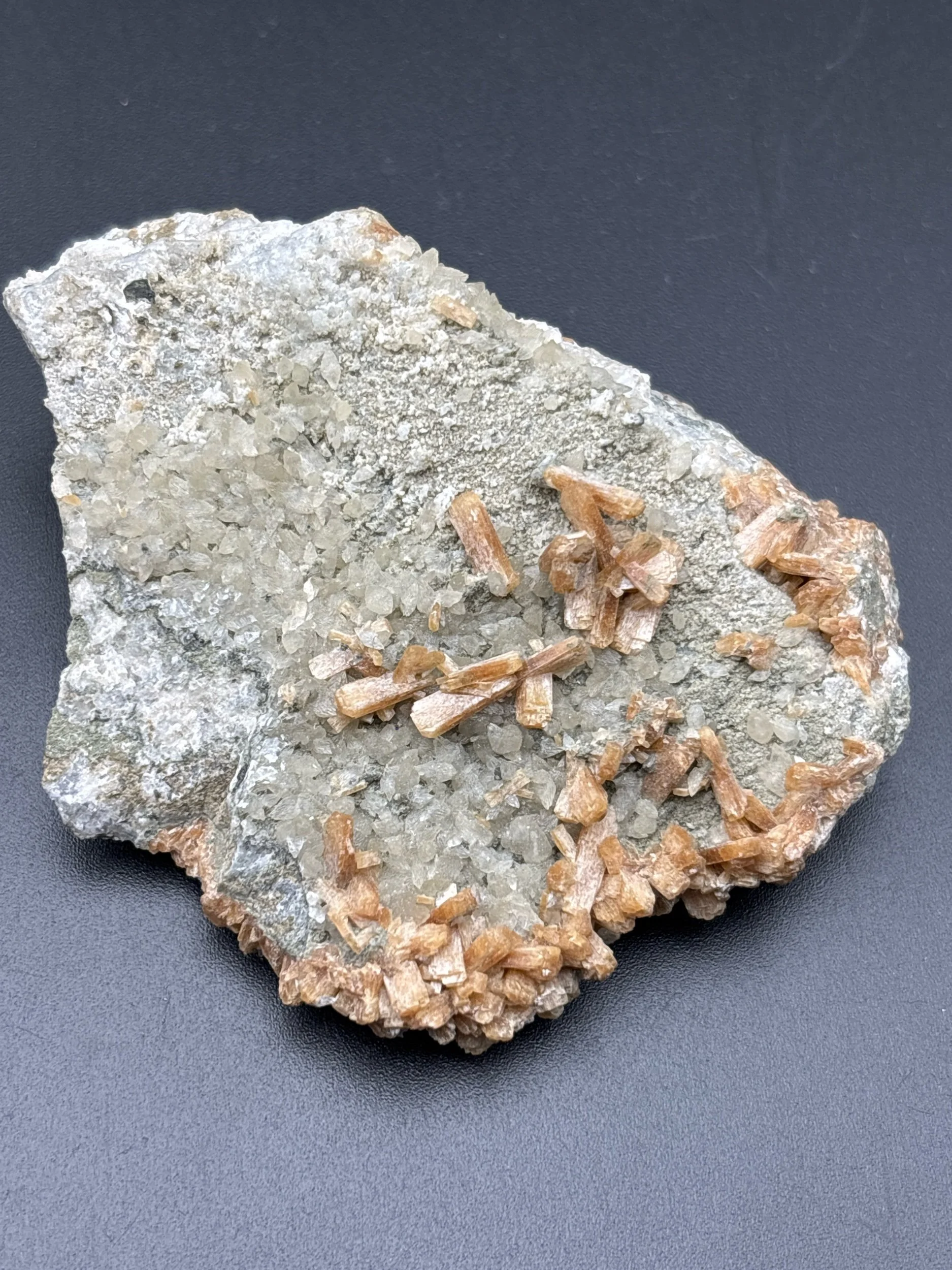
Featured here is a matrix coated primarily in stilbite but accented by nearly colorless calcites. Ex William Wall Collection, via Alexandria Mineral Shop. A USA classic from the northeast that seldom comes available! The provenance adds great bonus.
Thank you so much for viewing! Please message for any further information
(3.3 × 2.4 × 1.1 in - 8.4 × 6.3 × 2.8 cm) 4.1oz / 116g
Orders ship Mondays


The Kelly Mine, located in the Magdalena Mining District of Socorro County, New Mexico, emerged in the late 19th century as a major producer of lead, zinc, silver, and other metals, driving the rapid growth of the boomtown of Kelly. Mining began in the late 1870s, and expansion accelerated in the 1880s with improved rail connections that linked the district to regional and national markets. By the early 20th century, large companies such as the Empire Zinc Company consolidated operations, with zinc and lead becoming the mine’s primary products. As ore bodies were depleted and metal prices fluctuated, mining activity declined during the 1920s and 1930s. By the mid-1940s the town was largely abandoned, leaving behind prominent mine structures and ruins that today mark Kelly as a notable New Mexico ghost town and historic mining site. Final commercial mining ceased in 1957. The site is still mined for mineral specimens privately.
This example of smithsonite from the Kelly Mine is a much lesser seen brown, which is actually a classic color for older Kelly material! With a label detailing provenance to 1967, this specimen could also be from the 3 level the field collector label notes, but is denoted as 5 level. Lustrous spherules of smithsonite fill a vug in limonitic matrix. Overall, this is an amazing addition to any collector of antique, USA, or old mine locales!
Thank you so much for viewing! Please message for any further information
(3.4 × 2.4 × 1.6 in - 8.6 × 6.0 × 4.0 cm) 5.2oz / 147g
Orders ship Mondays


The Flambeau Mine near Ladysmith, Wisconsin, was discovered in 1968 and contained rich deposits of copper, gold, and silver. Initially proposed in the 1970s by Kennecott Minerals, the project was delayed for years due to local opposition and the passage of strict Wisconsin mining laws focused on environmental protection. The mine was revived in the late 1980s with a scaled-down open-pit plan, permitted in 1991 after extensive regulatory review and public debate. Mining operated from 1993 to 1997, producing about 1.9 million tons of ore that was shipped off-site for processing. Following closure, the site was backfilled, treated to prevent acid drainage, replanted, and restored as wildlife habitat and recreational land. It is considered a world class producer of chalcocite crystals to collectors, especially large iridescent crystals.
This examples of chalcocite from the Flambeau mine exhibits a mass of intergrown crystals, displaying somewhat amorphous and dissolute structure. Dull blue and gray overall, there are some hints of purple in nestled areas. This specime is accompanied by a Bud Erhle label.
Thank you so much for viewing! Please message for any further information
(3.3 × 2.4 × 1.6 in - 8.3 × 6.0 × 4.0 cm) 10.2oz / 289g
Orders ship Mondays


The Little Giant Mine is a historic lead zinc and copper producer. All commercial production dates prior to 1904, with specimen collecting continuing the decades after closure. Most specimens come from the #3 tunnel, formally known as the Upper Giant Prospect. Hosted in St. Regis quartzite, the mine is located approximately 1.6 miles southeast of Mullan.
This is a classic example of pale, green, elongated pyromorphite crystals on matrix. Crystallization is present on two naturally displaying faces of the specimen. A must have for the collector of Idaho, lead minerals, PNW locales, US Classics, or antique specimens!
Thank you so much for viewing! Please message for any further information
(3.75 × 1.5 × 2.25 in - 9.5 × 3.8 × 5.7 cm) 7.7oz / 218g
Orders ship Mondays
No results match your search. Try removing a few filters.